资讯 / 正文
中考英语每日练 | 第一次用英语指路与「假新闻」课(完形+阅读)
英语试界瓜坊 · 中考英语
今天的中考练习由两篇原创短文组成:「第一次用英语指路 My First Directions」与「英国中学的假新闻课 How to Spot Fake News」。前者写一个背熟了语法的初中生,第一次被外国游客拦下来问路——心里的语法突然都"躲起来了",最后靠一句"会犯错也是学习的一部分"开了口;后者写英国学校把"辨别假新闻"搬进课堂:看来源、查日期、比一比、盯措辞。完形填空 10 空、阅读理解 5 题,难度适配全国多数省份中考,全文原创。建议限时 18 分钟完成。
完形填空(共 10 题)
阅读下面短文,掌握其大意,然后从每题所给的 A、B、C、D 四个选项中选出可以填入空白处的最佳选项。
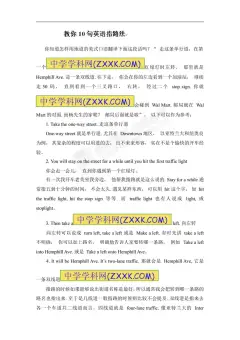
Last Saturday, I was reading outside a bookshop near the old bridge when a woman with a large map stopped in front of me. "Excuse me, could you tell me how to (1)______ to the City Museum?" she asked — in English.
I understood every word, but my mind went (2)______. At school, I could answer questions about grammar, but I had never (3)______ English with a stranger before. Then I remembered what our teacher often said: "Making (4)______ is part of learning. The important thing is to speak."
I took a deep breath and pointed down the street. "Go (5)______ this road for about five minutes. The museum is (6)______ to the bridge." To my surprise, she smiled and said, "Thank you so much! Your English is very good!"
I walked a little way with her to make (7)______ she found the right street. As we said goodbye and she waved her map, I was smiling all the way home — my heart was as light as a (8)______.
That evening, I told my mother everything. She laughed and said, "So all those years of (9)______ finally worked!"
Now, whenever I see someone holding a map, I don't (10)______ away — I walk up and ask, "Do you need any help?"
1. A. get B. come C. arrive D. leave
2. A. bright B. wild C. blank D. slow
3. A. taught B. spoken C. written D. read
4. A. friends B. plans C. faces D. mistakes
5. A. along B. across C. over D. behind
6. A. middle B. front C. next D. far
7. A. ready B. sure C. clear D. busy
8. A. feather B. stone C. brick D. cloud
9. A. drawing B. travel C. sleep D. practice
10. A. jump B. fly C. turn D. get
阅读理解(共 5 题)
阅读下面短文,从每题所给的 A、B、C、D 四个选项中选出最佳选项。
How to Spot Fake News
In a classroom in Manchester, England, thirty students are studying a news story very carefully. It looks real: a professional photo, an exciting headline, even a quote from a "scientist". But their teacher, Miss Brown, asks them to look again. Within minutes, someone finds the answer: the photo was taken in another country, three years ago. The "scientist" does not exist. The story is completely made up.
Lessons like this are becoming common in British schools. Last year, the government added "media literacy" to the school curriculum, which means students now learn how to check the news, not just read it.
Students learn some simple rules. First, look at the source: is it a newsroom you have heard of, or a website with a strange name? Second, check the date: old photos are often reused for new stories. Third, compare: if only one website in the world reports "amazing news", be careful. Fourth, watch the language: real news usually explains what is known and unknown, while fake news loves words like "shocking" and "secret".
The lessons are already changing habits. In a recent class survey, most students said they now check at least two sources before believing a story. "Before, I used to forward anything exciting to my friends," says one student. "Now I stop and think. Sometimes the truth is boring, but it is still the truth."
Teachers say the aim is not to make children doubt everything. "We are teaching them to be careful readers, not worried readers," says Miss Brown. "A careful reader asks one more question — and that question can stop a rumour from spreading."
1. What was wrong with the news story in Paragraph 1?
A. Its photo was an old one taken in another country.
B. It was written by the students themselves.
C. It had no headline at all.
D. It was too short to be believable.
2. Why did the government add "media literacy" to the curriculum?
A. To help students check the news, not just read it.
B. To make students read more news every day.
C. To train students to become reporters.
D. To teach students to design websites.
3. Which of the following is one of the "simple rules" in Paragraph 3?
A. A famous name always means true news.
B. If only one website reports the news, be careful.
C. Real news uses words like "shocking".
D. Long stories are usually more believable.
4. What change have the lessons brought, according to the survey?
A. Students forward exciting news faster than before.
B. Most students now check more than one source.
C. Students have stopped reading news.
D. Students find the truth boring.
5. What does Miss Brown mean by "careful readers, not worried readers"?
A. Students should read the news as little as possible.
B. Students should doubt everything they read.
C. Students should think before believing, without becoming afraid.
D. Students should only trust what teachers say.
答案与解析
完形填空
1. A 游客问"能否告诉我怎么______城市博物馆"——"到达某地"用 get to,选 get。arrive 后须接 at/in(arrive to ✗);come/leave 与"向陌生人问路"的语境不符。
2. C "每个词都听懂了,但大脑一片______"——紧张到大脑空白,my mind went blank 是固定表达,选 blank。A「明亮」、B「狂野」、D「慢」都不能形容"说不出话"的状态。
3. B "我从未和陌生人______过英语"——口语交流用 speak,且前面有 had never,用过去分词 spoken(had never spoken),选 B。taught(教)主语不对;written/read 与"对话"不符。
4. D 老师常说的话:"______ 是学习的一部分。重要的是开口。"——Making mistakes is part of learning(犯错是学习的一部分)是常见励志表达,也正好解释了"我"敢开口的原因,选 D。
5. A "沿着这条街走大约五分钟"——go along this road(沿路向前)是问路固定说法,选 along。across 指"从平面穿过",over 指"跨越",behind 指"在后面",都不与 this road 搭配表示"沿路走"。
6. C "博物馆______桥边"——next to(紧邻、在旁边)是方位固定搭配,选 next。middle/front 需与 in the 连用;far 后接 from 而不是 to。
7. B "我陪她走了一小段,以______她找对了路"——make sure(确保)是固定短语,选 sure。make ready/clear/busy 都不能表达"确认"之意。
8. A "我一路笑着回家——心情像______一样轻"——as light as a feather(轻如鸿毛)是英语习惯比喻,形容轻松愉快的心情,选 feather。stone/brick 都是"重"的东西,与 light 矛盾;cloud 虽轻但不是这个固定搭配。
9. D 妈妈笑着说"这么多年的______终于起作用了"——指多年练英语的功夫,选 practice(练习、实践)。drawing/travel/sleep 与"开口说英语"无关。
10. C "现在每当看到有人拿地图,我不会______开——而是走上前去问"——turn away(转身走开、避开)与后文 walk up and ask 形成对比,选 turn。jump/fly/get 都不能与 away 搭配表示"避开"。
阅读理解
1. A 第一段:"the photo was taken in another country, three years ago." → 这条假新闻的照片是三年前在另一个国家拍的,选 A。B「学生自己写的」无据;C「没有标题」与"an exciting headline"相反;D「太短不可信」原文未提。
2. A 第二段:"students now learn how to check the news, not just read it." → 把媒介素养纳入课程,是为了教学生核查新闻而不只是读新闻,选 A。B「让学生读更多新闻」曲解;C「培养记者」、D「教设计网站」均未提及。
3. B 第三条规则:"if only one website in the world reports 'amazing news', be careful." → 只有一家网站报道的"惊人新闻"要当心,选 B。A「有名的名字一定真」与"look at the source: is it a newsroom you have heard of, or a strange website"不符,原文只是线索之一;C「真新闻用 shocking 这类词」与原文相反(假新闻才爱用);D「越长越可信」无据。
4. B 第四段:"most students said they now check at least two sources before believing a story." → 多数学生现在会核对至少两个来源再相信,选 B。A「转发更快」与"Before, I used to forward anything exciting … Now I stop and think"相反;C「不再读新闻」无据;D「觉得真相无聊」是把那位学生的话(真相有时乏味但仍是真相)断章取义。
5. C 末段:"A careful reader asks one more question — and that question can stop a rumour from spreading." → "细心的读者"是多问一个问题、先想再信,而不是什么都不敢信的"担心的读者",选 C。A「尽量少读新闻」无据;B「怀疑一切」与"not to make children doubt everything"直接矛盾;D「只信老师」原文未提。
觉得有用点个【在看】,明天继续更~想看哪类题型,留言告诉我。
相关文档
- 完形红花绿叶词
- 完形固定搭配短语
- 2024年中考英语真题分类汇编03完形阅读(10题题型)(解析版)
- 2024年中考英语真题分类汇编03完形阅读(10题题型)(原卷版)
- 英语70高考完形固定搭配452个
- 陕西省部分学校2024届高三上学期第一次联考英语答案
- 易熙人完形技巧精华➕答案汇总➕皇后宫女词
- 9天背完英语完形高频词汇 中小学精品资料高清可打印
- 英语27145个高考阅读完形高频障碍词汇总
- Unit8背景材料教你10句英语指路法
- 2024高考英语专题08完形埴空(学生版)
- 初中英语完形填空高频词汇9天积累 一线老师整理版
- 2024高考英语专题08完形埴空(教师版)
- 2025高考英语专题08完形埴空(北京专用)(学生版)
- 10.完形思维力(关键能力05)(解析版)-2024年中考一轮复习英语语篇解读能力考查梳理与巩固
- 2025高考英语专题08完形埴空(北京专用)(教师版)
- 10.完形思维力(关键能力05)(原卷版)-2024年中考一轮复习英语语篇解读能力考查梳理与巩固
- 星火英语巅峰训练完形与语法填空二千六百题
- 2026年高考英语一轮复习阅读理解突破讲义每日一练精品素材3
- 2026年高考英语一轮复习阅读理解突破讲义 高考英语阅读理解每日一练3 参考答案
- 2026年高考英语一轮复习阅读理解突破讲义 每日一练1 含词汇积累
- 2025万唯初中七八年级《完形填写阅读理解与新考法》微技能讲练7年级
- 2024高考英语复习冲刺过关完形查漏补缺专题03解析版(全国通用)
- 2026年高考英语一轮复习阅读理解突破讲义:每日一练2(含词汇积累)
- 十年(2016-2025)高考英语真题分类汇编(全国通用)专题21完形填空(学生版)
- Unit6刷能力(完形、阅读、短填、写作提升练)-2022-2023学年九年级英语全一册单元模块满分必刷题(人教版)
- Unit5刷能力(完形、阅读、短填、写作提升练)-2022-2023学年九年级英语全一册单元模块满分必刷题(人教版)
- Unit4刷能力(完形、阅读、短填、写作提升练)-2022-2023学年九年级英语全一册单元模块满分必刷题(人教版)
- Unit3刷能力(完形、阅读、短填、写作提升练)-2022-2023学年九年级英语全一册单元模块满分必刷题(人教版)
- 2026年高考英语专项复习 五年(2021-2025)高考英语真题分类汇编 专题15完形填空(15空)(全国通用)教师版
- 2026年高考英语专项复习 五年(2021-2025)高考英语真题分类汇编 专题15完形填空(15空)(全国通用)学生版
- 十年(2016-2025)高考英语真题分类汇编(全国通用)专题21完形填空(教师版)
- 2026年高考英语一轮复习阅读理解突破讲义 高考英语阅读理解每日一练1含词汇积累 参考答案
- 高频词高中三年600个超高频英语词组,阅读、完形、写作都在考!(必会)
- 考研英语一2025年完形逐词翻译版本三
- 人教新目标九年级英语全册Unit6刷能力完形阅读短填写作提升练满分必刷题
- 人教新目标九年级英语全册Unit5刷能力完形阅读短填写作提升练满分必刷题
- 人教新目标九年级英语全册Unit4刷能力完形阅读短填写作提升练满分必刷题
- 人教新目标九年级英语全册Unit3刷能力完形阅读短填写作提升练满分必刷题
- 英语作文高分短语及万能句式 十天背完
- 2026年高考英语一轮复习阅读理解突破讲义 每日一练2 含词汇积累 参考答案
- 27—45河北英语45套小卷
- 2026年高考英语专项复习十年真题分类汇编专题19完形填空记叙文教师版(全国通用)
- 2026年高考英语专项复习十年真题分类汇编专题19完形填空记叙文学生版(全国通用)
- 2025考研英语一完型解析
- 2024考研英语一完型解析
- 2023考研英语一完型解析
- 2022考研英语一完型解析
- 2021考研英语一完型解析
- 2020考研英语一完型解析
- 2019考研英语一完型解析
- 2018考研英语一完型解析
- 2017考研英语一完型解析
- 2016考研英语一完型解析
- 2015考研英语一完型解析
- 2014考研英语一完型解析
- 2013考研英语一完型解析
- 2012考研英语一完型解析
- 2011考研英语一完型解析
- 2010考研英语一完型解析
- 2009考研英语完型解析英语一
- 2008考研英语完型解析英语一
- 2007考研英语完型解析英语一
- 2006考研英语完型解析英语一
- 2005考研英语完型解析英语一
- 考研英语二2025年完形逐词翻译版本三
- 四升五英语暑假阅读理解每日一练
- 五升六英语暑假阅读理解每日一练
- 三升四英语暑假阅读理解每日一练
- 希望学初三英语爱豆笔记第六讲题型综合
- 2024中考英语一轮复习讲练测用所给单词适当形式填空第12讲讲义解析版(全国通用)
- 2024中考英语一轮复习讲练测用所给单词适当形式填空第12讲讲义原卷版(全国通用)
- 2024中考英语一轮复习讲练测用所给单词适当形式填空第12讲练习解析版(全国通用)
- 2024中考英语一轮复习讲练测用所给单词适当形式填空第12讲练习原卷版(全国通用)
- 2027·一本·英语完型填空与阅读理解150篇·(中考)(英语)答案
- 2027·一本·英语完型填空与阅读理解150篇·(中考)(英语)
- 2026年高考英语二轮复习专题01核心词汇破壁培优讲义(全国通用)
- 六年级(下)英语小升初英语阅读理解每日一练人教版PEP
- 六年级(下)英语小升初英语时态专项每日一练人教版PEP
- 2025年中考英语复习语法每日小纸条
- 2024年高考英语真题新高考I卷完形解读分析学案
- 9.2026年唐山市中考模拟考试
- 2025考研英语二完型解析
- 2024考研英语二完型解析
- 2023考研英语二完型解析
- 2022考研英语二完型解析
- 2021考研英语二完型解析
- 2020考研英语二完型解析
- 2019考研英语二完型解析
- 2018考研英语二完型解析
- 2017考研英语二完型解析
- 2016考研英语二完型解析
- 2015考研英语二完型解析
- 2014考研英语二完型解析
- 2013考研英语二完型解析
- 2012考研英语二完型解析
- 2011考研英语二完型解析
- 2010考研英语二完型解析
- 五年高考英语真题分类汇编专题15完形填空(15空)(解析版)
- 2005至2025英语一完型真题答案速查