资讯 / 正文
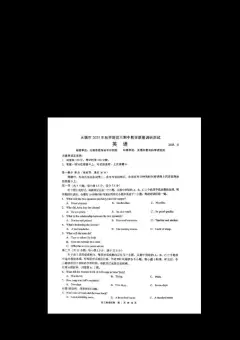
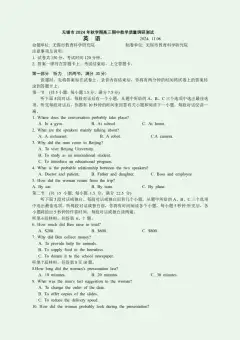
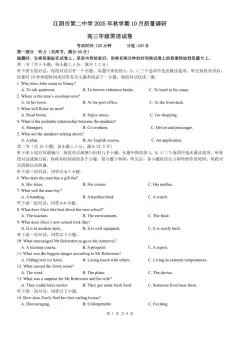
无锡市2026年秋学期高三期中考试英语试卷|洁净版(可打印)
无锡市2026年秋学期高三期中考试英语试卷|洁净版(可打印)
无水印洁净版。已去除整理稿中的署名与联系方式;题干、选项、答案、听力录音稿按原稿逐字照录,仅补回 PDF 复制造成的单词间空格,不改动任何用词、题号与答案。满分 150 分,考试时间 120 分钟。按已确认的「合规,转载」处理,仅供学习交流,勿商用。
题型导航
第一部分 听力(1—20,30 分)|第二部分 阅读理解(21—35,50 分,含七选五 36—40)|第三部分 语言运用(41—65,30 分,完形 41—55、语法填空 56—65)|第四部分 写作(应用文 15 分+读后续写 25 分)。
试题正文
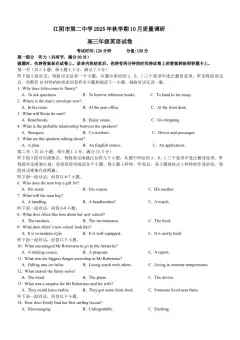
第一部分 听力 (共两节,满分 30分)
做题时,先将答案标在试卷上。录音内容结束后,你将有两分钟的时间将试卷上的答案转涂到答题卡上。
第一节 (共5小题; 每小题1.5分,满分7.5分)
听下面5段对话。每段对话后有一个小题,从题中所给的A、B、C三个选项中选出最佳选项。听完每段对话后,你都有10秒钟的时间来回答有关小题和阅读下一小题。每段对话读两遍。
1. What does the man plan to do this weekend?
A. Go to the city museum. B. Visit a good friend. C. Do volunteer work.
2. Why does the woman refuse the dessert at first?
A. She is full. B. She is on a diet. C. She dislikes the taste.
3. What is Jenny worried about?
A. Lack of sleep. B. The speech contest. C. The missing lines.
4. Where will the speakers meet?
A. At the library hall. B. At the school gate. C. At the community center.
5. What does the man think of the new city park?
A. It's worth visiting. B. Its scenery is ordinary. C. It's crowded every day.
第二节 (共15小题; 每小题1.5分,满分22.5分)
听下面5段对话或独白。每段对话或独白后有几个小题,从题中所给的A、B、C三个选项中选出最佳选项。听每段对话或独白前,你将有时间阅读各个小题,每小题5秒钟;听完后,各小题将给出5秒钟的作答时间。每段对话或独白读两遍.
听第6段材料,回答第6、7题。
6. What problem does the woman have in finishing her report?
A. She lacks enough current materials
B. She finds online materials unreliable.
C. She has no access to online databases.
7. What does the man advise the woman to do?
A. Renew some library books.
B. Search for online resources.
C. Ask her classmates for help
听第7段材料,回答第8至10题。
8. What is the man's major?
A. Public education. B. Computer engineering. C. Environmental science.
9. Why does the man take the part-time job?
A. To work as a guide. B. To earn pocket money. C. To obtain work experience.
10. What will the man do next?
A. Begin his full-time job. B. Attend a training course. C. Submit his job application.
第8段材料,回答第11至13题。
11. What are they talking about?
A. Choosing suitable furniture.
B. Reserving a parking spot.
C. Moving into a new apartment.
12. What was the woman's original choice of furniture?
A. A study desk. B. A metal shelf. C. A wooden bookshelf.
13. How will the woman probably go to the store?
A. By car. B. By bus C. By light rail.
听第9段材料,回答第14至16题。
14. How long will the woman stay in Canada?
A. About six months. B. About twelve months. C. About twenty months.
15. Why is the woman going to Canada?
A. To take a holiday. B. To visit relatives. C. To work as a visiting teacher.
16. What will the woman do next?
A. Go through security. B. Board the plane at once. C. Make a phone call.
听第10段材料,回答第17至20题。
17. Where did the group begin their tour on Thursday?
A. At an art museum. B. At a botanical garden. C. At a wildlife zoo.
18. Who gave the environmental lecture near theriver?
A. A professional guide. B.A science teacher. C. A professional biologist.
19. How long does the trip last?
A. One day. B. Two days. C. Three days.
20. What will the group do next?
A. Begin their return trip. B. Visit another site. C. Attend a new lecture.
第二部分阅读理解 (共两节,满分50分)
第一节 (共15小题; 每小题2.5分,满分37.5分)
阅读下列短文,从每题所给的A、B、C、D四个选项中选出最佳选项。
A
The great film historian and critic David Thomson picks four of his favourite books about Hollywood. (His latest book, A Sudden Flicker of Light: A Revisionist History of the Movies, has just been published by Allen Lane at £25.)
✧ The Last Tycoon by F. Scott Fitzgerald,1941 (Penguin £9.99). Fitzgerald's last, unfinished novel is not so good as a narrative (叙事的) story, but it offers a superb glimpse of how a brilliant young head of production runs a studio in the golden age, dealing with every problem except those in his own life.
✧ Picture by Lillian Ross, 1952 (NYRB £13.99). Report from the set of The Red Badge of Courage, John Huston's film adaptation of Stephen Crane's Civil War novel. Ross, a young writer on the New Yorker,records all the wild show-off talk and Huston's battles with the studio.
✧ The Deer Park by Norman Mailer, 1955 (Abacus £20). Still the best novel about love, passion, identity, money, honour, power, producers andactors. Set against the backdrop of Hollywood and the pleasure ground of Palm Springs, the story tells a war hero who toys with selling his life story to the movies
✧ The Golden Hour by Matthew Spector, 2025 (HarperCollins £12.99).Matthew's father, Fred Spector, was a top agent at CAA, the talent agency. Thisis a beautifully written memoir (回忆录) about growing up with the movies, making them,and trying to lead one's life in the light shining from the screen.
21. What do we know about The Last Tycoon?
A. It fails to tell the story as well as expected.
B. It tells a complete story with an excellent plot.
C. It gives a full account of Fitzgerald's personal life.
D. It describes the decline of Hollywood's golden age.
22. Which of the recommended books is priced thehighest?
A. A Sudden Flicker of Light.
B. The Deer Park.
C. The Golden Hour
D. The Last Tycoon.
23. What is the main purpose of the text?
A. To advertise Thomson's newly published book.
B. To trace the history of Hollywood's golden age.
C. To recommend four books about Hollywood.
D. To compare the writing styles of different authors.
B
Award-winning author and illustrator Rob Biddulph has written and illustrated 21 books, including the Peanut Jones series. Through his Draw with Rob YouTube videos, he has attracted a vast following of devoted young fans,whose parents are equally enthusiastic about his work. "Everyone can draw," Rob Biddulph says. He compares drawing to a fingerprint. "It's unique to you," he says. "That's the beauty of it." He has even taught Queen Camilla how to draw her crown.
Biddulph's three mostly grown-up daughters have influenced his work. Whenhis youngest daughter Poppy started school, he found it a challenge for her. So he began leaving motivational Post-it notes in her packed lunch. He kept upthis routine every school day from 2013 until 2020. Those notes, well preserved, developed into small-scale artworks and formed part of his museum exhibition,celebrating parenting as a labour of love. Besides writing, Biddulph is also a musician, which makes sense given the perfectly rhyming lines in his picture books.
Book writing and illustration is his second career. After working in media,he published his first children's book Blown Away at 42, and it was aninstant success. "As soon as I started, I honestly felt like this is what I was meant to do," he says. Inspired by his artist mother, he made his own books and comics as a child. When creating, he works out ideas in his sketchbook, writes by hand and adjusts rhymes repeatedly. He even tries reading his lines in different accents to test whether they work well.
As a national literacy ambassador, when asked what he thinks about AI in the world of publishing, he regards it as "theft". This is precisely why his Draw with Rob videos keep marks and imperfections real—to encourage children to embrace the beauty of imperfection and keep creating. And that is perhaps why children love him so much.
24. What can we learn from Biddulph's words in paragraph 1?
A. Drawings can be used to identify fingerprints.
B. Drawing serves as a special form of self-expression.
C. The uniqueness of art lies in its beautiful appearance.
D. The beauty of drawing lies in mastering artistic skills.
25. What inspired Rob Biddulph to start his Post-it notes?
A. His desire to exhibit his artworks. B. His daughter's struggle at school.
C. His ambition to become a writer. D. His family's encouragement in his career.
26. What does Biddulph intend to stress in the last paragraph?
A. The popularity of imperfect drawings.
B. The risk of children's depending on AI
C. The value of children's creative attempts.
D. The difficulty in developing children's creativity.
27. Which of the following best describes Biddulph?
A. Ambitious and strict. B. Generous and modest.
C. Caring and creative. D. Determined and cautious.
C
A new study reveals that humans and great apes (类人猿) have shared similar ways of laughing ever since they branched off from the evolutionary tree, reflecting a deep evolutionary connection between species.
To explore the origin of human laughter, researchers designed a scientific comparative experiment. They tickled (挠痒) 13 apes raised under human care including gorillas, orangutans, chimpanzees to collect decades-old recordings, which were then re-examined and carefully compared with the natural laughter of four young children. The result confirmed that human and ape laughs share highly similar rhythms and regular time intervals (间隔), strongly indicating a common ancestor. "In a way, we are very similar to other great apes because we've been laughing in a similar way for 15 million years," said Chiara De Gregorio, a primatologist from the University of Warwick and author of the study.
Previous studies on laughter evolution mainly focused on animals' facial expressions, while the acoustic (声音的) features of laughter were long ignored. Unlike great apes, human laughter has evolved to be faster and more complex, varying greatly with different social contexts, ranging from polite chuckles in public to loud laughter among close friends. "We are like the masters of laughter," De Gregorio commented, whose findings were published in Communications Biology.
Brittany Florkiewicz, who studies animal communication and was not involved in the research, thought the new findings make sense. She holds that animals'giggles (咯咯笑声) have evolved to best fit their distinct social lives and stressed the necessity of further exploration. Florkiewicz suggested collecting comparable recordings of other playful animals, including dogs, horses and cats, to deepen related research. According to her, more data can help scientists better figure out the evolution of laughter and "understand what makes us uniquely human, but also what is similar between humans and other animals".
For researchers, though studying laughter's origins seems trivial, it matters a lot for exploring human communication and language development.Since sounds cannot be preserved in fossils, scientists have to trace the evolutionary history of human laughter based on existing biological evidence.
28. What did the researchers do in the new study?
A. They studied the social contexts of human laughter.
B. They examined the fossil records of ancient humans.
C. They analyzed the facial expressions of apes and humans.
D. They compared the laughter of apes with that of children.
29. What does the underlined word "trivial" in the last paragraph probably mean?
A. Complex. B. Practical. C. Insignificant. D. Invaluable.
30. What does Brittany Florkiewicz suggest for future studies?
A. Describing the social lives of great apes
B. Focusing on the facial expressions of animals.
C. Exploring the fossils to trace laughter's origin.
D. Contrasting laughter among a wide range of animals.
31. What is the major finding of the new study on laughter?
A. Facial expressions are key to understanding laughter.
B. Human laughter varies with different social situations.
C. Laughter in humans and apes shows similar acoustic patterns.
D. Apes produce more complex laughter than human beings.
D
Digital screens are now deeply integrated in our lives, with children getting access to them at earlier and earlier ages-but is this increasing screen time actually affecting their health? The science is more mixed than you might expect, with some digital device studies raising concerns and others suggesting there is no real relationship between time in front of a screen and mental or physical problems.
In a new paper published in JAMA Network Open, researchers from the University of Edinburgh and Imperial College London analyzed data from a group of 3,786 children in the Growing Up in Scotland research study. They looked at how out-of-school screen use at age 5, 10, and 15 related to psychosocial development, covering emotional, behavioral, and social well-being. Theresearchers accounted for several influencing factors, including sex, race, ethnicity, household income, and cognitive (认知的) test scores. The overall findings are reassuring (令人放心的), suggesting that how screens are used matters more than the time spent on devices.
The research found no significant association between general screen use and developmental difficulties among children aged 5 and 10. For 15-year-olds, higher developmental difficulty scores were only related to overuse of electronic games, not other screen activities. Besides, early heavy screen use that seemed to cause problems at age 10 did not have lasting negative effects by age 15. One unexpected finding was that 15-year-olds spending more than one hour a day on social media had fewer average developmental troubles. Researchers explained that social media may help teenagers strengthen friendships and gain social support, but they reminded readers that this result cannot confirm definite benefits, as socially adaptable teens are more likely to use such platforms actively.
The study questions current public health guidelines that simply focus on limiting children's screen time. Experts suggest future research should explore children's specific screen content, usage scenarios (场景) and accompanying partners, as well as their offline activities. Launched in 2009, the study has certain limitations since digital devices are far more popular nowadays. Even so, it clearly proves that screen time alone will not consistently harm teenagers' psychosocial development. The apparent negative links between screen use and poor growth outcomes will weaken or disappear completely when comprehensive external factors are taken into account.
32. What do paragraphs 2 and 3 mainly tell us?
A. Major findings of the new study. B.Limits of the screen-time research.
C. Advice on kids' screen behaviour. D.Causes of teens' developmental trouble.
33. What can we learn about social media useaccording to the study?
A. Early screen problems can last throughout teenage years.
B. Heavy gaming may cause teens' developmental problems.
C. More social media use helps teens' development grow better.
D. Social competence makes teens more willing to use social media.
34. Why does the author mention current health guidelines?
A. To introduce ways to improve teens' offline activities.
B. To prove the value of long-term children research.
C. To stress the necessity of limiting kids' screen use.
D. To show the limits of the common screen-time rules.
35. What is the best title for the text?
A. Digital Devices: More Popular Than Ever.
B. Screen Use: More Beneficial Than Harmful.
C. Screen Rules: More Important Than Content.
D. Screen Time: Less Harmful Than Expected.
第二节 (共5小题; 每小题2.5分,满分12.5分)
阅读下面短文,从短文后的选项中选出可以填入空白处的最佳选项。选项中有两项为多余选项。
Critical thinking refers to the ability to make objective, reasoned judgments based on interpreting, understanding, and applying evidence.Nowadays, large amounts of conflicting information surround us, so these skills matter greatly. Here's how to develop them.
Accept diverse viewpoints
It's easy to get trapped in your own bubble. Social media algorithms keep exposing us to similar ideas, and we tend to stay around people sharing similar viewpoints. 36 Reading diverse news sources and listening curiously to people with different views can help reassess problems from fresh angles.
Try to be less reactionary
Training yourself not to react without thinking gives you room to think over topics thoroughly. When debating, resist immediate rejection of opposing ideas. 37 It broadens your thinking and prevents costly, rushed decisions.
Look for the full picture
We often see only partial information due to our personal views or hidden agendas of information sources. 38 Carry out independent research and search for overlooked facts and alternative viewpoints
Learn to spot unfair preferences
39 Such preferences are not necessarily bad. For example, a satisfying personal experience may make someone praise a service far more than most other people do. But we still need to watch out for them, for they can change our opinions. Hidden influences of this sort are easy to go unnoticed in daily reading. We can examine word choices, check source materials, look for repeated patterns and consider factors like support and influence
Ask questions
Apply this skill in talks, news-reading and self-reflection. Seek background context, spot patterns and require further details. 40 You might gain unexpected insights through deeper exploration.
A. It pays to figure out why we prefer certain sets of beliefs.
B. We should value opinions based on one's real-life feelings.
C. Keep digging when available materials fail to offer sufficient clues.
D. This means treating something with an unbalanced favour or disapproval.
E. However, open-mindedness helps escape such limited thinking patterns.
F. Taking time to consider unfamiliar thoughts produces better judgments.
G. Under such conditions, we ought to make up for missing message pieces.
第三部分 语言运用(共两节,满分 30 分)
第一节(共 15 小题;每小题 1 分,满分 15 分)
阅读下面短文,从每题所给的A、B、C、D四个选项中选出可以填入空白处的最佳选项。
For shelter animals, a gentle voice can make a frightening place feel a little more comforting. For over two years, 11-year-old Nehemiah Turner has offered that 41 : one story at a time.
In June 2026, Turner became the first child in the Jacksonville Humane Society's Pawsitive Reading program to 42 100 volunteer hours. He was honored with a certificate for this meaningful 43 . Turner hopes his reading helps the animals on the other side of the 44 feel calmer and eventually find their forever homes.
The program 45 young teenagers to shelter centers to read aloud to cats and dogs. It allows children to 46 their reading skills while providing shelter pets with companionship and the presence of a calm human voice. That simple 47 can make a meaningful difference in a shelter environment, where unfamiliar sounds, people, and surroundings can make animals 48 .Surprisingly, soft reading voices can 49 lower their stress.
Turner 50 the program in 2024. 51 , he bonded with many animals, and a memorable dog named Hopper impressed him most. For Turner, such warm moments make every reading session 52 .
He returned repeatedly with books. His 100-hour milestone now 53 a record for a child in the Pawsitive Reading program, 54 the number only tells part of the story. His achievement offers a simple reminder that kindness does not always require a grand 55 . Sometimes it means opening a book, accompanying waiting creatures and devoting your time—especially to those with four paws and a wagging tail.
41.A. honor B. chance C. shelter D. comfort
42.A. save B. miss C. count D. reach
43.A. decision B. promise C. milestone D. challenge
44.A. way B. page C. door D. body
45.A. invites B. orders C. transports D.accompanies
46.A. gain B. change C. measure D. practise
47.A. interaction B. observation C. introduction D.conservation
48.A. calm B. anxious C. cheerful D. curious
49.A. rarely B. randomly C. effectively D. secretly
50.A. quit B. joined C. founded D. studied
51.A. At times B. Over time C. In time D. On time
52.A. endless B. effortless C. worthwhile D.challenging
53.A. marks B. breaks C. keeps D. beats
54.A. so B. or C. but D. and
55.A. view B. scale C. celebration D. gesture
第二节(共 10 小题;每小题 1.5 分,满分 15 分)
阅读下面短文,在空白处填入 1 个适当的单词或括号内单词的正确形式。
Fans have a history in China dating back over 3,000 years. In early days, fans 56 (craft) from pheasant feathers, and they were used primarily by the imperial family, 57 symbols of power and status, rather than for cooling. However, modern craftsmanship has reinvented this traditional item. Can you imagine this fan being woven (编织) with bamboo threads? 58 (surprising), there is such a fan. It is the Gong fan, the peach-shaped fan made from bamboo in Zigong. In 2008, 59 (it) craft was listed as China's national intangible cultural heritage (非物质文化遗产).
The Gong fan consists of countless bamboo threads, each thinner than a human hair. The selected bamboo, 60 is prized for its toughness, is wrapped in silk and sent for processing. With custom-made knives, craftsmen choose the most evenly 61 (color) bamboo sections and cut them into very thin threads. Finished fans will be framed, handled and decorated with silk strings.
Gong Juewu, 62 (create) of the Gong fan, was a local coal porter. He split bamboo into hair-thin threads, and then wove delicate fan faces, 63 (make) his handmade works locally famous. His son Gong Yuzhang remained committed to this craftsmanship. Yet, he improved the craft to create more delicate patterns.
Gong Qian is the fifth-generation inheritor (继承人) of the craft. “If inheritance is the root of the Gong fan, then innovation is its branches and 64 (leaf)— expanding the possibilities for this ancient craft, bringing it out from behind a museum's glass 65 into the hands of a wider audience,” she says.
第四部分 写作(共两节,满分 40 分)
第一节(满分 15 分)
你校英语报“Voice”栏目正在征稿,请同学们对良好同学关系中的真诚(Sincerity)、包容(Tolerance)、沟通(Communication)这三要素按重要性进行排序,并阐述理由。请你写一篇短文向该栏目投稿。
注意:
1. 写作词数应为 80 个左右;
2. 请按如下格式在答题卡的相应位置作答。
Ranking Good Relationship Essentials
______________________________________________
______________________________________________
______________________________________________
______________________________________________
第二节 (满分25分)
阅读下面材料,根据其内容和所给段落开头语续写两段,使之构成一篇完整的短文。
A poster posted on the school bulletin board announced a compulsory activity: all students were required to complete twenty hours of community volunteer work within a week. I let out a silent sigh. Busy with endless exam preparations and an upcoming school basketball competition, I thought volunteering would only add extra trouble and boredom to my tight schedule.
Most of my classmates rushed to sign up for easy and comfortable positions like library sorting or animal shelter care. However, all these popular choices were fully occupied when I finally got the chance to sign up. The only volunteer task left was delivering meals to elderly residents in the downtown old community. Helplessly, I signed my name, counting down the days to finish the tiring task as soon as possible
On my first volunteering day, I was assigned to deliver packed lunches to seniors living in old apartment buildings. These aging buildings had no elevators at all. Sweating in the hot summer weather, I carried heavy meal boxes and climbed countless stairs up and down. After just a few deliveries, my uniform was completely soaked with sweat.
It was then that I got to know Elaine. She opened the door extremely slowly, and I was almost about to leave, assuming no one was home. She was a small, elderly lady with a bent figure, and her simple apartment was filled with various old books, giving off a quiet and peaceful atmosphere. When I handed her the lunch box, she held my hands tightly with hers. "I haven't talked to a young person for such a long time," she said softly. I smiled awkwardly and promised to visit her again the next day.
I kept my word. Every day, I climbed the stairs to visit Elaine. Gradually, she opened up to me and shared her life stories: her peaceful childhood, her late husband who was a book lover and kept a collection of precious books, and her only son who worked in a distant city and seldom came back. She once told me that she still kept all her husband's books carefully, as they could remind her of their warm old days. I always listened carefully during my short visits. Unexpectedly, the boring delivery work gradually turned into the most relaxing and warm part of my day.
On my final day of volunteer service, Elaine handed me a small package wrapped neatly in old newspaper. "Open it at home," she said gently, wearing a mysterious and warm smile. The package felt firm and flat in my hand, and I could tell it held a square-shaped object with slight thickness.
注意:
1.续写词数应为150左右;
2.请按如下格式在答题卡的相应位置作答
I unwrapped the package on my arrival home and found a book inside._______________________
______________________________________________
______________________________________________
This unexpected gift completely changed my previous attitude towards volunteer work. _______
______________________________________________
______________________________________________
英语参考答案
第一部分听力 (共两节,满分30分)
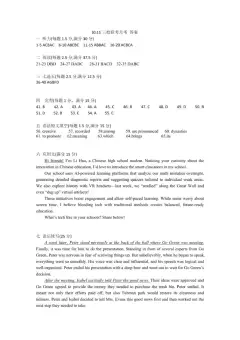
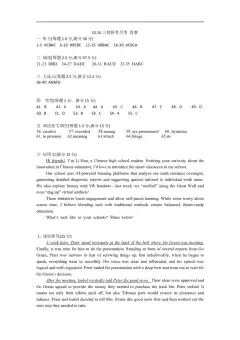
1-5 CBBCA 6-10ABBCB 11-15ACCAC 16-20ABCCA
第二部分 阅读理解 (共两节,满分50分)
第一节(共15小题: 每小题2.5分,满分375分)
21-23 ABC 24-27BBCC 28-31DCDC 32-35 ADDD
第二节 (共5小题; 每小题2.5分,满分12.5分)
36-40 EFGDC
第三部分 语言运用 (共两节,满分30分)
第一节 (共15小题,每小题1分,满分15分)
41-45 DDCBA 46-50DABCB 51-55 BCACD
第二节 (共15小题: 每小题1.5分,满分15分)
56. were crafted 57.as 58. Surprisingly 59. its 60.which
61.colored 62.creator 63. making 64.leaves 65. and
听力录音稿
这是无锡市2026年秋学期高三期中教学质量调研测试英语听力部分,该部分分为第一第二两节。注意,回答听力部分时,请先将答案标在试卷上,录音内容结束后,你将有两分钟的时间将试卷上的答案转涂到答题卡上。听力考试现在开始。
(停顿00'02")
第一节
听下面5段对话。每段对话后有一个小题,从题中所给的A、B、C三个选项中选出最佳选项。听完每段对话后,你都有10秒钟的时间来回答有关小题和阅读下一小题。每段对话读两遍。
(停顿00'05" 叮咚铃声)
Text 1
W: Would you like to go to the city museum with usthis weekend?
M: I'd love to, but I've promised to help at thecommunity center with my good friend.
W: OK. Maybe another time.
(停顿00'02" 重复)
(停顿00'10" 叮咚铃声)
Text 2
M: Lily, would you like to try this strawberry dessert? It tastes good.
W: I wish I could, but I'm cutting down on sugar tokeep fit.
M: Just a tiny piece. A small bite won't hurt,right? It's really delicious.
W: Alright, just a tiny bite. Thanks!
(停顿00'02" 重复)
(停顿00'10" 叮咚铃声)
Text 3
M: Jenny, you look a little tired. What's up?
W: I stayed up late last night preparing for the school speech contesttomorrow. I'm worried I'll forget my lines.
M: Take it easy. You've practised a lot, and I'msure you'll do a good job.
W: It's kind of you to say so. Thanks a lot.
(停顿00'02" 重复)
(停顿00'10" 叮咚铃声)
Text 4
W: Shall we meet at the school gate or the libraryhall before our group activity tomorrow?
M: Actually, neither. This time, we'll gather atthe community center instead.
W: OK. See you then.
(停顿00'02" 重复)
(停顿00'10" 叮咚铃声)
Text 5
W: Have you been to the new city park? I'm thinkingabout going there.
M: Yes, I went there last weekend.
W: How was it?
M: It's absolutely fantastic. The scenery is beautiful and the facilitiesthere are excellent. But it gets crowded on weekends.
(停顿00'02" 重复)
(停顿00'05" 叮咚铃声)
第一节到此结束。
第二节
听下面5段对话或独白。每段对话或独白后有几个小题,从题中所给的A、B、C三个选项中选出最佳选项。听每段对话或独白前,你将有时间阅读各个小题,每小题5秒钟;听完后,各小题将给出5秒钟的作答时间。每段对话或独白读两遍。
(叮咚铃声)
听第6段材料,回答第6、7题,现在你有10秒钟的时间来阅读这两个小题。
(停顿00'10" 叮咚铃声)
Text 6
M: Hi, Jane! You look upset. What's the matter?
W: I'm stuck with my cultural report.The deadline is in three days, and I can't find enough latest supporting materials. Most books in our library are outdated.
M: Oh, that's a common problem. Many students like using printed resources.Actually, official online databases areregularly updated and highly reliable nowadays.
W: I always thought online materials were messy andhard to access.
M: But these official databases are different. Alsothey're free for all the students in our school.
W: That's such useful information. Thanks a lot forthe advice!
(停顿00'02" 重复)
(停顿00'10" 叮咚铃声)
听第7段材料,回答第8至10题,现在你有15秒钟的时间来阅读这三个小题。
(停顿00'15" 叮咚铃声)
Text 7
W: Is your part-time park guide job related to yourmajor, computer engineering?
M: Not at all. I tried to get a major-related job, but failed. Then Iapplied for another two positions, environmental science and public education,but failed too.
W: What a pity! So you chose this park-guideposition?
M: Yes, I took this job not for pocket money, butfor work experience for my future career.
W: By the way, when will you start your full-timejob?
M: Not sure. They've approved my application andI'm waiting for the training course.
(停顿00'02" 重复)
(停顿00'15" 叮咚铃声)
听第8段材料,回答第11至13题,现在你有15秒钟的时间来阅读这三个小题。
(停顿00'15" 叮咚铃声)
Text 8
W: Hi, I'm Lisa, your new neighbour. I just moved into this apartment andlive next door. Could you spare a minute and give me some advice on furniture shopping?
M: Sure. What kind of furniture do you prefer?
W: I was going to buy a wooden bookshelf for mystudy, but now I'm not sure.
M: I wouldn't recommend a wooden one. It easilygets damp on rainy days. A metal shelf is much better.
W: Sounds good. And I will check the store's openhours in advance.
M: No need to worry about that if you go on weekends. The home goods storeis open all day on weekends. But downtown parking is terrible.
W: In that case, I'll take the bus there.
M: The bus ride takes too long. Why not take the light rail instead? It's much faster and moreconvenient.
W: That's good. Thanks for your advice!
(停顿00'15" 叮咚铃声)
听第9段材料,回答第14至16题,现在你有15秒钟的时间来阅读这三个小题。
(停顿00'15" 叮咚铃声)
Text 9
W: Hi, Tom. I really appreciate you taking time outto see me off. I wasn't expecting you'd make it today.
M: No trouble at all. So your assignment in Canada finally kicks off. Howlong are you planning to stay over there?
W: Roughly six months. I've got a post as a visiting teacher at a localhigh school. At first I was offered a one-year contract, but I negotiated toshorten it.
M: That sounds amazing! Be sure to keep me updatedon your life there. Don't let our contact fade away.
W: I won't. Listen, the broadcast is sayingboarding will begin in twenty minutes.
M: Then you'd better head for security check right away. It usually takeslonger than expected here. Take care and stay safe.
W: I will. Thanks a million for driving me all theway here.
(停顿00'02" 重复)
(停顿00'15" 叮咚铃声)
听第10段材料,回答第17至20题,现在你有20秒钟的时间来阅读这四个小题。
(停顿00'20" 叮咚铃声)
Text 10
M:
Hello, everyone! Let's review what we have done over the past few days. OnThursday, we set off early and took a 90-minute bus ride to the city's culturalscenic sites. We started our visit at the urban botanical garden, where aprofessional guide introduced local native plants. In the afternoon, we visitedthe city art museum to enjoy traditional local artworks.
On Friday morning, the second day of the tour, we went to the city wildlifezoo to learn about the living habits of protected animals. In the afternoon, wewalked along the riverbank and finished required field observation records.There happened to be a public environmental lecture nearby, so we stayed andlistened. It was delivered by a professional biologist by the river.
Today, Saturday, is the final day of our tour. We spent the whole morningat the city science museum, learning practical knowledge about ecological protection. We have just finished lunch, and all scheduled study and visiting activities are completed. We will go back to school soon. Thanks to all theteachers and parent volunteers for your support. This tour has effectively connected our classroom learning with real-world practice.
(停顿00'02" 重复)
(停顿00'26" 叮咚铃声)
第二节到此结束,现在你有两分钟的时间将试卷上的答案转涂到答题卡上。
(停顿02'00" 叮咚铃声)
听力测试到此结束。
使用说明
建议按 120 分钟限时完成后再对答案;逐题详解与试卷评价见同卷下篇《全卷详解与试卷评价》。原稿未附听力音频文件,录音稿可用于听后核对与跟读。
本套试卷 · 无水印洁净版下载
已把本卷整理为无水印可打印 Word 存档,内含完整试题、参考答案、两篇写作范文与听力录音稿,可下载保存或直接打印。
下载链接:https://share.weiyun.com/XE4XihWd
如链接失效,可在「知英坊」后台回复卷名获取。资料仅供学习交流,勿商用。
相关文档
- 江苏省无锡市2025-2026学年高三上学期期中教学质量调研测试英语试题
- 江苏省无锡市2025-2026学年高三上学期期中教学质量调研测试英语解析
- 江苏省无锡市2024-2025学年高三上学期期中教学质量调研测试英语试卷答案
- 江苏省无锡市2025-2026学年高三上学期期中教学质量调研测试语文答案
- 江苏省无锡市2025-2026学年高三上学期期中教学质量调研测试生物答案
- 江苏省无锡市2025-2026学年高三上学期期中教学质量调研测试数学答案
- 江苏省无锡市2025-2026学年高三上学期期中教学质量调研测试历史答案
- 江苏省无锡市2025-2026学年高三上学期期中教学质量调研测试生物试题
- 江苏省无锡市2025-2026学年高三上学期期中教学质量调研测试数学试题
- 江苏省无锡市2025-2026学年高三上学期期中教学质量调研测试政治试题
- 江苏省无锡市2025-2026学年高三上学期期中教学质量调研测试历史试题
- 江苏省无锡市2025-2026学年高三上学期期中教学质量调研测试地理试卷
- 江苏省无锡市2025-2026学年高三上学期期中教学质量调研测试化学试卷
- 江苏省无锡市2025-2026学年高三上学期期中教学质量调研测试物理试卷(含答案)
- 江苏省无锡市2025-2026学年高三上学期期中教学质量调研测试政治试卷(含答案)
- 江苏省无锡市三校联考2025-2026学年高三上学期10月月考英语试卷
- 江苏省无锡市三校联考2025-2026学年高三上学期10月月考英语试卷(另版)
- 江苏省无锡市三校联考2025-2026学年高三上学期10月月考英语答案
- 江苏省无锡市三校联考2025-2026学年高三上学期10月月考英语答案(另版)
- 江苏省无锡市2023-2024学年高三上学期期中教学质量调研测试英语试卷解析版
- 江苏省无锡市2025-2026学年高三上学期期中教学质量调研测试化学答案
- 江苏省无锡市2026届高三上学期期中教学质量检测语文试题(含答案)
- 江苏省无锡市四校2023-2024学年高三下学期期初学期调研英语答案
- 江苏省无锡市2024年秋季学期高三期终教学质量调研测试英语试题
- 江苏省无锡市2024年秋季学期高三期终教学质量调研测试英语解析
- 江苏省无锡市2024年秋季学期高三期终教学质量调研测试英语答案
- 江苏省无锡市2023-2024学年高三上学期期中教学质量调研测试英语试卷原卷版
- 2023至2024学年春学期期初学情调研试卷英语无锡四校
- 江苏省无锡市2024-2025学年高三上学期期中教学质量调研测历史答案
- 江苏省无锡市澄宜六校2024-2025学年高三上学期12月联考英语试卷
- 江苏无锡2026届高三上期末考试英语试题含答案
- 江苏省无锡市澄宜六校2024-2025学年高三上学期12月联考英语参考答案
- 无锡市三校联考2025-2026学年高三上学期10月月考英语答案
- 无锡市三校联考2025-2026学年高三上学期10月月考英语
- 江苏省无锡市2024年秋季学期高三期终教学质量调研测试历史试卷
- 江苏省无锡市三校联考2025-2026学年高三上学期10月月考数学试卷
- 江苏省无锡市三校联考2025-2026学年高三上学期10月月考数学试卷(另版)
- 江苏省无锡市三校联考2025-2026学年高三上学期10月月考地理试卷(2025年秋学期10月质量调研)
- 江苏省无锡市三校联考2025-2026学年高三上学期10月月考地理试卷(2025年秋学期10月质量调研)
- 江苏省无锡市2024年秋季学期高三期终教学质量调研测试语文试卷答案
- 江苏省无锡市2024年秋季学期高三期终教学质量调研测试语文试卷
- 江苏省无锡市2024年秋季学期高三期终教学质量调研测试数学试卷
- 江苏省无锡市三校联考2025-2026学年高三上学期10月月考数学答案
- 江苏省无锡市三校联考2025-2026学年高三上学期10月月考数学答案(另版)
- 高三政治试卷
- 江苏省无锡市2024届高三上学期期中教学质量调研测试数学试卷解析版
- 江苏省无锡市2024届高三上学期期中教学质量调研测试数学试卷原卷版
- 高三物理参考答案(副本3)
- 江苏省无锡市2024年秋季学期高三期终教学质量调研测试数学答案
- 江苏省无锡市2024年秋季学期高三期终教学质量调研测试数学试卷(含答案)
- 江苏省无锡市三校联考2025-2026学年高三上学期10月月考地理答案(2025年秋学期10月质量调研)
- 江苏省无锡市三校联考2025-2026学年高三上学期10月月考地理答案(2025年秋学期10月质量调研)
- 江苏省无锡市三校联考2025-2026学年高三上学期10月月考物理试卷
- 江苏省无锡市三校联考2025-2026学年高三上学期10月月考物理试卷(另版)
- 江苏省无锡市三校联考2025-2026学年高三上学期10月月考政治试卷
- 江苏省无锡市三校联考2025-2026学年高三上学期10月月考政治试卷(2025年秋学期10月质量调研)
- 2023至2024学年春学期期初学情调研高三地理试卷无锡四校
- 2023至2024学年春学期期初学情调研试卷化学无锡四校
- 2023至2024学年春学期期初学情调研试卷数学无锡四校
- 江苏省无锡市澄宜六校2024-2025学年高三上学期12月联考语文试卷
- 江苏省无锡市澄宜六校2024-2025学年高三上学期12月联考语文试卷全科版
- 江苏省无锡市澄宜六校2024-2025学年高三上学期12月联考生物试卷
- 江苏省无锡市澄宜六校2024-2025学年高三上学期12月联考政治试卷
- 江苏省无锡市澄宜六校2024-2025学年高三上学期12月联考历史试卷
- 江苏省无锡市2024-2025学年高三上学期期中教学质量调研测试物理试卷含答案
- 江苏省无锡市四校2023-2024学年高三下学期期初学情调研历史试卷
- 江苏省无锡市三校联考2025-2026学年高三上学期10月月考物理答案
- 江苏省无锡市三校联考2025-2026学年高三上学期10月月考物理答案(另版)
- 江苏省无锡市三校联考2025-2026学年高三上学期10月月考政治答案(2025年秋学期10月质量调研)
- 江苏省无锡市三校联考2025-2026学年高三上学期10月月考政治答案(2025年秋学期10月质量调研)
- 江苏省无锡市江阴市六校联考2025至2026学年高一上学期期中考试政治答案含答案卷
- 2024四校联考历史答案无锡
- 江苏省无锡市江阴市六校联考2025-2026学年高一上学期期中考试政治试题
- 江苏无锡江阴2022至2023高三上期末考试历史试卷
- 江苏省无锡市2024年秋季学期高三期终教学质量调研测试物理(含答案)
- 江苏省无锡市2024年秋季学期高三期终教学质量调研测试地理(含答案)
- 江苏省无锡市2024年秋季学期高三期终教学质量调研测试化学(含答案)
- 福建省全国名校联盟2026届高三上学期中考试英语试卷
- 江苏省无锡市2023-2024学年高三上学期期中地理试题解析版
- 江苏省无锡市澄宜六校2025-2026学年高三上学期10月学情调研英语试卷
- 江苏省无锡市2024年秋季学期高三期终教学质量调研测试生物试题
- 江苏省无锡市2024年秋季学期高三期终教学质量调研测试生物答案
- 江苏省无锡市2024年秋季学期高三期终教学质量调研测试政治试题(2025年1月)
- 江苏省无锡市2024年秋季学期高三期终教学质量调研测试政治答案
- 江苏省无锡市2024-2025学年高三上学期期中教学质量调研测试数学试题含答案
- 江苏省无锡市澄宜六校2024-2025学年高三上学期12月联考语文答案
- 江苏省无锡市澄宜六校2024-2025学年高三上学期12月联考生物答案
- 江苏省无锡市澄宜六校2024-2025学年高三上学期12月联考物理试题
- 江苏省无锡市澄宜六校2024-2025学年高三上学期12月联考物理参考答案
- 江苏省无锡市澄宜六校2024-2025学年高三上学期12月联考数学试题
- 江苏省无锡市澄宜六校2024-2025学年高三上学期12月联考数学答案
- 江苏省无锡市澄宜六校2024-2025学年高三上学期12月联考地理试题答案
- 江苏省无锡市澄宜六校2024-2025学年高三上学期12月联考地理试题
- 江苏省无锡市澄宜六校2024-2025学年高三上学期12月联考历史答案
- 江苏省无锡市澄宜六校2024-2025学年高三上学期12月联考化学试题
- 江苏无锡2025至2026高三上期末地理试题图片版含答案
- 江苏省无锡市2023-2024学年高三上学期期中教学质量调研测试生物试题解析版
- 江苏省无锡市2023-2024学年高三上学期期中地理试题原卷版
- 辽宁省实验中学2026届高三上学期期中考试英语试卷
- 无锡市三校联考2025-2026学年高三上学期10月月考语文答案