资讯 / 正文
重庆中考英语最新题型“概要补全”
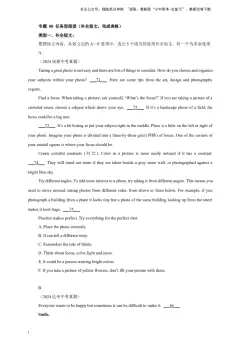
重庆中考英语最新题型“概要补全”概要补全是重庆地区中考英语的新题型,最先出现在2025年的中考,这一年开始也不再分A/B卷,统一为一卷。 以上是重庆地区2025年中考英语真题的概要补全,首年考得较难,2026年难度降低不少。尤其是第74题就特别灵活,不是原文现成的句子。实话实说,这种题我是做不好的,所以也还在不停地刷题和学习当中。 今天给大家分享的主要是对概要补全题型改写的一些思路,对于丰富我们的表达和提升语言能力很有帮助。同时也是我攻破概要补全题型的进步记录。 首先,说我做这个题的思路。其实,我也没有什么快速做题的方法,或者我的思路从来都不是追求这些。我就老老实实做题,看题看文章,进行一一比对,这就是我的思路。 当然,在这个思路下,有一个需要注意的圈画点。就是我们要习惯去给文段进行分段,无论是一整篇没有分段的,还是有分段的,我们需要注意的就是要明白段落层次。即使是分好段的,也要去搞明白what、why、how这些。即使是单讲一段,也要去分析层次,论点是什么,论据如何展开,如何在结语,这些,我觉得就是语文的基本能力。 先说下面要讲的试题来源,我是从学科网组卷网上进行的组卷,把重庆七上的几乎所有的概要补全题全部集合成册了,这一道题是给学生的课后练习之用。因为我课上给他讲了一套一中的题。 【难度】0.85 【来源】重庆市垫江中学校2025-2026学年七年级上学期10月月考英语试题 是去年七上的期中考试题: 阅读文章,用恰当的单词或短语补全概要,补全部分总词数不超过20词。
做题方法是先读概要,因为概要文字少,然后就一句一句对原文,找出文字的主要内容和结构层次。 概要1:This is Clark, a 13-year-old kind boy. 原文1:Hello, this is my friend Clark. He’s 13 years old. He’s tall and has black hair. He’s a kind boy. He greets everyone in the morning at school. 看得出来概要进行了省略,同时也进行了整合。 比如这里的“He’s 13 years old.”和“He’s a kind boy.”,就被整合进了前文的同位语当中——a 13-year-old kind boy. 省略的信息——“He greets everyone in the morning at school. ”(对前一句kind的具体阐述)和“He’s tall and has black hair. ”(对外貌的描写) 概要2:He 41 his time at school. 原文2:He likes school very much. It is so much fun. 这里就要做题了。答案经过比对就容易出来:likes/loves/enjoys均可。 概要3:His desk is 42 . 原文3:Look at his desk! It is clean and tidy. 做题:根据原文3-概要3我们不难得出,此处也是进行了原文1-概要1的整合——答案:clean and tidy。 那么从这样的一个过程我们能体会到什么呢?主要就是代词的指代作用。原文3第二个开头的主语It就指代其前句子里的his desk。 当然这里进行了省略——“Look at...”这个看的信息给省略了,直接概要成His desk 怎么样了。 概要4:There’s 43 with keys, books and a red pencil box in it. 原文4: There is a blue schoolbag on the desk. He puts many things in it. There are some keys, an English book, a math book and a pencil box. 读到这里,我们就能感知到这里是在讲桌面的情况了。答案不难看出: a blue schoolbag 。 为了确证,或者为了弄明白出题人是如何进行整合的,我们是一定要去检查和学习的。 检查概要4——“There’s” “in it”。原文4:“There is a blue schoolbag on the desk. He puts many things in it. ” 加粗部分字体是与之对应的。 在看概要4中段——“with keys, books and a red pencil box”,对应原文4——There are some keys, an English book, a math book and a pencil box. 再进行原文4的整体理解:“There is a blue schoolbag on the desk. He puts many things in it. ” 与“There are some keys, an English book, a math book and a pencil box. ”,不难发现这里面的many things——some keys, an English book, a math book and a pencil box形成对应关系。 因而我们就窥探到了出题人的改写整合或概要思路: 首先出题人将原文4前两句——“There is a blue schoolbag on the desk. He puts many things in it.”进行整合为一句:“There is a blue schoolbag with many things in it.” 这个句子其实极妙,用with+宾语+宾补的复合结构,把后面那个句子融进了前面那个句子,变成了一个句子。 继续代入前面提到的:many things——some keys, an English book, a math book and a pencil box。 故:There’s a blue schoolbagwith keys, books and a red pencil box in it. 同时我还要特别指出的还是代词it的指代,不管是原文4还是概要4的it,都是指前面的a blue schoolbag。 所以这里的检查,我们也可以把it的指代功能用上,先看原文4的it:There is a blue schoolbag on the desk. He puts many things in it. 别看小小的这个it指代,里面藏着很多学问呢。以前我看翻译,看翻译的理论,会讲到句子主题和主语的关系问题,这里的主题和主语是一致的,前面的那个there be句子里的主语就是a blue schoolbag,也是这个句子的主题,那么后文提到的内容其实也是顺着这个主题往后延展——He puts many things in the blue schoolbag.——He puts many things in it. 概要4:There’s 43 with keys, books and a red pencil box in it. 做这个题的思路也可以跟着it指代作用去做。这里面的it,我们就会去想了,具体指代什么呢?那么就是43 这个空所要填的内容了。 据原文4可知,keys, books and a red pencil box——some keys, an English book, a math book and a pencil box形成对应。 原文4:He puts many things in it. There are some keys, an English book, a math book and a pencil box. —— There are some keys, an English book, a math book and a pencil box in it. 据前文可知:There is a blue schoolbag on the desk. He puts many things (in it). 可得:There are some keys, an English book, a math book and a pencil box in a blue schoolbag. 概要4的43 所缺内容,即为 a blue schoolbag。那么整个逻辑展开就是:There is a blue schoolbag on the desk. There are some keys, an English book, a math book and a pencil box in the blue schoolbag. 合为一句即为:There is a blue schoolbag on the desk withsome keys, an English book, a math book and a pencil box in the blue schoolbag. 再改为:There is a blue schoolbag with keys, books and a red pencil box in it. 可以。不过这里出了一个问题——a red pencil box,这里的red从何而来呢? 就要看后面一句:His pencil box is red. 这里采用的方法也是与前面概要1类似。 因此我们要调整一下: 概要4:There’s 43 with keys, books and a red pencil box in it. 原文4:There is a blue schoolbag on the desk. He puts many things in it. There are some keys, an English book, a math book and a pencil box. His pencil box is red. 概要5:There are pens and an eraser in the box. 原文5:(His pencil box is red. )He has four pens and a white eraser in it. 进一步改原文5为:He has four pens and a white eraser in the box. 接着来比对概要5:There are pens and an eraser in the box. 你会发现“has”和“There are”都表示“有”的意思,当然实质表达的含义有所区别:前者表达“所属”关系,前面有主语;后者表达“存在”问题,因为含有be动词——本身表达存在的含义。 但在中文里我们都说成“有”。 因此,我们在使用“have”和“there be”的时候,就有注意区分。 我的总结是: 无头there be 有头have 这两个都表示“有”的概念。也就是我们在表达的过程中需要注意区分的,同时这也是我们学科英语学习的一个考点。 那么这里涉及的东西就很多了。牵涉到我们对自身的英语学科教学的批判。因为看到网上很多自媒体博主就说,我们的英语教材就有问题,根本不是纯正的英语,都是中国人编的,或者翻译我们自己的一些汉语作品成英语文章然后又让大家来学习,这样一种中国式英语。 这里面牵涉的内容很多。其实本质上牵涉的应该是翻译和语言本质的问题。 实事求是来讲,我们学科英语的问题必然存在,早期来讲,大家弹得最多的就是聋哑英语,不会与人实际进行交流,这其实很多部分也是语言环境的所限。 其实,近来大家谈论得比较多的是,我们要用英语讲中国故事,那么是不是首先要学习英语本身,先去学习原汁原味的英语,包括英语本土的文化、历史、作品等? 也就是关于如何学、学什么内容,这是争议较多的两种思路——一种思路是,现在教材的思路是先要会熟悉中国本土的文化、故事、成语这些如何用英语来表达,也就是这就是在学英语,我们学的英语就是这些内容;另一种思路则是,我们要学原汁原味的,真正的英语表达,是本土作品、文化等——这是学英语。 我在这里无法做出答复,我也没能形成自己的判断。 不过实事求是,英语并非我们的母语,作为一门外语,我们的学习必然不同于英语母语学习者,我觉得这层跨文化背景是必须要明确的。 就实际的写作或者表达来讲,我们是抛不开我们语言本身的,汉语帮助我们建立概念、表达思想、传递意图,这些是本身就存在的。 比如,这里我就要表达“有”这个概念,你是要进行一层语言代码的转换,就会把我们之前学到的“有”的两个表达用起来,也就是为我们的“概念”找到“载体”。 这一层概念的交递,也没有离开前置区的汉语作用呢? 这是一种辅助,或者也是一份备案,那么其意义和价值或许比只有单本更高。 当然,你说学习英语恰恰就是你看重的所谓“辅助”、“备案”这些让你不快,让你有掣肘,甚至干扰你,这也是有的。 你甚至会强调这一点,正是因为我们汉语母语的干扰,所以你学不好英语,因为你拿汉语来学英语,因此,我们学校就会拿出好多好多同义辨析,而这些恰好是因为汉语中介翻译中才会出现的问题和情况,造成越学越多、越学越学不完——而这些在英语本身的学习中是不存在的。 比如:“打开”:open /turn on open 多指物理开合(门、盒子);turn on 是启动电器、设备。英语本来就按对象分,只是中文都叫 “打开”。 也就是讲我们很多同义辨析都是无味的,是没有意义的,是由于汉语翻译介入造成的干扰。 所以要主张去汉语化,学习英语本身。 那么这里就主张把汉语弱化,使其负面影响,“损之又损,以至于无为”。 我们真的能做到吗? 追其根本,就是这个汉语背景还要不要? 就考试而言,就我们现在学校英语学习内容而言,就学习方式和学习背景而言,汉语的去除显然是不可能的。 我们会这么考,这里的概要补全不就出来了吗? 两个“有”。原文5——概要5的转换体现了出题人这一思路(无头there be,有头have),主题人也是这么编制题目的。 我能理解,我们这种汉语学英语的方式,是因为我们需要汉语这样一根拐杖,支撑我们去理解、吸收和运用英语知识。 不过还是实事求是,我们讲英语、写英语、读英语、听英语的时候,还都离不开汉语语境。它像一个无形的背景墙,我们在学英语、用英语,但是这个背景墙又无处无时不在。 ...... 概要6:He also 44 and drinks milk from it. 原文6:On his desk, you can also see his bottle. It is blue. He drinks milk from it every morning, so he’s really tall. 这是整个概要补全最难的一题,当然我们可以根据原文6当中的“On his desk, you can also see his bottle.”,并且结合原文5——概要5的转换得知两个“有”的转换: “概要5:There are pens and an eraser in the box. 原文5:(His pencil box is red. )He has four pens and a white eraser in it. 进一步改原文5为:He has four pens and a white eraser in the box. 接着来比对概要5:There are pens and an eraser in the box.” 当然原文1中也有:“ He’s tall and has black hair. ” 原文4: There is a blue schoolbag on the desk. He puts many things in it. There are some keys, an English book, a math book and a pencil box. His pencil box is red. 我们可以看出来出题人的思路,在选材文章的时候,就已经反复横跳“there be”和“have”两种表达了。 自然在概要题里面,也会出现这两种表达的交替出现,甚至相互转换。 以原文6——概要6为例,原文6当中的“On his desk, you can also see his bottle.”,根据意思,结合概要6句子主语的转换,我们很容易想到就是“他也有一个瓶子”的意思。 这是意思整体上的关联,相当于叙述角度的变换——由主语改变带动。 那么这题也就做起了。 但是,我想进一步就原文“there be”的运用进行一层转换,因为前面都是在描述物品的方位,提到了his desk,接着描述桌子上面有什么:“There is a blue schoolbag on the desk.” ——引出 a blue schoolbag ,接着原文写道“He puts many things in it.”,many things是什么呢?“There are some keys, an English book, a math book and a pencil box.”——讲的就是schoolbag里有的东西。 原文就是循着这样的逻辑,讲到了pencil box——先说颜色“His pencil box is red. ”,接着讲pencil box里有什么,这里原文没有再重复用“there be”,而是采用的“have”——“He has four pens and a white eraser in it. ”。 于是,我想到的就是把这个句子改成“there be”: “On his desk, you can also see his bottle.” There is also a bottle on his desk. 再对应 “概要6:He also 44 and drinks milk from it. 原文5:(His pencil box is red. )He has four pens and a white eraser in it. 当然有点沾边的句子:He’s tall and has black hair. ” 不难得出:He also has a botttle on his desk. 题44就可以填上has a bottle了,这里就没有要额外信息on his desk了。填一组词块就行。 当然这里还会涉及also的用法——实前be后。后续可以跟同学补充。 最后,我们还是要把原文6——概要6的转换说一遍(与原文4——概要4的转换类似): 会涉及到检查的问题——“He also has a bottle and drinks milk from it.” 也就是这里的it指代的是前面的a bottle。 看原文 原文6:On his desk, you can also see his bottle. It is blue. He drinks milk from it every morning, so he’s really tall. 前面我们已经转了:On his desk, you can also see his bottle.(原文) There is also a bottle on his desk. He also has a botttle on his desk. 看概要 概要6:He also 44 and drinks milk from it. 于是,删掉on his desk,得出所填为has a botttle。 再对比原文6发现,这里还有“It is blue.”,跟原文4——概要4转换中的red类似,我们把blue这个颜色词也放进去,于是答案变成了——has a (blue) botttle。 当然这里的blue,答案给的是括号,也就是不做强行的要求,一定非要要写上。 答案宽松了。 然后我们要看后面and drinks milk from it,它是如何来的呢?and是并列,那么我们可以看出并列的是两个动词has和drinks,那么这里就实现了并列结构。是没有问题的。 我们看原句子如何变更成的并列结构: He also has a bottle(概要)——On his desk, you can also see his bottle.(原文) He also has a blue bottle(概要)——On his desk, you can also see his bottle. It is blue.(原文) and drinks milk from it(概要)——He drinks milk from it every morning, so he’s really tall.(原文) 我们需要明白和对比其中的转换过程,只有实打实看见了,其转换的由来,我们便能更好地掌握该题型,作为老师,也可以自己去出题。 我们这里总结起来就是开篇提到的——把原文进行概要,需要省略和整合。其中特别提到了代词的指代功能,可以作为我们做题和核查的重要依据,同时我们前期的段落层次划分也很重要,让我们能读懂文章和概要——这里需要注重逻辑关系衔接词的运用。 最后总结,这道题就是我们所说的概要补全的初级版,还没有涉及转换表达的情况,因为没有设置——“不能照抄原文连续超3个词”的要求。 而且难度指数是0.85,是较容易的题。 不过就是这些基础题、简单题,却是很有价值、很有必要把它的底层逻辑拆解清楚——把地基打牢,基本的底层运行弄顺畅,到了高阶段就会体现出来前期所做工夫的价值和意义了。
Hello, this is my friend Clark. He’s 13 years old. He’s tall and has black hair. He’s a kind boy. He greets everyone in the morning at school. He likes school very much. It is so much fun. Look at his desk! It is clean and tidy. There is a blue schoolbag on the desk. He puts many things in it. There are some keys, an English book, a math book and a pencil box. His pencil box is red. He has four pens and a white eraser in it. On his desk, you can also see his bottle. It is blue. He drinks milk from it every morning, so he’s really tall.
相关文档
- 题型七概要写作(通用版)解析版老高考二轮复习
- 2024中考英语二轮复习题型模拟训练09任务型阅读:补全句子、补全短文、信息摘录和多任务混合(解析版)
- 题型七概要写作(通用版)原卷版老高考二轮复习
- 题型七概要写作(通用版)原卷版老高考二轮复习
- 2023高考英语二轮复习重难考点新题型突破题型七概要写作通用版解析版2863110
- 2024中考英语二轮复习题型模拟训练09任务型阅读:补全句子、补全短文、信息摘录和多任务混合(原卷版)
- 2026年高考英语专项复习:专题11概要写作讲义·题型突破之难题易解(题型拆解+方法落地+分层训练)
- 补全短文(表格)题型补全短文(表格)题型-(译林版三起)
- 2026届高考英语核心语法概要Lesson9简单句讲义(英语专项复习)
- 2026届高考英语核心语法概要Lesson3语态讲义(高考一二三轮复习)
- 2026届高考英语核心语法概要Lesson6名词和数词讲义(英语专项复习)
- 2026届高考英语核心语法概要Lesson5非谓语动词讲义(高考一二三轮复习)
- 2026届高考英语核心语法概要Lesson2动词的时态讲义(高考一二三轮复习)
- 2026届高考英语核心语法概要Lesson10并列句讲义(高考一二三轮复习)
- 2026届高考英语核心语法概要Lesson4虚拟语气讲义(高考一二三轮复习)
- 2026届高考英语核心语法概要Lesson11主从复合句讲义(高考一二三轮复习)
- 人教版九年级全册英语专题06补全对话教师版专项练习
- 人教版九年级全册英语专题06补全对话学生版专项练习
- 2026届高考英语核心语法概要 Lesson7形容词和副词讲义
- 2026届高考英语核心语法概要Lesson1动词的分类和变化规则讲义(高考一二三轮复习)
- 2024中考英语二轮复习题型模拟训练17补全对话(解析版)
- 2026届高考英语核心语法概要 高中核心语法Lesson8代词、介词、连词和冠词讲义
- 专题17补全对话(解析版)
- 备考2026年中考英语一轮复习卷补全对话含答案解析其一
- 备考2026年中考英语一轮复习卷补全对话含答案解析其二
- 2024中考英语二轮复习题型模拟训练17补全对话(原卷版)
- 专题17补全对话(原卷版)
- 2024中考英语一轮复习讲练测任务型阅读之补全句子补全短文信息摘录和多任务混合第05讲讲义解析版(全国通用)
- 2024中考英语一轮复习讲练测任务型阅读之补全句子补全短文信息摘录和多任务混合第05讲讲义原卷版(全国通用)
- 2024中考英语一轮复习讲练测任务型阅读之补全句子补全短文信息摘录和多任务混合第05讲练习解析版(全国通用)
- 2024中考英语一轮复习讲练测任务型阅读之补全句子补全短文信息摘录和多任务混合第05讲练习原卷版(全国通用)
- 专练07完形填空(10空)+阅读理解+补全对话+任务型阅读+短文填空(题型组合练)(解析版)
- 专练07完形填空(10空)+阅读理解+补全对话+任务型阅读+短文填空(题型组合练)(原卷版)
- 2026年中考英语一轮复习补全对话(含答案解析)
- 2026年中考英语一轮复习补全对话(含答案解析)
- 人教版九年级全册英语专题15选择句子补全短文五选五教师版专项练习
- 人教版九年级全册英语专题15选择句子补全短文五选五学生版专项练习
- 人教版九年级全册英语专题16选择句子补全短文七选五教师版专项练习
- 人教版九年级全册英语专题16选择句子补全短文七选五学生版专项练习
- 专练08完形填空(10空)+补全对话+阅读理解+任务型阅读(题型组合练)(解析版)
- 专练08完形填空(10空)+补全对话+阅读理解+任务型阅读(题型组合练)(原卷版)
- 2023年高考英语概要写作技巧解析版
- 2024中考英语专项复习补全对话第18讲原卷版
- 2023年高考英语概要写作技巧原卷版
- 2024中考英语专项复习补全对话第18讲解析版
- 2027上海华育中学中考英语新题型训练(综合)
- 上海华育中学中考英语新题型训练翻译练习本
- 2027上海华育中学中考英语新题型训练·情景对话练习本(2026秋初中教辅)
- 初中英语英语(重庆卷)(答题卡)人教版2025年
- 2027上海华育中学中考英语新题型训练读后续写练习本
- 2027上海华育中学中考英语新题型训练(任务型阅读练习本)
- 2025年中考押题预测卷数学重庆卷新题型考试版
- 专题43概要写作高分技巧与演练(解析版)
- 专题38书面表达之读写任务及概要写作-2023年高考英语一轮复习《考点•题型•技巧》精讲与精练高分突破系列(通用)(解析版)
- 专题38书面表达之读写任务及概要写作-2023年高考英语一轮复习《考点•题型•技巧》精讲与精练高分突破系列(通用)(原卷版)
- 2025年中考押题预测卷数学重庆卷新题型考试版A3
- 2025年中考押题预测卷数学重庆卷新题型答题卡其一
- 2025年中考押题预测卷数学重庆卷新题型答题卡其二
- 2025年中考押题预测卷数学重庆卷新题型全解全析
- 备考2025年中考英语真题分类汇编专题05补全对话全国版含答案
- 专题33其它题型任务型阅读写作概要阅读表达解析卷英语分项汇编
- 近十年高考英语真题分项汇编专题33其它题型任务型阅读写作概要阅读表达(学生卷)
- 专题43概要写作高分技巧与演练(原卷版)
- 好题汇编三年2023至2025中考英语真题分类汇编专题39补全对话考点2填空型全国通用解析版
- 好题汇编三年2023至2025中考英语真题分类汇编专题38补全对话考点1选择型全国通用解析版
- 2025年中考第三次模拟考试数学重庆卷新题型考试版
- 好题汇编三年2023至2025中考英语真题分类汇编专题39补全对话考点2填空型全国通用原卷版
- 好题汇编三年2023至2025中考英语真题分类汇编专题38补全对话考点1选择型全国通用原卷版
- 专题05补全对话备考20252024年中考英语真题分类汇编全国版(含答案)
- 2025年高考英语抢押秘籍(安徽专用)专项复习:猜押08概要写作(教师版)
- 2025年中考第二次全真模拟题数学重庆卷新题型考试版
- 2025年中考第三次模拟考试数学重庆卷新题型考试版A3
- 2025年中考第二次全真模拟题数学重庆卷新题型答题卡其一
- 2025年中考第二次全真模拟题数学重庆卷新题型答题卡其二
- 2025年中考第三次模拟考试数学重庆卷新题型答题卡
- 2025年中考第三次模拟考试数学重庆卷新题型全解全析
- 专题10补全对话(讲练)(解析版)
- 2024年中考英语真题分类汇编08任务型阅读(补全短文,完成表格)--解析版
- 2024年中考英语真题分类汇编08任务型阅读(补全短文,完成表格)--原卷版
- 5·3B·专题十三阅读补全(七选五)
- 5·3B·专题十三 阅读补全(七选五)(试题word)·专题十三阅读补全(七选五)(试题word)
- 专项训练之34
- 英语专题06补全对话(学生版)
- 2025年中考第二次全真模拟题数学重庆卷新题型考试版A3
- 2025年中考第二次全真模拟题数学重庆卷新题型参考答案及评分标准
- 2025年中考第三次模拟考试数学重庆卷新题型参考答案及评分标准
- 2025年中考第二次全真模拟题数学重庆卷新题型全解全析
- 中考英语专题38补全对话考点1选择型全国通用(解析版)
- 中考英语补全对话考点2填空型解析版(全国通用)
- 初中英语八年级重庆期末考试教师版人教版2025年
- 初中英语八年级重庆期末考试学生版人教版2025年
- 2025年高考英语抢押秘籍 黑吉辽蒙专用 专项复习 猜押08概要写作 学生版
- 学易金卷:十年(2014-2023)高考真题英语分项汇编(全国通用)专题33 其它题型(任务型阅读+写作概要+阅读表达)解析版
- 高考英语真题分项汇编 专题33 其它题型(任务型阅读+写作概要+阅读表达)学生版 十年(2014-2023)全国通用 学易金卷
- 专题10补全对话(讲练)(原卷版)
- 专题38补全对话考点1选择型(全国通用)(原卷版)
- 中考英语补全对话考点2填空型原卷版(全国通用)
- 专项训练之35
- 英语专题06补全对话(教师版)
- 2025年高考英语抢押秘籍(黑吉辽蒙专用)猜押08 概要写作 教师版