

如果考古学家挖出一块完整头骨,至少还能看看它长什么样。但如果挖出来的是 60,000 多块碎骨头呢?其中绝大部分来自各种动物,真正的人类化石也许只藏着三四块;更麻烦的是,十几万年过去以后,很多骨头已经碎到仅凭形状根本认不出来。2026 年,中国科学院团队在云南鹤庆蝙蝠洞(Bianfu Cave)面对的就是这个问题。他们没有给 6 万多块骨头全部做昂贵的分子检测,而是先 look at the bones,再 look at the proteins——最终,从数万块碎骨中锁定出三块古人类骨骼,并结合两颗牙齿,通过古蛋白质证据确认:它们属于丹尼索瓦人,其中还有世界上第一块被确认的丹尼索瓦人桡骨。这项研究真正有意思的不是"发现了一块古人类骨头",而是:How do scientists know what a fragment of bone actually is?
发表于:9 September 2026
DOI:10.1038/s41586-026-10976-9
研究团队在云南蝙蝠洞遗址,从 6 万多件骨骼碎片中先通过形态筛选缩小范围,再使用 ZooMS 和更深入的古蛋白质组分析,最终确认多件丹尼索瓦人遗骸,年代约为距今 16.7 万—13.4 万年。这一发现填补了丹尼索瓦人在中国西南地区的化石证据空白。
识骨寻踪——古蛋白质组学新策略从万块碎骨中识别出中国西南地区首例丹尼索瓦骨骼。
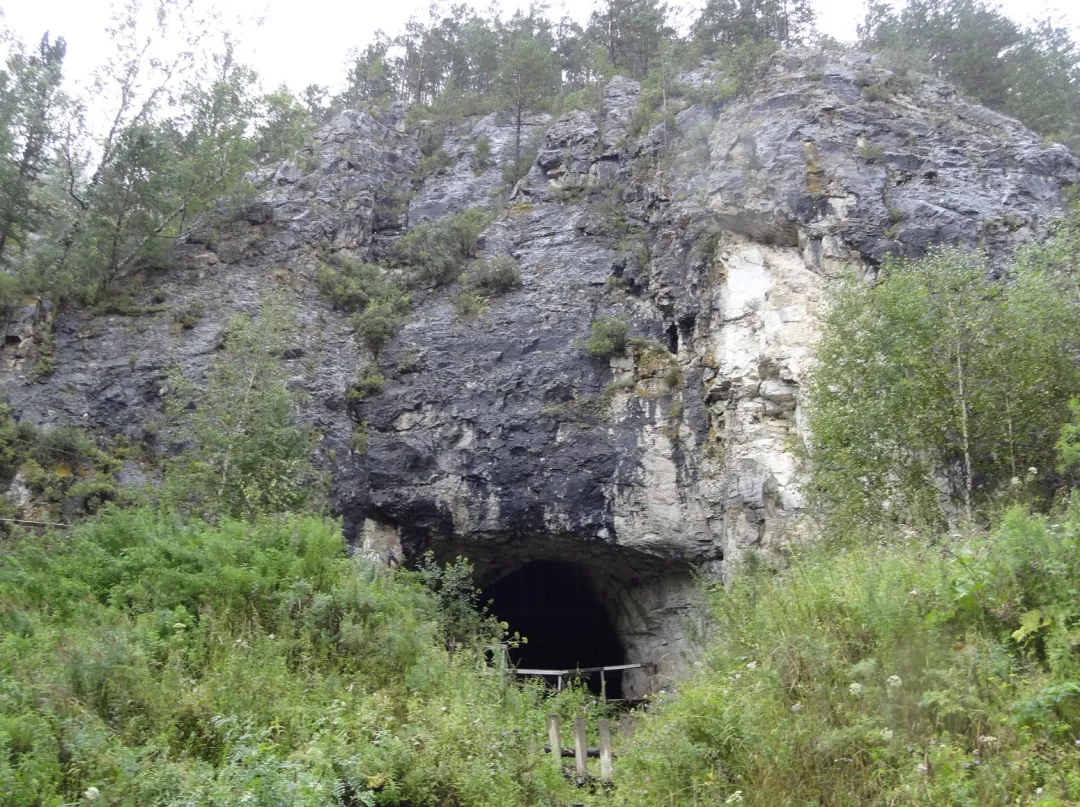
When archaeologists excavate an ancient site, the most difficult problem is sometimes not finding bones but identifying them.
At Bianfu Cave in southwestern China, researchers recovered more than 60,000 bone fragments. Most were badly broken, and many lacked the anatomical features normally used to tell one species from another.
Testing every fragment with advanced molecular techniques would have been slow and expensive. So researchers developed a two-step strategy.
First, they examined the shapes of the fragments and selected 22 that looked most likely to come from ancient humans. They then used a technique known as ZooMS, which identifies animals by analysing characteristic proteins preserved in bone.
Three of the 22 fragments were identified as belonging to the human genus.
The researchers did not stop there. To determine exactly which ancient human population the bones belonged to, they carried out more detailed protein analysis. They also examined two human teeth discovered at the site.
All five samples contained molecular features associated with Denisovans, an extinct group of ancient humans first identified in Siberia in 2010. The fossils were between roughly 134,000 and 167,000 years old.
The discovery is important partly because Denisovan fossils are extremely rare. Genetic evidence suggests that Denisovans once lived across large areas of Asia, yet for years scientists had only a small number of physical remains from which to reconstruct their appearance and way of life.
One of the newly identified bones was especially valuable. It was part of a radius, one of the two long bones of the forearm. It is the first confirmed Denisovan radius ever found.
Its shape contained an unusual mixture of features. Some aspects resembled Neanderthal bones, whereas others were closer to those of modern humans. Researchers therefore describe it as showing a "mosaic" pattern rather than fitting neatly into either group.
The site also provides information beyond anatomy. A separate study of Bianfu Cave found more than 1,300 stone tools, as well as bone tools and animal remains. Cut marks and broken bones suggest that the people living there hunted and processed animals such as deer and large cattle-like species. Evidence from different archaeological layers indicates that humans used the area repeatedly over a very long period, even while the climate changed.
But the researchers remain cautious. A few bones cannot reveal everything about Denisovans. The forearm fragment may tell scientists something about the body of one individual or population, but it cannot prove that all Denisovans had exactly the same physical characteristics.
The larger importance of the discovery may therefore lie in the method itself. Instead of waiting for archaeologists to uncover an obvious human skull or an intact skeleton, scientists can search through huge collections of unidentified fragments and use preserved molecules to find evidence that would otherwise remain hidden.
Sometimes, an ancient bone does not have to look human to tell a human story.
考古里 find a bone 和 identify a bone 完全是两件事。蝙蝠洞早就挖出了 6 万多块碎骨,真正困难的是:哪几块属于古人类?所以研究路线不是"挖到骨头 → 完事",而是这条证据链本身——它就是全文最值得考的东西:
↓ morphological screening 形态筛选
22 块候选
↓ ZooMS
3 块古人类骨骼
↓ deeper proteomic analysis 更深入的蛋白质分析
Denisovan 丹尼索瓦人
ZooMS 本身已经相对快速、成本较低,但是 60,000+ 仍然太多;而以往类似遗址使用 ZooMS 寻找古人类骨骼时,命中率甚至可能低于 0.1%。所以:先筛选、再检测,会大幅提高效率。
全文不需要记 Zooarchaeology by Mass Spectrometry 这个全称,你只需要理解:它利用骨头里保存下来的 protein fingerprints(蛋白质指纹),帮助判断这块骨头来自哪一类动物。
因为 human genus 不等于 Denisovan。确认"这是一块古人类骨头"只是第一步,还必须继续问:Which ancient human group? 研究人员进一步检查蛋白质中的 amino-acid variants,并进行系统发育分析。五件样本都携带支持丹尼索瓦人身份的分子特征,因此不同证据指向同一结论。
6 万多块 → 22 块候选 → 3 块古人类骨头。这些数字不是用来考计算,它们是在说明:screening dramatically narrowed the search space。这也是为什么这种方法未来可能被用于其他 large collections of unidentified bone fragments。
来源:commons.wikimedia.org(File:Xiahe mandible.jpg)
以前丹尼索瓦人的牙齿、下颌骨、部分头骨越来越多,但身体其他部分的化石仍然非常少。因此,这块 forearm bone 第一次给研究人员提供了丹尼索瓦人颅骨以下身体形态的重要直接证据。
研究发现这块桡骨有些特征接近 Neanderthals,有些又更接近 modern humans,研究人员因此使用 mosaic 这个词。但请注意:不能立刻推出 All Denisovans had this exact anatomy,因为目前样本仍然太少。研究团队自己也明确指出,要真正了解丹尼索瓦人内部的形态多样性,还需要更多长骨和其他化石。
平时 mosaic 是马赛克、拼图;科学文章里 a mosaic of features 意思是同时呈现来自不同模式的特征组合。这里:some features → Neanderthal-like,others → more modern-human-like。
真正改变考古工作的可能不是"我们以后会挖到更多完整头骨",而是:很多已经躺在博物馆和考古仓库里的 unidentified fragments 可能本身就藏着重要信息。以前看起来"这就是一块不知道什么动物的碎骨头",现在利用形态筛选 + 分子技术,可能重新问:Whose bone was it?
2. protein evidence ≠ complete DNA genome(蛋白质和 DNA 不是一个东西)
3. first confirmed Denisovan radius ≠ first Denisovan fossil(完全不是)
4. mosaic features ≠ half Neanderthal, half modern human(形态特征相似不能这样理解)
5. one specimen shows X ≠ all Denisovans had X
6. method improves identification ≠ method answers every archaeological question
2. identify — identify a specimen,鉴定。
3. screen — screen thousands of samples,初步筛查。
4. preserve — preserved proteins,被保存下来的。
5. molecular — molecular evidence,分子证据。
6. anatomical — anatomical features,解剖结构特征。
7. specimen — fossil specimen,标本、样本。
8. mosaic — a mosaic of features,多种特征的组合。
3 分钟 — 讲一个概念:Hominin ≠ Denisovan。前者范围大,后者是具体人群。这是全文最容易被学生读过去的地方。
5 分钟 — 做 Q4、Q6、Q8,分别训练:数字作用、外推边界、研究意义。结束。
难度参考:高考 D 篇—考研英语阅读
核心题型:研究方法题、数字作用题、证据层级题、例子作用题、熟词生义、结论边界、研究意义推断、最佳标题题
identify as human → identify as Denisovan
protein → DNA
first radius → first fossil
one specimen → entire population
suggest → prove
similar to → identical to
DOI:10.1038/s41586-026-10976-9
研究通过形态学预筛、ZooMS、蛋白质组测序和系统发育分析,从云南蝙蝠洞大量碎骨中确认多件丹尼索瓦人化石,其中包括目前唯一得到分子证据确认的丹尼索瓦人桡骨。
中国科学院古脊椎动物与古人类研究所 — 识骨寻踪——古蛋白质组学新策略从万块碎骨中识别出中国西南地区首例丹尼索瓦骨骼
ivpp.cas.cn/xwdt/kyjz/202609/t20260907_8279088.html
研究团队从 6 万多件骨片中先筛选出 22 件疑似人骨,再通过 ZooMS 确认 3 件属于人属;随后结合另外两颗牙齿,利用更深入的蛋白质证据确认五件样本的丹尼索瓦人身份。
延伸研究:同一遗址的另一项 2026 年 Nature 研究进一步结合石器、骨器、动物遗骸和环境证据,发现蝙蝠洞从约 19 万年至 7 万年前存在长期人类活动记录;1300 多件石器以及鹿、牛类动物遗骸上的切割和敲击痕迹,为研究这一人群的狩猎和环境适应提供了更完整背景。(DOI:10.1038/s41586-026-10997-4)
主体阅读材料为根据上述研究整理改写的高考化版本,非原文全文。
One method ≠ complete evidence
One specimen ≠ an entire population
科学阅读里经常出现:研究人员不是突然"发现了答案",而是一步一步把可能性缩小:screen → test → compare → confirm。所以高考 D 篇或考研阅读看到一串实验方法时,不要急着背技术名词,先问一句:What question does each step answer? 把这个问题弄明白,整篇文章的证据链基本就读懂了。
下期外刊精读,继续带你押考点


