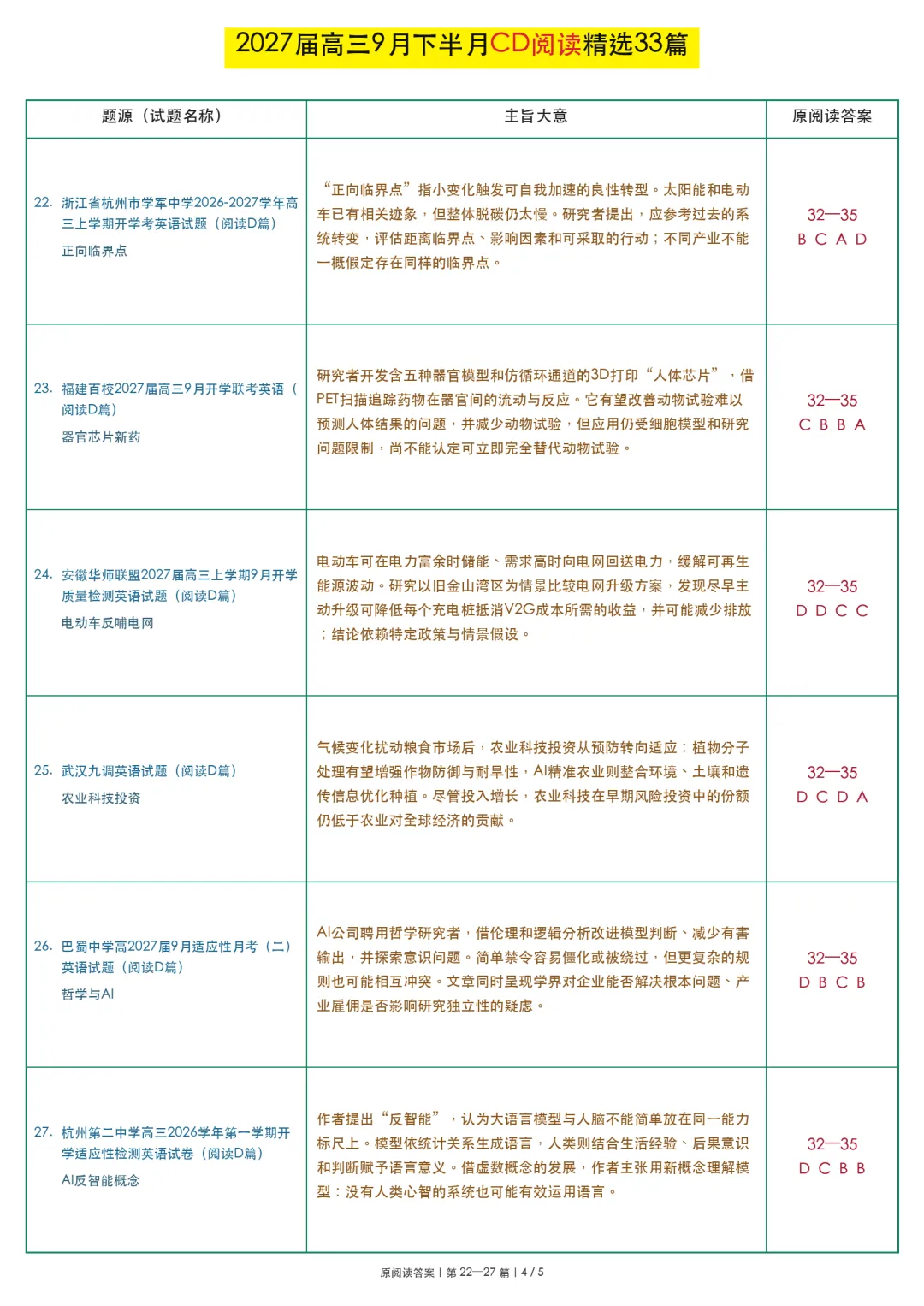
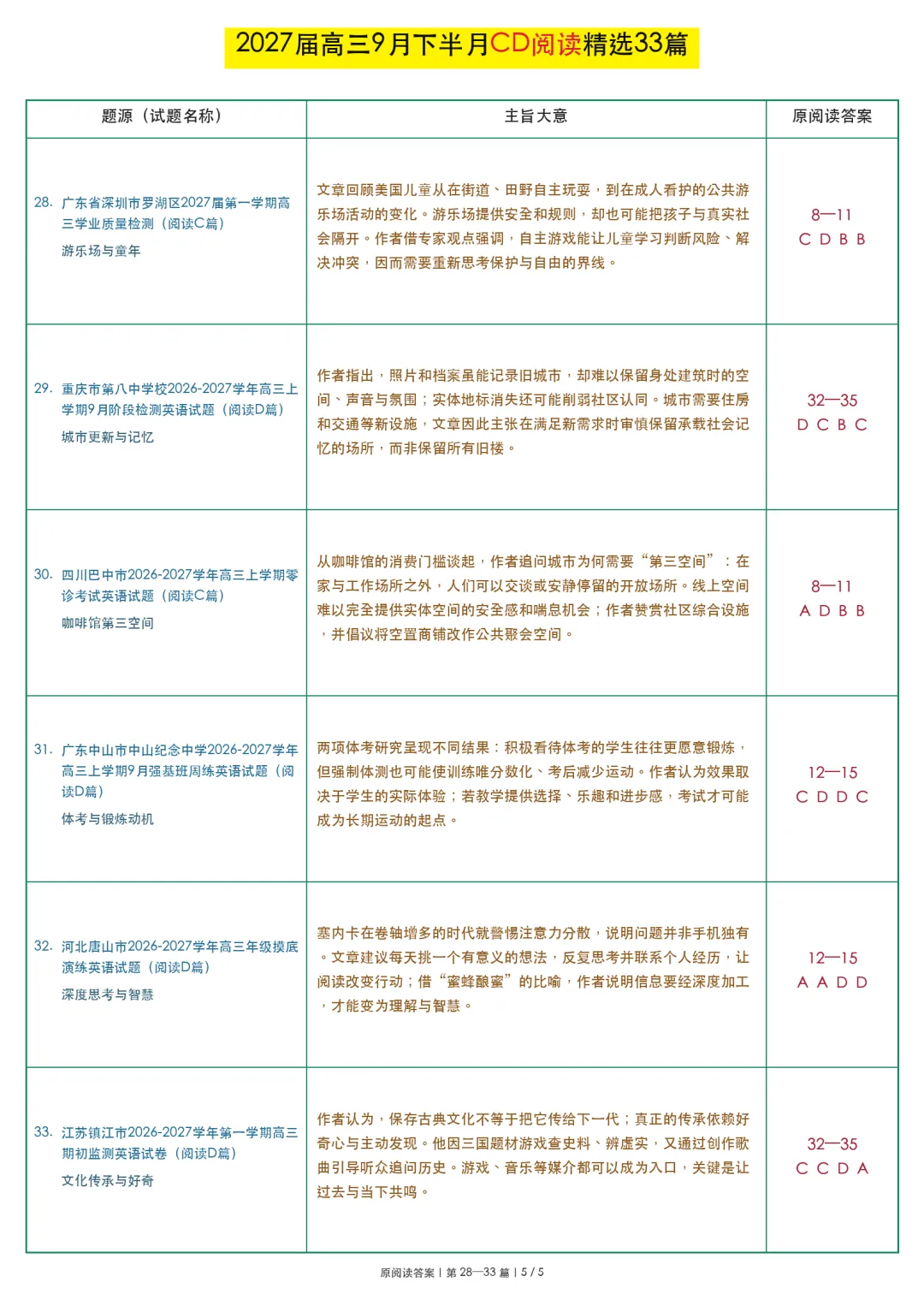
一篇思维含量直逼高考真题的高三D篇阅读
近期更新内容:
本公众号资料获取说明:所有资料已上传至知识星球,星球会员们可自行至星球中下载。
非会员可扫码加入(10月5日,星球将提价至299元/年。随着星球资料越来越多,星球预计逐步涨价至365元/年。星球有海量资源,非常超值):

单份资料获取方式:点击文末的“阅读原文”。

本次分享一篇高质量阅读,出自27届重庆巴蜀中学月考二阅读D篇。
文章讲的是AI行业的一个反常现象:最大的AI难题,攻坚者不是程序员而是哲学家——AI公司已成哲学博士的最大雇主。他们的核心任务是"对齐"(alignment):早期的护栏简单粗暴、易被绕过,如今转向倚重"是与非"的哲学理解。但事情并不顺利:让模型破一例规则,它就会连锁破规。更深的问题悬而未决——机器意识能否被解答?产业资助会不会让研究偏向资本?Bich 式的遗憾收束全篇:AI让这些问题迫在眉睫,答案却依旧遥远。
本篇阅读改编自New Scientist 2026年7月11日刊特稿 “Can the biggest problems in AI be solved by philosophy?”
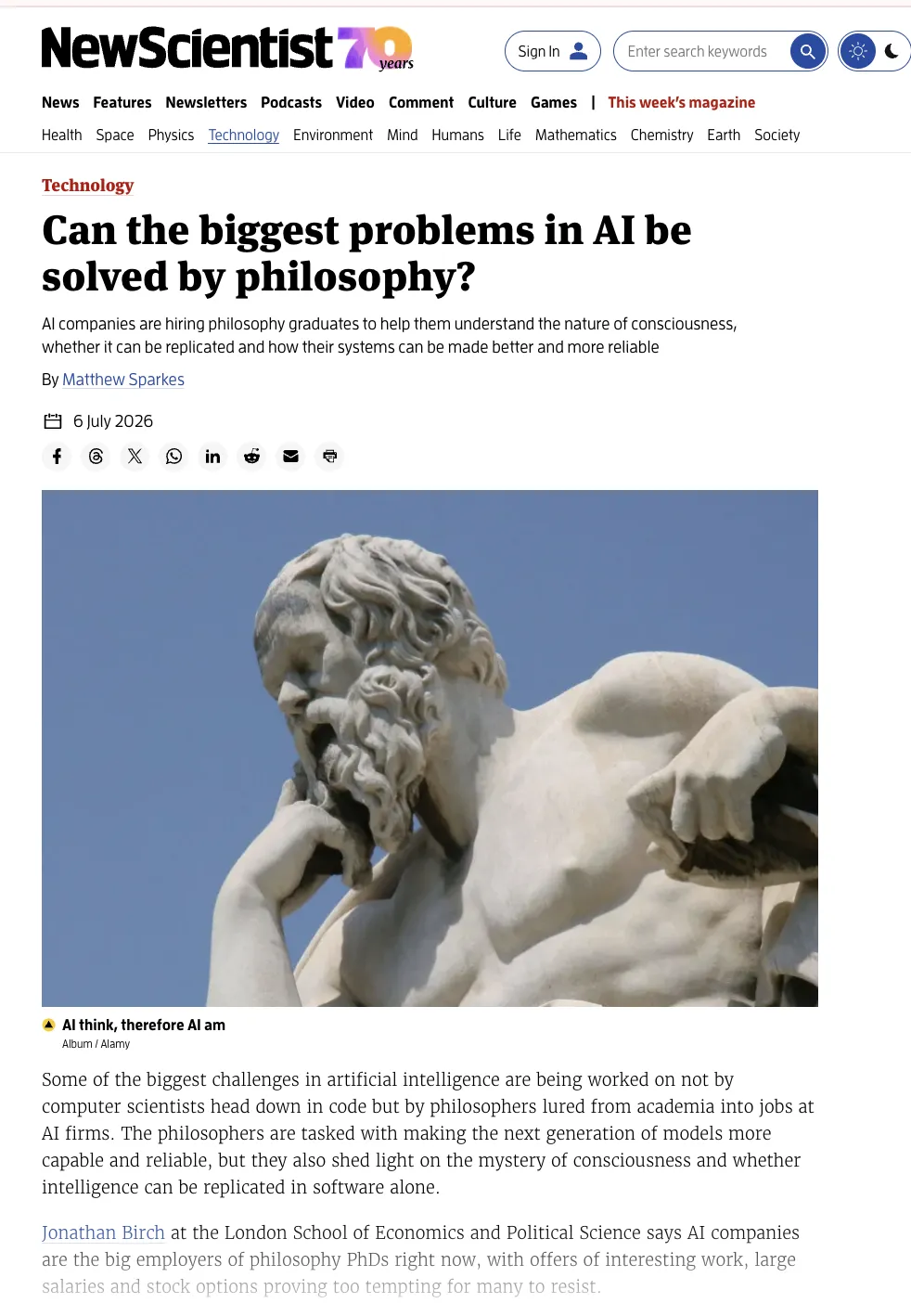
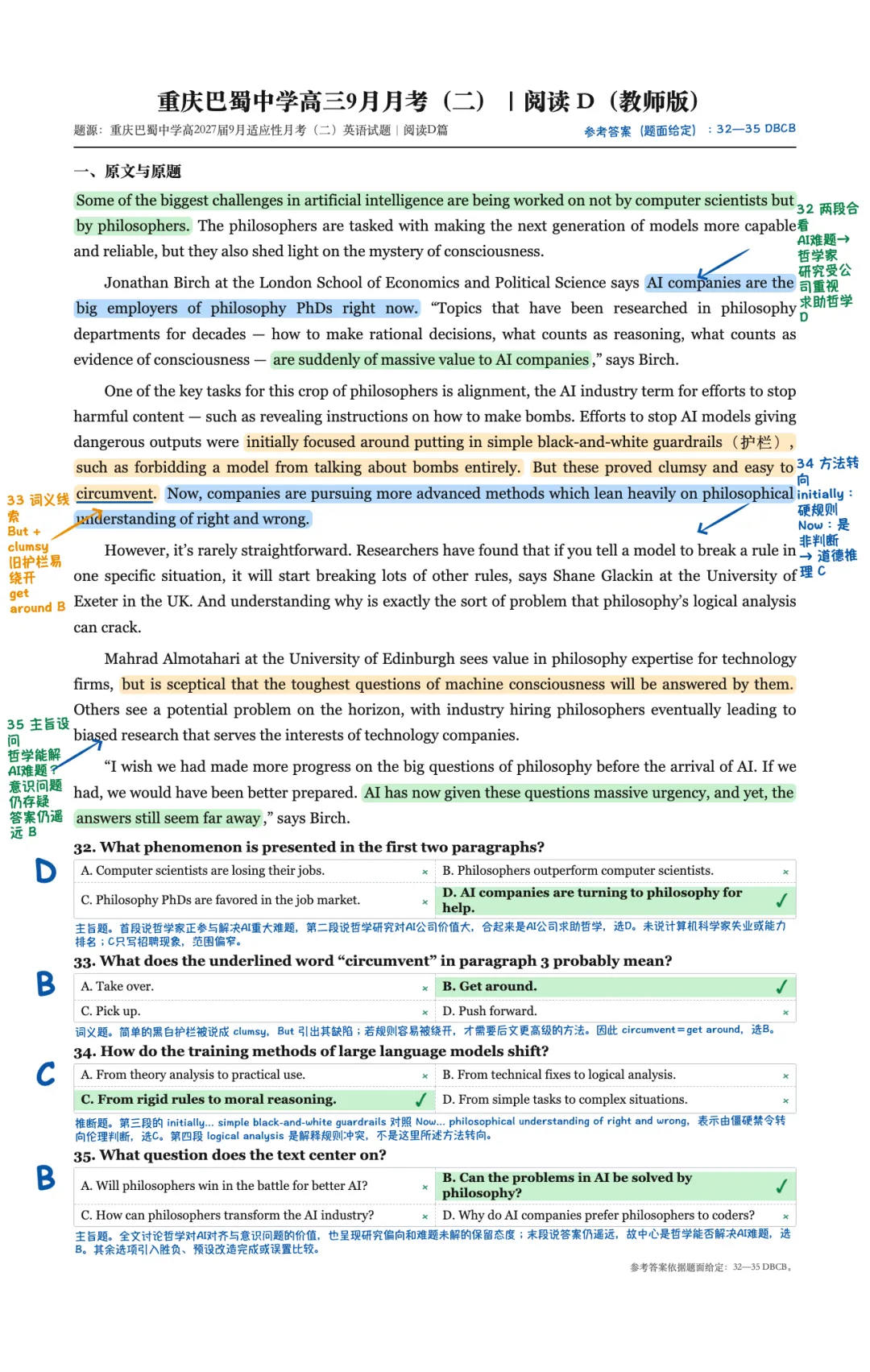
Some of the biggest challenges in artificial intelligence are being worked on not by computer scientists but by philosophers. The philosophers are tasked with making the next generation of models more capable and reliable, but they also shed light on the mystery of consciousness.
Jonathan Birch at the London School of Economics and Political Science says AI companies are the big employers of philosophy PhDs right now. “Topics that have been researched in philosophy departments for decades — how to make rational decisions, what counts as reasoning, what counts as evidence of consciousness — are suddenly of massive value to AI companies,” says Birch.
One of the key tasks for this crop of philosophers is alignment, the AI industry term for efforts to stop harmful content — such as revealing instructions on how to make bombs. Efforts to stop AI models giving dangerous outputs were initially focused around putting in simple black-and-white guardrails(护栏), such as forbidding a model from talking about bombs entirely. But these proved clumsy and easy to circumvent. Now, companies are pursuing more advanced methods which lean heavily on philosophical understanding of right and wrong.
However, it’s rarely straightforward. Researchers have found that if you tell a model to break a rule in one specific situation, it will start breaking lots of other rules, says Shane Glackin at the University of Exeter in the UK. And understanding why is exactly the sort of problem that philosophy’s logical analysis can crack.
Mahrad Almotahari at the University of Edinburgh sees value in philosophy expertise for technology firms, but is sceptical that the toughest questions of machine consciousness will be answered by them. Others see a potential problem on the horizon, with industry hiring philosophers eventually leading to biased research that serves the interests of technology companies.
“I wish we had made more progress on the big questions of philosophy before the arrival of AI. If we had, we would have been better prepared. AI has now given these questions massive urgency, and yet, the answers still seem far away,” says Birch.
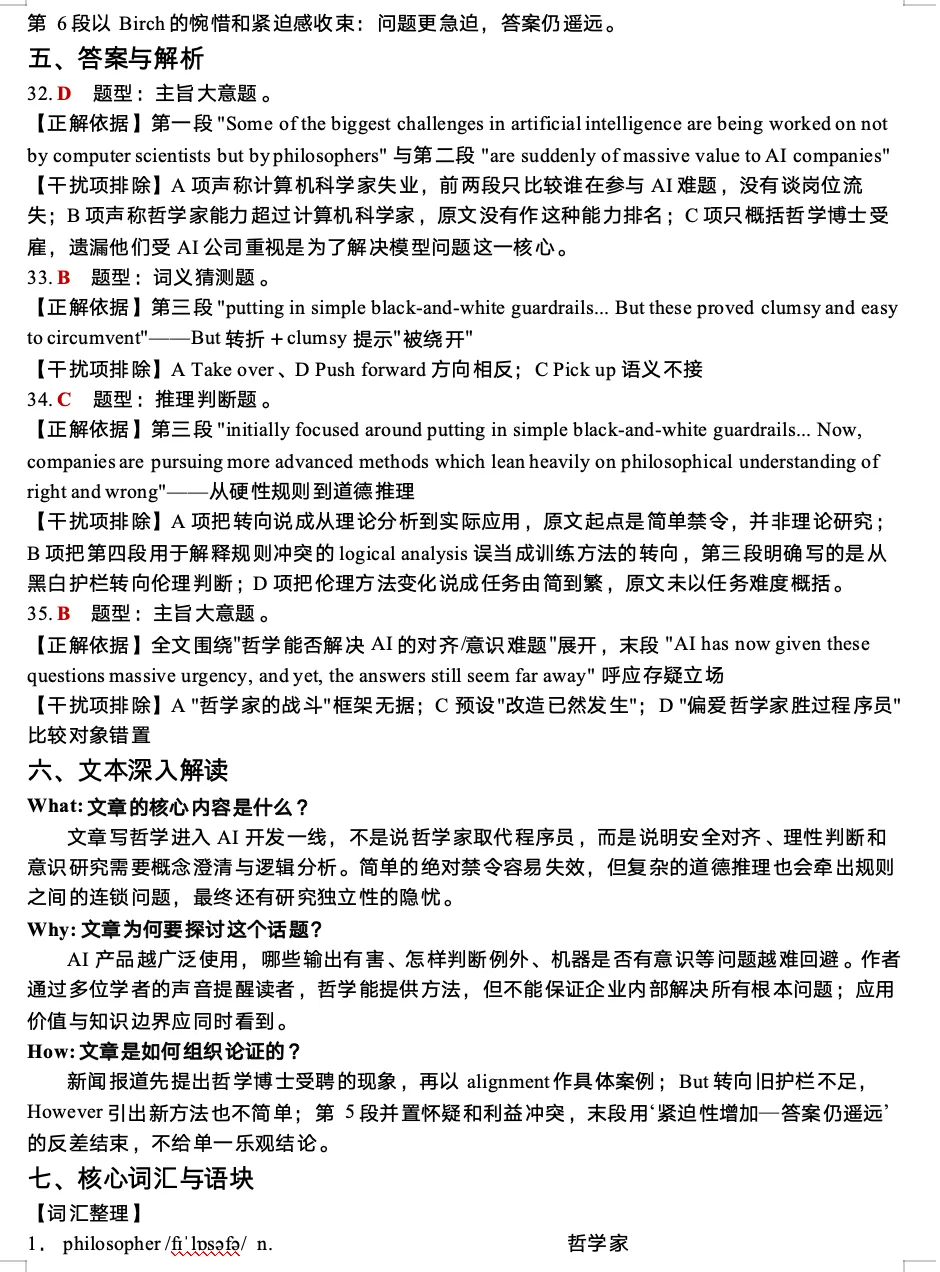
32. What phenomenon is presented in the first two paragraphs?
A. Computer scientists are losing their jobs.
B. Philosophers outperform computer scientists.
C. Philosophy PhDs are favored in the job market.
D. AI companies are turning to philosophy for help.
33. What does the underlined word “circumvent” in paragraph 3 probably mean?
A. Take over.B. Get around.C. Pick up.D. Push forward.
34. How do the training methods of large language models shift?
A. From theory analysis to practical use.
B. From technical fixes to logical analysis.
C. From rigid rules to moral reasoning.
D. From simple tasks to complex situations.
35. What question does the text center on?
A. Will philosophers win in the battle for better AI?
B. Can the problems in AI be solved by philosophy?
C. How can philosophers transform the AI industry?
D. Why do AI companies prefer philosophers to coders?
语篇结构
第1段 现象总起:最大 AI 难题的攻坚者“不是计算机科学家而是哲学家”。(32题命题区)
第2段 现象佐证:Birch 引言——AI 公司是哲学博士的最大雇主,哲学系研究数十年的问题“突然价值巨大”。(32题命题区)
第3段 任务聚焦·转变:alignment 定义;护栏从“简单粗暴、易被绕过”转向“倚重对错哲学理解”的高级方法。(33、34题命题区)
第4段 复杂性显露:让模型破一例规则即引发连锁破规,理解其因“正是哲学逻辑分析能攻克的问题”。(34题B项干扰锚)
第5段 反方声音:Almotahari 肯定哲学专长价值,但怀疑最难的机器意识问题能由产业界解答。(35题反面证据)
第6段 隐忧与收束:产业雇用或致研究偏向;Birch 虚拟语气遗憾作结——AI 给了问题紧迫性,答案却依旧遥远。(35题命题区)
本篇是篇事物介绍型的说明文。分类依据:主体介绍哲学家进入AI企业后承担的工作、方法和争议,而非检验某个单一实验。实际逻辑链:新职业现象→ 工作任务 → 方法挑战 → 价值与隐忧。思辨结构(立—破—合)对应课标批判性思维要求。
32 题 D——现象概括题,双段合并定位。A无中生有:首段只说这些挑战不由计算机科学家主导,未涉失业;“not by...” 是分工表述而非裁员表述。B. 程度越界:把“分工不同”偷换成“能力更强”,outperform 含文本不支持的全面对比。C. 范围扩大,钓的是只抓到 “big employers of philosophy PhDs” 短语而忽略主语限定语的学生。 正确答案 D 须合并两段证据做概括,无单句定位点。且 C 项玩的是范围扩大(AI companies → the job market)——这是新课标卷 D 篇的标志性干扰手法,考"限定语意识"而非词汇量。
33 题 B——原文定位:第3段:“But these proved clumsy and easy to circumvent. Now, companies are pursuing more advanced methods...”关键表述对应:双线索定位:① 同句评价词 clumsy(笨拙的,贬义)锁定靶词亦为贬义/缺陷义;② But...Now 转折链——旧法“笨拙且易 ___”,于是转向更高级方法,空格必为旧法被弃用的原因:易被“绕过”。circumvent = get around(规避)。
34 题 C——A方向颠倒:实际走向是“从粗暴实操到理论支撑”,与文本恰好相反。B. From technical fixes to logical analysis. —— 跨段偷换概念:logical analysis 出自第4段 Glackin 谈“理解模型为何连锁破规”,钓的是抓词不抓论证结构的学生。错误项对应明确错误思维,这正是真题干扰项的设计逻辑。D 张冠李戴:simple 修饰的是 guardrails 的性质,文本从未讨论任务难度梯级。
35 题 B——文本既展示哲学“有用”(前四段),又保留“最难问题未必能解”的怀疑(后两段)——重心落在“能否解决”的开放之辩,恰为 Can 问句。有趣的是,B 项几乎就是外刊源文原标题(New Scientist 原题 “Can the biggest problems in AI be solved by philosophy?”),主旨题与源标题同构。
语言点:
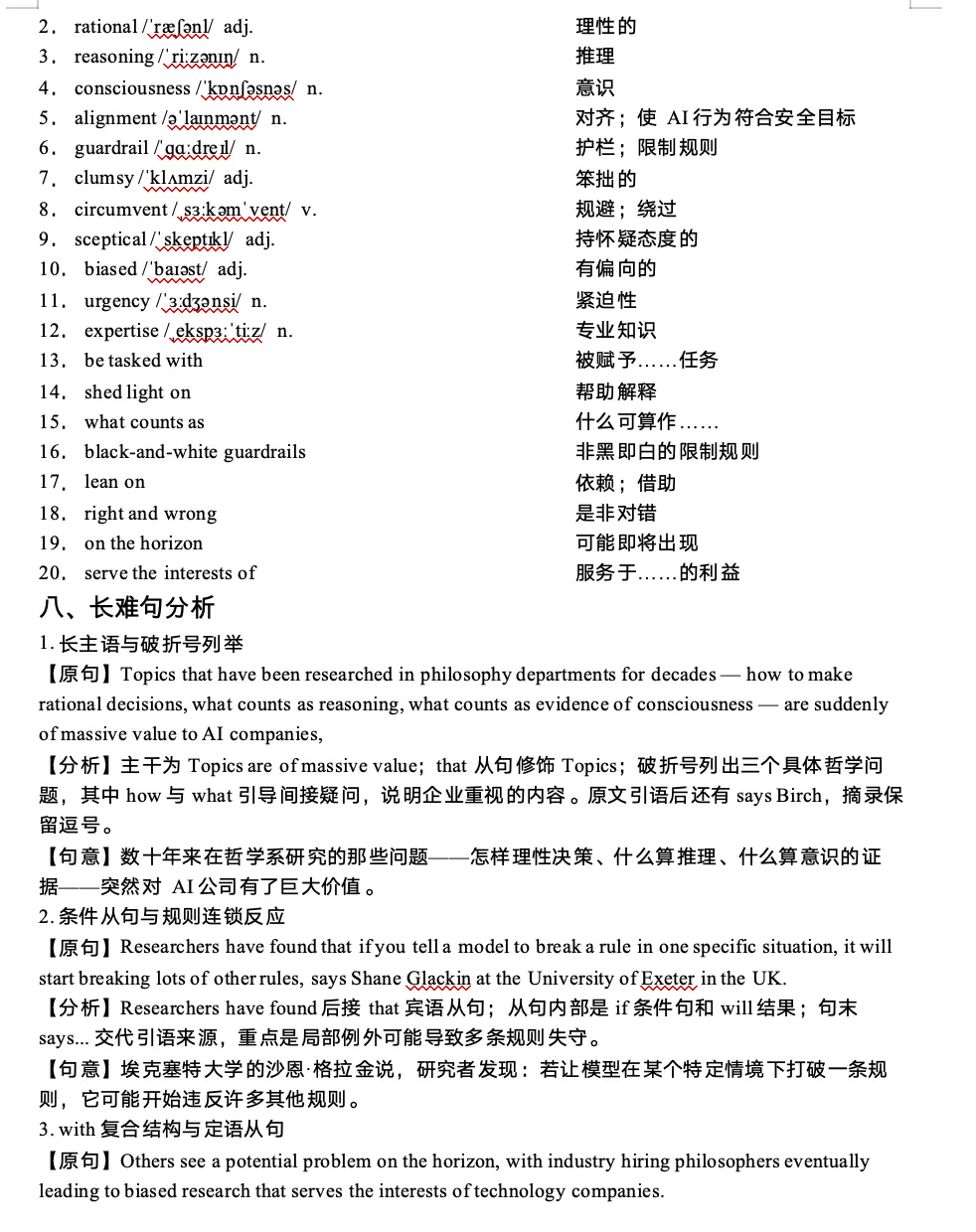
词汇:this crop of(这一批,crop 熟词生义)、alignment(对齐,行业术语)、black-and-white guardrails(非黑即白的护栏)、lean heavily on(深度倚重)、shed light on(揭示)、on the horizon(初现端倪)、serve the interests of(服务于……的利益)、give sth massive urgency(使……迫在眉睫)。 长难句:"Researchers have found that if you tell a model to break a rule in one specific situation, it will start breaking lots of other rules, says Shane Glackin…"——宾语从句嵌条件状语,引用句后置倒装,break a rule → breaking lots of other rules 的"一破百破"对照是全句支点。
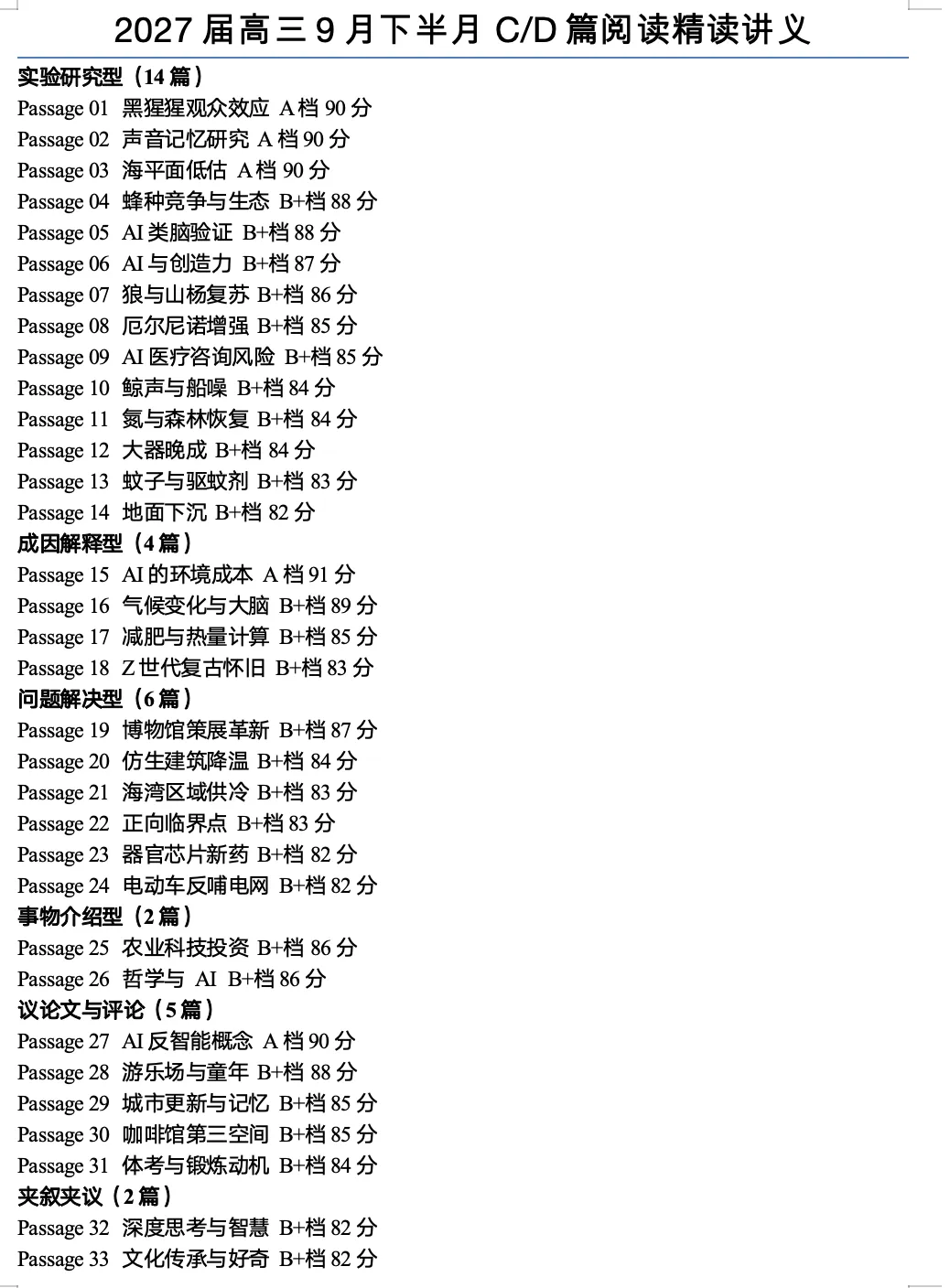
本次分享我从80多篇近期高三阅读中挑选而来的33篇阅读理解CD篇。
一套好的阅读讲义,价值不在于把过多鱼龙混杂参差不齐的阅读装订在一起,而在于让每篇文章都值得细读、讲得透。这套阅读讲义的选材面比较宽:题源涵盖南京、深圳等地的期初检测和学业质量检测,也包括杭州学军中学、重庆八中、昆明一中等学校的试题,以及多校联考。
不拼数量,关键是做值得一做的题。
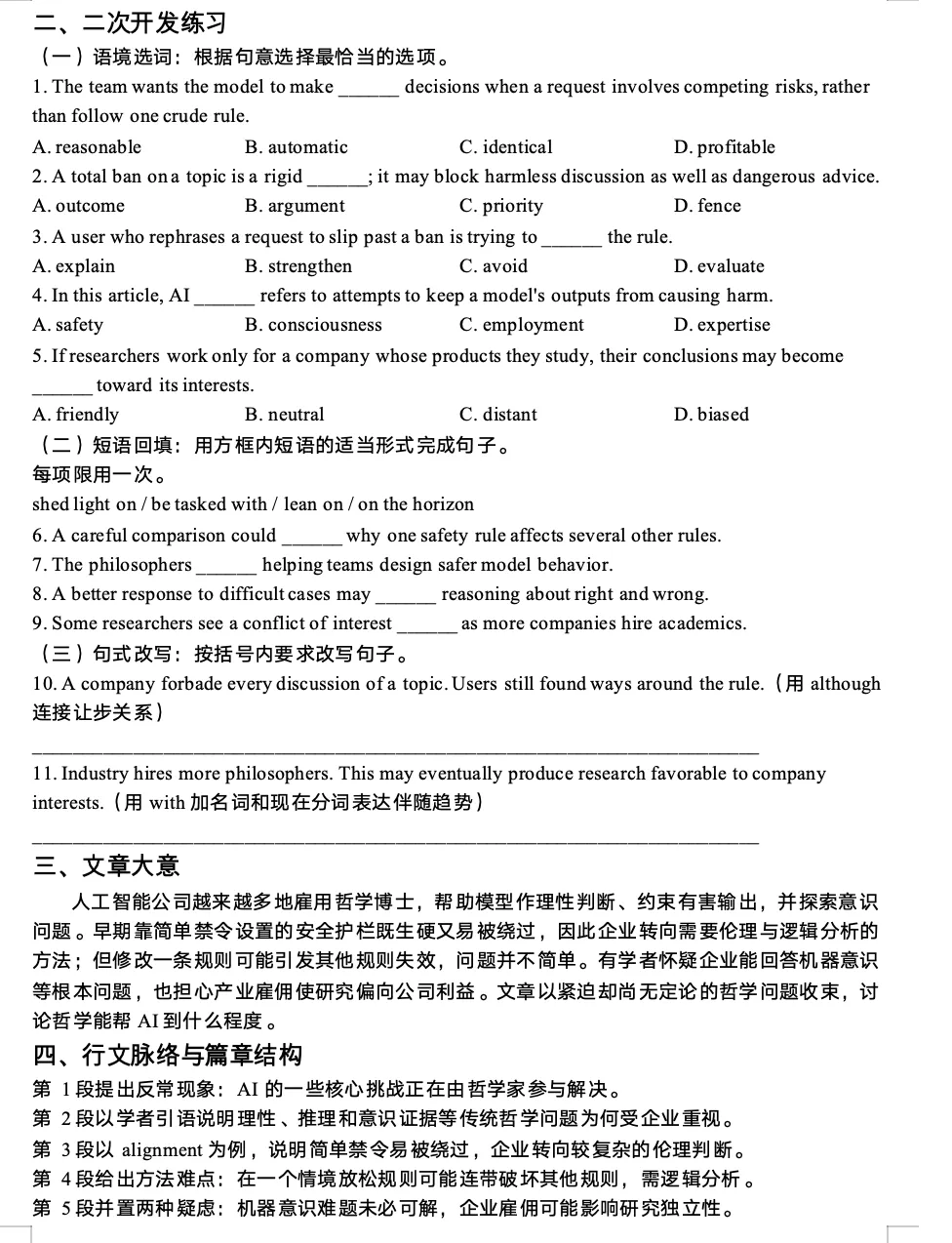
讲义把说明文按实验研究、成因解释、问题解决、事物介绍四种思路编排,将议论文与夹叙夹议单独呈现,让学生在做题之外,逐渐看出不同文章是怎样展开的。教师版提供答案依据、干扰项分析和篇章解读,方便把“为什么选、为什么不选”讲到原文中;学生版则保留独立思考的空间,再用语境选词、短语回填和句式改写巩固所学。对尖子班来说,它既能提供有质量的阅读量,也能把一次练习延伸为证据判断、逻辑梳理和语言迁移的训练。
除答案详解外,每一篇都包含文章大意、行文脉络与文章结构、文本深入解读、核心词汇整理、全文译文及配套二次开发练习。