西双版纳雨林探秘,初中课标词一读就懂
一提到英语就炸毛、卷子藏书包底、单词表永远停在第一页——不少初二男孩正卡在这个「越学不懂越不碰、越不碰欠账越大」的死循环里,家长一催,亲子关系先崩。上周和山南市一位八年级家长聊到,孩子其实不是不想学,是前面掉的坑太多,翻开书满眼生词,本能就想逃。与其硬摁着他背字母表,不如换条路:借今天这篇西双版纳雨林时文,让单词先在真实画面里活起来——大象、泼水节、吊脚楼,孩子愿意读下去,词才有机会真正进脑子。
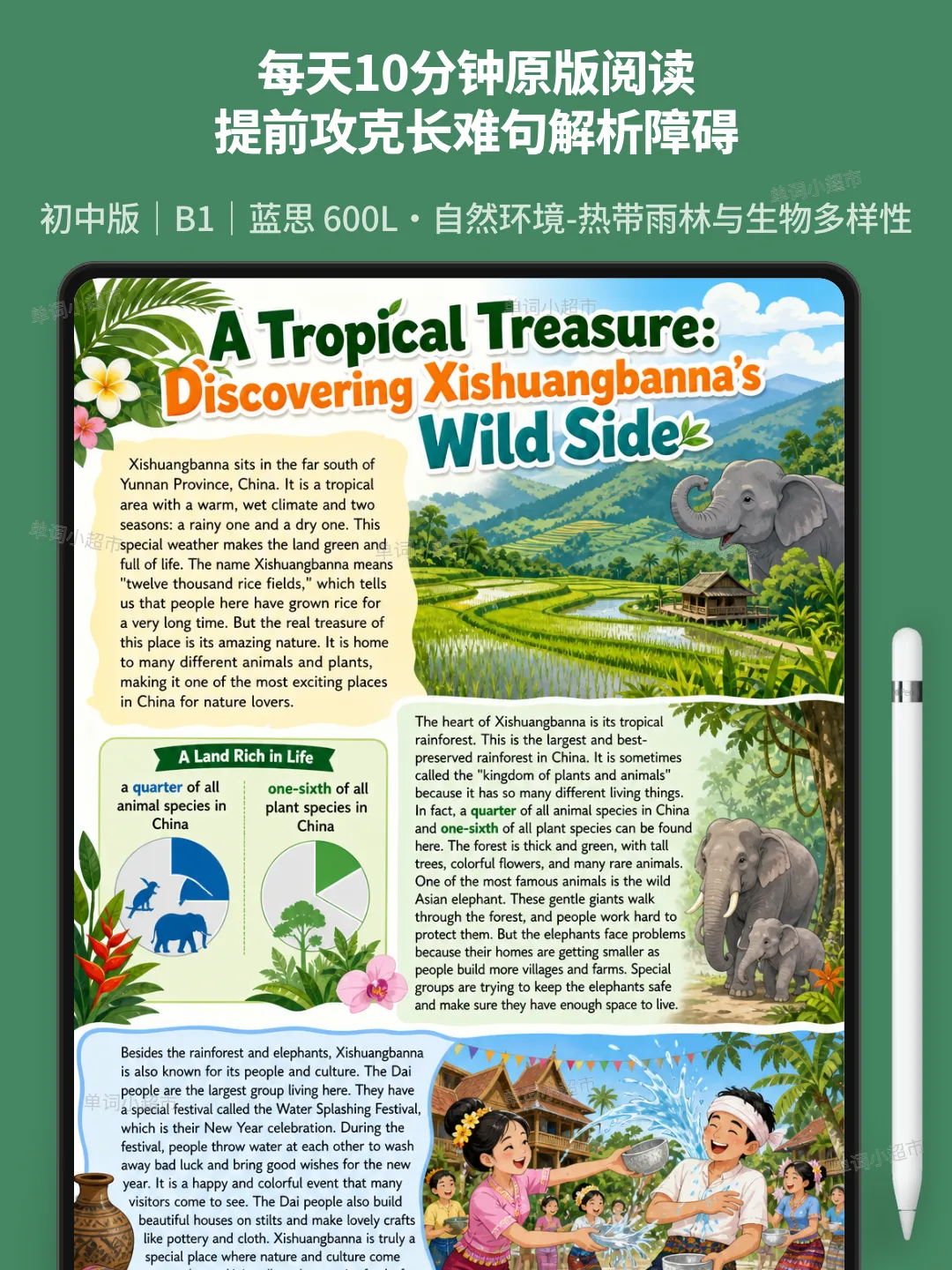
A Tropical Treasure: Discovering Xishuangbanna's Wild Side
Xishuangbanna sits in the far south of Yunnan Province, China. It is a tropical(热带的) area with a warm, wet climate and two seasons: a rainy one and a dry one. This special weather makes the land green and full of life. The name Xishuangbanna means "twelve thousand rice fields," which tells us that people here have grown rice for a very long time. But the real treasure of this place is its amazing nature. It is home to many different animals and plants, making it one of the most exciting places in China for nature lovers.
The heart of Xishuangbanna is its tropical rainforest(雨林). This is the largest and best-preserved rainforest in China. It is sometimes called the "kingdom of plants and animals" because it has so many different living things. In fact, a quarter of all animal species(物种) in China and one-sixth of all plant species can be found here. The forest is thick and green, with tall trees, colorful flowers, and many rare animals. One of the most famous animals is the wild Asian elephant. These gentle giants(巨人) walk through the forest, and people work hard to protect them. But the elephants face problems because their homes are getting smaller as people build more villages and farms. Special groups are trying to keep the elephants safe and make sure they have enough space to live.
Besides the rainforest and elephants, Xishuangbanna is also known for its people and culture. The Dai people are the largest group living here. They have a special festival called the Water Splashing(泼洒) Festival, which is their New Year celebration. During the festival, people throw water at each other to wash away bad luck and bring good wishes for the new year. It is a happy and colorful event that many visitors come to see. The Dai people also build beautiful houses on stilts(高跷) and make lovely crafts(手工艺品) like pottery(陶器) and cloth. Xishuangbanna is truly a special place where nature and culture come together, and it is well worth protecting for the future.
热带宝藏:发现西双版纳的野性之美
西双版纳位于中国云南省的最南端。这是一个热带地区,气候温暖潮湿,分为雨季和旱季两个季节。这种特殊的气候让土地变得翠绿且充满生机。西双版纳这个名字的意思是“十二千块稻田”,这说明这里的人们种植水稻已有很长的历史。但这个地方真正的宝藏是其令人惊叹的自然环境。这里生活着许多不同的动植物,使其成为中国最令人兴奋的自然胜地之一。
西双版纳的核心是它的热带雨林。这是中国最大、保存最完好的雨林。它有时被称为“动植物王国”,因为这里拥有如此多不同的生物。事实上,中国四分之一的动物物种和六分之一的植物物种都可以在这里找到。森林茂密而翠绿,有高大的树木、色彩鲜艳的花朵,还有许多珍稀动物。其中最著名的动物之一是野生亚洲象。这些温和的巨兽在森林中漫步,人们努力保护它们。但大象面临困境,因为随着人们建造更多的村庄和农场,它们的家园正在变小。专门的团体正在努力保护大象,确保它们有足够的生存空间。
除了雨林和大象,西双版纳还以其人民和文化而闻名。傣族是这里最大的民族群体。他们有一个特殊的节日叫泼水节,这是他们的新年庆祝活动。在节日期间,人们互相泼水,以洗去坏运气,并为新年带来美好的祝愿。这是一个欢乐而多彩的活动,许多游客都会前来观看。傣族人民还建造了美丽的吊脚楼,制作精美的手工艺品,如陶器和织物。西双版纳确实是一个自然与文化交融的特殊地方,非常值得为未来而保护。
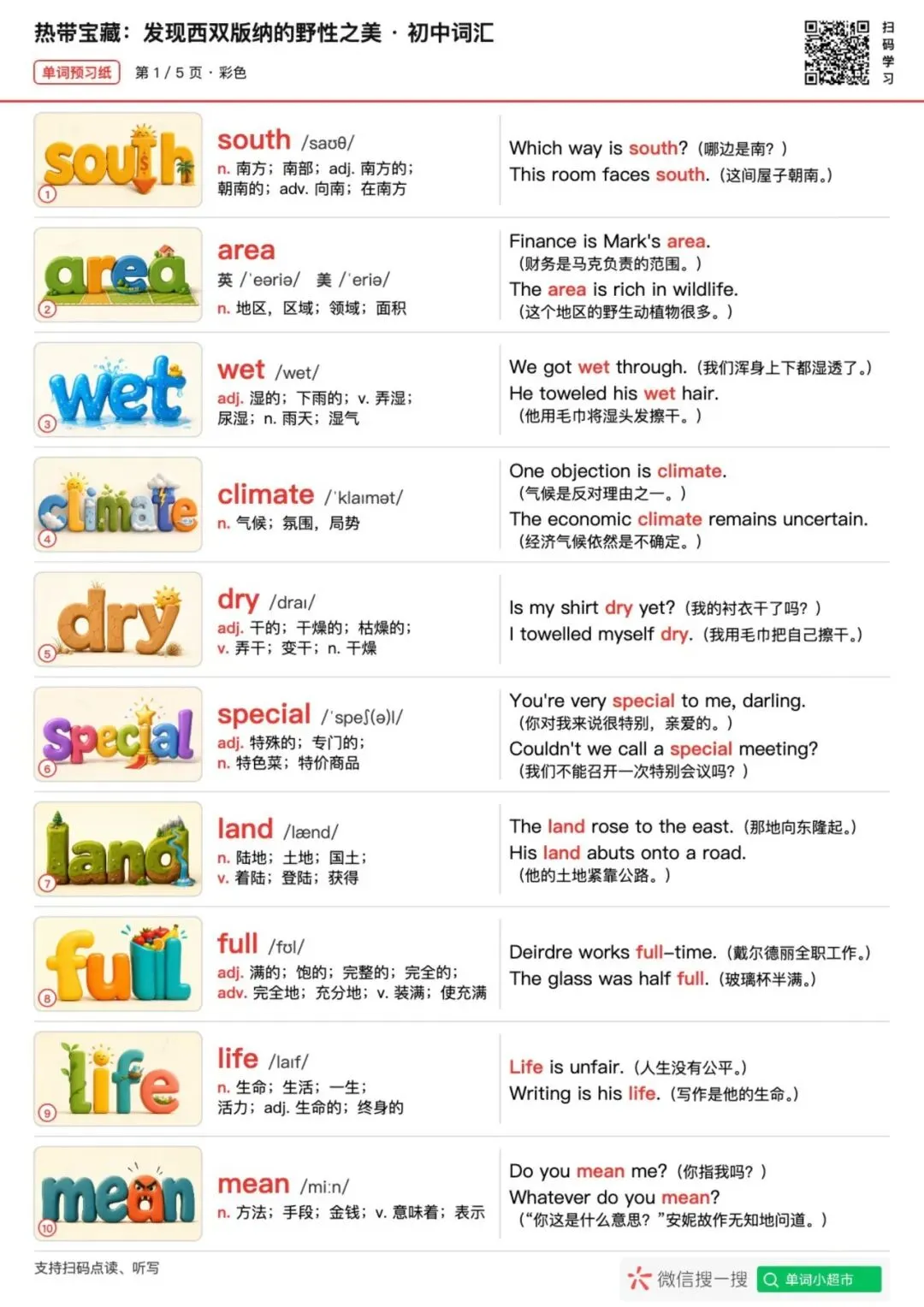
初中课标词
/saʊθ/ | |
/ˈeəriə/ | |
/wet/ | |
/ˈklaɪmət/ | |
/draɪ/ | |
/ˈspeʃ(ə)l/ | |
/lænd/ | |
/fʊl/ | |
/laɪf/ | |
/miːnz/ | |
/ˈfiːldz/ | |
/ˈriːəl/ | |
/ˈtreʒə(r)/ | |
/ˈneɪtʃə(r)/ | |
/ˈdɪfrənt/ | |
/məʊst/ | |
/hɑːt/ | |
/ˈlɑːdʒɪst/ | |
/θɪŋz/ | |
/fækt/ | |
/ˈkwɔːtə(r)/ | |
/faʊnd/ | |
/ˈfɒrɪst/ | |
/θɪk/ | |
/waɪld/ | |
/θruː/ | |
/prəˈtekt/ | |
/ˈprɔ:bləmz/ | |
/æz; əz/ | |
/bɪld/ | |
/mɔː(r)/ | |
/ɡruːps/ | |
/ɪˈnʌf/ | |
/ˈkʌltʃə(r)/ | |
/ɡruːp/ | |
/ˈfestɪvl; ˈfestəvəl/ | |
/ˈdjʊərɪŋ/ | |
/θrəʊ/ | |
/iːtʃ/ | |
/ˈʌðə(r)/ | |
/əˈweɪ/ | |
/lʌk/ | |
/ɪˈvent/ | |
/təˈɡeðə(r)/ | |
/wɜːθ/ | |
/prəˈtektɪŋ/ | |
/ˈfjuːtʃə(r)/ |
教研精读笔记
三个课标词,吃透这篇雨林时文
1. protect(v. 保护)
文中原句:"Special groups are trying to keep the elephants safe and make sure they have enough space to live." 这里虽未直接出现 protect,但整段讲的正是保护野生亚洲象的核心议题,protect 是这篇文章的情感落点。应试抓手:完形填空里 protect...from... 是高频搭配,如 protect the forest from being destroyed;写作中想表达「保护环境」,用 "We should protect the environment from being polluted" 比 "We should save the environment" 更高级,直接拉分。
2. enough(adj./adv. 足够的/足够地)
文中原句:"make sure they have enough space to live." enough 修饰名词时前置,修饰形容词/副词时必须后置,这是中考完形和语法填空的经典陷阱。应试抓手:记住 "enough space"(enough + 名词)和 "big enough"(形容词 + enough)两个结构,考试一考一个准。写作中 "...enough to do..." 句式也是加分句型,如 "The forest is big enough to hold thousands of species."
3. worth(adj. 值得的)
文中原句:"it is well worth protecting for the future." 这里 worth 后接动名词,是中考高频结构。应试抓手:be worth doing sth. 是固定搭配,不能写成 be worth to do;完形填空常考 worth / worthy / worthwhile 的辨析。写作中想表达「值得做某事」,用 "Xishuangbanna is well worth visiting" 远比 "Xishuangbanna is a good place to visit" 更出彩。
为什么要在流动语境里学单词?
孤立背单词,记住的是字母排列;放进雨林、大象、泼水节的真实画面里,记住的是场景和情感。当孩子能说出 "The rainforest is worth protecting",他掌握的不只是 worth 这个词,而是一整套可以迁移到写作和阅读中的表达能力。语境让单词从「考点」变成「工具」,这才是打破死记硬背的关键一步。
今晚读完就能做
家长朋友们,读完这篇别急着让孩子抄单词。打开单词小超市小程序,找到这篇西双版纳雨林的配套精读——先跟读音频把 protect、enough、worth 的发音过一遍,再做配套的完形填空小练习,最后对照 PDF 预习纸把三个词的搭配抄在笔记本上。十分钟搞定,比逼他背半小时单词表管用得多。
💡 【小超老师 · 本期学情诊断与建议】
本期学生案例:西藏山南市八年级男生,英语基础薄弱,一提英语就逆反,陷入越不学越不会的循环。
难在哪儿:不是智力问题,是欠账太多导致翻开书就恐惧,家长越催他越对抗。
接下来一周能做的三个建议:
1. 先停掉「你今天背了几个词」这类追问,换成「这篇雨林里的大象你读懂了没」,把关注点从数量转到内容,降低他的防御心理。
2. 每天只挑一篇短文,陪他读一遍、听一遍音频,不考不查,让他先找回「我能读懂」的感觉。
3. 如果词汇量确实拖后腿,想短期补上来,可以每天用一组我们教研组打磨的中考688高频词预习单,按话题分组、配语境例句,一天一组,压力小、见效快。