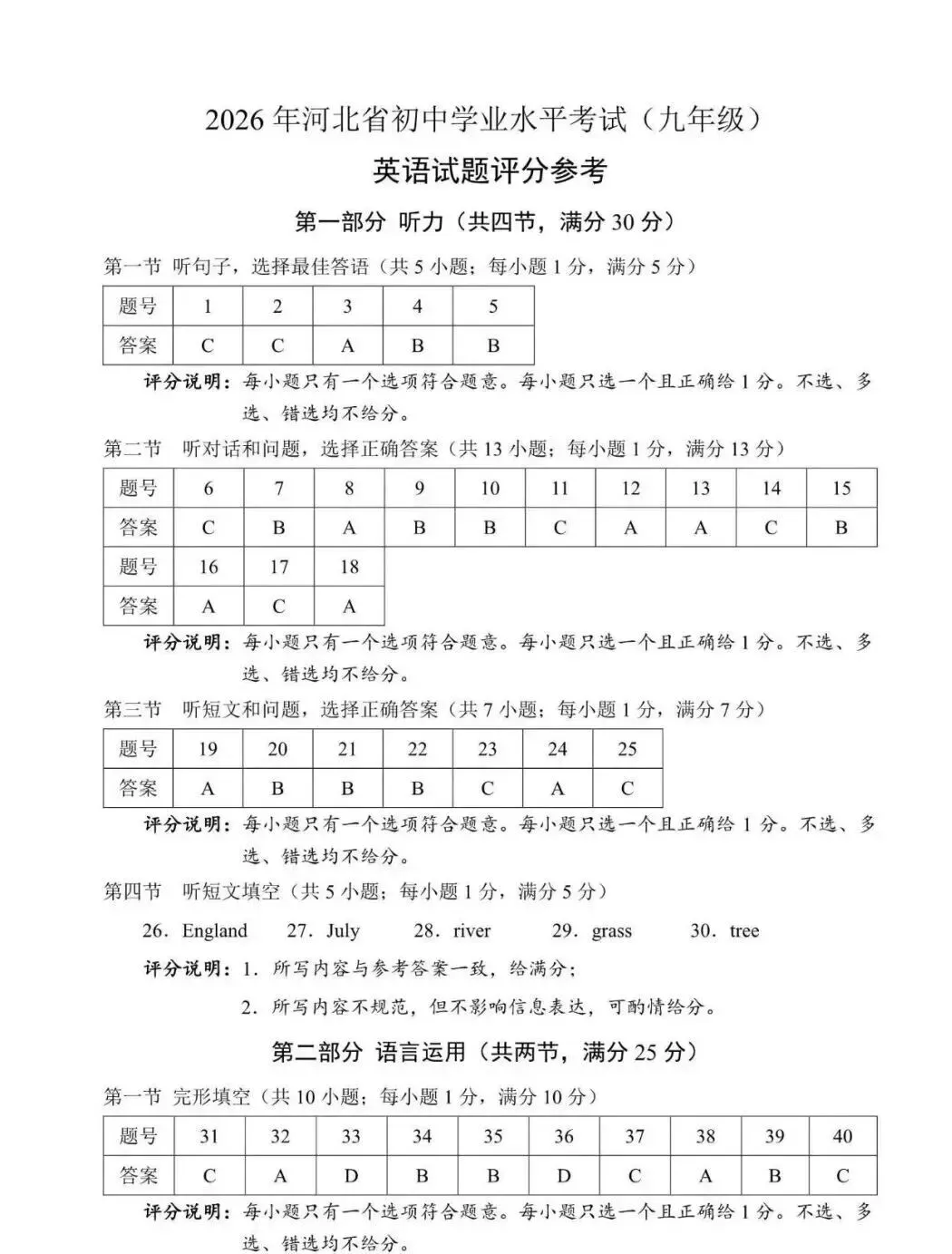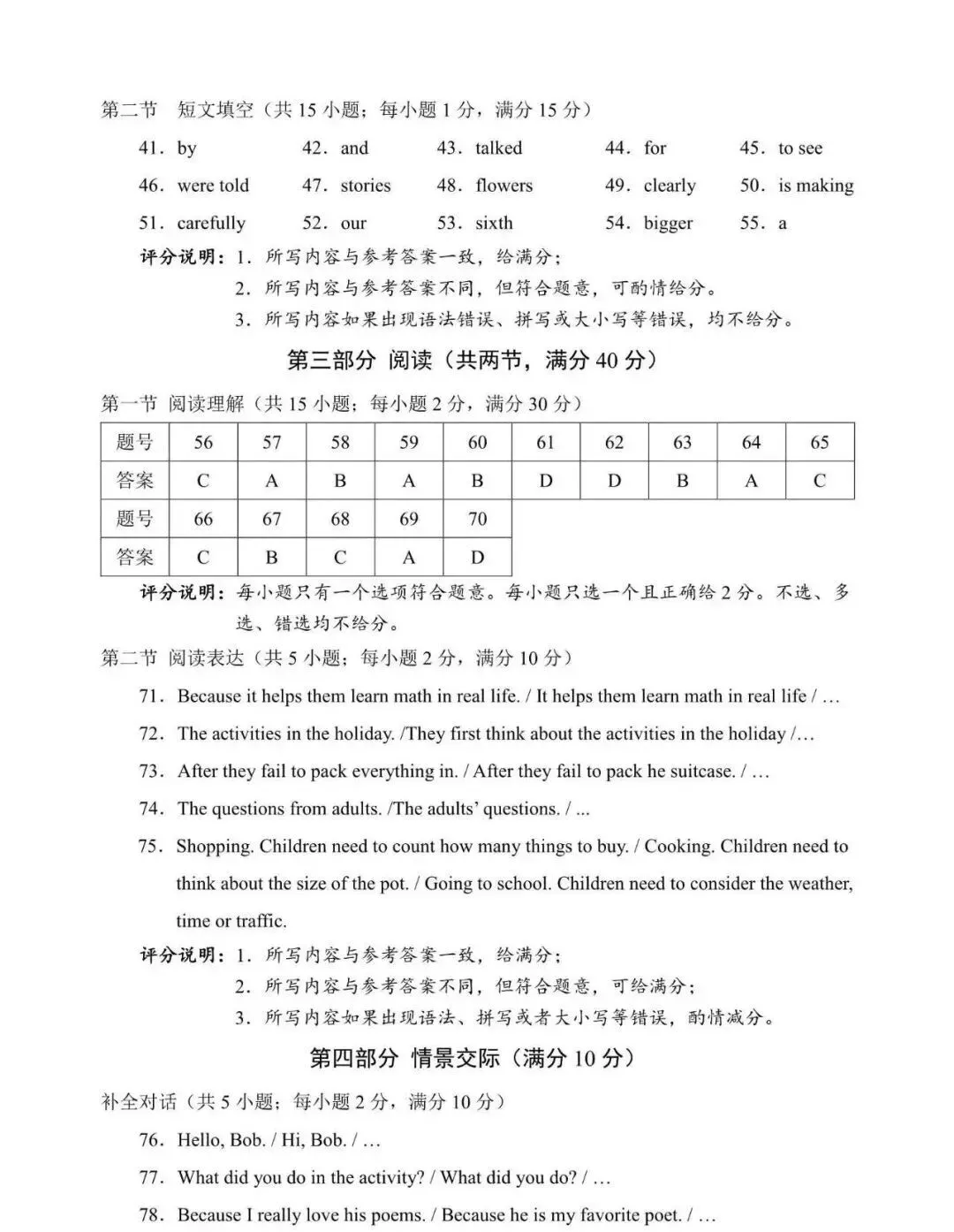

机密★启用前
2026 年河北省初中学业水平考试(九年级)
英语试卷
注意事项:
1.本试卷共 12 页,总分 120 分,考试时间 120 分钟。
2.答题前,考生务必将姓名、准考证号填写在试卷和答题卡相应位置。
3.所有答案均在答题卡上作答,在本试卷或草稿纸上作答无效。答题前,请仔细阅读答题卡上的 “注意事项”,按照 “注意事项” 的规定答题。
4.答选择题时,用 2B 铅笔将答题卡上对应题目的答案标号涂黑;答非选择题时,请在答题卡上对应题目的答题区域内答题。
5.考试结束后,将答题卡、试卷和草稿纸一并交回。
第一部分听力(共四节,满分 30 分)
听力部分共有四节,第一节至第三节为选择题,第四节为填空题。做题时,先将答案答在试卷上,在听力测试结束后,再将答案填涂到答题卡上。
第一节听句子,选择最佳答语(共 5 小题;每小题 1 分,满分 5 分)
下面你将听到 5 个句子,每个句子读两遍。请你听完句子的第二遍朗读后,从每小题所给出的 A、B、C 三个选项中,选出该句的最佳答语。
1. A. Come on. B. Enjoy yourself. C. Nice to meet you, too.
2. A. Try again. B. Sounds interesting. C. OK, here you are.
3. A. Quite right. B. My pleasure. C. Well done.
4. A. I’m hungry. B. Juice, please. C. A large one.
5. A. With my sister. B. Last week. C. To exercise.
第二节听对话和问题,选择正确答案(共 13 小题;每小题 1 分,满分 13 分)
下面你将听到 6 组对话和 13 个问题,每组对话和问题读两遍。请你听完对话和问题的第二遍朗读后,根据所听内容,从每小题所给出的 A、B、C 三个选项中,选出正确答案。
请听第 1 组对话,回答第 6 小题。
6.How did they travel to Shijiazhuang?
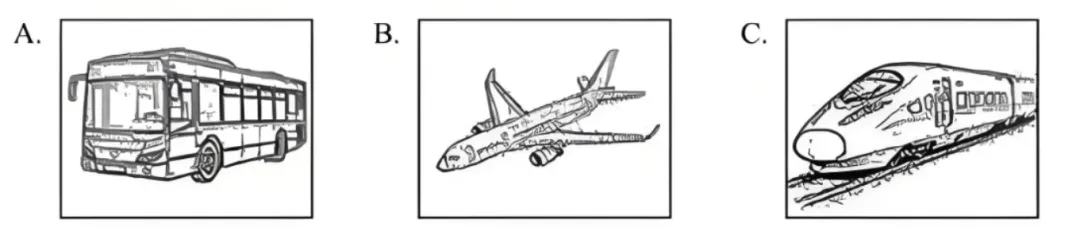
请听第 2 组对话,回答第 7 小题。
7.Where will the speakers probably go?
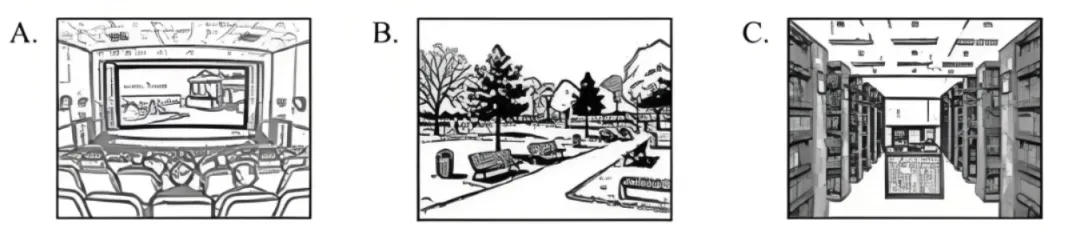
请听第 3 组对话,回答第 8、9 小题。
8. What is Li Ting?
A. A news reporter. B. A doctor. C. An engineer.
9. Where does Peter work?
A. In Shenzhen. B. In Shanghai. C. In Hangzhou.
请听第 4 组对话,回答第 10 至 12 小题。
10. How many people will take part in the discussion?
A. Two. B. Three. C. Four.
11. What time will the speakers meet on Saturday morning?
A. At 7:00. B. At 8:00. C. At 9:00.
12. What is the probable relationship between the speakers?
A. Classmates. B. Father and daughter. C. Husband and wife.
请听第 5 组对话,回答第 13 至 15 小题。
13. What does Jane need to do?
A. Complete a form. B. Go to a class. C. Attend a meeting.
14. Who teaches Mark to play the guitar?
A. His uncle. B. His mother. C. His grandfather.
15. What does Mark plan to learn?
A. To sing. B. To skate. C. To play the piano.
请听第 6 组对话,回答第 16 至 18 小题。
16. What fruit does the mother like?
A. Bananas. B. Apples. C. Oranges.
17. Who suggests buying some mooncakes?
A. Tom. B. The father. C. Cindy.
18. What are the speakers mainly talking about?
A. A shopping list. B. A fruit cake. C. A Chinese festival.
第三节听短文和问题,选择正确答案(共 7 小题;每小题 1 分,满分 7 分)
下面你将听到两篇短文和 7 个问题,每篇短文和问题读两遍。请你听完短文和问题的第二遍朗读后,根据所听内容,从每小题所给出的 A、B、C 三个选项中,选出正确答案。
请听第 1 篇短文,回答第 19 至 21 小题。
19. How is the weather?
A. Rainy. B. Sunny. C. Snowy.
20. What should the students do?
A. Call their parents. B. Wait in the classroom. C. Clean the roads.
21. Where can the students get help from Mr. Zhang?
A. In Room 1. B. In Room 5. C. In Room 6.
请听第 2 篇短文,回答第 22 至 25 小题。
22. Which is the speaker’s favorite season?
A. Spring. B. Summer. C. Winter.
23. How long does it take the speaker to walk to the beach?
A. 10 minutes. B. 15 minutes. C. 20 minutes.
24. What does the speaker like to do best on the beach?
A. Play volleyball. B. Sit on the sand. C. Listen to music.
25. What does the speaker advise visitors to take?
A. A coat. B. A camera. C. An umbrella.
第四节听短文填空(共 5 小题;每小题 1 分,满分 5 分)
下面你将听到一篇短文,短文读两遍。请你听完短文的第二遍朗读后,根据短文的内容和提示,在信息表中相应的横线上填入所缺信息。
A Beautiful Picture | |
Painter | 26. Amy, from ______ |
Time of painting | 27. in ______, 2025 |
In the middle | 28. a long ______ |
On the right | 29. green ______ |
30. birds in the big ______ |
第二部分语言运用(共两节,满分 25 分)
第一节完形填空(共 10 小题;每小题 1 分,满分 10 分)
阅读下面短文,从每题所给的 A、B、C、D 四个选项中选出最佳选项。
It was exciting to go to work with my father as a young boy. I remember him buying me a 31_______ just like his and my mother packed lunch into them for both of us. My father was a skilled repairman and he worked very hard. Usually, he 32_______ early and left the house while it was still dark outside. During my holidays, I 33_______ climbed up into my father’s truck and went to his company.
In the company, we put the 34_______ on the truck and then went to work in different places. I usually 35_______ him and passed him the tools. When he was 36_______, I would get him some water. He always told me to be careful and not to 37_______ myself.
For all of my “help,” my father always praised me. His words made me 38_______. One afternoon, we took a walk around the town 39_______ we finished the work. In the town center, we found a sports store. There my father bought me a 40_______ and I liked it very much. “Thank you, Dad. You are the best dad in the world,” I said happily.
The experiences of working with my father have a great influence on me. Those experiences are always encouraging me to work hard in my life.
31. A. fishbowl B. handbag C. lunchbox D. bookshelf
32. A. got up B. came back C. moved in D. lay down
33. A. wisely B. politely C. secretly D. excitedly
34. A. pets B. tools C. medals D. vegetables
35. A. visited B. followed C. thanked D. hugged
36. A. active B. sleepy C. strict D. thirsty
37. A. hate B. doubt C. hurt D. punish
38. A. proud B. brave C. lucky D. curious
39. A. if B. after C. until D. although
40. A. rose B. lantern C. basketball D. computer
第二节短文填空(共 15 小题;每小题 1 分,满分 15 分)
阅读下面短文,在空白处填入一个适当的单词或填入括号内单词的正确形式。
Last Sunday, I went to Handan Cizhou Kiln Site (邯郸磁州窑遗址) with my classmates. It was a bright day and we went there 41_______ bus. On the bus, my best friend 42_______ I sat next to each other. We 43_______ (talk) and sang happily along the way.
A guide was waiting 44_______ us when we arrived. He first took us to the museum 45_______ (see) the unearthed ceramics (陶瓷制品). At the gate, we 46_______ (tell) not to touch the ceramics. Then he shared several interesting 47_______ (story) about ceramics with us. After that, the guide showed us around the museum. He said, “Cizhou ceramics often had pictures of many 48_______ (flower) and daily activities on them. In ancient times, they were used not only by local people but also by people in some other Asian areas.”
An hour later, the guide brought us to a workshop. He 49_______ (clear) explained how to make a cup. Then he pointed to a man and said, “Look! The man 50_______ (make) a cup now. Please be quiet and watch 51_______ (careful). Then you can have a try.” After the man finished, all of us tried 52_______ (we) best to make cups by ourselves. I succeeded on my 53_______ (six) try. I shouted happily, “My cup is much 54_______ (big) than that one.”
The visit to Handan Cizhou Kiln Site is 55_______ wonderful learning experience for me. I hope I’ll have more chances to learn about traditional Chinese culture.
第三部分阅读(共两节,满分 40 分)
第一节阅读理解(共 15 小题;每小题 2 分,满分 30 分)
阅读下列短文,从每题所给的 A、B、C、D 四个选项中选出最佳选项。
A
Games for Kids
Last month, we introduced ball games suitable for kids. This month, another two screen-free games are strongly recommended.
Freeze Dance Freeze Dance is one of the easiest games for kids – and maybe the most fun to play. Only a little bit of space and some music are needed. When the music starts, everyone dances. When the music stops, kids should stand still. The kids who are dancing are out. No one can move again until the music starts. | Spider Web (蜘蛛网) Spider Web is a great outdoor game. Ropes are necessary for kids to play the game. With the ropes, kids create a spider web pattern (式样) on the ground. Kids try to jump between the ropes, but they can’t touch the “spider web.” Anyone who jumps into every open space without touching the web wins. |
▲No running. No pushing other kids. Safety comes first. |
56. What should kids do when the music stops in Freeze Dance?
A. Jump up. B. Have a dance. C. Stand still. D. Create a web.
57. What is necessary for kids to play Spider Web?
A. Ropes. B. Balls. C. Music players. D. Touch screens.
58. Where is this text most probably from?
A. A diary. B. A magazine. C. A history book. D. A personal letter.
B
Nina is a seventh grade student. On January 1st of each year, she chooses to buy a book to read, instead of shopping for a dress as her new year gift. And then she reads lots of books through the year.
In fact, the girl thought reading was a waste of time before she met her teacher, Mr. White, in the fourth grade. Mr. White believed reading was great and he thought that students needed to read more.
With Mr. White’s help, Nina changed her idea about reading and found pleasure in books. In that year alone, the girl read over 100 books. She was chosen as Reading Star of the Year in her school and got a chance to interview her favorite writer at the school’s reading festival. And she began working as a volunteer in the community to help young readers enjoy the pleasure of reading.
Reading has become part of Nina’s life. Now Nina spends at least two hours reading books every day. She writes book reviews when she finishes reading each book. Sometimes, she reads interesting parts of a book again and again.
In her eyes, books are a treasure for human creativity and a form of human expression. Reading books is an act of discovering fresh views with each new book. She advises kids to make lifelong friends with books because reading helps learn more about human imagination and personal experiences from different cultures.
59. What do we know about Nina from paragraph 1?
A. She reads a lot. B. She has wide interests. C. She often goes shopping. D. She likes January best.
60. Who helped Nina change her idea about reading?
A. A volunteer. B. A teacher. C. A famous writer. D. A young reader.
61. What is paragraph 4 mainly about?
A. Nina’s daily plan. B. Nina’s school life. C. Nina’s favorite books. D. Nina’s reading habits.
62. What does Nina advise kids to do?
A. Describe their experiences. B. Design creative reading activities. C. Express their own opinions. D. Make lifelong friends with books.
C
A Chinese robot became the unexpected star in an international kite festival. At the beginning of the festival, the robot held the string (线) of a kite flying in the sky and made up-and-down movements. The show lasted for 20 minutes and drew crowds of visitors to take photos.
The robot in the international festival is a good example of human-like robots. In recent years, human-like running robots have greatly improved and surprised the world. This year, a robot from a Chinese company broke the men’s record for the half-marathon (半程马拉松). In another event, a robot, also from a Chinese company, came close to the men’s 100-meter world record.
Robots are not just for flying a kite or running in competitions. They are also helping on farms. Picking tomatoes is tiring work for humans. Now farming robots can help with it. The robots first get information about the tomatoes on their own. The information is about whether the tomatoes are ripe (成熟的) or not and whether there is any tomato hidden behind leaves. With the information, the robots can work out the most effective way to pick the fruit. When picking tomatoes, the robots must choose ripe tomatoes and leave unripe ones untouched.
There are many reasons for the rapid improvement of robots in recent years. The cost of building robots has fallen a lot. New computer chips allow machines to perform better. With the development of technology, robots are playing an increasingly important role in everyday life.
63. What did the robot do in the international kite festival?
A. It made kites. B. It flew a kite. C. It hosted a kite show. D. It took photos of kites.
64. What did the two human-like running robots have in common?
A. Coming from Chinese companies. B. Breaking the men’s running records. C. Taking part in an international festival. D. Winning first place in the half-marathon.
65. What is the first step for the robots to pick tomatoes?
A. Finding hidden leaves. B. Learning farming methods. C. Collecting information. D. Taking away fallen tomatoes.
66. What does the text mainly talk about?
A. The future of robot industry. B. An international kite festival. C. The rapid development of robots. D. A race between robots and humans.
D
Scientists have studied animals’ feelings for hundreds of years. However, the past research mainly focused on animals’ negative feelings, such as expressions of pain and fear. This can help reduce animals’ suffering, but it doesn’t tell what brings them happiness.
Now some scientists are working together to better understand animals’ joy. They are trying to measure (测量) joy in animals in a new study. The scientists define (下定义) joy as a strong positive feeling which is caused by an event, such as seeing a friend or a favorite food. They have created a set of ways to measure the feeling in different animals. The scientists want to make sure that the final result is not from just guessing animals’ mind, but from scientific research.
Some signs of joy are connected with actions. For example, some scientists have noticed that chimpanzees (黑猩猩) make laugh-like sounds while they are playing. Other scientists have noticed that dolphins (海豚) produce joyful sounds when happy things happen to them.
However, actions do not tell the whole story. Horses seem to be happily playing, but they may actually have the opposite feeling: they are downcast. So the scientists are also examining animals’ brain chemistry and studying their body temperature changes to help tell if the animals are truly happy.
Learning about joy in animals can improve the care of animals. And the new study about animals’ happiness can also help better understand humans’ happiness.
67. What does the new study about animals focus on?
A. Their fear. B. Their happiness. C. Their food. D. Their friendship.
68. Why are chimpanzees and dolphins mentioned in paragraph 3?
A. To record the challenge of studying animals. B. To explain the ways of making happy sounds. C. To show the connection between joy and actions. D. To tell the differences between two kinds of animals.
69. What does the underlined word “downcast” in paragraph 4 mean?
A. Sad. B. Calm. C. Moved. D. Surprised.
70. What does the writer think of the new study?
A. It makes people get close to nature. B. It improves animals’ daily behavior. C. It encourages people to keep animals. D. It benefits both animals and humans.
第二节阅读表达(共 5 小题;每小题 2 分,满分 10 分)
阅读下面短文,简略回答问题。
Packing for a family holiday often feels like a rush to remember necessary things like socks or medicine. However, for children, packing can be valuable because it helps them learn math in real life.
Counting is a basic math skill. Before they pack, children should first think about the activities in the holiday. Different activities require different things. Then they will count the days about the trip and how many things they will take. For example, if swimming is included, they may need to take swimming clothes. If the trip lasts seven days, they will consider how many clothes they need. In this process (过程), they practice counting.
Sometimes, the suitcase is not big enough. After they fail to pack everything in, children quickly learn the importance of space. They might try folding (折叠) their clothes in different ways to make them smaller. By trying again and again, children start to understand something like volume (容积).
More importantly, the questions from adults can guide children toward deep thinking. For example, when the mother sees her child put milk and clothes together, she may ask her child if it is OK to do so. The child has to consider whether it is proper to pack that way. If not, the child will think about what the proper way is. Deep thinking is what children need when they solve difficult math problems.
Learning math happens not only at a desk but also in other places. Therefore, when parents do housework, children should try to take part if possible.
71.Why can packing be valuable to children?
72.What should children first think about before they pack?
73.When do children quickly learn the importance of space according to paragraph 3?
74.What can guide children toward deep thinking when they pack?
75.What other daily activities can help children learn math? Give one example and explain.
第五部分写作(满分 15 分)
书面表达
81.假定你是冀方,上周你和家人一起去加拿大旅行,受到了好友 Helen 及其家人的热情接待。请你根据以下提示给 Helen 写一封邮件。
(1)Express your thanks.
(2)Recall (回想) the happy time with Helen’s family:
● attend a welcome party for your family
● visit a library
(3)…
注意:
(1)邮件须包括以上提示中的所有信息(含需要补充的信息),可适当发挥;
(2)邮件中不得出现真实的人名、校名和地名;
(3)词数 80 个左右(开头和结尾已给出,不计入总词数)。
Dear Helen,
I have just come back home with my parents. _________________________
Yours,
Ji Fang