资讯 / 正文
雅思英语VS高考英语,如何规划英语学习路径?
通知
活动
学术
招生
左右滑动查看中英双语版本
Swipe left and right to
view bilingual versions
高考
英语
识记复刻型应试体系,只为标准化考试服务
高考英语核心目标是检验学生基础语言储备,词汇、听力、阅读、口语、写作等板块,全程围绕“信息搬运、标准答案、固定框架”设计考察内容。
长期学习高考英语,孩子会熟练掌握刷题技巧,但高度依赖模板与给定素材,独立立论、逻辑论述能力薄弱,进入大学后面对论文、课堂研讨、英文汇报极易出现能力断层。
雅思
英语
思辨应用型能力体系,适配海内外大学课堂
那么雅思学术英语学什么?它是学生英语标化成绩的“硬通货”,完全模拟高校真实学术场景,核心培养综合语言运用与批判性思维,是面向长期学业发展的长效学习路径。
雅思训练的数据分析、辩证论述、公开英文表达能力,能够无缝衔接大学各类学术任务,是高中到高校学习的关键过渡桥梁。
听说写三大维度直观对比
看清学习侧重点
01
写作板块对比
02
口语板块对比
03
听力&阅读板块对比
简单来说,高考英语是封闭式应试训练,雅思学术英语是开放式学术能力培养,二者训练目标、能力要求天差地别。
如何帮助学生学好英语?AIC从课堂分层教学、课外口语交流、外语竞赛活动等多维度着手,提升学生流利外语表达能力。
课堂教学层面,我们开设雅思学术写作、思辨口语专项课堂,将辩证论证、议题研讨融入日常教学,引导学生自主搭建行文逻辑,锻炼大学所需学术表达思维;
口语训练方面,日常母语表达+精准专业术语双驱并行,常态化开展英文辩论、主题演讲、小组研讨,支撑雅思深度思辨对话,从根源解决学生“看得懂单词,写不出、说不出观点”的通病。
此外,我校注重寓教于学的教学理念,定期举办Spelling Bee单词比赛、外语影视配音、戏剧表演等语言类活动,让学生体验语言学习乐趣,自然适应母语交流节奏。英语从来不是只为一场考试服务的短期冲刺科目,而是贯穿高中、大学、未来发展的核心综合素养。
Many parents and students are caught in the same educational dilemma:they consistently score high marks in school English, yet feel completely at a loss when it comes to the IELTS test.
If they start preparing for IELTS early, their approach to school exams goes off track. The result? They have to enrol in separate courses for each, doubling both the cost and the time commitment.
The Gaokao English test (the English section of China’s national college entrance examination) and academic IELTS may seem like both are English learning, but in reality, they operate on entirely different logic: One is designed for China’s domestic exam system; the other is built to prepare students for English-medium university classrooms.
Gaokao
English
A memorization based exam system
that only serves standardized exams
The core objective of the Gaokao English testis to test students' basic language knowledge, including vocabulary, listening, reading, speaking, writing, and other sections. The entire process revolves around designing assessment content for "information retrieval, standard answers, and fixed frameworks".
Long term study of the Gaokao English testwill enable children to proficiently master test-taking techniques, but they are highly dependent on templates and given materials, and have weak abilities in independent argumentation and logical reasoning. After entering university, they are prone to skill gaps in academic papers, classroom discussions, and presentations in English-medium universities.
IELTS
English
A Critical-Thinking and Application-Oriented System,Suitable for University Classrooms at Home and Abroad
So what is IELTS Academic English? It fully simulates the real academic scene of universities, with the core cultivation of comprehensive language use and critical thinking, and is a sustainable learning pathway for long-term academic development.
The data analysis, balanced argumentation, and public presentationskills of IELTS training align seamlessly with various academic tasks in university and serve as a key transitional bridge from high school to university learning.
A Side-by-Side Comparison of Listening,
Speaking, and Writing:
Where the Focus Really Lies
01
Comparison of Writing Sections
Gaokao English Writing consists of a 100-word practical writing task and a 150-word story continuation, both of which are given complete prompts and structured frameworks. The main focus is on story telling and simple point explanations, with a relatively lenient marking scheme. Completing the basic content will result in stable scores, with little demand for depth of reasoning.
IELTS writing , by contrast, includes a 150-word task (describing visual data) and a 250-word essay (presenting an argument), requiring independent structuring of all content and building a complete argumentation loop around social issues. The scores are strictly graded from four dimensions: task response, logical coherence, vocabulary, and grammar. Language diversity and depth of reasoning are the key differentiators that separate high-scoring responses from the rest.02
Comparison of Writing Sections
03
Comparison of Listening
and Reading Sections
Gaokao English Listening and Reading are practical and easy to use, and the corresponding words can be found in the original text. Only shallow information extraction is considered.
Academic IELTS Listening and Reading, by contrast, feature university-style lectures and multi-accent conversations in Listening, and long, complex academic texts in Reading. The focus is on textual logic, inference, and information transformation—simply locating original wording is rarely sufficient to answer the questions.
Simply put, Gaokao English is a closed ended exam training, while IELTS academic English is an open ended academic ability cultivation. The training objectives and ability requirements of the two are vastly different.
相关文档
- Tara老师雅思口语2024年9至12月Part1素材完整版
- 词霸天下英语学习策略详解小学VS小升初篇(宋维钢38000词汇速记全集·老师建议的学习策略)
- 2025年1至4月安小雅口语素材Part2第二套简单版串联
- 2025年1至4月安小雅口语素材Part1
- 英语专业职业生涯规划
- 英语师范专业职业生涯规划书英语专业
- 英语专业职业生涯规划书
- 英语专业学生职业生涯规划
- 大学英语专业职业规划书范文
- 商务英语专业职业规划书
- 英语专业职业生涯规划书一
- 商务英语专业职业生涯规划
- 英语专业职业生涯规划书702
- 英语专业职业生涯规划3000字以上
- 剑桥雅思官方真题集15小白必看A类
- 英语专业大学生职业生涯规划范文
- 大学生职业生涯规划书范文英语专业
- 英语翻译专业大学生职业生涯规划书
- 英语专业本科大学生职业规划书范文
- 英语翻译专业大学生职业生涯规划书一
- 商务英语专业大学生职业生涯规划书甲
- 英语翻译专业大学生职业生涯规划书743
- 商务英语专业大学生职业生涯规划书资料
- 商务英语专业大学生职业生涯规划书乙
- 剑桥雅思真题14备考真题音频解析A类
- 剑桥雅思真题13备考真题音频解析A类
- 剑桥雅思真题12备考真题音频解析A类
- 剑桥雅思真题11备考真题音频解析A类
- 剑桥雅思真题10备考真题音频解析A类
- 外国语言文学系英语专业学业职业生涯规划书
- 剑桥雅思真题精讲11备考真题音频解析A类
- 英语四级学习规划建议
- 2025高考英语写作专项训练读后续写微技巧5:高潮的设计与表达路径
- 新东方知心雅思阅读7分单项班讲义
- 英语六级学习规划建议
- 高考英语读后续写道德抉择人际温情治愈动物羁绊类讲义:心脏手术男孩vs寻狗心切主人情感选择题(学生作业讲义,2026年一二三轮复习)
- 2026届高三英语一轮复习外刊阅读分类教学Day16:科学家找到塑料回收新路径
- 学英语教师职业规划
- 2025高考英语一轮话题复习话题12生命的意义与个人职业倾向规划学生版
- 英语师范专业职业生涯规划书教师教育类
- 2025高考英语一轮话题复习 话题12生命的意义与个人职业倾向规划教师版专项训练
- 李辉英语2026版高三讲义学业规划与方法指导上册下印
- 英语师范生职业生涯规划书
- 英语师范专业职业生涯规划书资料
- 2025高中英语应用文课后续写专项复习:读后续写微技巧5(高潮的设计与表达路径)
- 剑桥雅思真题精讲13真题音频解析A类
- 小学英语教师职业生涯规划范文
- 2025年高考英语一轮复习应用文写作与读后续写精讲精练 第27讲读后续写微技巧5高潮的设计与表达路径
- 刘洪波雅思阅读真经5解析app版之十四
- 刘洪波雅思阅读真经5解析app版之十三
- 刘洪波雅思阅读真经5解析app版之十二
- 刘洪波雅思阅读真经5解析app版之十一
- 刘洪波雅思阅读真经5解析app版之十
- 2025高考英语一轮复习应用文写作与读后续写精讲精练读后续写微技巧5高潮的设计与表达路径27
- 考研英语二规划课ppt北大学长作文模板视频课
- 2025年高考英语一轮复习应用文写作与读后续写精讲精练 读后续写微技巧5高潮的设计与表达路径
- 2026年1至4月雅思口语题库12月考频顺序
- 李辉英语2026版高二讲义学业规划与方法指导上册下印
- 2024年高考英语一轮复习应用文写作与读后续写精讲精练:读后续写微技巧5 高潮的设计与表达路径
- 2024年高考英语一轮复习主题词汇阅读一遍过专题09职业发展、未来规划和创新意识-2024年高考英语一轮复习主题词汇&阅读一遍过
- 主题一 八 未来职业发展趋势,个人职业倾向、未来规划等
- 英语84高考英语作文模板
- 英语672021高考英语语法最全总结掌握了高考英语至少128加
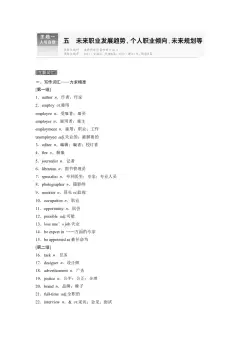
- 主题一 五未来职业发展趋势,个人职业倾向、未来规划等
- 主题一 五 未来职业发展趋势,个人职业倾向、未来规划等
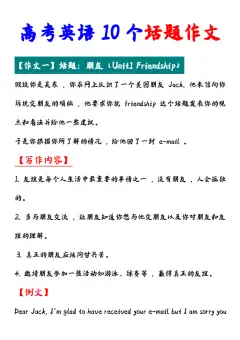
- 英语46高考英语10个话题作文
- 英语78高考英语8个押题作文新高考
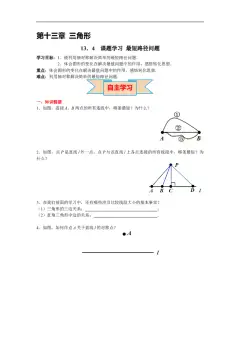
- 数学13.4课题学习最短路径问题(人教版)
- 英语50高中英语13篇高考英语热点类优秀范文
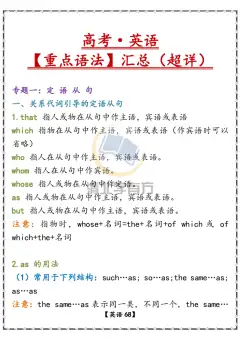
- 英语68高考英语重点语法汇总超详
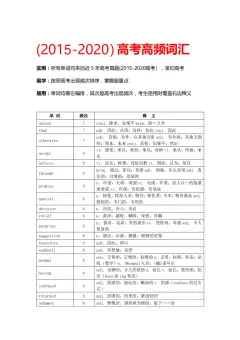
- 英语472015至2020高考英语高频词
- 英语08高考英语800个高频词
- 新东方2026年6月六级英语返学费春季直通车开班课笔记课程规划导学课件
- 主题一 八 未来职业发展趋势,个人职业倾向、未来规划等
- 主题一 五未来职业发展趋势,个人职业倾向、未来规划等
- 主题一 五未来职业发展趋势,个人职业倾向、未来规划等
- 主题一 五 未来职业发展趋势,个人职业倾向、未来规划等
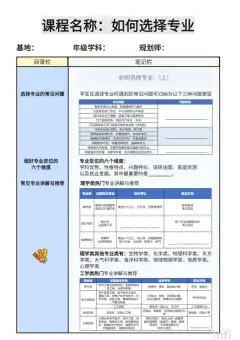
- 李辉英语2026版高三如何选择专业课程笔记规划资料
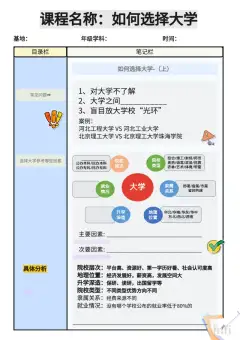
- 李辉英语2026版高三如何选大学课程笔记规划资料
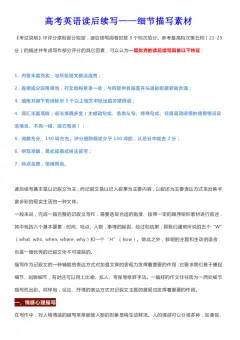
- 英语32高考英语读后续写细节描写素材
- 2025届高中英语一轮话题复习学生版主题一人与自我语境10未来职业发展趋势个人职业倾向未来规划等
- 2024年高考英语一轮复习主题词汇阅读一遍过专题09职业发展、未来规划和创新意识-2024年高考英语一轮复习主题词汇&阅读一遍过
- 2025版5·3A新高考英语词汇册未来规划习题Word
- 星火英语巅峰训练高考英语真题必刷二千题
- 地理微考点:沃克环流vs厄尔尼诺vs拉尼娜现象-备战2023年高考总复习地理微考点狙击与专项突破(2)
- 备战2023年高考地理总复习微考点狙击与专项突破沃克环流vs厄尔尼诺vs拉尼娜现象
- 备战2023年高考地理总复习微考点狙击与专项突破沃克环流vs厄尔尼诺vs拉尼娜现象
- 星火英语巅峰训练高考语法填空一千八百题
- 快捷英语外刊活页英语时文高考第二十一期
- 快捷英语外刊活页英语时文高考第二十七期
- 快捷英语外刊活页英语时文高考第二十六期
- 快捷英语外刊活页英语时文高考第二十五期
- 快捷英语外刊活页英语时文高考第二十四期
- 快捷英语外刊活页英语时文高考第二十三期
- 快捷英语外刊活页英语时文高考第二十二期
- 快捷英语外刊活页英语时文高考第二十期
- 英语74高考英语必考的40个重点句型下
- 英语10高考二轮复习抢分宝典英语
- 英语06高考二轮复习抢分宝典英语
- 星火英语小学英语词汇语法天天练