


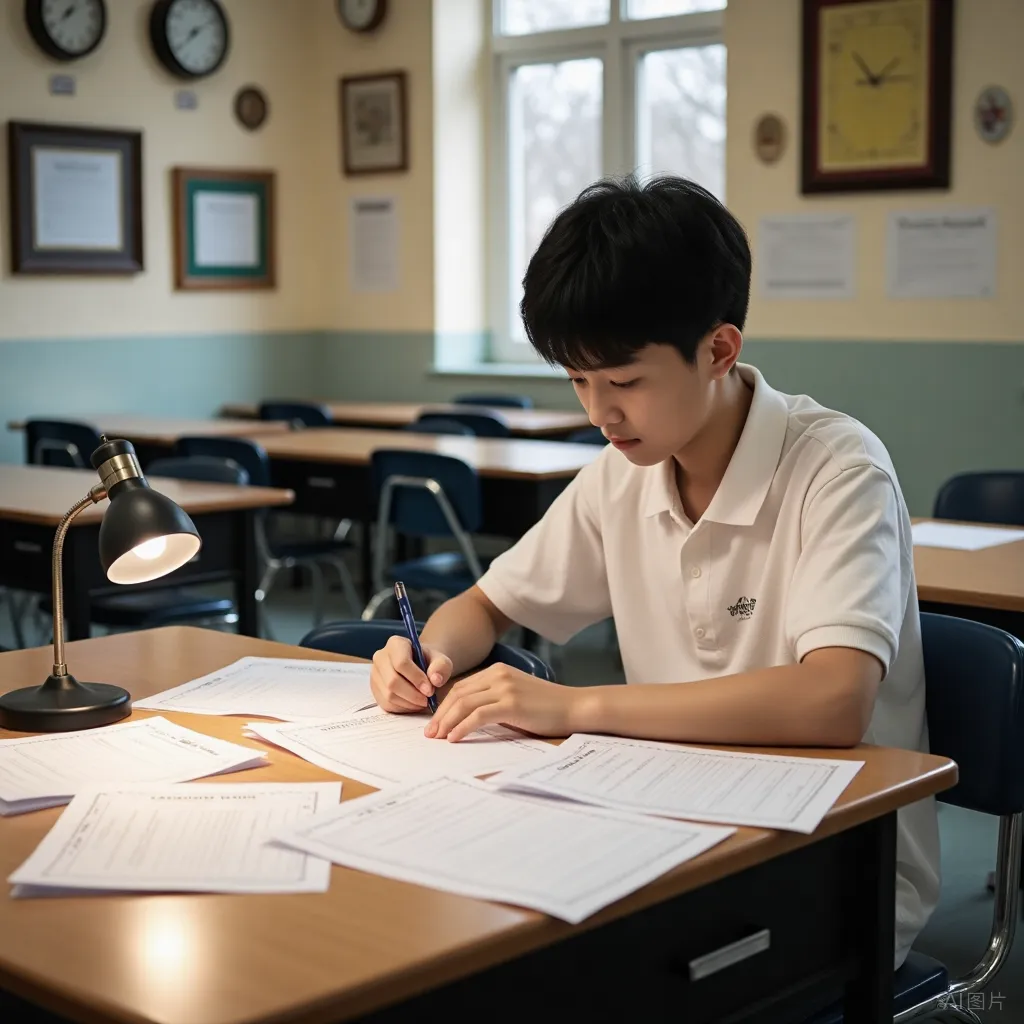
中考志愿填报在即,摆在许多成绩优异的考生和家长面前的一道经典选择题,便是“宁做鸡头,还是凤尾”?是选择第一梯队顶尖高中的普通班,还是第二梯队优质高中的创新班或强化班?这不仅是学校的选择,更是两种不同成长路径的规划。
The high school entrance exam (Zhongkao) application season is approaching, and a classic dilemma faces many high-achieving students and their parents: to be a big fish in a small pond or a small fish in a big pond? Should you choose a regular class in a top-tier high school or an innovation/enhanced class in a second-tier school? This is not merely a choice between schools, but a decision between two different developmental paths.
Advantage Analysis
Top-tier Peer Group
: Your classmates will be the city's best students. In this environment, you'll be exposed to cutting-edge ways of thinking and learning methods. "He who walks with the wise becomes wise." Being around excellence is a powerful motivator in itself.
Superior Platform and Resources
: Top high schools boast the most experienced faculty, including key teachers who have participated in grading the Gaokao. Their grasp of exam points and scoring criteria provides an invisible advantage. More importantly, the initial review threshold for autonomous recruitment programs like the "Strong Foundation Plan" from top universities is often set at these elite high schools.
Resilience Training
: The competition is fierce, and every exam is a stress test. For students with strong psychological fortitude who thrive on challenges, this environment can greatly enhance their resilience and grit, preparing them for future competition in university and their careers.
Potential Risks
The "Flowerpot Effect"
: Long-term exposure to a relatively sheltered and superior environment might weaken one's ability to handle more complex challenges. If the overall class level lags behind the top students, one might not be exposed to higher-order thinking skills.
Psychological Gap and Loss of Confidence
: Transitioning from a "star" in junior high to a "small fish" in high school can lead to a significant blow to one's self-esteem. If not adjusted to in time, it can cause anxiety or even academic burnout.
Advantage Analysis
Focused Resource Allocation
: As the "showcase" and "spearhead" of the school, these classes are staffed with the best teachers and given priority for competition coaching and research projects. Teachers provide more attention and精细化 guidance.
Building Strong Confidence
: In a smaller competitive pool, it's easier to achieve top rankings. This continuous positive feedback loop significantly builds confidence and maintains high motivation.
A More Suitable Pace
: The teaching pace and difficulty are often tailored for top students, avoiding the dilemma of "falling behind" or "not being challenged enough" that might occur in a top-tier school. For students who need more guidance, this is an ideal "nurturing pool".
Potential Risks
Limitations in Perspective
: The overall student body quality sets the "ceiling". You might miss out on intellectual sparring with the city's absolute best students and have less exposure to the most challenging problems in competitions.
Psychological Burden of Being the "Big Fish"
: Carrying the constant expectation of being number one can create immense pressure when grades fluctuate. Research suggests that students in second-tier experimental classes may have a higher "test anxiety index".
Singular Skill Development
: The training model in some second-tier schools may be more exam-focused. They might lack the rich extracurricular resources for interdisciplinary project-based learning (like Model UN or science clubs) that top universities value in their autonomous recruitment processes.
The Four Guiding Questions
What is their stress tolerance
Does the child thrive on challenges, or do they get discouraged by fluctuations in ranking? The former suits the "small fish" path, while the latter is better for the "big fish" path.
How are their self-learning skills
Is the child good at planning their own studies and summarizing mistakes, or do they rely on teacher supervision and detailed explanations? The former will thrive in a top school, while the latter will be better supported in an innovation class.
Was the Zhongkao performance typical or an over-performance
?If it was an over-performance, a key class in a second-tier school might be a safer bet. If they underperformed, the platform of a first-tier school can better accommodate their true ability.
What are the child's goals
? If the goal is to aim for top universities like Tsinghua or Peking, the platform and channels of a first-tier school are crucial. If the goal is to steadily get into a 985/211 university, the targeted training in a second-tier innovation class might be more efficient.
The ultimate goal of education is not to force a child into a seemingly glamorous mold, but to awaken the power within them. No matter which path you choose, remember that true champions never opt for "safe mediocrity"; they give their all on the battlefield that suits them best.
中高考考点精讲
高效学习方法
1对1学情诊断

文章来源:
四季读书网
版权声明:本文内容由互联网用户自发贡献,该文观点仅代表作者本人。本站仅提供信息存储空间服务,不拥有所有权,不承担相关法律责任。如发现本站有涉嫌抄袭侵权/违法违规的内容, 请发送邮件至23467321@qq.com举报,一经查实,本站将立刻删除;如已特别标注为本站原创文章的,转载时请以链接形式注明文章出处,谢谢!


