题目:
The best way to learn about a culture is to learn the language of that culture.
To what extent do you agree or disagree with this opinion?
中文:
了解一种文化的最好方法就是学习这种文化的语言。你在多大程度上同意或不同意这一观点?
题目解读
这道题要求我们就“了解一种文化的最好方法就是学习这种文化的语言”这一观点表达同意或不同意的程度。注意,这是一道观点类题目,题干中使用了“Do you agree or disagree?”,因此我们可以选择完全同意、完全不同意,或部分同意。
我们可以采用五段式结构。第一段明确表达立场;第二段可以从语言学习对文化理解的帮助讨论;第三段可以从语言学习的局限性讨论;第四段可以给出更加全面的方法;最后一段总结并重申立场
写作框架
1.开头段(Introduction)
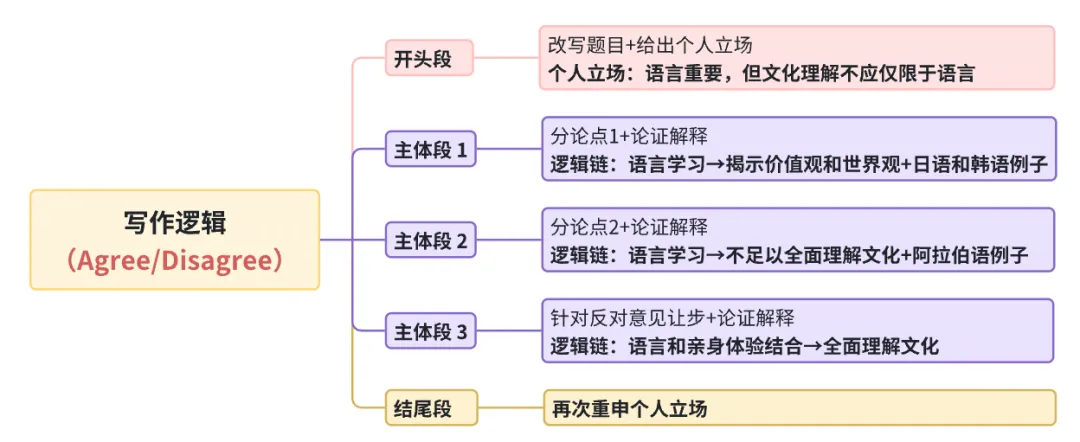
人们常说,学习一门语言是理解其文化最有效的方式。虽然我同意语言是进入文化的重要门户,但我认为文化理解远不止于语言能力
It is often argued that learning a language is the most effective way to understand a culture. While I agree that language is an essential gateway, I believe cultural understanding goes beyond linguistic ability.
2.主体段
主体段1:
主题:语言无疑能深入揭示一个社会的价值观、传统和世界观
解释1:成语、隐喻和谚语往往反映了一个群体的历史经历和道德准则
例子1:例如,在日语中,“出头的钉子会被敲下去”这句话体现了文化对和谐与一致性的重视,如果不学习语言,学习者可能无法完全理解这一点
解释2:韩语中复杂的敬语体系揭示了社会关系中的等级结构,而这些细微差别也只有通过语言学习才能真正领会
主体段2:
主题:把语言学习等同于文化掌握存在过度简化的风险
解释1:一个人即使精通外语,也可能对更深层次的文化实践一无所知,例如宗教仪式、社交礼仪或饮食传统
例子1:要真正理解阿拉伯语中的“Inshallah”,不仅需要语言知识,还必须熟悉伊斯兰教关于命运和神意的信仰
解释2:人们即便不精通当地语言,也能通过旅行、艺术、美食和社交互动深入体验文化。这些经历往往能揭示一些语言本身无法传达的生活细节
主体段3:
主题:语言是一种强有力但并非唯一的文化学习工具
解释1:通过把语言学习与亲身体验结合起来,比如参加节日、观察当地习俗或建立跨文化友谊,人们才能获得更全面的文化理解
解释2:事实上,文化与语言是互补的:文化为表达提供背景,而语言帮助阐释这些文化现实
结尾段(Conclusion)
学习语言无疑是理解文化的重要途径,但它不应被视为唯一的方法。只有把语言知识与真实的文化体验相结合,才能获得更深入的理解learning a language is undeniably an important path to understanding a culture, but it should not be regarded as the sole method. A deeper comprehension comes from integrating linguistic knowledge with lived cultural experiences.
范文精析版
⭐️ 蓝色部分-生动动作表达:增加写作词汇丰富程
⭐️ 黄色部分-地道名词形容词表达:增加写作词汇丰富程度
⭐️ 橙色部分-必备连接词汇:增加写作连接词的积累
⭐️ 绿色部分-高级语法积累:提高写作时语法多样性和准确性
▼
范文
It is often argued that learning a language is the most effective way to understand a culture. While I agree that language is an essential gateway, I believe cultural understanding goes beyond linguistic ability.
Language undoubtedly provides deep insights into a society’s values, traditions, and worldview. Idioms, metaphors, and proverbs often reflect historical experiences and moral principles that define a community. For instance, in Japanese, the phrase “the nail that sticks out gets hammered down” illustrates the cultural emphasis on harmony and conformity, something a learner may not fully grasp without engaging with the language. Similarly, the nuances of politeness in Korean honorifics reveal the hierarchical structure of social relationships, offering learners a perspective that textbooks on culture alone cannot provide.
However, equating language learning with cultural mastery risks oversimplification. A person can achieve fluency in a foreign language yet remain ignorant of deeper cultural practices such asreligious rituals, social etiquette, or culinary traditions. For example, understanding the Arabic word “Inshallah” requires not just linguistic knowledge but also familiarity with Islamic beliefs about fate and divine will. Moreover, individuals can immerse themselves in a culture through travel, art, food, and social interaction without necessarily being proficient in the local tongue. These experiences often reveal aspects of daily life that words alone cannot capture.
A balanced view is that language is a powerful but not exclusive tool for cultural learning. By combining language study with firsthand experiencessuch asparticipating in festivals, observing local customs, or engaging in intercultural friendships, one gains a more comprehensive appreciation of a culture. In fact, culture and language complement each other: the former provides context for expressions, while the latter helps articulate those cultural realities.
In conclusion, learning a language is undeniably an important path to understanding a culture, but it should not be regarded as the sole method. A deeper comprehension comes from integrating linguistic knowledge with lived cultural experiences.
高分表达
goes beyond linguistic ability 关键媒介
provides deep insights 提供深刻见解
risks oversimplification 有过度简化的风险
remain ignorant 对…… 仍不了解
immerse themselves in a culture 让自己沉浸于一种文化中
participating in festivals 参加节日(活动)
observing local customs 观察(或 “了解”)当地习俗
articulate those cultural realities 清晰表达那些文化现实
integrating linguistic knowledge with 将语言知识与… 相整合
an essential gateway 超越语言能力(范畴)
historical experiences 历史经历
moral principles 道德准则
emphasis on harmony and conformity 对和谐与一致性的重视
hierarchical structure of social relationships 社会关系的等级结构
cultural mastery 对文化的精通
religious rituals 宗教仪式
social etiquette 宗教仪式
culinary traditions 社交礼仪
a powerful but not exclusive tool 一种有力但非排他性的工具
intercultural friendships 跨文化友谊
comprehensive appreciation 全面的理解
path to understanding a culture 了解一种文化的途径
the sole method 唯一的方法
①For instance, in Japanese, the phrase “the nail that sticks out gets hammered down” illustrates the cultural emphasis on harmony and conformity, something a learner may not fully grasp without engaging with the language.
例如,在日语中,“出头的钉子会被敲下去”这句话体现了文化对和谐与一致性的重视,(名词同位语)如果不学习语言,学习者可能无法完全理解这一点
②Similarly, the nuances of politeness in Korean honorifics reveal the hierarchical structure of social relationships, offering learners a perspective that textbooks on culture alone cannot provide.
同样,韩语中复杂的敬语体系揭示了社会关系中的等级结构,(句尾comma-ing表伴随)而这些细微差别也只有通过语言学习才能真正领会
③For example, understanding the Arabic word “Inshallah” requires not just linguistic knowledge but also familiarity with Islamic beliefs about fate and divine will.
举例来说,要真正理解阿拉伯语中的“Inshallah”,(not just…but also…平行)不仅需要语言知识,还必须熟悉伊斯兰教关于命运和神意的信仰
④By combining language study with firsthand experiences such as participating in festivals, observing local customs, or engaging in intercultural friendships, one gains a more comprehensive appreciation of a culture.
(by+动名词表方式)通过把语言学习与亲身体验结合起来,比如参加节日、观察当地习俗或建立跨文化友谊,人们才能获得更全面的文化理解
▼