资讯 / 正文
高考英语听力训练(1121),适用所有版本!(请老师转给学生)
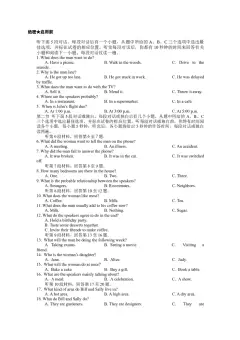
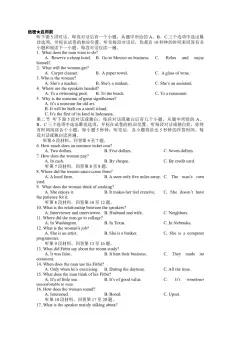
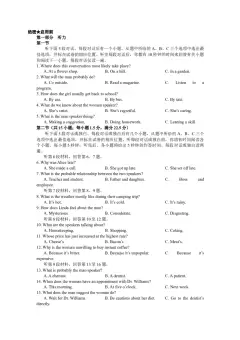
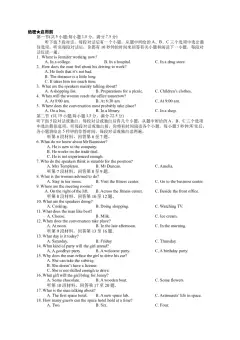
听下面5段对话。每段对话后有一个小题,从题中所给的A、B、C三个选项中选出最佳选项。听完每段对话后,你都有10秒钟的时间来回答有关小题和阅读下一小题。每段对话读两遍。
1. How does the woman probably feel?
A. Curious.
B. Excited.
C. Annoyed.
2. What does the man tell Ava to do?
A. Cook dinner.
B. Fetch the clothes.
C. Pick up the groceries.
3. Why did the man buy the lemon tree?
A. To produce fruit.
B. To purify the indoor air.
C. To decorate his room.
4. What are the speakers arguing about?
A. Which way to go.
B. Where to eat.
C. What to buy.
5. Why is Matt leaving the company?
A. He’s retiring.
B. He’s starting his own business.
C. He’s moving to a different country.
第二节(共15小题;每小题1.5分,满分22.5分)
听下面5段对话或独白。每段对话或独白后有几个小题,从题中所给的A、B、C三个选项中选出最佳选项。听每段对话或独白前,你将有时间阅读各个小题,每小题5秒钟;听完后,各小题将给出5秒钟的作答时间。每段对话或独白读两遍。
听下面一段对话,回答以下小题。
6. Where does the conversation take place?
A. In a bakery.
B. In a fruit shop.
C. In a restaurant.
7. What is free?
A. A strawberry pie.
B. A delivery service.
C. A custom message.
听下面一段对话,回答以下小题。
8. What did the scientists do during the research?
A. They drank coffee.
B. They made videos.
C. They kept a cat.
9. What does a relaxed cat do?
A. It shuts its eyes.
B. It pulls its ears back.
C. It moves its tail forward.
10. What are the speakers mainly talking about?
A. A cat cafe.
B. Cat face signals.
C. Adopting a cat.
听下面一段对话,回答以下小题。
11. What is the most likely relationship between the speakers?
A. Good friends.
B. Husband and wife.
C. Brother and sister.
12. How do the speakers feel about the rules now?
A. Annoyed.
B. Unconcerned.
C. Grateful.
13. What did the speakers benefit from sleeping early according to the man?
A. They were refreshed for classes.
B. They spent less time watching TV.
C. They achieved better time management.
听下面一段对话,回答以下小题。
14. Why does Annie love touring?
A. She can relax in the natural world.
B. She can advocate wildlife protection.
C. She can experience different lifestyles.
15. How does Annie communicate with foreigners?
A. By using body language.
B. By turning to translators.
C. By learning their languages.
16. What is Annie’s advice for future photographers?
A. Be determined.
B. Stay curious.
C. Get up early.
17. What is the man?
A. A guide.
B. A host.
C. A teacher.
听下面一段独白,回答以下小题。
18. What is the main topic of the talk?
A. The structure of the bee society.
B. A particular kind of bee behavior.
C. Ways for bees to find their own food.
19. What does the length of the dance tell about the food source?
A. Its distance.
B. Its quality.
C. Its direction.
20. What was the original purpose of the dance according to scientists?
A. To find and select a place to build a nest.
B. To teach young bees to find food.
C. To help old bees get energy.
W: Could you please read the instructions carefully first? They are hard to understand.
M: Sorry, that’s my fault. I will put them together again in simple words. Just wait a moment and you’ll soon get a new version.
M: Ava, remember to pick up our clothes at the dry cleaner on your way home.
W: Sure. And I’m going to stop by the grocery store. Is there anything you’d like to eat?
M: It’s up to you to decide.
W: Wow, the lemon tree turns out to be a great decoration in your room.
M: Well, that’s not why I bought it. You see, the fresh scent of lemons fills the air around the lemon trees, which can improve air quality in the room.
M: We should go straight ahead. The store assistant sold me this map, and she said it’s the latest one.
W: No, the waiter at that restaurant told me to take the small path on the left. It’s the shortest way to Sweetwater Town.
M: Joyce, have you heard that Matt is leaving the company?
W: Oh really? He’s worked here for 15 years. Is he retiring?
M: No, he is leaving to open his own company in a different industry.
W: Hi. My family is having a holiday party today, and I’d like a fruit cake.
M: We have a menu with some different options.
W: Let’s see. This one fits my budget. So I’ll take this one with the strawberries on top.
M: Great, I’ll package that up for you right away. Would you like me to write a custom message on it? There’s no extra charge.
W: No, thank you. Just package it as is.
W: Hey Bob. My parents just adopted a cat last week, but none of us really know how to understand it.
M: Oh, I just read about a study on cat facial expressions.
W: Really?
M: Yeah! Scientists recorded videos of 53 cats in a café. They found cats can make over 270 different faces using just 26 tiny movements.
W: That’s almost as many as dogs!
M: Yep. Dogs use 27, and humans use 44.
W: That’s amazing. What kind of things did they notice?
M: They looked at small changes like how a cat opens its mouth or moves its ears.
W: So, can you tell if a cat is happy or mad?
M: Kind of. A friendly cat moves its ears forward and slowly closes its eyes. An upset one pulls its ears back and stares.
W: That’s helpful.
M: When we were young, I used to get really mad about some of the rules at home. But now I realize that the rules were meant to help us.
W: You’re right.
M: Remember that time we went to watch TV without finishing our homework? We ended up being criticized. I thought it was unfair at the time.
W: I felt the same way when I was forced to attend piano lessons, but now I see it helped me develop discipline and skills. I’m so happy I did it.
M: We always had to go to bed early, so we were well-rested for school.
W: And do you remember how we used to complain about helping with housework? But that was how we learned responsibility.
M: It’s interesting how we see things differently now.
M: Today, we have the opportunity to talk with Annie Smith. She’s a photographer for the National Geographic Society. Welcome, Annie.
W: Hello. I’m glad to be here.
M: Annie, why do you like to travel and explore the world?
W: Because it allows me to appreciate different views of the world. I get to experience how people in different places live their lives. I also love taking pictures of wildlife and landscapes.
M: But how do you communicate with foreigners?
W: I think the key is to get over my own shyness. Even if I don’t know the local language, I will gesture and smile, so that people feel more relaxed around me.
M: What advice do you have for future photographers?
W: I think the most important thing is that you’ve got to wake up every morning wanting to experience something new. It’s also important to love being creative and seeing things in new ways.
M: That makes sense. Well, thanks for being here today, Annie.
Honeybees are well known for their hard-working nature. But did you know they’re also excellent dancers? These useful little insects use a special dance as a way to communicate with each other about the location of the food source. Scientists have been studying this type of dance since the 1940s. As a result, we now know quite a bit about this secret bee language. The direction of the bee’s dance refers to the position of the food source in relation to the nest. The length of the dance tells other bees how far away the food source is. Honeybees will also adapt their dances according to the quality of the food source. The better quality the food has, the more energetic the dance will be. Researchers believe that the dance probably began as a way for bees to find and choose a nest site. It wasn’t until later that they started to use it to find food. It’s also believed that dancing is not the behavior the bees are born with. Instead, young bees must learn it from their elders. It is an interesting example of just how complex insects societies can be.
因为公众号平台更改了推送规则,如果不想错过浪哥的文章,记得读完点一下“在看”,这样每次新文章推送才会第一时间出现在你的订阅列表里。 想要人生没有遗憾,不要忘记点“分享”“点赞”“在看”!!!
相关文档
- 2026届高考英语听力训练第二十七期(高考一二三轮专项复习)
- 2026届北京市高考英语听力口语训练第七期专项训练
- 2026届高考英语听力训练第二十二期(高考一二三轮专项复习)
- 2026届高考英语听力训练第二期(全国二卷)
- 2026届高考英语听力训练第三期(全国二卷)专项复习
- 2026届高考英语听力训练北京市高考英语听力口语训练第四期专项训练
- 2026届高考英语听力训练:北京市高考英语听力口语训练第十期专项训练
- 2026届高考英语听力训练:北京市高考英语听力口语训练第二期专项训练
- 2026届高考英语听力训练第十五期(全国二卷)
- 2026届高考英语听力训练第一期 全国二卷
- 2026届高考英语听力训练第十四期(全国二卷)
- 2026届高考英语听力训练第十六期(全国二卷)
- 2026届高考英语听力训练第十二期(全国二卷)
- 2026届高考英语听力训练第八期(全国二卷)
- 2026届高考英语听力训练第五期(全国二卷)
- 2026届高考英语听力训练:北京市高考英语听力口语训练第十一期
- 2026届高考英语听力训练:北京市高考英语听力口语训练第九期
- 2026届北京市高考英语听力口语训练第四期专项训练
- 2026届北京市高考英语听力口语训练第一期专项训练
- 2026届高考英语听力训练第十期(全国二卷)专项复习
- 2026届高考英语听力训练第十三期 全国一卷
- 2026届高考英语听力训练第十七期 全国一卷 英语专项复习
- 2026届高考英语听力训练第三十一期(全国二卷)
- 2026届高考英语听力训练 上海市高考英语听力第四期专项训练
- 2026届高考英语听力训练第十八期(全国一卷)
- 2026届高考英语听力训练第十九期(全国一卷)
- 2026届高考英语听力训练第二十期(全国一卷)
- 2026届高考英语听力训练第二十八期专项练习(全国二卷)
- 2026届高考英语听力训练第七期 全国二卷 高考英语专项复习
- 2026届高考英语听力训练:北京市高考英语听力口语训练第五期
- 2026届北京市高考英语听力口语训练第三期(高考英语听力专项复习)
- 2026届高考英语听力训练上海市高考英语听力第五期专项训练
- 2026届高考英语听力专项训练第六期(上海市)
- 2026届上海市高考英语听力第二期专项训练
- 2026届上海市高考英语听力第三期专项训练
- 2026届高考英语听力训练:上海市高考英语听力第一期专项训练
- 高考英语听力模拟训练20(试题)
- 高考英语听力模拟训练19(试题)
- 高考英语听力模拟训练18(试题)
- 高考英语听力模拟训练17(试题)
- 高考英语听力模拟训练16(试题)
- 高考英语听力模拟训练15(试题)
- 高考英语听力模拟训练14(试题)
- 高考英语听力模拟训练13(试题)
- 高考英语听力模拟训练12(试题)
- 高考英语听力模拟训练11(试题)
- 高考英语听力模拟训练10(试题)
- 高考英语听力模拟训练09(试题)
- 高考英语听力模拟训练08(试题)
- 高考英语听力模拟训练07(试题)
- 高考英语听力模拟训练06(试题)
- 高考英语听力模拟训练05(试题)
- 高考英语听力模拟训练04(试题)
- 高考英语听力模拟训练03(试题)
- 高考英语听力模拟训练02(试题)
- 2026届高考英语听力训练第十期 全国二卷(英语专项复习)
- 2026届高考英语听力训练第二十四期(全国二卷)
- 2026届高考英语听力训练第二十九期(全国二卷)
- 2026届高考英语听力训练第三十五期 全国一卷 专项复习
- 2026届高考英语听力训练:北京市高考英语听力口语训练第六期专项练习(英语专项复习)
- 2026届高考英语听力训练第九期 全国一卷
- 2026届高考英语听力训练第三十期(全国一卷)
- 2026届高考英语听力训练第三十二期(全国一卷)专项复习
- 2026届高考英语听力训练第三十三期(全国一卷)专项复习
- 2026届北京市高考英语听力口语训练第三期(高考英语听力专项复习)
- 高考英语听力模拟训练20(答案和听力原文)
- 高考英语听力模拟训练19(答案和听力原文)
- 高考英语听力模拟训练18(答案和听力原文)
- 高考英语听力模拟训练17(答案和听力原文)
- 高考英语听力模拟训练16(答案和听力原文)
- 高考英语听力模拟训练15(答案和听力原文)
- 高考英语听力模拟训练14(答案和听力原文)
- 高考英语听力模拟训练13(答案和听力原文)
- 高考英语听力模拟训练12(答案和听力原文)
- 高考英语听力模拟训练11(答案和听力原文)
- 高考英语听力模拟训练10(答案和听力原文)
- 高考英语听力模拟训练09(答案和听力原文)
- 高考英语听力模拟训练08(答案和听力原文)
- 高考英语听力模拟训练07(答案和听力原文)
- 高考英语听力模拟训练06(答案和听力原文)
- 高考英语听力模拟训练05(答案和听力原文)
- 高考英语听力模拟训练04(答案和听力原文)
- 高考英语听力模拟训练03(答案和听力原文)
- 高考英语听力模拟训练02(答案和听力原文)
- 2026届高考英语听力训练第四期 全国一卷
- 2026届高考英语听力训练第六期(全国一卷)
- 2026届高考英语听力训练第二十六期(全国一卷)专项复习
- 2026届高考英语听力训练第二十五期(全国一卷)
- 2026届高考英语听力训练第二十一期 全国二卷 专项练习
- 2026届高考英语听力训练第三十七期(全国一卷)
- 2026届高考英语听力训练第二十三期全国一卷专项练习
- 备考2024新高考英语听力20试题
- 备考2024新高考英语听力19试题
- 备考2024新高考英语听力18试题
- 备考2024新高考英语听力17试题
- 备考2024新高考英语听力16试题
- 备考2024新高考英语听力15试题
- 备考2024新高考英语听力14试题
- 备考2024新高考英语听力13试题
- 备考2024新高考英语听力12试题