资讯 / 正文
高考词汇常见词性转化规律
备课自用,喜欢的点个小红心可以悄悄转走。高中词汇学习合集将会有持续更新,敬请留意。
一、名词的构成规律(其他词性 → 名词)
名词化是非常重要的一类,也是高考语法填空的重点。
1. 动词 + 后缀 → 名词
典型例词:
develop → development achieve → achievement advertise → advertisement perform → performance prefer → preference exist → existence appear → appearance refuse → refusal arrive → arrival discover → discovery
2. 形容词 + 后缀 → 名词
典型例词:
happy → happiness weak → weakness kind → kindness careless → carelessness active → activity possible → possibility responsible → responsibility independent → independence different → difference strong → strength
3. 名词 + 后缀 → 表示身份、职业或人物的名词
例如:
science → scientist art → artist music → musician library → librarian politics → politician photograph → photographer employ → employer / employee
二、形容词的构成规律(其他词性 → 形容词)
1. 名词 + 后缀 → 形容词
典型例词:
beauty → beautiful danger → dangerous fame → famous culture → cultural nature → natural science → scientific tradition → traditional economy → economic industry → industrial comfort → comfortable fashion → fashionable cloud → cloudy friend → friendly
2. 动词 + 后缀 → 形容词
典型例词:
accept → acceptable access → accessible attract → attractive create → creative compete → competitive impress → impressive differ → different resist → resistant interest → interested / interesting confuse → confused / confusing encourage → encouraging
3. 特别重要:-ed 和 -ing 形容词
这是高中学生尤其需要掌握的一类。
其核心区别是:
-ed:表示人的感受或事物所处的状态。 -ing:表示引起某种感受的性质或特点。
例如:
I am interested in the book.
The book is interesting.
The students were excited.
The news was exciting.
这里真正需要学生理解的不是词尾,而是动作的承受者与动作的发出者之间的关系。
三、动词的构成规律(其他词性 → 动词)
1. 名词 + 后缀 → 动词
典型例词:
beauty → beautify identity → identify apology → apologize apology → apologize strength → strengthen length → lengthen danger → endanger symbol → symbolize modern → modernize
2. 形容词 + 后缀 → 动词
典型例词:
wide → widen deep → deepen short → shorten sharp → sharpen strong → strengthen simple → simplify active → activate central → centralize
这里有一个很值得学生注意的构词思维:
动词往往表示使某种状态发生变化。
例如:
wide → widen:使变宽 deep → deepen:使加深 simple → simplify:使简化 strong → strengthen:使增强
四、副词的构成规律(其他词性 → 副词)
副词化是高考语法填空中非常高频的考点。
1. 形容词 + -ly → 副词
这是最常见的模式。
2. 需要注意的特殊拼写变化
其他例子:
easy → easily angry → angrily busy → busily simple → simply gentle → gently automatic → automatically scientific → scientifically
3. 特别注意:并非所有 -ly 结尾的词都是副词
例如:
friendly:形容词 lovely:形容词 lonely:形容词 lively:形容词 likely:形容词 daily:形容词/副词 weekly:形容词/副词
同时,部分形容词和副词形式相同:
fast hard late early high straight
例如:
He is a fast runner. He runs fast.
五、否定前缀和反义词构成规律
这一部分特别值得独立整理,因为它不仅涉及词义变化,还涉及词性识别。
典型例词:
able → unable available → unavailable honest → dishonest agree → disagree approve → disapprove possible → impossible polite → impolite legal → illegal regular → irregular responsible → irresponsible understand → misunderstand
需要强调:否定前缀并不一定改变词性。
例如:
possible(adj.)→ impossible(adj.) agree(v.)→ disagree(v.) honesty(n.)→ dishonesty(n.)
六、单独归纳的三类变化
除了常见的词缀转换,还有三种现象值得学生掌握。
1. 同一个单词兼具不同词性:零派生
不增加词缀,通过词汇功能和语境实现词性转换。
这类词不能仅凭词形判断词性,必须根据句法位置判断。
2. 过去分词和现在分词的形容词化
例如:
develop → developed / developing interest → interested / interesting inspire → inspired / inspiring satisfy → satisfied / satisfying relax → relaxed / relaxing shock → shocked / shocking
这里既涉及动词的非谓语形式,也涉及形容词用法。
3. 复合词和派生词
例如:
bedroom bathroom childhood friendship newspaper businessman environmentalist independence
它们不完全属于简单的词性转换,但体现了英语通过构词成分组合形成新词的规律。
七、高中英语词性转换核心规律表
我建议把学生的学习过程设计成三个层次:
识别规律: 看到 -tion、-ment、-ness、-ful、-ly 等词缀,能够初步判断词性。 理解构词: 理解词根和词缀如何共同改变单词的意义和语法功能。 语境运用: 在真实语篇和句子中,根据句法位置、语义关系选择正确的词形。
尤其是第三层,应该成为教学重点。
例如:
His ______ (care) attitude towards others made him a popular figure in the community.
学生不能只看到 care 就机械地加 -ful,而应该先判断:
His 后面需要什么成分? attitude 是什么词性? 空格修饰 attitude,还是表示 attitude 的某种行为? 句意需要表达什么?
最终得到:
caring
这里还可以进一步引导学生比较:
a caring attitude(关怀他人的态度) a careful attitude(谨慎的态度) carelessness(粗心)
记住,词性转换就不再是孤立的拼写训练,而是词汇意义、句法功能和语篇理解的结合。
相关文档
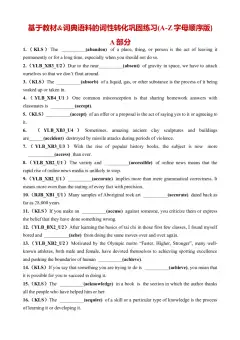
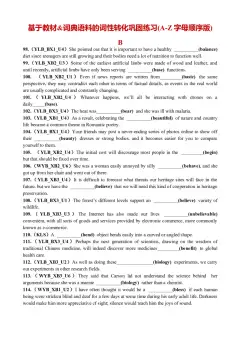
- 2026年高考英语二轮复习专项词性转化精炼宝典(A-Z)A部分 基于人教版教材与词典的词性转化巩固练习(A-Z字母顺序版)
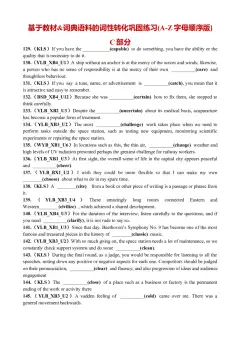
- 2026年高考英语二轮复习专项词性转化精炼宝典:基于教材与词典语料的词性转化巩固练习C部分(A-Z字母顺序版)
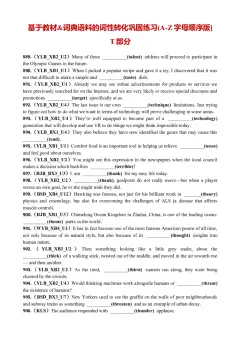
- 高考英语二轮复习词性转化巩固练习T部分(A-Z字母顺序版,基于教材与词典语料)
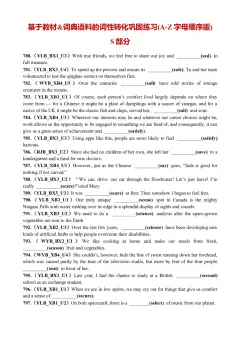
- 高考英语二轮复习词性转化巩固练习S部分(A-Z字母顺序版,基于教材与词典语料)
- 2026年高考英语二轮复习专项词性转化精炼宝典(A-Z) 基于教材&词典语料的词性转化巩固练习P部分 A-Z字母顺序版
- 2026年高考英语二轮复习专项词性转化精炼宝典(A-Z)M部分巩固练习(基于教材&词典语料,字母顺序版)
- 2026年高考英语二轮复习专项词性转化精炼宝典(A-Z)I部分巩固练习(基于教材&词典语料,字母顺序版)
- 2026年高考英语二轮复习专项词性转化精炼宝典(A-Z):基于教材&词典语料的词性转化巩固练习H部分(A-Z字母顺序版)
- 2026年高考英语二轮复习专项词性转化精炼宝典(A-Z):基于教材&词典语料的词性转化巩固练习G部分(A-Z字母顺序版)
- 2026年高考英语二轮复习专项词性转化精炼宝典(A-Z):基于教材&词典语料的词性转化巩固练习F部分(A-Z字母顺序版)
- 2026年高考英语二轮复习专项词性转化精炼宝典(A-Z)基于教材与词典语料的词性转化巩固练习E部分(A-Z字母顺序版)
- 2026年高考英语二轮复习专项词性转化精炼宝典(A-Z)基于教材与词典语料的词性转化巩固练习D部分(A-Z字母顺序版)
- 2026年高考英语二轮复习专项词性转化精炼宝典(A-Z)B部分 基于教材与词典语料的词性转化巩固练习(A-Z字母顺序版)
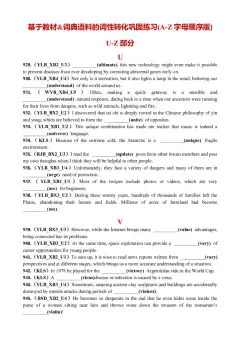
- 2026年高考英语二轮复习专项词性转化精炼宝典(A-Z):基于教材&词典语料的词性转化巩固练习U-Z部分(A-Z字母顺序版)
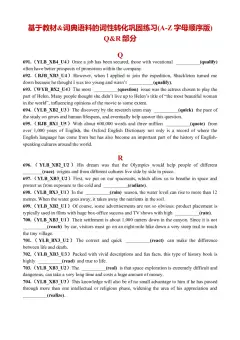
- 2026年高考英语二轮复习专项词性转化精炼宝典(A-Z) 基于教材&词典语料的词性转化巩固练习Q&R部分 A-Z字母顺序版
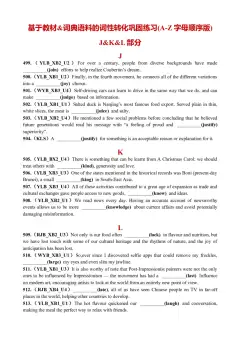
- 2026年高考英语二轮复习专项词性转化精炼宝典(A-Z)J&K&L部分巩固练习(基于教材&词典语料,字母顺序版)
- 2026年高考英语二轮复习词性转化巩固练习N&O部分(A-Z字母顺序版,基于教材与词典语料)
- 2024高考英语语法词汇专项突破:名词性从句经典百题专项训练04-2(答案解析版·全国通用)
- 2024高考英语语法词汇专项突破:名词性从句经典百题专项训练04-1(原卷版+答题卡)
- 2024高考英语语法词汇专项突破:名词性从句经典百题专项训练03-1(2-1)原卷版含答题卡
- 2026年高考英语二轮复习高频易错课标词汇词性转换 第15练 检测版
- 2026年高考英语二轮复习高频易错课标词汇词性转换9 记忆版
- 2026年高考英语二轮复习高频易错课标词汇词性转换8(记忆版)
- 2026年高考英语二轮复习高频易错课标词汇词性转换8(检测版)
- 2026年高考英语二轮复习高频易错课标词汇词性转换7记忆版
- 2026年高考英语二轮复习高频易错课标词汇词性转换7 检测版
- 2026年高考英语二轮复习高频易错课标词汇词性转换6 记忆版
- 2026年高考英语二轮复习高频易错课标词汇词性转换6(检测版)
- 2026年高考英语二轮复习高频易错课标词汇词性转换5(记忆版)
- 2026高考英语二轮复习高频易错课标词汇词性转换5(检测版)
- 2026高考英语二轮复习高频易错课标词汇词性转换4(检测版)
- 2026年高考英语二轮复习高频易错课标词汇词性转换3(记忆版)
- 2026年高考英语二轮复习高频易错课标词汇词性转换3(检测版)
- 2026年高考英语二轮复习高频易错课标词汇词性转换2 检测版
- 2026年高考英语二轮复习高频易错课标词汇词性转换16 检测版
- 2026年高考英语二轮复习高频易错课标词汇词性转换15 记忆版
- 2026年高考英语二轮复习高频易错课标词汇词性转换14 记忆版
- 2026年高考英语二轮复习高频易错课标词汇词性转换14 检测版
- 2026年高考英语二轮复习高频易错课标词汇词性转换13检测版
- 2026年高考英语二轮复习高频易错课标词汇词性转换12检测版
- 2026年高考英语二轮复习高频易错课标词汇词性转换11记忆版
- 2026年高考英语二轮复习 高频易错课标词汇词性转换11(检测版)
- 2026年高考英语二轮复习 高频易错课标词汇词性转换10(检测版)
- 2026年高考英语二轮复习高频易错课标词汇词性转换1 检测版
- 2024高考英语语法词汇专项突破02名词性从句考点扫描巩固练习与答案解析
- 2024高考英语语法词汇专项突破04名词性从句易错易混点解读
- 2026年高考英语二轮复习高频课标词汇词性转换9(检测版)
- 2026年高考英语二轮复习高频易错课标词汇词性转换2记忆版
- 2026年高考英语二轮复习高频易错课标词汇词性转换13记忆版
- 2026年高考英语二轮复习高频易错课标词汇词性转换12(记忆版)
- 2026年高考英语二轮复习高频易错课标词汇词性转换10(记忆版)
- 2026年高考英语二轮复习高频易错课标词汇词性转换(记忆版)
- 高考英语语法词汇专项突破:05透视what引导的名词性从句用法2024年
- 高考英语语法词汇专项突破:01表解名词性从句+巩固练习+答案与解析2024年
- 高考英语语法词汇专项突破:03名词性从句特殊考点全突破+巩固训练2024年
- 2024年高考英语语法词汇专项突破表解名词性从句加巩固练习加答案与解析
- 2024高考英语语法词汇专项突破名词性从句特殊考点全突破加巩固训练
- 25英语《阅读常见情绪态度类词汇》
- 2024高考英语语法词汇专项突破:名词性从句高考真题百题专项训练2-2答案解析版
- 高考英语语法词汇专项突破:名词性从句典型试题单项选择百题专项训练2-2(答案解析版·全国通用)
- 2024高考英语语法词汇专项突破 名词性从句典型试题单项选择百题专项训练2-1 答案解析版 全国通用
- 2024高考英语语法词汇专项突破:名词性从句高考真题百题专项训练(原卷版含答题卡)
- 2026届高考英语常见词汇新意解读系列0723(共35组)清单
- 2025届高考英语核心词汇专题练习 关联速记熟词生僻义之活用词性得新义 2026年高三英语一轮复习
- 高考英语语法词汇专项突破:06重点语法易错易混点(定语从句状语从句名词性从句)2024年
- 2025高中英语题型核心考点大串讲易错词性转化及高考易混词辨析
- 2026版高考英语一轮复习讲义+练习+课件(新教材新高考)第06讲 选修三词汇(词性转换、短语词组固定搭配、词汇综合检测)讲义(学生版)
- 2026年高考英语一轮复习讲义+练习+课件(新教材新高考)第03讲必修三词汇复习讲义(教师版)
- 2026版高考英语一轮复习讲义:必修二词汇第02讲(词性转换、短语词组固定搭配、词汇综合检测)学生版(新教材新高考)
- 2026年高考英语一轮复习第07讲选修四词汇词性转换短语词组固定搭配词汇综合检测讲义学生版
- 高考英语语法词汇专项突破:05重点语法易错易混点(状语从句定语从句名词性从句辨析)2024年
- 2026年高考英语一轮复习讲义+练习+课件(新教材新高考):第06讲选修三词汇词性转换、短语词组固定搭配与词汇综合检测(讲义)(教师版)
- 2026年高考英语一轮复习讲义 第01讲 必修一词汇(词性转换、短语词组固定搭配、词汇综合检测)(教师版)——新教材新高考版
- 2026年高考英语一轮复习讲义 第01讲 必修一词汇(词性转换、短语词组固定搭配、词汇综合检测)(学生版)——新教材新高考版
- 2026年高考英语一轮复习讲义+练习+课件(新教材新高考):第04讲选修一词汇(词性转换、短语词组固定搭配、词汇综合检测)讲义(学生版)
- 2026版高考英语一轮复习讲义:必修二词汇第02讲(词性转换、短语词组固定搭配、词汇综合检测)教师版(新教材新高考)
- 2026年高考英语一轮复习 第07讲 选修四词汇词性转换短语固定搭配及综合检测 讲义 教师版
- 高考英语语法词汇专项突破名词性从句经典百题训练答案解析版
- 2024年高考英语语法词汇专项训练:名词性从句高考真题百题专项训练(答案解析版)
- 2024年高考英语语法词汇专项突破:名词性从句高考真题百题专项训练(答题解析版)
- 2024年高考英语语法词汇专项突破:名词性从句典型试题单项选择百题专项训练(答案解析版)
- 2024年高考英语语法词汇专项突破:名词性从句经典百题专项训练(原卷版,含答题卡)
- 2024年高考英语语法词汇专项训练 名词性从句高考真题百题专项训练(2-2)原卷版含答题卡
- 2026年高考化学二轮复习 专题9 常见无机物的性质及转化 知识点+模拟及高考真题+答案解析
- 2026版高考英语一二三轮复习外研版2019选择性必修三至选择性必修四词汇讲义学生版(词性转换、核心单词、语法填空综合检测)
- 2026年高考英语一轮复习讲义:第04讲选修一词汇(词性转换、短语词组固定搭配、词汇综合检测)教师版(译林版)
- 2026版高考英语外研版2019选择性必修三至选择性必修四词汇讲义(词性转换、核心单词、语法填空综合检测)教师版
- 2024年高考英语语法词汇专项突破 名词性从句典型试题单项选择百题专项训练2-2 答题卡 原卷版
- 中考1600按词性分类
- 重难语法练06词形词性转化(解析版)
- 重难语法练06词形词性转化(原题版)
- 高考化学专题01化学与STSE常见物质的性质与转化学生版(2026年高考一二三轮复习·2025年高考化学一模试题分类汇编湖南专用)
- 高考化学重难点常见无机物性质用途转化解析版新高考
- 高考化学重难点常见无机物性质用途转化学生版
- 2024年高考化学热点重点难点专练重难点06常见无机物的性质用途与转化(新高考专用)(解析版)
- 高考化学专题01化学与STSE常见物质的性质与转化教师版(2026年高考一二三轮复习·2025年高考化学一模试题分类汇编湖南专用)
- 高考化学重难点常见无机物性质用途转化原卷版新高考
- 高考化学重难点常见无机物性质用途转化教师版
- 2024年高考化学热点重点难点专练重难点06常见无机物的性质用途与转化(新高考专用)(原卷版)
- 2023年高考化学热点重点难点专练重难点08常见无机物的性质与转化(新高考专用)(解析版)