


Part A Reading Aloud
阅读文本,对照视频跟读训练,注意语速、停顿 ( | )、连读 ()与语音语调。
Caffeine | occurs naturally | in coffee beans, tea leaves | and some tree nuts. People | have been consuming it | for centuries, but daily consumption | took off | at different times | in different places | around the world. Coffee became popular | in the 15th and 16th centuries. Tea became popular | by the 14th century | in China, but didn’t catch on | in Britain | until almost 400 years later. Today, caffeine can be found | nearly everywhere, and more and more caffeine-infused products | are hitting the shelves | every day. While | caffeine may provide great benefits, such as increased focus, alertness | and energy, it comes with considerable risks | just like any other substance.
课标外词汇:
caffeine / kǝ'fi:n / 咖啡因
infuse / ɪn'fju:z / 输注(药物等);注入
名词复数及动词第三人称单数的发音:
risks 中读 /s/
nuts, products, benefits, 中 -ts 读一个音 /ts/
oocurs, beans, leaves, centuries, times, years, shelves, comes 中读 /z/
places 读 /'pleɪsɪz/
容易读错的词汇:
until /ǝn'tɪl/ (不要读成 /ʌn'tɪl/)
Part B Role Play
角色扮演,先看题目,再播放音频,完成信息捕捉与问答输出。
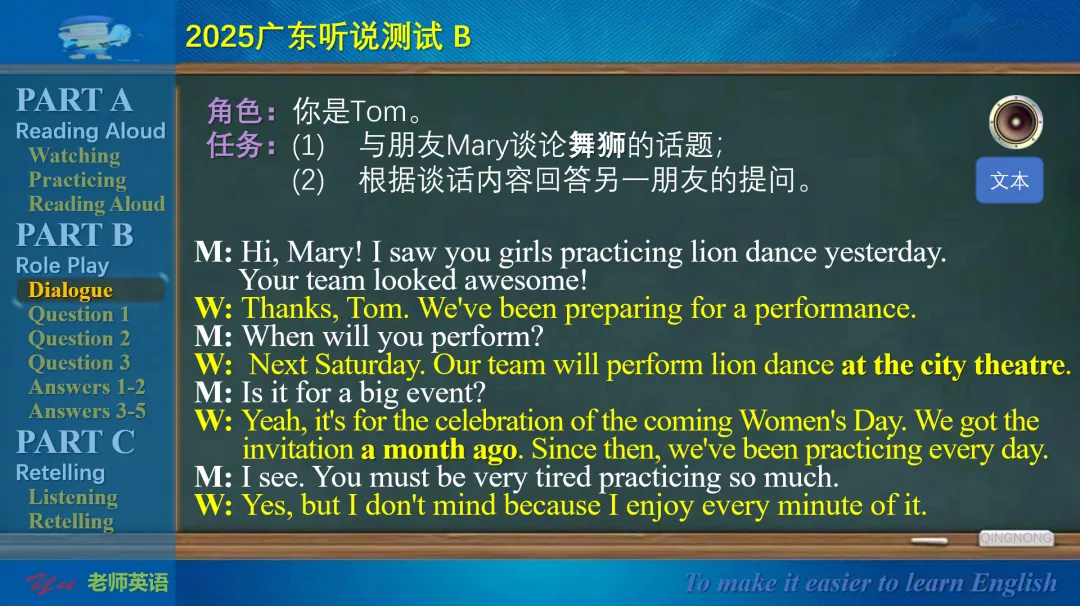
Tom与Mary谈论舞狮
对话末句及机器回答问题时的末句有助于你用英语提出或翻译下面三个问题
你为什么这么热爱舞狮? 你爸爸为什么拒绝教你? 你的第一次表演怎么样?
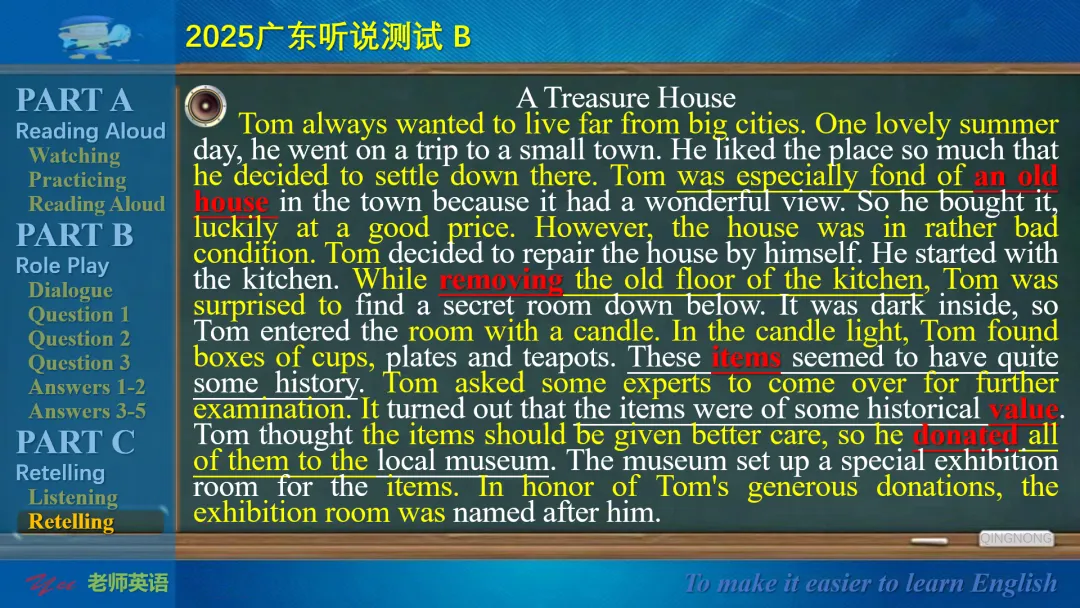
听音频抓取故事关键情节,梳理逻辑,完成复述输出。
梗概:Tom购得一旧屋,翻修厨房时,发现有历史价值的物品,捐给博物馆。
听时注意关键词前后信息。为什么买旧屋?旧屋在哪?拆除哪部分?在哪发现物品?怎么确定哪些是有价值的?博物馆怎么处置捐赠物?
课件获取:
企业微信微盘获取(复制下面链接,粘贴到浏览器打开)
https://drive.weixin.qq.com/s?k=AMMAoQdcADY8cBp4dy
备用渠道1:对话框发送25广东听说B
备用渠道2:2025年广东高考听说测试 B.rar
版权声明
课件为本人教研自制。真题素材来源于公开考试资源;课件音频、点播编排、版式设计为本人制作权益,禁止私自转发、二次剪辑、倒卖分销。欢迎自用备考。


