

每日一篇|诺奖人物成长故事与高考实战(Day 05)
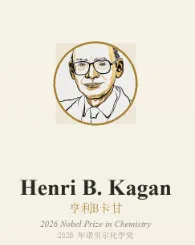
Day 05 · 亨利·B·卡甘 Henri B. Kagan · 2026 年诺贝尔化学奖
一、导语
从隐姓埋名的战时孩童,到「手性分子」的从容先驱——一门手性科学,如何由耐心筑成。
二、英文成长故事· The Story
2026 年诺贝尔化学奖得主亨利·B·卡甘,1930 年生于巴黎近郊。第二次世界大战期间,全家逃往法国南部一座村庄,隐姓埋名以求生。战后他重返校园,起初却并非优等生。他先选了并不适合自己的文科道路,后转向科学——被亲手做实验的奇妙所吸引,尤其着迷于巴黎「发现宫」的演示。
卡甘先后就读于索邦大学与巴黎化学高等学校,1960 年在法兰西公学院的雅克指导下获博士学位,随后在奥罗门下从事研究。1967 年,他加入新建的巴黎南大学(奥赛),并逐步建立起稳定的研究团队。1973 年晋升正教授,在此培养了一代代化学家,直至 1999 年荣休,一生未曾离开这所大学。
1971 年,卡甘提出 DIOP——一种 C2 对称手性配体,与铑催化剂配合,使烯烃氢化的对映体过量大幅提高。这一结果把配体对称性变成了不对称催化中可操作的设计原则,催生了一大批 C2 对称配体。制药界自此首次能可靠地制备「单一构型」的分子——一项重塑现代药物合成的突破。
1986 年,卡甘揭示了非线性效应:催化剂的纯度如何不成比例地决定产物的手性。这一洞察后来与自催化及生命起源相连,自成一门学科。2001 年诺奖因「最多三人」的规则将他遗漏,法国化学界为之抗议,卡甘却以平静回应。2026 年,诺奖终于表彰这一发现,并与硖合宪三共享。
三、高考实战· Gaokao Practice
A. They hid in southern France under false names. | B. They moved to the United States. |
C. They stayed in Paris throughout the war. | D. They worked for the resistance. |
A. He was a top student from the start. |
B. He always preferred chemistry. |
C. A literary path initially ill-suited him before he turned to science. |
D. He skipped school during the war. |
A. the speed of a chemical reaction | B. how much one chiral form outweighs the other |
C. the temperature of a catalyst | D. the size of a molecule |
A. A child prodigy who won early fame. |
B. A wartime refugee who gave up science. |
C. A chemist who only studied literature. |
D. From a hidden wartime child to a pioneer of asymmetric catalysis, with quiet grace. |
四、词汇积累· Word Bank
Word | Meaning | Example |
captivate | (v.) 使着迷;吸引 | captivated by hands-on experiments 被亲手实验深深吸引 |
stint | (n.) 一段(工作)经历;短期任务 | A research stint with the chemist Horeau 在奥罗门下的一段研究经历 |
disproportionately | (adv.) 不成比例地;不相称地 | disproportionately steer a product's chirality 不成比例地影响产物手性 |
reshape | (v.) 重塑;改变 的格局 | reshaped modern drug synthesis 重塑了现代药物合成 |
一、文本分析与主题学习全貌
主题学习全貌:本篇可串联「科学家的另一面」「战乱中的求学」「荣誉与从容」等单元,引导学生建立「人物—精神—方法」的阅读图式,并积累科普叙事中的高频词块(captivate / stint / reshape)。
二、高考考核能力分析与解题
解题:抓住题干关键词 during the Second World War 与 family,定位第一段 his family fled to a village in southern France and lived under assumed names,即「隐姓埋名躲到法国南部村庄」,故选 A。B/C/D 均无原文依据。细节题要领:先锁关键词 → 回原文精准定位 → 排除无依据项。
解题:第一段讲他「起初并非优等生,先走不适合的文科道路,后转科学」,C 是原文的同义转述。A 与「no star pupil」相反;B 与「后来才转向科学」矛盾;D 文中只说战时避难,未说辍学。推断题须依原文逻辑推进一步,不可外加信息或反向解读。
解题:第三段说 DIOP 使氢化获得「high enantiomeric excess」,并紧接着解释为可制备「single, controlled hand」的分子;enantiomeric excess 即「对映体过量」,指两种手性构型中一种多于另一种的程度,故选 B。词义题要在语境中找解释性同位或举例,把术语还原成功能含义再比对选项。
解题:全文主线是「战时隐姓埋名的少年→ 转投科学 → DIOP 与不对称催化突破 → 非线性效应与诺奖迟到」,贯穿坚持与从容,D 最贴切。A「神童早慧」、B「放弃科学」、C「只学文学」均与文意相反。主旨题须统观首尾与反复意象(hidden child / pioneer / calm),不被局部细节带偏。
三、模拟题格式范本
A. They hid in southern France under false names. | B. They moved to the United States. |
C. They stayed in Paris throughout the war. | D. They worked for the resistance. |
解析:解题:抓住题干关键词 during the Second World War 与 family,定位第一段 his family fled to a village in southern France and lived under assumed names,即「隐姓埋名躲到法国南部村庄」,故选 A。B/C/D 均无原文依据。细节题要领:先锁关键词 → 回原文精准定位 → 排除无依据项。
A. He was a top student from the start. |
B. He always preferred chemistry. |
C. A literary path initially ill-suited him before he turned to science. |
D. He skipped school during the war. |
解析:解题:第一段讲他「起初并非优等生,先走不适合的文科道路,后转科学」,C 是原文的同义转述。A 与「no star pupil」相反;B 与「后来才转向科学」矛盾;D 文中只说战时避难,未说辍学。推断题须依原文逻辑推进一步,不可外加信息或反向解读。
A. the speed of a chemical reaction | B. how much one chiral form outweighs the other |
C. the temperature of a catalyst | D. the size of a molecule |
解析:解题:第三段说 DIOP 使氢化获得「high enantiomeric excess」,并紧接着解释为可制备「single, controlled hand」的分子;enantiomeric excess 即「对映体过量」,指两种手性构型中一种多于另一种的程度,故选 B。词义题要在语境中找解释性同位或举例,把术语还原成功能含义再比对选项。
A. A child prodigy who won early fame. |
B. A wartime refugee who gave up science. |
C. A chemist who only studied literature. |
D. From a hidden wartime child to a pioneer of asymmetric catalysis, with quiet grace. |
解析:解题:全文主线是「战时隐姓埋名的少年→ 转投科学 → DIOP 与不对称催化突破 → 非线性效应与诺奖迟到」,贯穿坚持与从容,D 最贴切。A「神童早慧」、B「放弃科学」、C「只学文学」均与文意相反。主旨题须统观首尾与反复意象(hidden child / pioneer / calm),不被局部细节带偏。
四、词汇积累· Word Bank
Word | Meaning | <font face="宋体">文中例句</font> Example |
captivate | (v.) 使着迷;吸引 | captivated by hands-on experiments <font face="宋体">被亲手实验深深吸引</font> |
stint | (n.) 一段(工作)经历;短期任务 | A research stint with the chemist Horeau <font face="宋体">在奥罗门下的一段研究经历</font> |
disproportionately | (adv.) 不成比例地;不相称地 | disproportionately steer a product's chirality <font face="宋体">不成比例地影响产物手性</font> |
reshape | (v.) 重塑;改变 的格局 | reshaped modern drug synthesis <font face="宋体">重塑了现代药物合成</font> |
五、教学提示


