今天给大家介绍一篇中考同源阅读,讲的是中国出台房车旅游新规:从停车位到租赁年限,再到新能源房车,政策正让“轮子上的家”驶入普通家庭。文章词数184,蓝思值约630L,属“社会生活—旅游出行”主题,难度偏AB,适合AB卷主练,CD卷可加练first/second/third信息链。已配阅读5题、完形10空和超纲词预习单,方便直接进卷。
语篇分析
【What】 中国出台新规推动房车旅游。地方政府将建设特色路线、提供房车停车位及供水充电和废物处理服务;道路与停车场高度限制将考虑房车;小型租赁房车使用年限从15年延长到25年,拖挂式可达20年,并鼓励免押金和异地还车。同时支持新能源、智能和绿色房车,推广安全与环保露营。
【Why】 文章紧扣“社会生活—旅游出行”主题,用政策条文说明房车旅游如何变得更方便。真正要证明的一点是:房车旅游的普及不只靠车本身,更依赖停车、充电、废物处理等配套条件,以及租赁门槛的降低。后文主旨和推断题会踩住“配套服务决定体验”这个支点,而非只谈房车好玩。
【How】 本文是新闻说明文,按“总—分—总”展开,中间用First、Second、Third串起三条政策。数字(25年、20年、15年)和人物身份(地方政府、租赁公司、企业)容易成为细节干扰;对比处如“25年 instead of 15年”也常被设为同义替换题。末段由政策转向年轻旅行者,体现由物及人的收束逻辑。
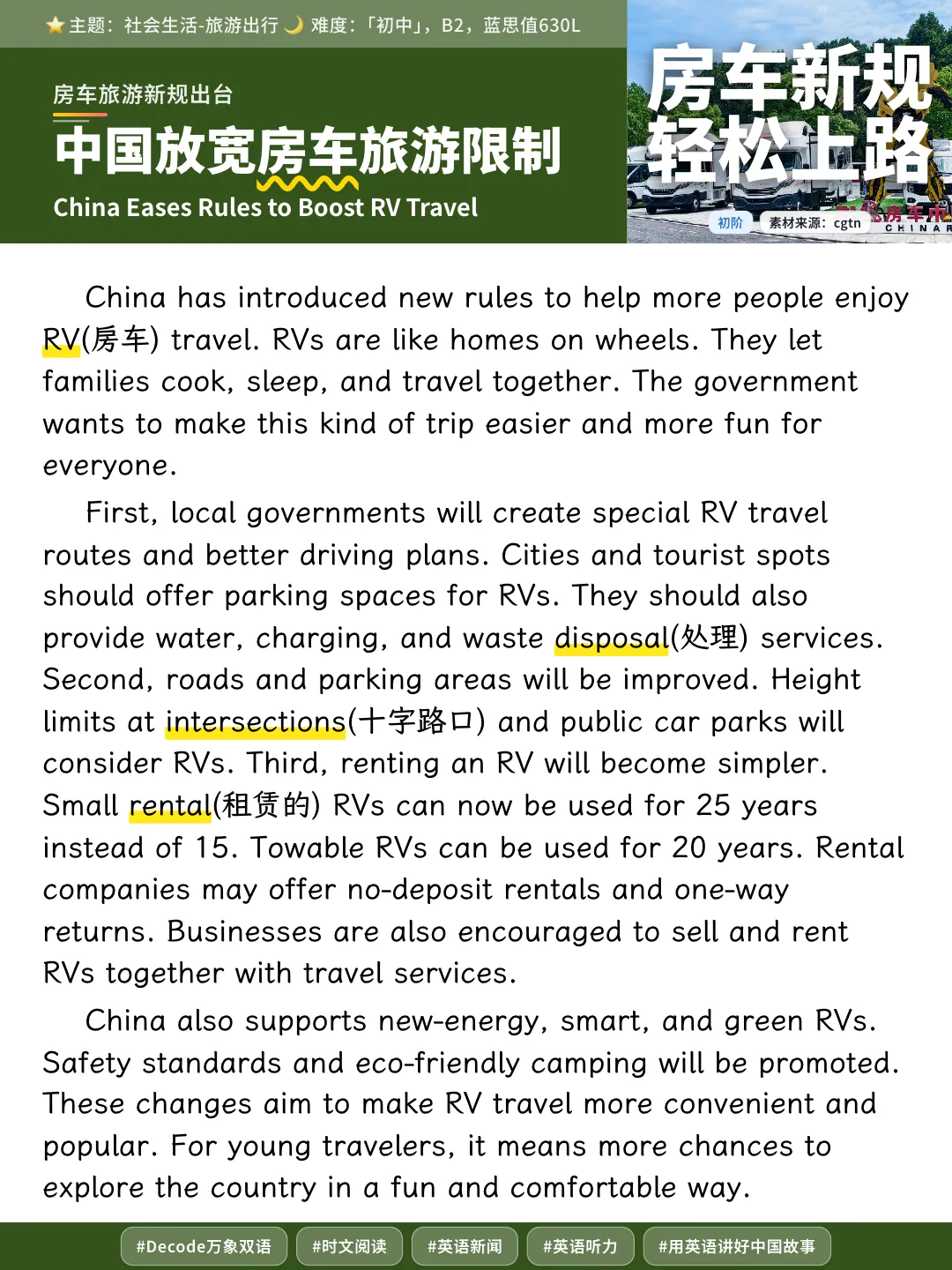
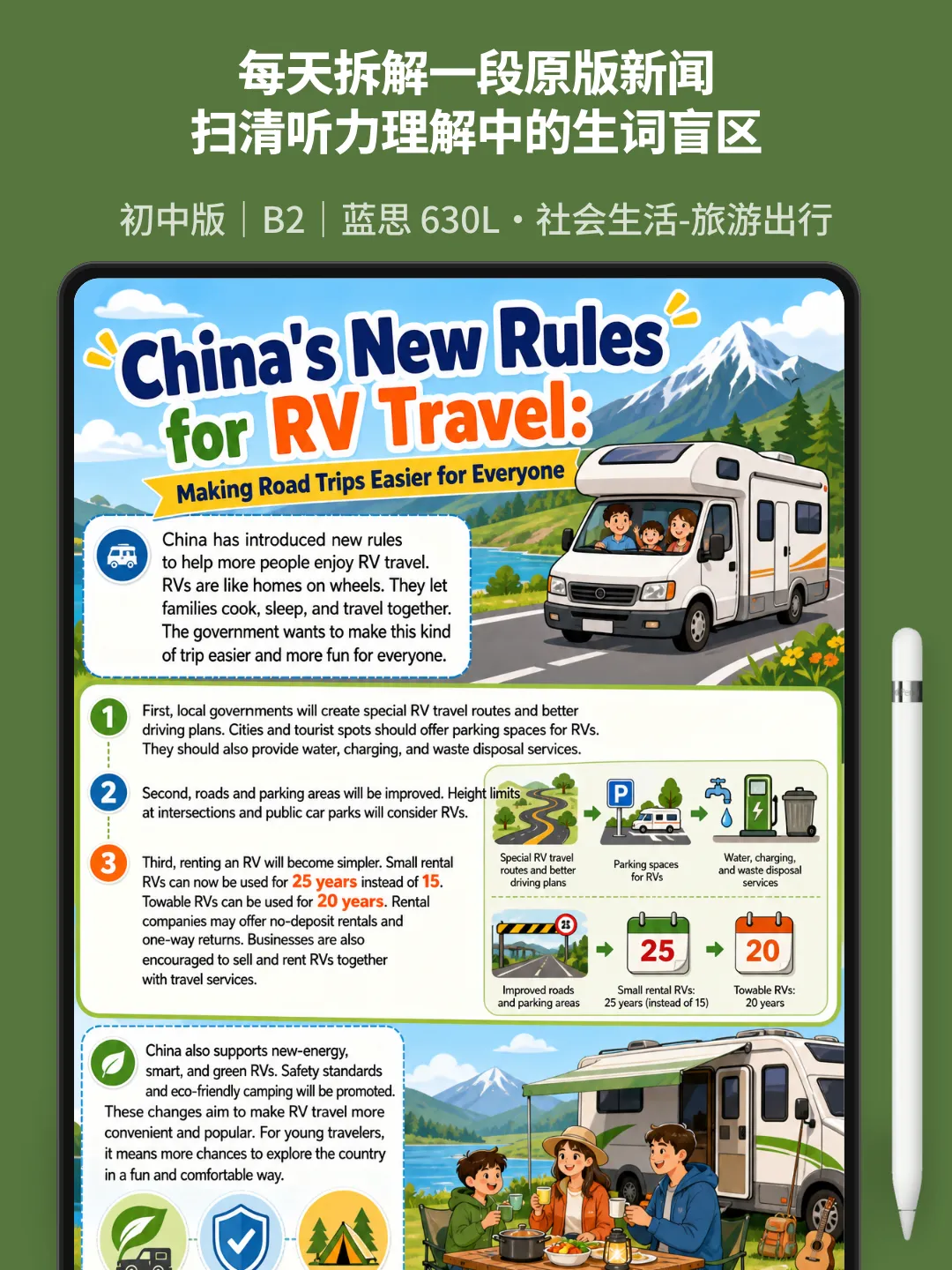
China's New Rules for RV Travel: Making Road Trips Easier for Everyone
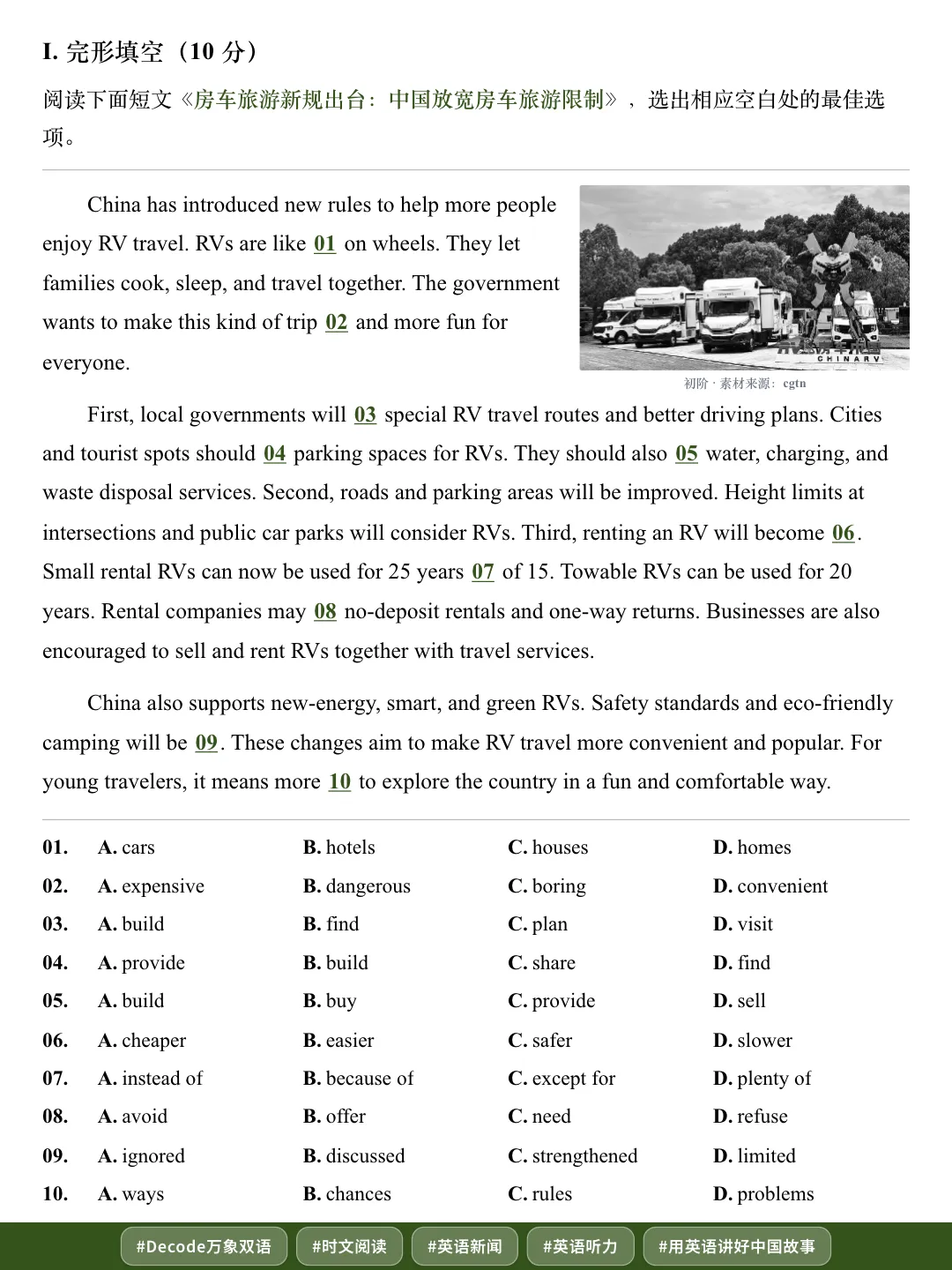
China has introduced new rules to help more people enjoy RV(房车) travel. RVs are like homes on wheels. They let families cook, sleep, and travel together. The government wants to make this kind of trip easier and more fun for everyone.
First, local governments will create special RV travel routes and better driving plans. Cities and tourist spots should offer parking spaces for RVs. They should also provide water, charging, and waste disposal(处理) services. Second, roads and parking areas will be improved. Height limits at intersections(十字路口) and public car parks will consider RVs. Third, renting an RV will become simpler. Small rental(租赁的) RVs can now be used for 25 years instead of 15. Towable RVs can be used for 20 years. Rental companies may offer no-deposit rentals and one-way returns. Businesses are also encouraged to sell and rent RVs together with travel services.
China also supports new-energy, smart, and green RVs. Safety standards and eco-friendly camping will be promoted. These changes aim to make RV travel more convenient and popular. For young travelers, it means more chances to explore the country in a fun and comfortable way.
这篇语篇,可以怎么命题?
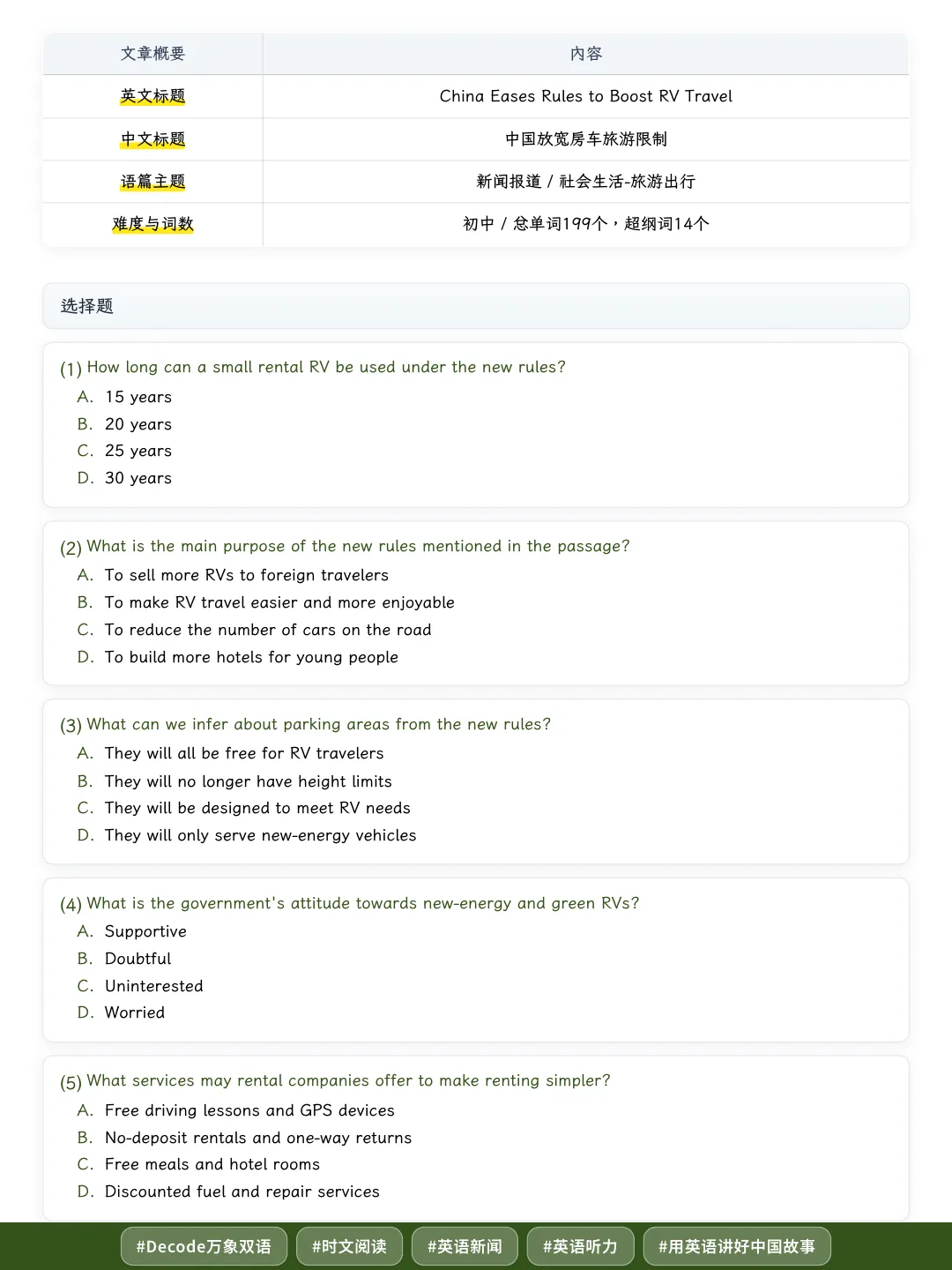
(1) How long can a small rental RV be used under the new rules?
A. 15 years
B. 20 years
C. 25 years
D. 30 years
(2) What is the main purpose of the new rules mentioned in the passage?
A. To sell more RVs to foreign travelers
B. To make RV travel easier and more enjoyable
C. To reduce the number of cars on the road
D. To build more hotels for young people
(3) What can we infer about parking areas from the new rules?
A. They will all be free for RV travelers
B. They will no longer have height limits
C. They will be designed to meet RV needs
D. They will only serve new-energy vehicles
(4) What is the government's attitude towards new-energy and green RVs?
A. Supportive
B. Doubtful
C. Uninterested
D. Worried
(5) What services may rental companies offer to make renting simpler?
A. Free driving lessons and GPS devices
B. No-deposit rentals and one-way returns
C. Free meals and hotel rooms
D. Discounted fuel and repair services
这组题为什么这样设计?
这组题技能铺开清晰,不挤在同一段刷细节,能覆盖学生理解具体信息、主旨、推断、态度和词义五方面能力。
这组题真正要测的是学生能否在政策类说明文中区分主干与例证、数字与身份、直述与推断、评价与事实。干扰项多从旧规、他类、绝对化、无中生有切入,暴露学生信息筛选和逻辑判断的缺口。老师组进旅游出行主题时,可放心用它检验细节定位、主旨概括和态度推断能力。
完型填空题目改编(10道)
China has introduced new rules to help more people enjoy RV travel. RVs are like 1 on wheels. They let families cook, sleep, and travel together. The government wants to make this kind of trip 2 and more fun for everyone.
First, local governments will 3 special RV travel routes and better driving plans. Cities and tourist spots should 4 parking spaces for RVs. They should also 5 water, charging, and waste disposal services. Second, roads and parking areas will be improved. Height limits at intersections and public car parks will consider RVs. Third, renting an RV will become 6. Small rental RVs can now be used for 25 years 7 of 15. Towable RVs can be used for 20 years. Rental companies may 8 no-deposit rentals and one-way returns. Businesses are also encouraged to sell and rent RVs together with travel services.
China also supports new-energy, smart, and green RVs. Safety standards and eco-friendly camping will be 9. These changes aim to make RV travel more convenient and popular. For young travelers, it means more 10 to explore the country in a fun and comfortable way.
1. A. cars B. hotels C. houses D. homes
2. A. expensive B. dangerous C. boring D. convenient
3. A. build B. find C. plan D. visit
4. A. provide B. build C. share D. find
5. A. build B. buy C. provide D. sell
6. A. cheaper B. easier C. safer D. slower
7. A. instead of B. because of C. except for D. plenty of
8. A. avoid B. offer C. need D. refuse
9. A. ignored B. discussed C. strengthened D. limited
10. A. ways B. chances C. rules D. problems
本篇文章完型填空的命题特点
以新闻说明文为语篇载体,按开篇总起、转折段分述、收束升华的层次递进设空,突出语篇约束下恢复信息的能力。开篇以房车功能定位为起点,句内语块与语法约束层设空,考查名词与形容词在家庭生活语境中的精确匹配,如“轮子上的家”需同时呼应cook、sleep、families等动作主体。转折段以First、Second、Third三条政策链为骨架,句际逻辑关系层设空,考查动词与名词在政策执行语境中的搭配,如地方政府的规划职能、城市与景点的服务供给职能,以及from A to B的年限升降关系。跨句衔接与词汇复现层设空,考查provide等词在前后句中的同义复现,以及受益对象从地方政府到租赁公司再到企业的转换。近义方向辨析层设空,考查easier与cheaper、safer的语义边界,需核对后文免押金、异地还车等数据支撑。收束段由物及人,情感基调与主题一致层设空,考查chances在积极政策语境中的方向性,与rules、problems形成情感对照。
能有效测出学生在语篇约束下恢复信息的能力缺口,如空上看选项、近义方向不核对数据、把搭配当充分条件等典型问题。教师可将此题与同源阅读配套印发,阅读课侧重政策条文的信息梳理,完形课侧重语篇约束下的信息恢复,两者形成互补,帮助学生建立从单句语法判断到跨句逻辑推理的完整解题路径。
文章中文翻译
中国房车旅游新规:让公路旅行更轻松
中国出台了新规定,帮助更多人享受房车旅游。房车就像轮子上的家。它们让家庭可以一起做饭、睡觉和旅行。政府希望让这种旅行对每个人来说都更容易、更有趣。
首先,地方政府将开发特色房车旅游路线和更好的自驾计划。城市和旅游景点应该为房车提供停车位。它们还应该提供供水、充电和废物处理服务。其次,道路和停车区将得到改善。十字路口和公共停车场的高度限制将考虑房车。第三,租用房车将变得更简单。小型租赁房车现在可以使用25年,而不是15年。拖挂式房车可以使用20年。租赁公司可能提供免押金租赁和异地还车服务。政府还鼓励企业将房车销售和租赁与旅游服务结合起来。
中国还支持新能源、智能和绿色房车。安全标准和环保露营将得到推广。这些变化旨在让房车旅游更方便、更受欢迎。对于年轻旅行者来说,这意味着有更多机会以有趣和舒适的方式探索这个国家。
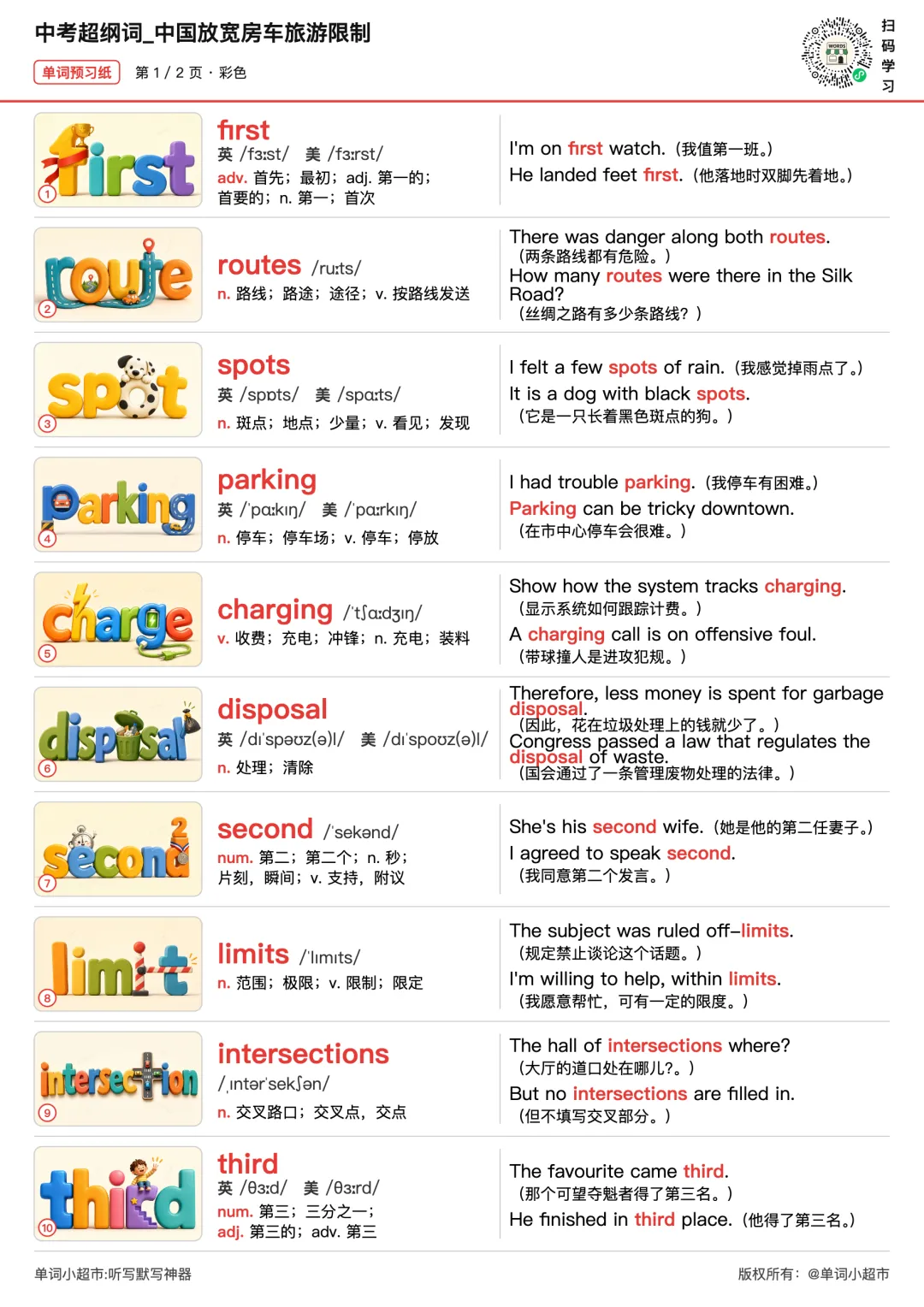
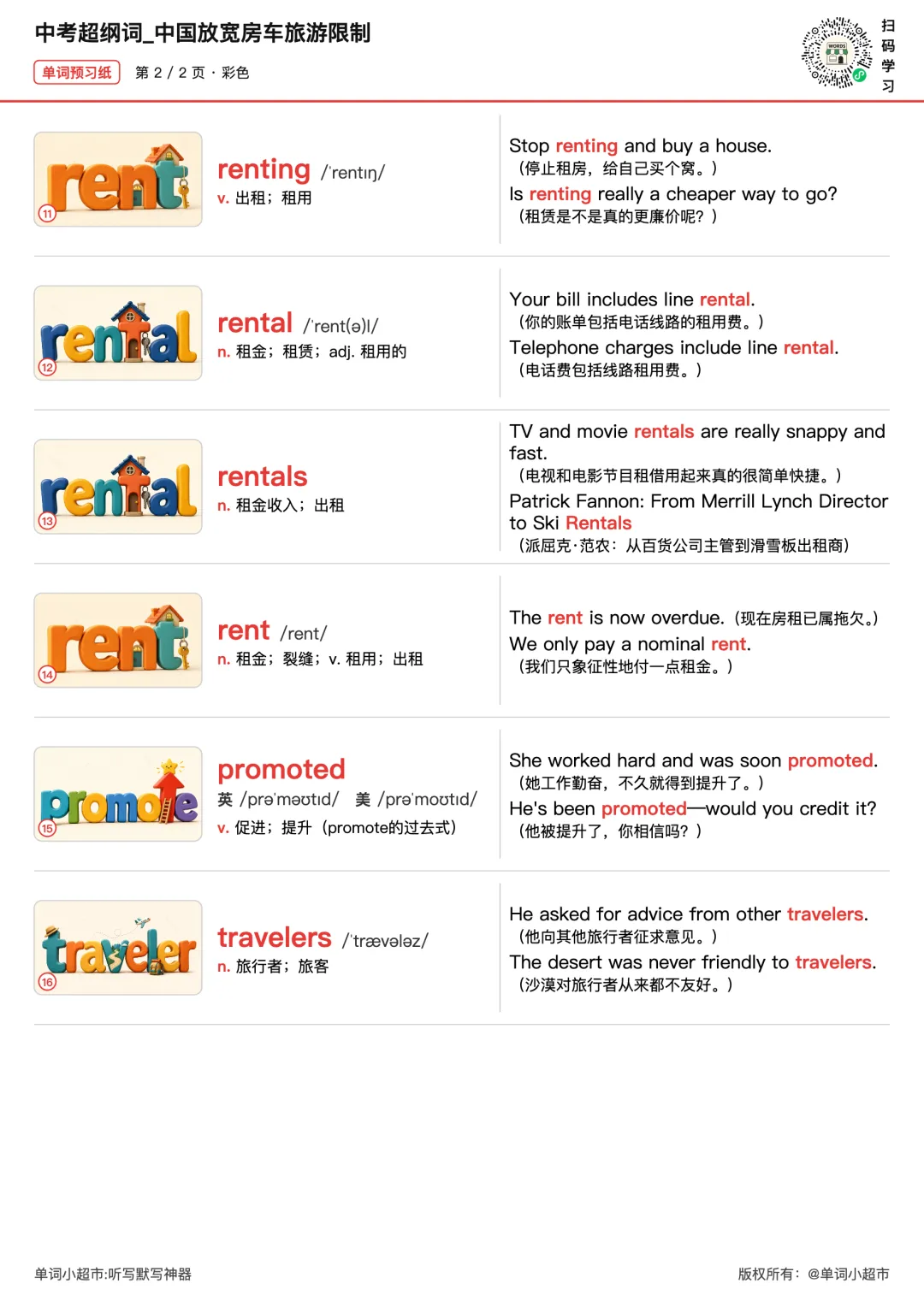
中考超纲词
这份词表里,真正会卡住学生理解本文信息的,不是那些看起来最难的词,而是 routes、spots、disposal、intersections 这几个。先把它们放回句子里看,学生读起来会顺很多。
/fɜːst/ | ||
/spɒts/ | ||
/ˈpɑːkɪŋ/ | ||
/ˈtʃɑːdʒɪŋ/ | ||
/dɪˈspəʊz(ə)l/ | ||
/ˈsekənd/ | ||
/θɜːd/ | ||
/ˈrent(ə)l/ | ||
/rent/ | ||
/prəˈməʊtɪd/ | ||
/ˈtrævələz/ |
超纲词名师点评
我是许乃夫老师,前新东方功勋教师。这篇房车新规的短文,最值得在课堂上花时间的是 routes、spots、disposal、intersections,还有 renting 和 rental 这一组。它们不是孤立的生词,而是撑起文章三条政策信息的支点。
先看 routes 和 spots。原文说 local governments will create special RV travel routes and better driving plans,紧接着 Cities and tourist spots should offer parking spaces。routes 在这里不是抽象的道路,而是地方政府专门为房车规划的旅游线路;spots 也不是“斑点”,而是 tourist spots——旅游景点。学生如果只背过 spot 的“斑点”义,读到 tourist spots 就容易卡住。把这两个词放回“政府规划线路、景点提供车位”的语境里,词义自然就清楚了。
disposal 和 intersections 是本文两个容易被跳过的信息点。disposal 出现在 waste disposal services,是废物处理服务,属于房车旅游的配套条件,恰恰是文章 Why 层面要证明的“配套决定体验”。intersections 在 Height limits at intersections and public car parks will consider RVs 里,是十字路口,和 height limits 一起说明道路设施要为房车调整。这两个词不处理,学生做细节题时容易丢分。
renting 和 rental 可以一起看。第三条规定 renting an RV will become simpler,后面 Small rental RVs 和 Rental companies 反复出现。rent 这个词族在本文里承担的是“降低租赁门槛”这条政策线,不是单纯的“租金”。让学生顺着 renting—rental—rentals 在句子里找主语和修饰关系,比单独背词形有用得多。
老师用这张词表时,不必逐词讲。先让学生在原文里圈出 routes、spots、disposal、intersections、rental 所在的句子,读两遍,再猜义。学生验证词义的最好方式,就是回到句子里看它和谁搭配、在信息链里排第几。单词小超市里配了本文的预习单和语境跟读音频,学生可以听一遍、跟一遍,把这些词放回声音和句子里再记。