

答案解析:
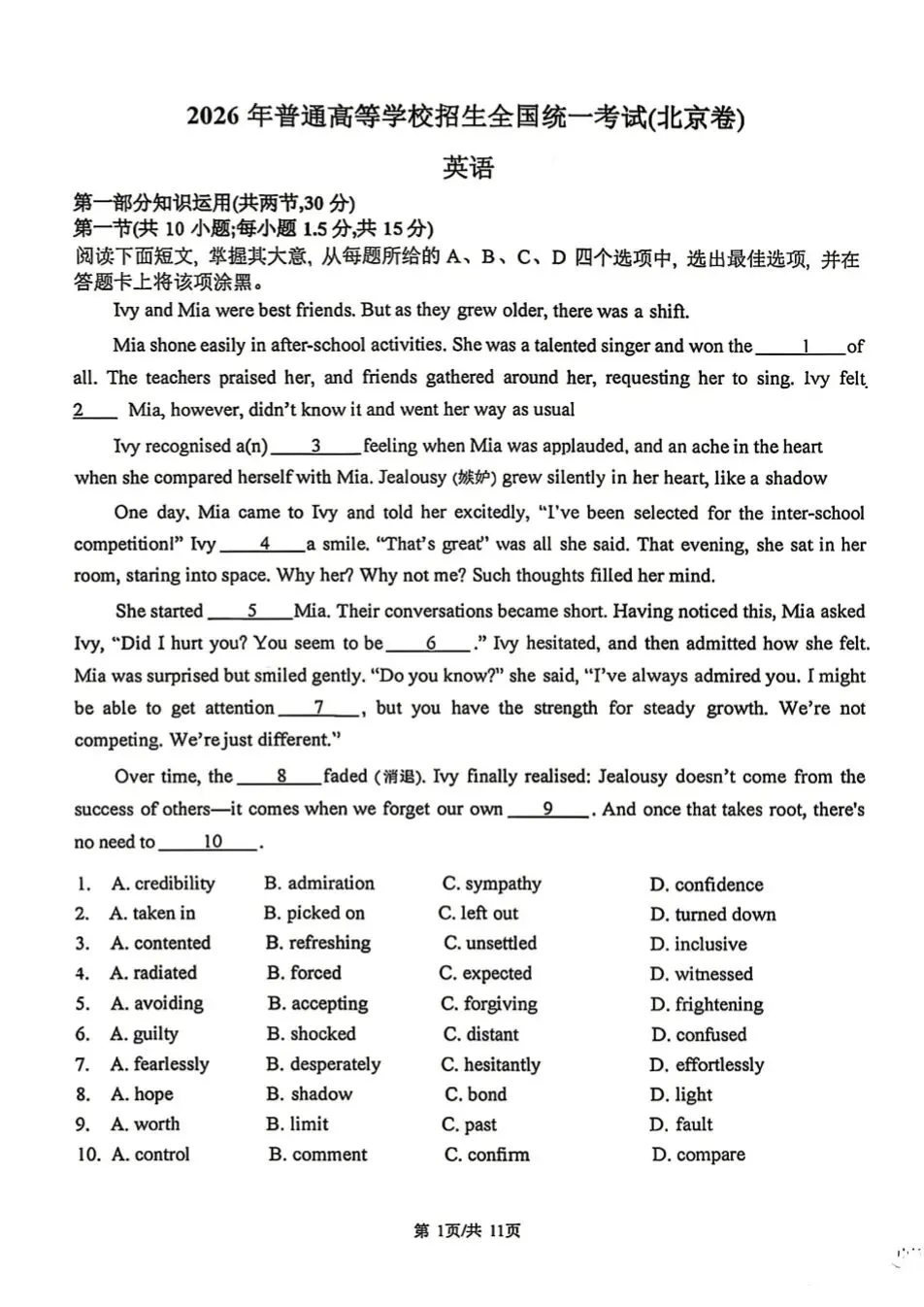
第一部分知识运用(共两节,30分)
第一节完形填空(共10小题;每小题1.5分,共15分)
1. B. admiration
2. C. left out
3. C. unsettled
4. B. forced
5. A. avoiding
6. C. distant
7. D. effortlessly
8. B. shadow
9. A. worth
10. D. compare
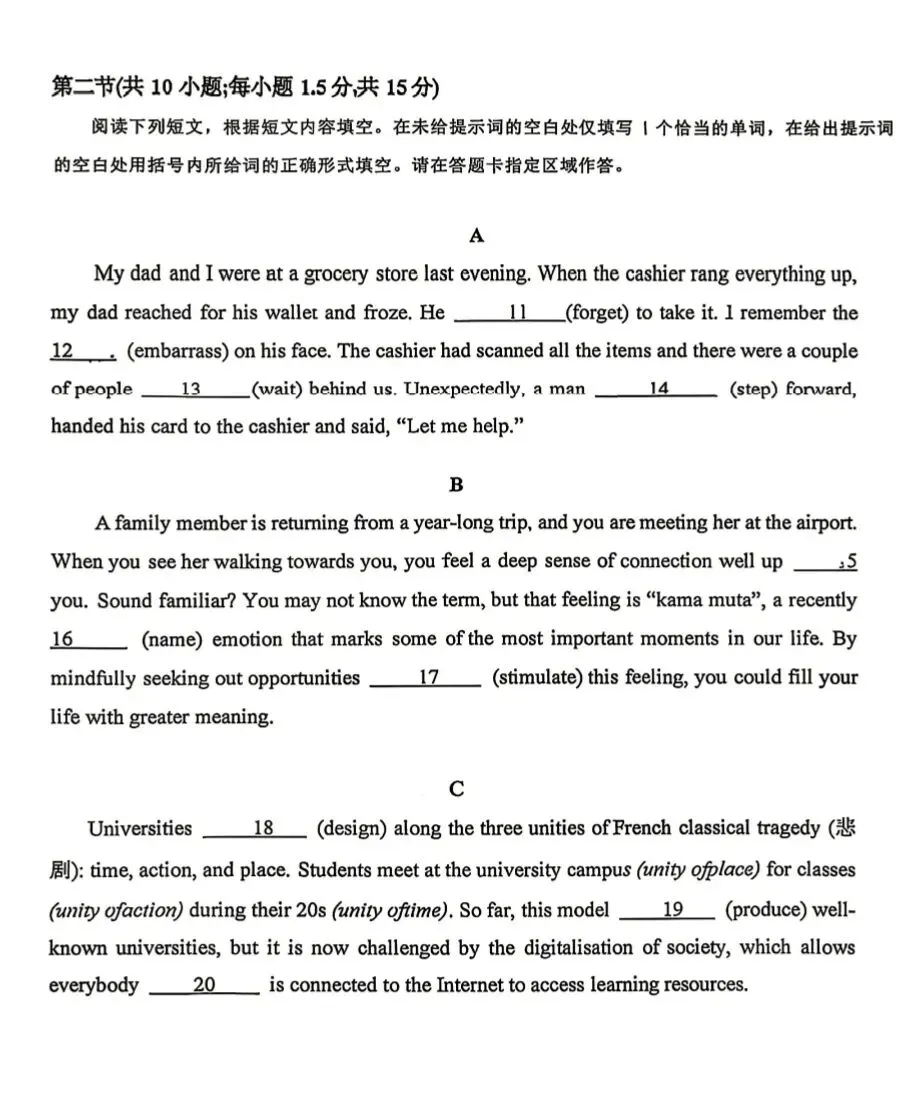
第二节语法填空(共10小题;每小题1.5分,共15分)
A
11. had forgotten — 动作发生在"伸手拿钱包"之前,表示"过去之过去",用过去完成时。
12. embarrassment — 作宾语,用名词形式。
13. waiting — 作后置定语,修饰 people,表示"正在等待的人"。
14. stepped — 描述过去发生的动作,用一般过去时。
B
15. within — "涌上心头"用 well up within sb.。
16. named — 过去分词作定语,表示"被命名的"。
17. to stimulate — 不定式作定语,修饰 opportunities。
C
18. are designed — 表示一般事实,用一般现在时被动语态。
19. has produced — 与 So far 连用,用现在完成时。
20. who/that — 引导定语从句,先行词为 everybody,关系代词在从句中作主语。
有老师对这个答案提出质疑,认为此处不应用who.其实当先行词是指人的不定代词(如 someone, anybody, nobody, those, everyone等)时,关系代词既可以使用 who,也可以使用 that。
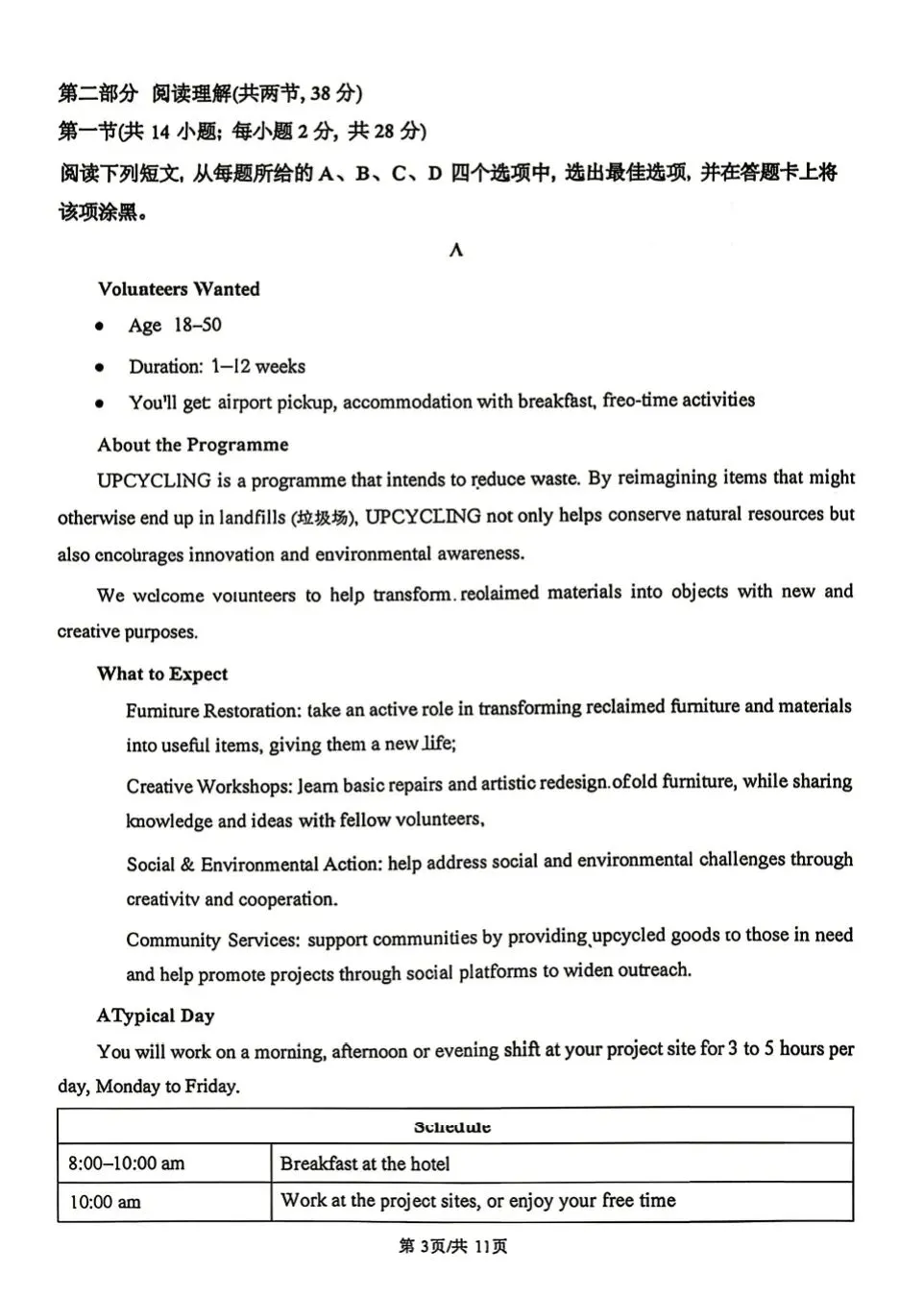
第二部分阅读理解(共两节,38分)
第一节(共14小题;每小题2分,共28分)
A篇
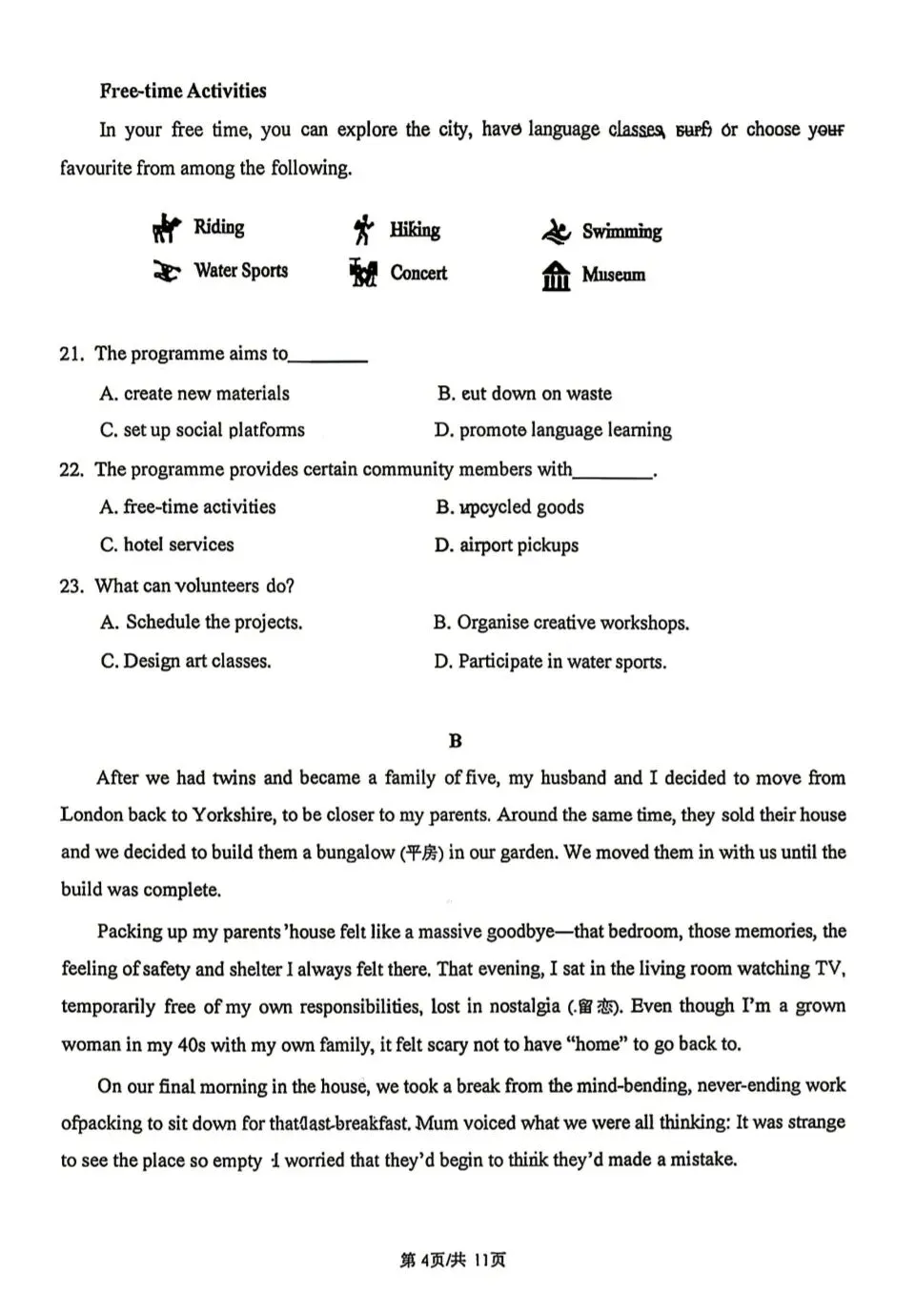
21. B. cut down on waste
22. B. upcycled goods
23. D. Participate in water sports
B篇
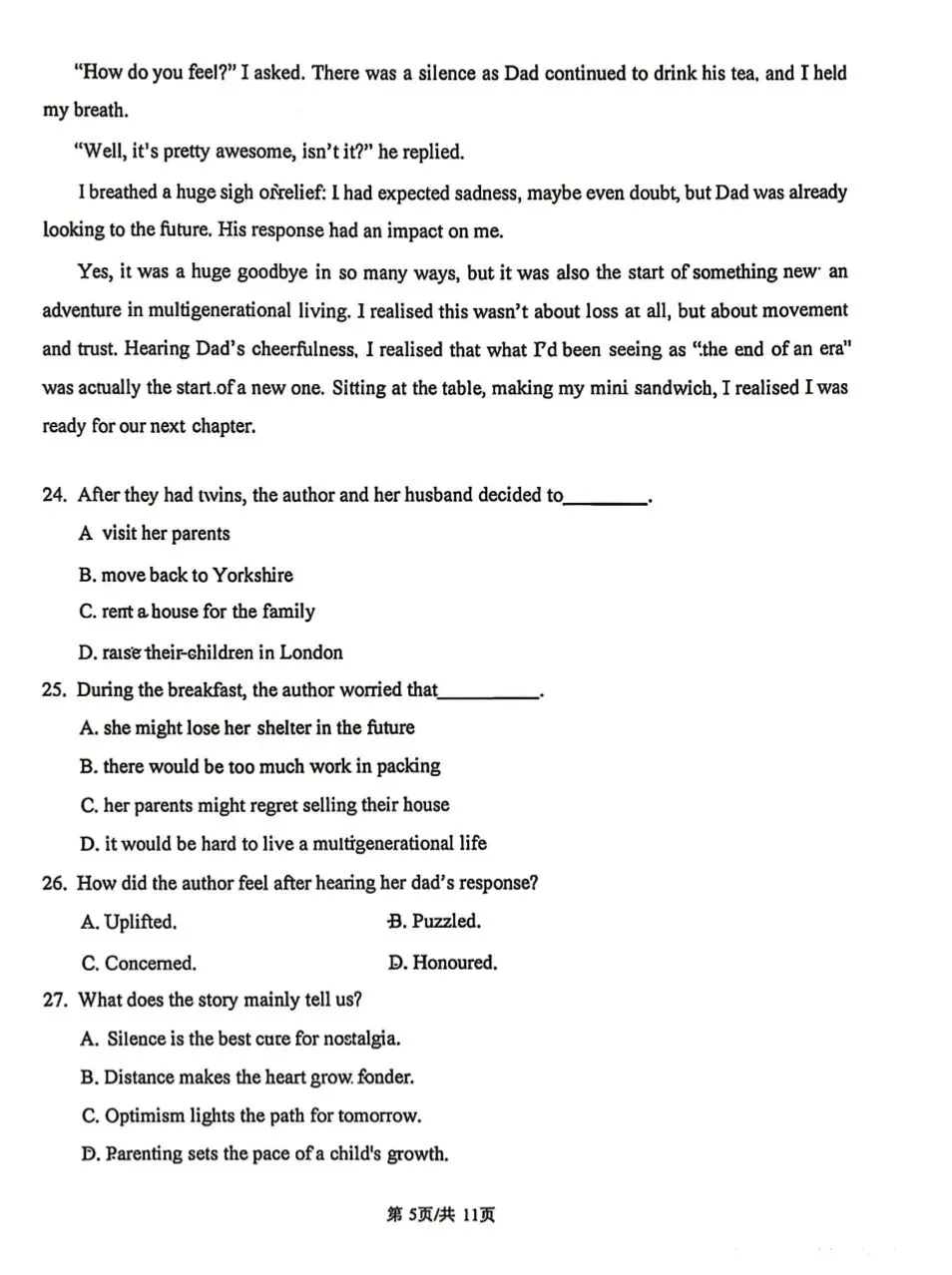
24. B. move back to Yorkshire
25. C. her parents might regret selling their house
26. A. Uplifted
27. C. Optimism lights the path for tomorrow
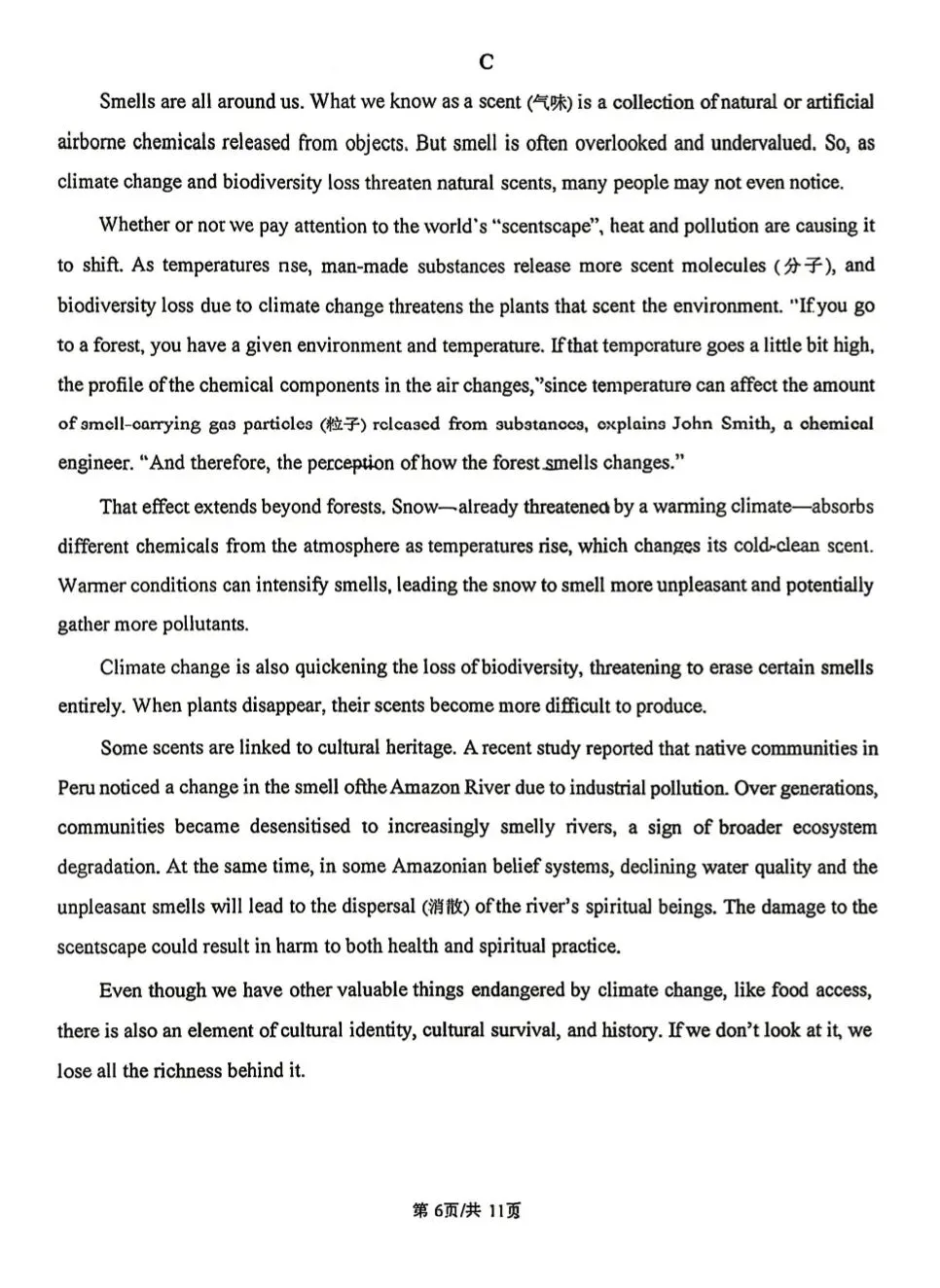
C篇
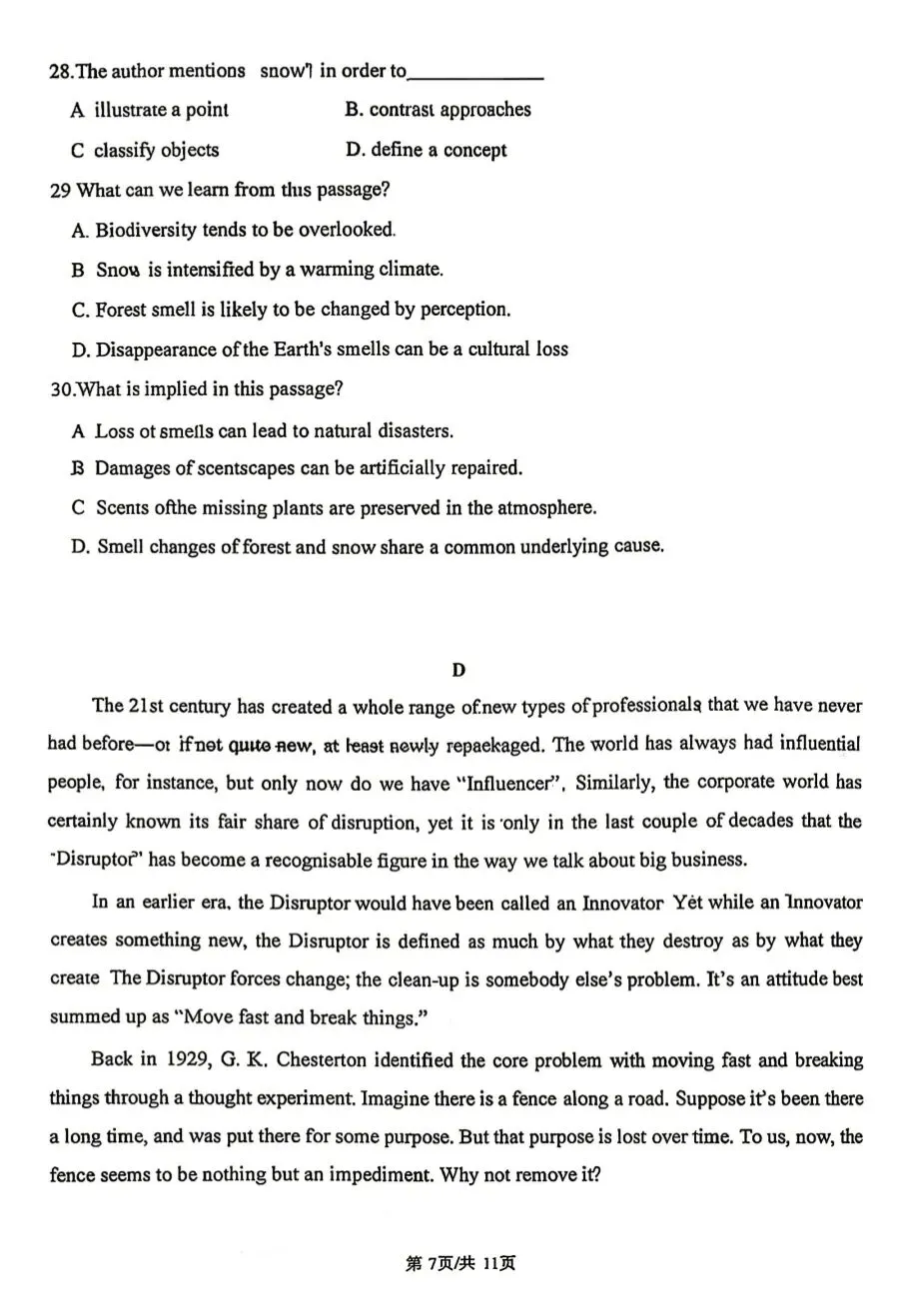
28. A. illustrate a point
29. D. Disappearance of the Earth's smells can be a cultural loss
30. D. Smell changes of forest and snow share a common underlying cause
D篇
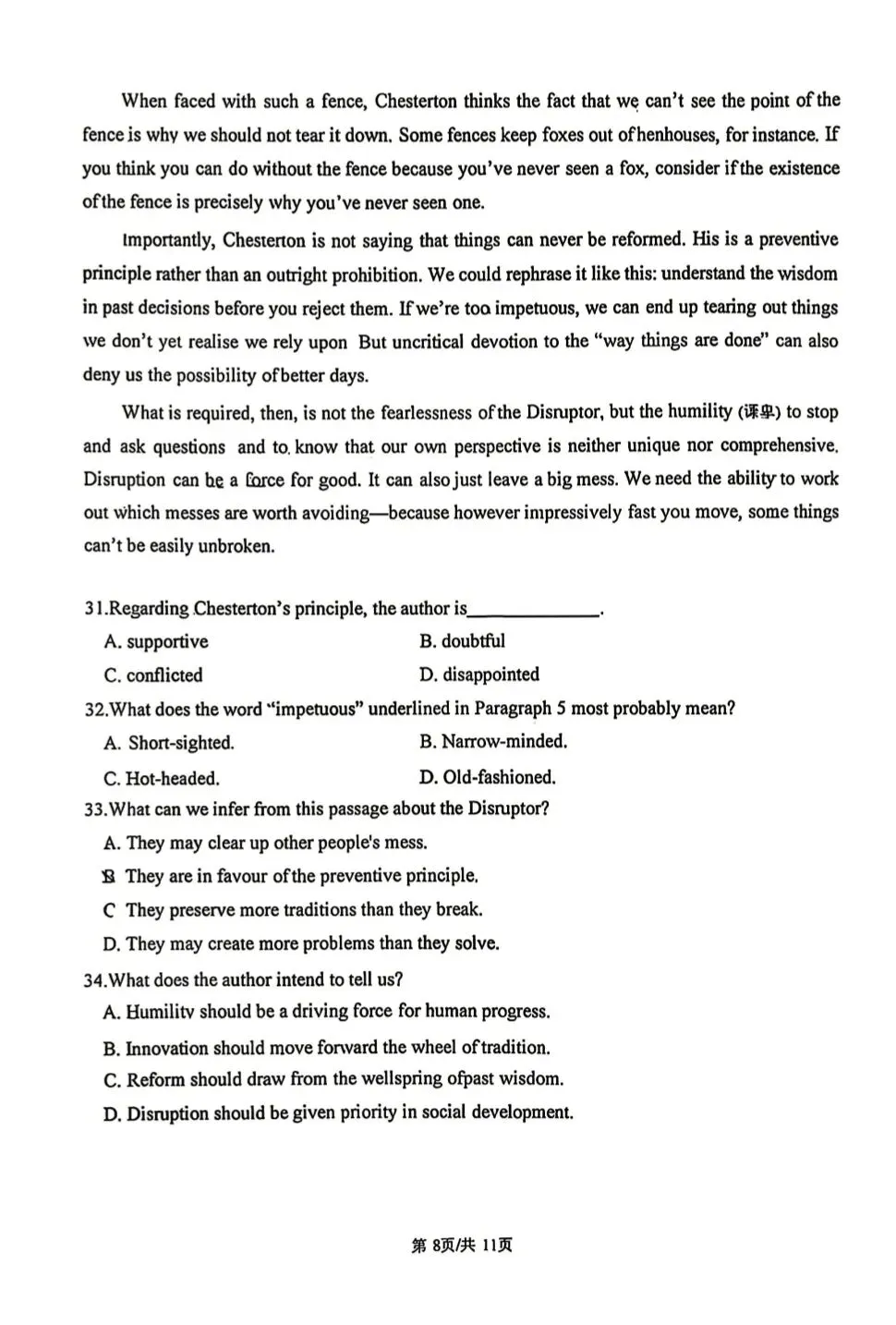
31. A. supportive
32. C. Hot-headed
33. D. They may create more problems than they solve
34. C. Reform should draw from the wellspring of past wisdom
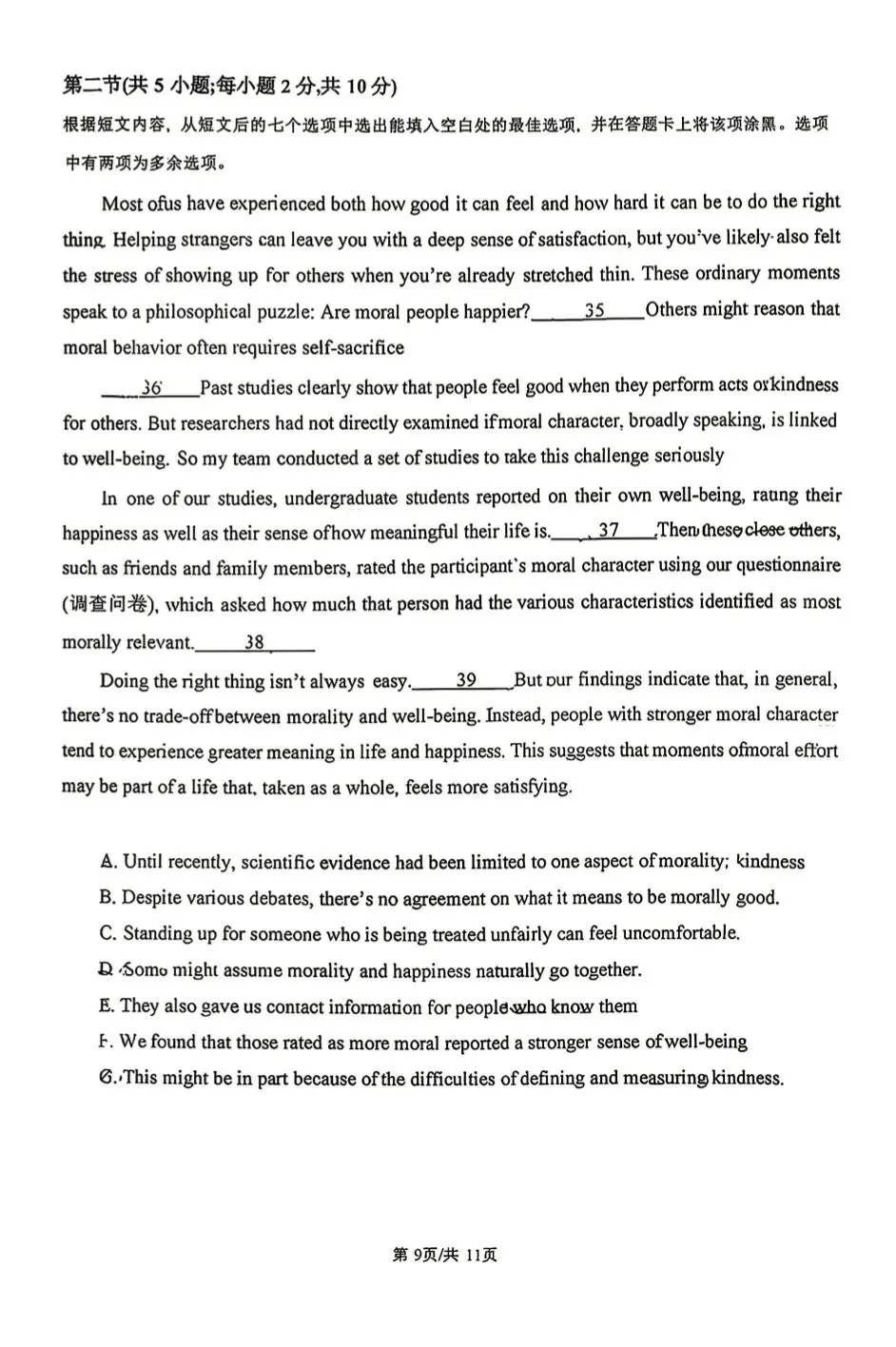
第二节七选五(共5小题;每小题2分,共10分)
35. D. Some might assume morality and happiness naturally go together.
36. A. Until recently, scientific evidence had been limited to one aspect of morality; kindness.
37. E. They also gave us contact information for people who know them.
38. F. We found that those rated as more moral reported a stronger sense of well-being.
39. C. Standing up for someone who is being treated unfairly can feel uncomfortable.
第三部分书面表达(共两节,32分)
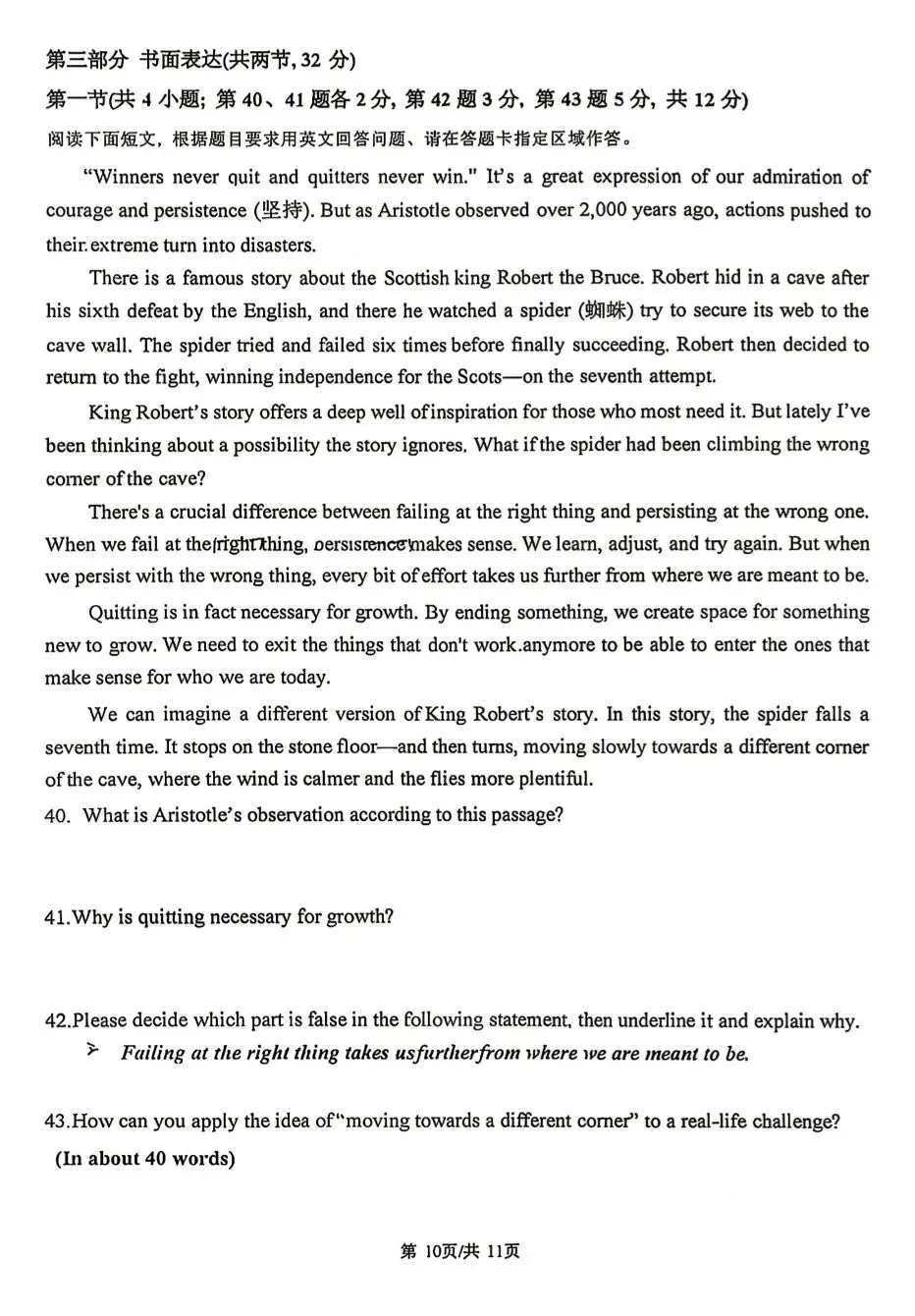
第一节阅读表达(共4小题:第40、41题各2分,第42题3分,第43题5分,共12分)
40. Aristotle observed that actions pushed to their extreme turn into disasters.
41. Because by ending something, we create space for something new to grow. Quitting allows us to exit things that no longer work and enter new ones that make sense for who we are today.
42. 划线部分:Failing at the right thing
理由:According to the passage, failing at the right thing helps us learn, adjust, and try again. It is persisting at the wrong thing that takes us further from where we are meant to be. Therefore, the false part is "Failing at the right thing."
43. (参考范文,约40词)
When I find myself stuck on a difficult maths problem for hours, instead of giving up, I can "move to a different corner" by trying a new approach—asking my teacher for help, watching online tutorials, or discussing it with classmates. Changing my strategy often leads to a breakthrough.
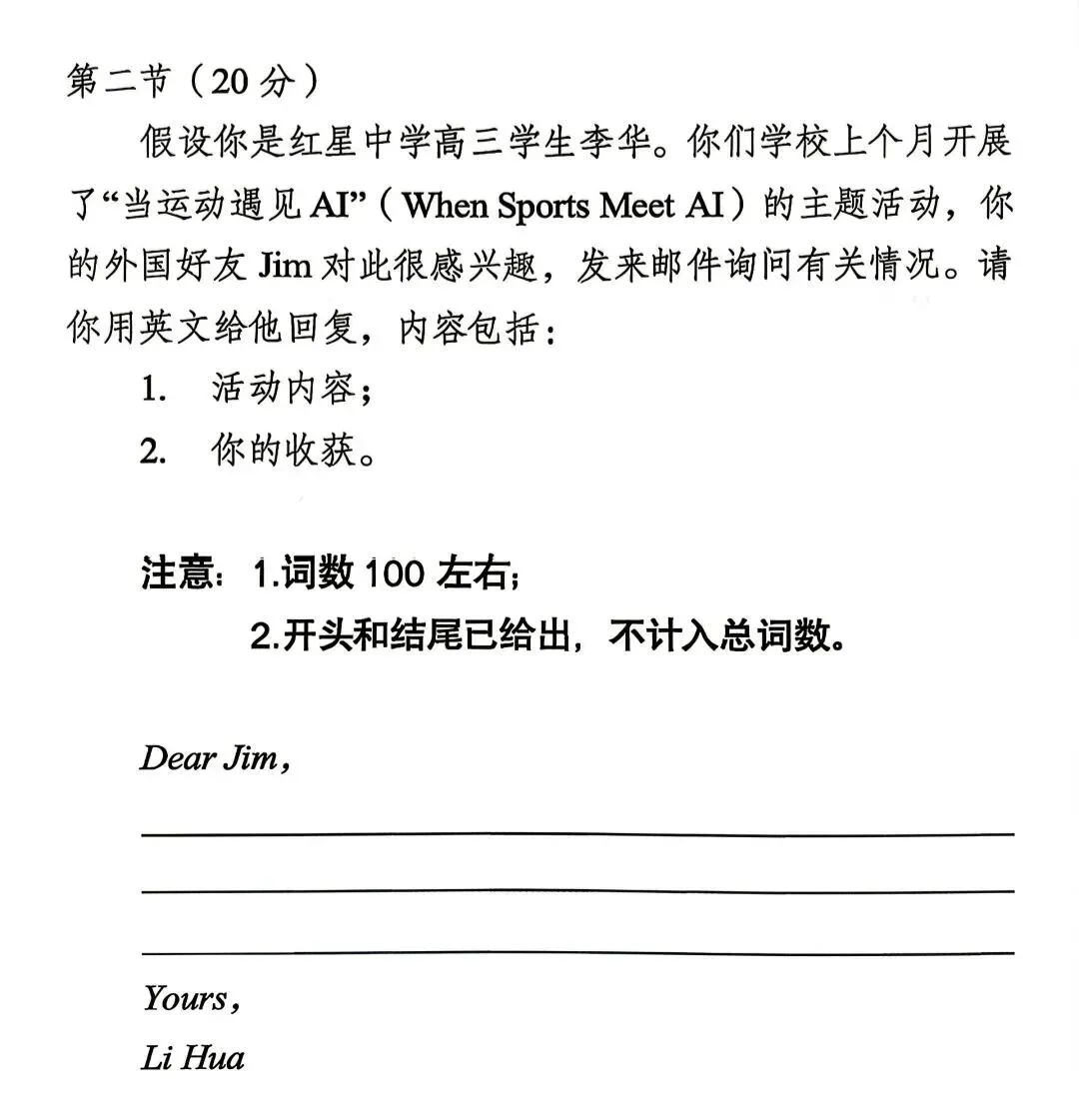
第二节书面表达(20分)
Dear Jim,
I'm glad to hear that you're interested in our school's "When Sports Meet AI" activity held last month. It was truly an eye-opening experience!
During the activity, we used AI-powered devices to analyze our sports performance. For example, AI cameras recorded our running postures and provided real-time feedback on how to improve efficiency. There was also a smart badminton system that tracked shuttlecock speed and accuracy, offering personalized training suggestions. What impressed me most was the AI fitness mirror, which guided us through workout routines and corrected our movements instantly. It made exercise more scientific and fun!
Through this activity, I not only improved my sports skills but also realized how technology can transform our daily lives. AI helps us train smarter, not just harder. I feel more motivated to combine technology with physical exercise in the future.
How about you? Have you tried any AI applications in sports? Looking forward to your reply!
Yours,
Li Hua
【超级会员V7】通过百度网盘分享的文件:2026北京高考…
链接:https://pan.baidu.com/s/1yRkdjGRCib8jDt-WKCvZmg?pwd=t719
复制这段内容打开「百度网盘APP 即可获取」


