

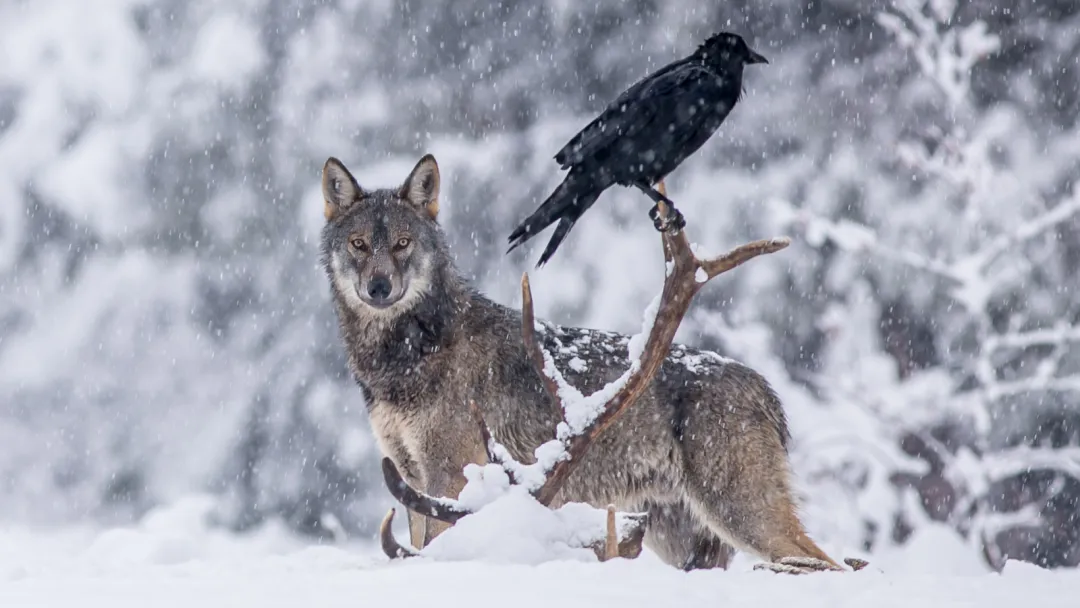
为什么是这道题?
2026 年 3 月,《Science》刊登了一项把生态学常识翻了一遍的研究——过去几十年大家都以为,黄石国家公园里那些迅速出现在狼群猎杀现场的渡鸦,是"跟着狼找饭吃"。但维也纳兽医大学和德国马普所给 69 只渡鸦和 20 只狼装上 GPS,跟踪 2.5 年,结果让所有人都愣住了:它们根本不跟狼,它们记得狼会去哪儿。
这种"具体物种 + 大规模数据 + 颠覆百年常识 + 可升华为生活哲学"的科普报道,是近两年北京中考阅读理解最爱的题源。小忆按命题人偏好的"科普议论文骨架"改写出下面这道题,一起来试试。
模拟题原文
For as long as people have watched wolves hunt, one scene has puzzled them. When a wolf pack brings down an elk in Yellowstone, large black birds called ravens appear almost out of nowhere—often before the wolves have even started to feed. For decades, scientists had a simple explanation: ravens must be following the wolves through the forest, riding on their hard work.
It turns out scientists were wrong.
In March 2026, an international team led by Dr. Matthias-Claudio Loretto from the University of Veterinary Medicine Vienna published the answer in the journal Science. The team put tiny GPS backpacks on 69 ravens, and combined that with tracking data from 20 wolves. They watched both animals move across Yellowstone National Park for two and a half years. The data told a surprising story.
In all that time, the researchers found only one case of a raven following a wolf for more than an hour. Yet the ravens still arrived at kill sites quickly, again and again. So how did they get there?
The ravens, it turns out, were not following—they were remembering. Over many seasons, each bird had built a kind of mental map of the places where wolves often hunt: certain valleys, certain river bends, certain meadows (草地). Instead of chasing wolves through the woods, the ravens simply flew straight to these familiar hunting spots and waited. Their secret tool wasn't speed. It was memory.
Scientists call this kind of skill "ecological intelligence" (生态智能)—the ability to read the landscape and predict where good things will happen. It changes how we think about smart animals. Being clever isn't always about being the fastest or the strongest. Sometimes it's about being the one who paid attention—who learned the map, who noticed the patterns, who arrived a step ahead of everyone else.
题目(每题 2 分,共 8 分)
1. What can we learn from the GPS tracking data?
A. Ravens followed wolves closely most of the time.
B. Ravens rarely followed wolves but still found kill sites fast.
C. Wolves usually waited for the ravens before hunting.
D. Ravens and wolves both used GPS devices to find prey.
2. What does the underlined sentence "It was memory" in Paragraph 5 mean?
A. Ravens fly faster than wolves can run.
B. Ravens succeed by remembering where wolves hunt.
C. Ravens copy what their parents did long ago.
D. Ravens can only find food they have eaten before.
3. Why does the writer ask "So how did they get there?" in Paragraph 4?
A. To show that even the scientists could not answer.
B. To suggest that the GPS devices were not reliable.
C. To lead the reader into the real finding of the study.
D. To compare ravens with other smart birds.
4. What is the best title for this passage?
A. How Wolves Help Ravens Survive Winter
B. GPS Devices Change Modern Wildlife Studies
C. The Return of Wolves to Yellowstone Park
D. The Ravens That Knew Where to Wait
答案 1. B 2. B 3. C 4. D
01 · 解题策略
科普议论文,核心抓三句话:第 2 段独句"It turns out scientists were wrong"(立靶反转)、第 5 段的 It was memory(金句)、末段的 Being clever isn't... it's about...(升华)。三句构成全文反转链,4 道题答案全锚在这条链上。
02 · 源头分析
源头是 Matthias-Claudio Loretto(维也纳兽医大学 + 马普动物行为研究所)联合华盛顿大学 John Marzluff 团队 2026 年 3 月 12 日发表在《Science》上的研究。研究地点黄石国家公园本身就有故事——90 年代中期狼被重新引入这片它们消失了 70 年的土地,2.5 年间,研究者给 69 只渡鸦 + 20 只狼装 GPS 进行追踪,结果颠覆了几十年的常识。
研究者把渡鸦的能力命名为"生态智能" (ecological intelligence)——读懂景观、预判事件。这种"具体物种 + 大数据 + 反转常识 + 升华哲学"的结构,和项目里 Naruto 西猯、格陵兰睡鲨、Veronika 母牛形成系列——这次的反转是:跟随者,其实一直是预判者。
03 · 做对题,更做对人
大家往往会有一种焦虑——"别人跑得比我快"。看着同桌做题神速、隔壁同学竞赛拿奖、班里那个一直被夸"反应快"的同学……很容易觉得自己笨。Veronika 是"机会问题",渡鸦讲的是另一件事:真正赢的人,不一定是跑得最快的,而是早就知道东西在哪儿的。
渡鸦跑不过狼,它做的是记住:哪个山谷、哪段河弯、哪片草地,狼会一次次回来。等狼下次扑向猎物,它已经在那儿等着了。学习也是这样。那些看上去聪明的同学,常常不是脑子转得多快,是错题本翻得多熟、考点记得多准。
拼速度,你会很累;拼记忆和耐心,时间就会站在你这边。
你不必跑得最快——你只要记得住,就能先到一步。


