亲爱的同学们、家长朋友们:
中考备考已然进入紧张冲刺阶段,英语学科分值占比高、提分空间大,是冲刺阶段逆袭突围、稳稳拔高的关键科目。为助力全体学子精准备考、高效提分,李曼初中英语名师工作室凝聚多位资深教师的教学智慧,重磅推出“冲刺中考·英语领航计划” 专栏。
本专栏精准锚定中考英语阅读、写作等核心板块的高频考点、易混淆语法难点与应试提分技巧,以 “专题精讲” 形式拆解知识体系。我们将通过阅读解题思维导图、高分作文模板PPT等多元形式,化繁为简剖析命题逻辑,带你直击考试本质。一个专题,一套制胜方案!让我们以科学规划为帆,以专项突破为舵,扫清知识盲点、攻克答题障碍,在考场上稳扎稳打,向高分发起全力冲刺!即日起关注专栏,开启以练促学、以题悟道的提分之旅!
今天将为大家带来城关镇中学段丽丽老师的《阅读理解解析--C篇说明文》专题。

专题三——中考C篇说明文
城关镇中学 段丽丽
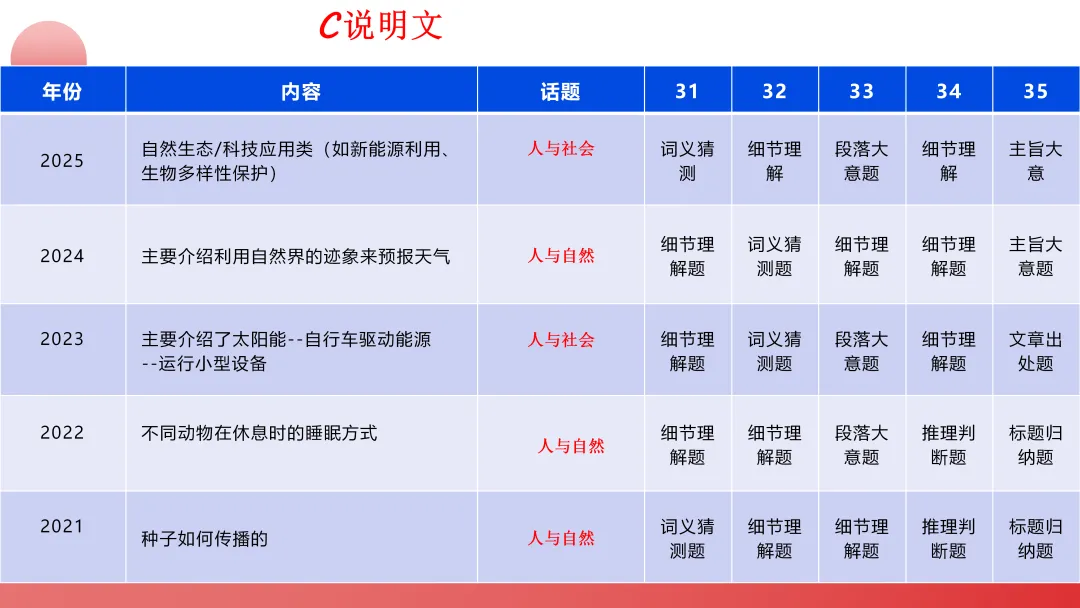
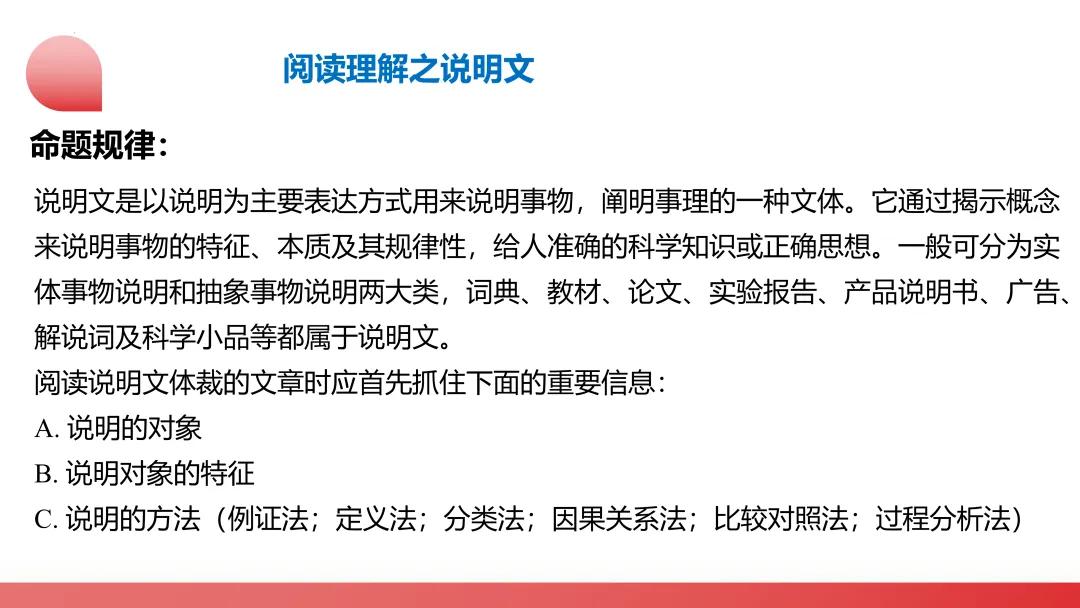
一、近五年中考阅读理解C篇(说明文)题型的剖析:
年份 | 2025 | 2024 | 2023 | 2022 | 2021 |
考察内容 | 自然生态/科技应用类(如新能源利用、生物多样性保护) | 主要介绍利用自然界的迹象来预报天气 | 主要介绍了太阳能--自行车驱动能源--运行小型设备 | 不同动物在休息时的睡眠方式 | 种子如何 传播的 |
31 | 词义猜测 | 细节理解 | 细节理解 | 细节理解 | 词义猜测 |
32 | 细节理解 | 词义猜测 | 词义猜测 | 细节理解 | 细节理解 |
33 | 段落大意题 | 细节理解 | 段落大意题 | 段落大意题 | 细节理解 |
34 | 细节理解 | 细节理解 | 细节理解 | 推理判断 | 推理判断 |
35 | 主旨大意 | 主旨大意 | 文章出处 | 标题归纳 | 标题归纳 |
考情总结
1.选材稳定:以科普知识、自然现象、科技创新、生活常识类说明文为主,贴近时代、贴近生活。
2.题型集中:以细节理解、词义猜测、段落大意、主旨/ 标题归纳、推理判断为核心考点。
3.难度梯度:细节题居多,侧重定位、比对、同义转换;主旨与推理题稍难,考查概括与逻辑能力。
二、C篇阅读理解命题规律和解题技巧:
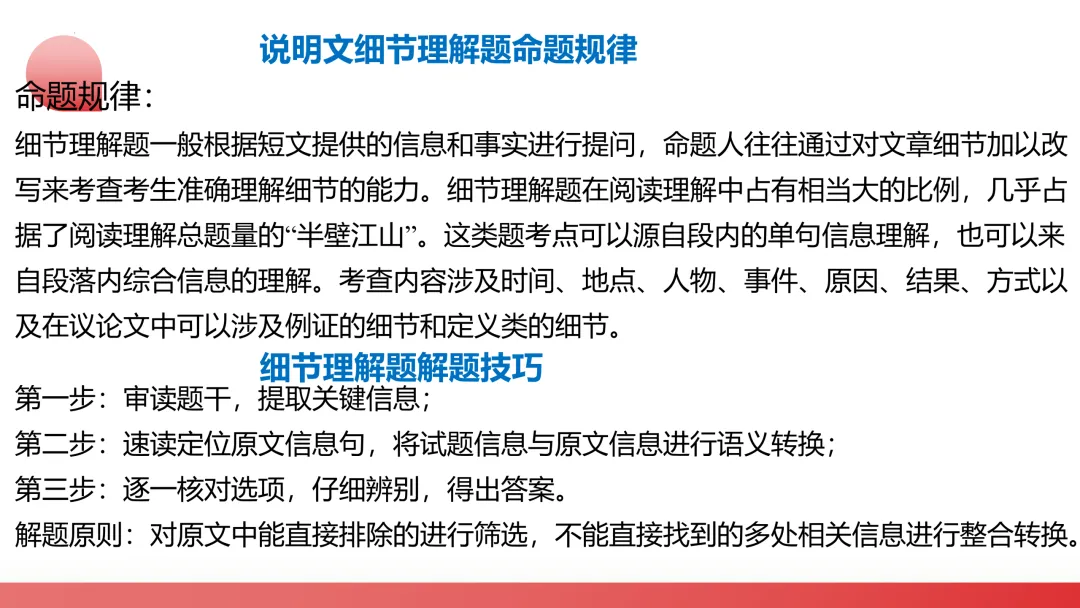
1. 细节理解题
命题规律:细节理解题一般根据短文提供的信息和事实进行提问,命题人往往通过对文章细节加以改写来考查考生准确理解细节的能力。细节理解题在阅读理解中占有相当大的比例,几乎占据了阅读理解总题量的“半壁江山”。这类题考点可以源自段内的单句信息理解,也可以来自段落内综合信息的理解。考查内容涉及时间、地点、人物、事件、原因、结果、方式以及在议论文中可以涉及例证的细节和定义类的细节。
解题技巧:
(1)审读题干,提取关键信息;
(2)速读定位原文信息句,将试题信息与原文信息进行语义转换;
(3)逐一核对选项,仔细辨别,得出答案。
解题原则:对原文中能直接排除的进行筛选,不能直接找到的多处相关信息进行整合转换
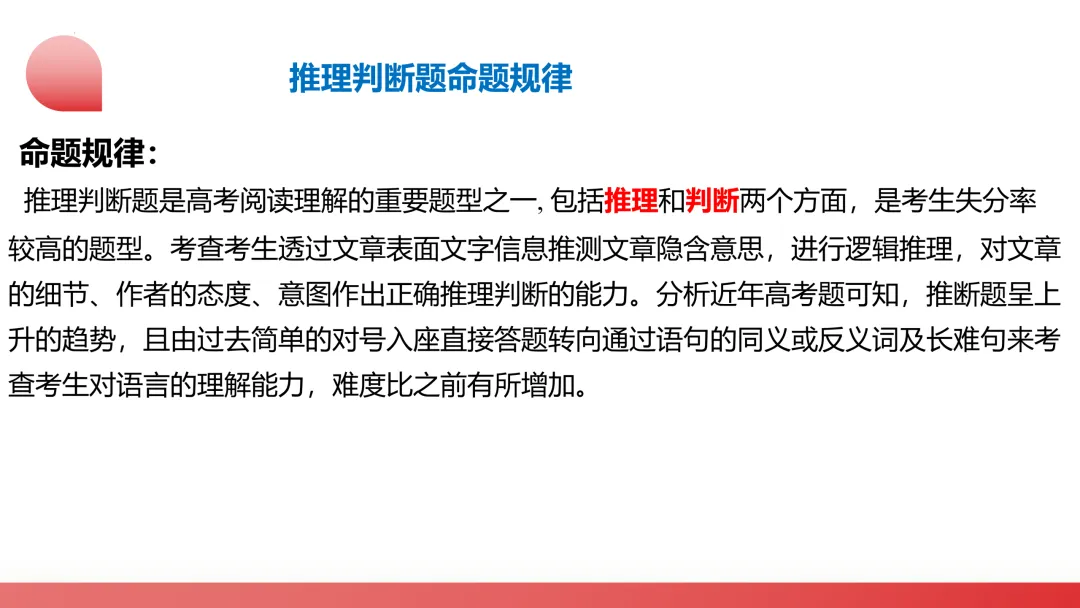
2. 推理判断题
命题规律:推理判断题考查考生透过文章表面文字信息推测文章隐含意思,进行逻辑推理,对文章的细节、作者的态度、意图作出正确推理判断的能力。
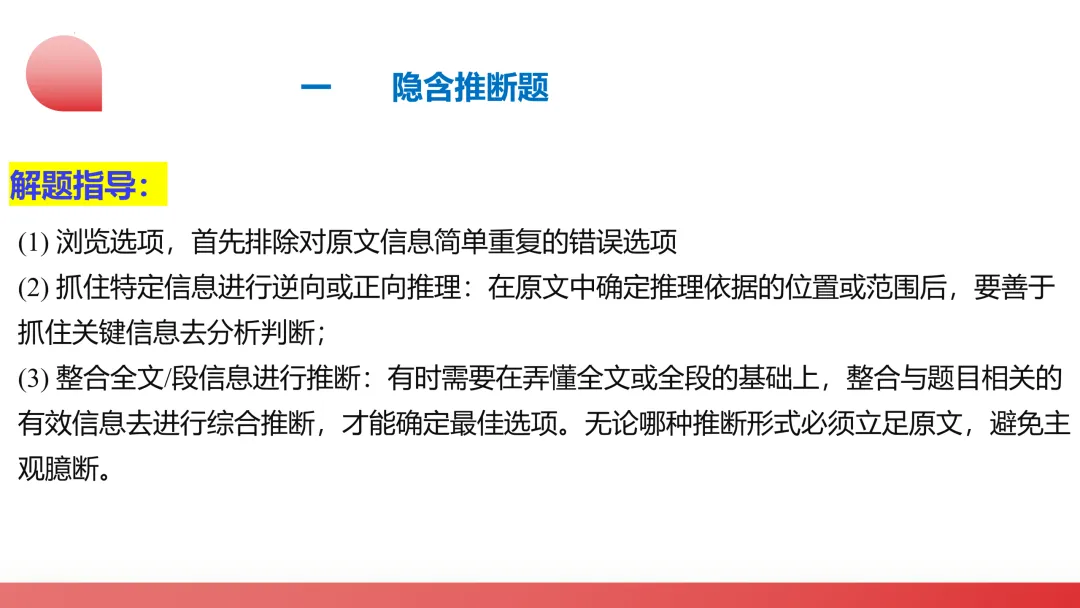
解题技巧:
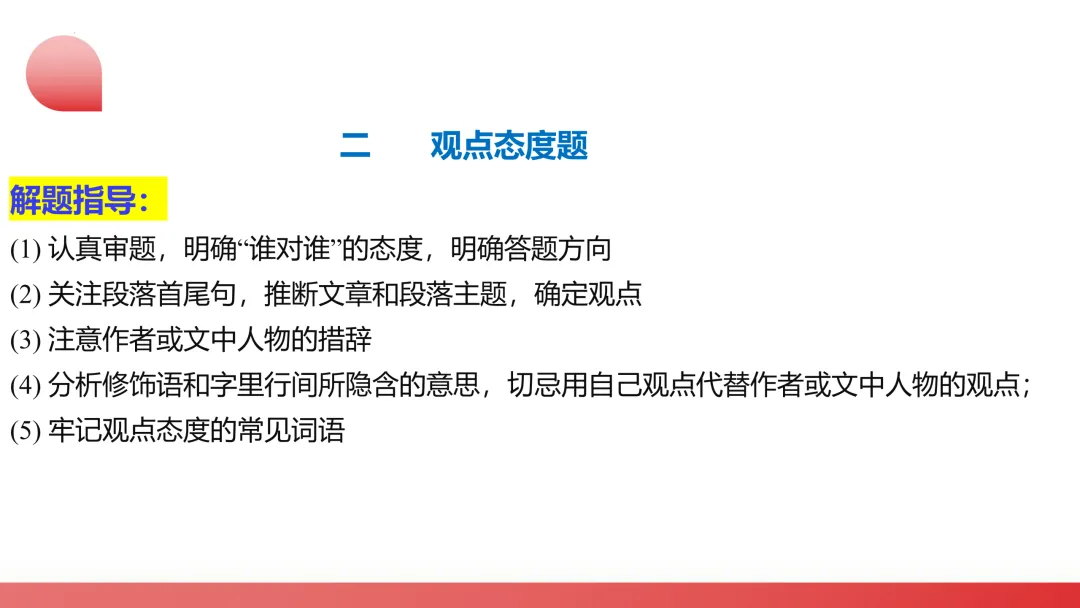
(1)认真审题,明确“谁对谁”的态度,明确答题方向;
(2)关注段落首尾句,推断文章和段落主题,确定观点;
(3)注意作者或文中人物的措辞;
(4)分析修饰语和字里行间所隐含的意思,切忌用自己观点代替作者或文中人物的观点;
(5)牢记观点态度的常见词语。
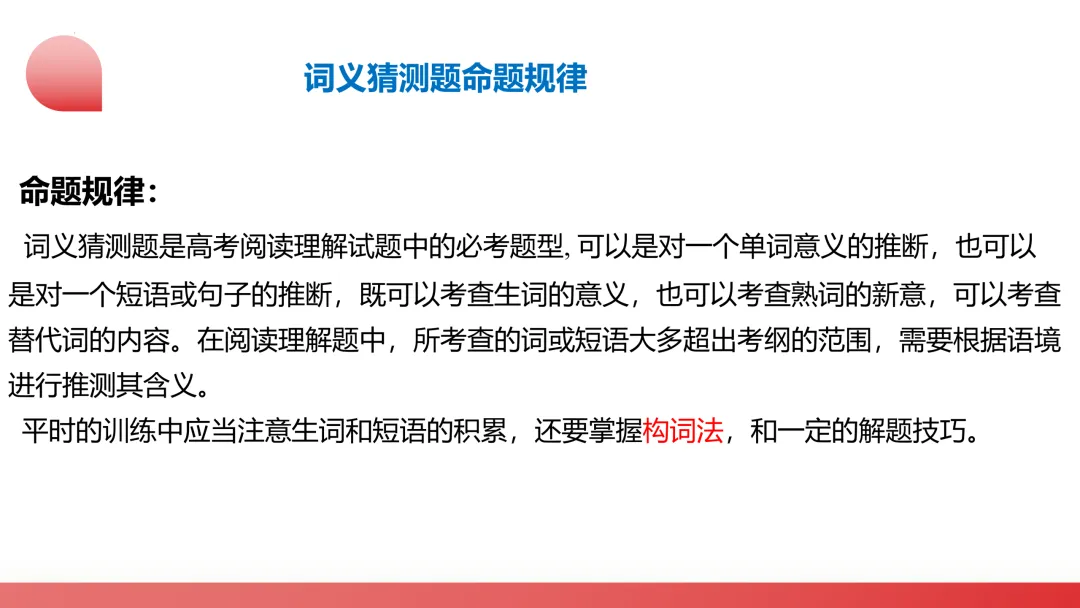
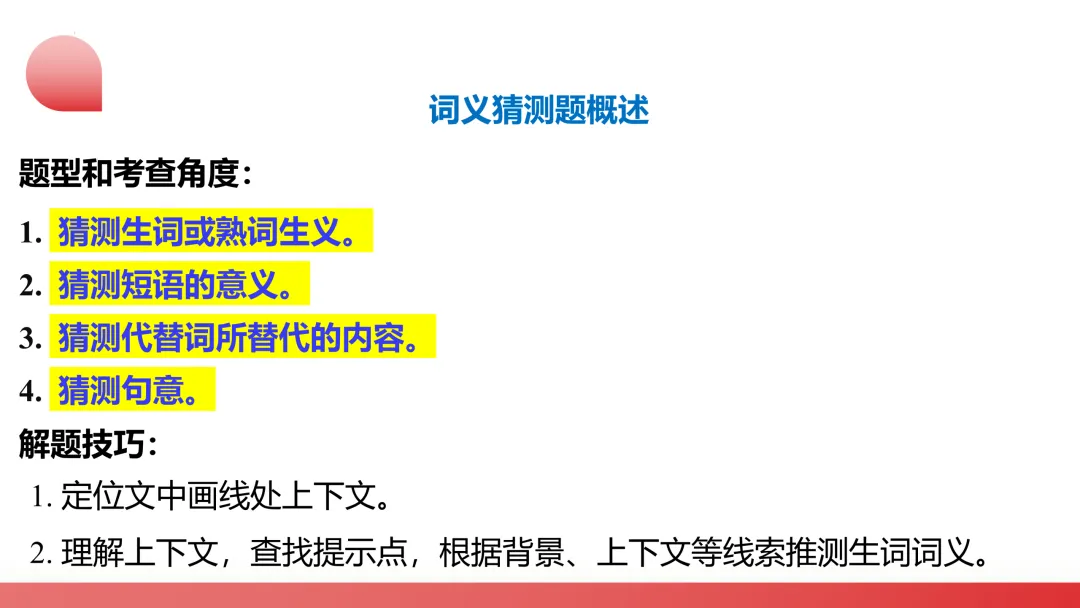
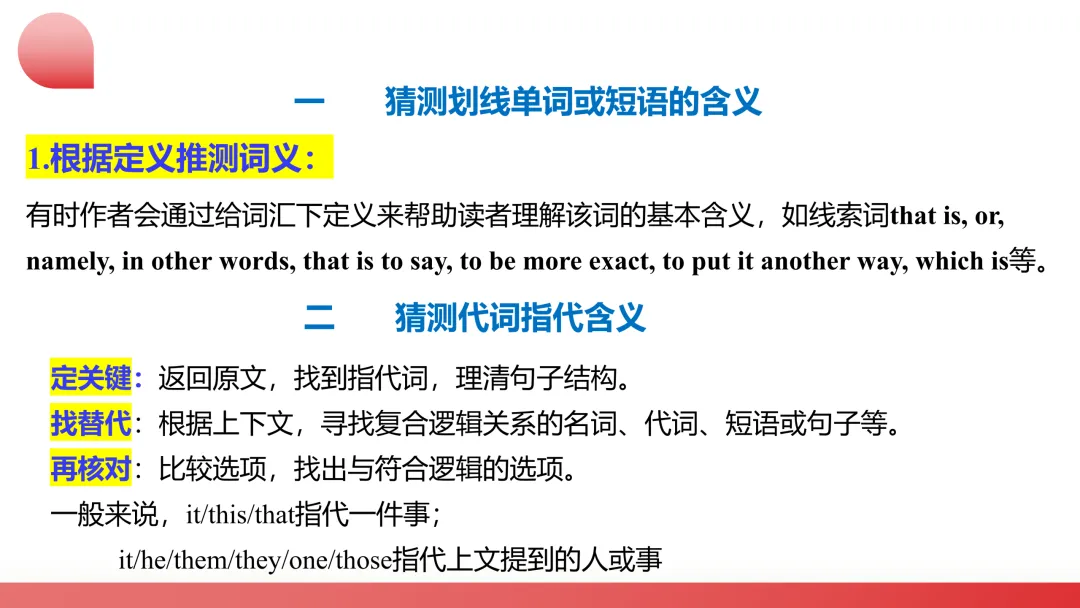
3. 词义猜测题
命题规律:猜测词义题主要考查学生根据上下文正确判断灵活变化的词义能力。一般情况下,推断词义的题目中所出现的单词,大多数是学生未曾见过的生词。
解题技巧:
(1)定位文中画线处上下文;
(2) 理解上下文,查找提示点,根据背景、上下文等线索推测生词词义。
4. 主旨大意题
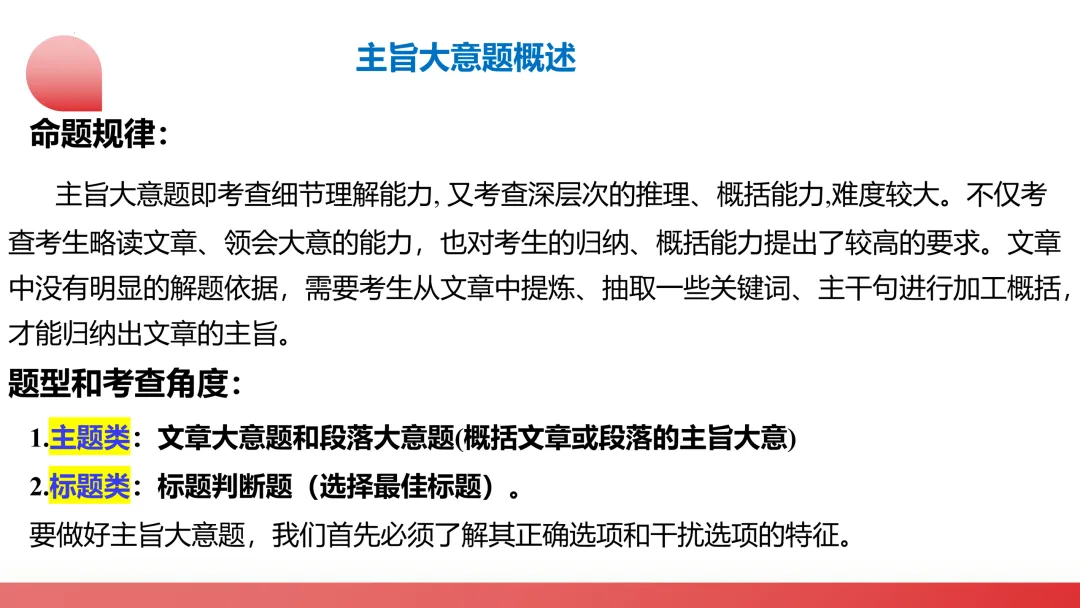
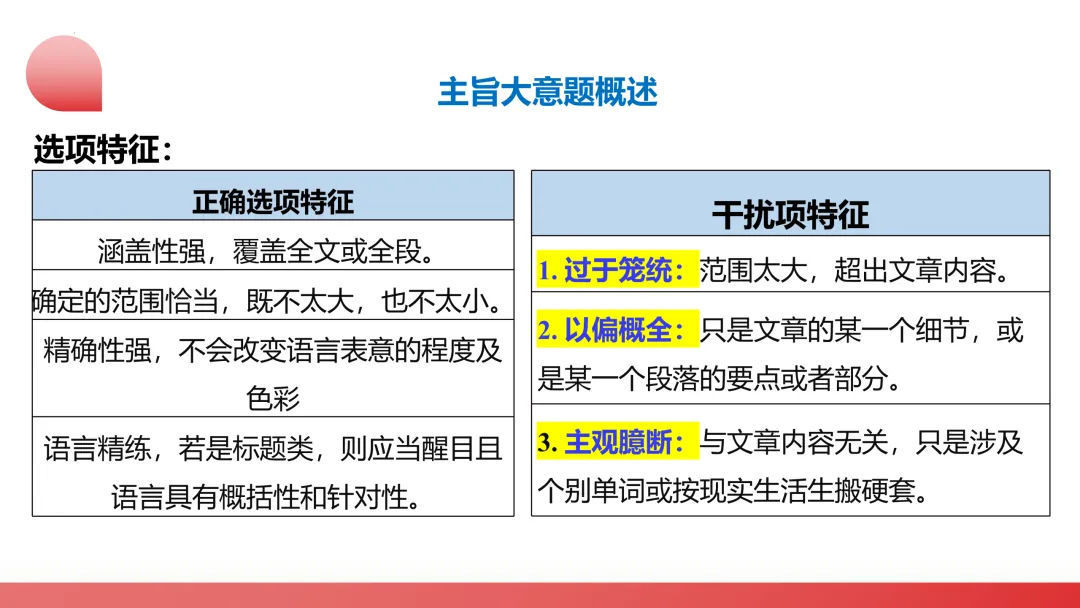
命题规律:主旨大意题即考查细节理解能力, 又考查深层次的推理、概括能力难度较大。不仅考查考生略读文章、领会大意的能力,也对考生的归纳、概括能力提出了较高的要求。文章中没有明显的解题依据,需要考生从文章中提炼、抽取一些关键词、主干句进行加工概括,才能归纳出文章的主旨。
解题技巧:
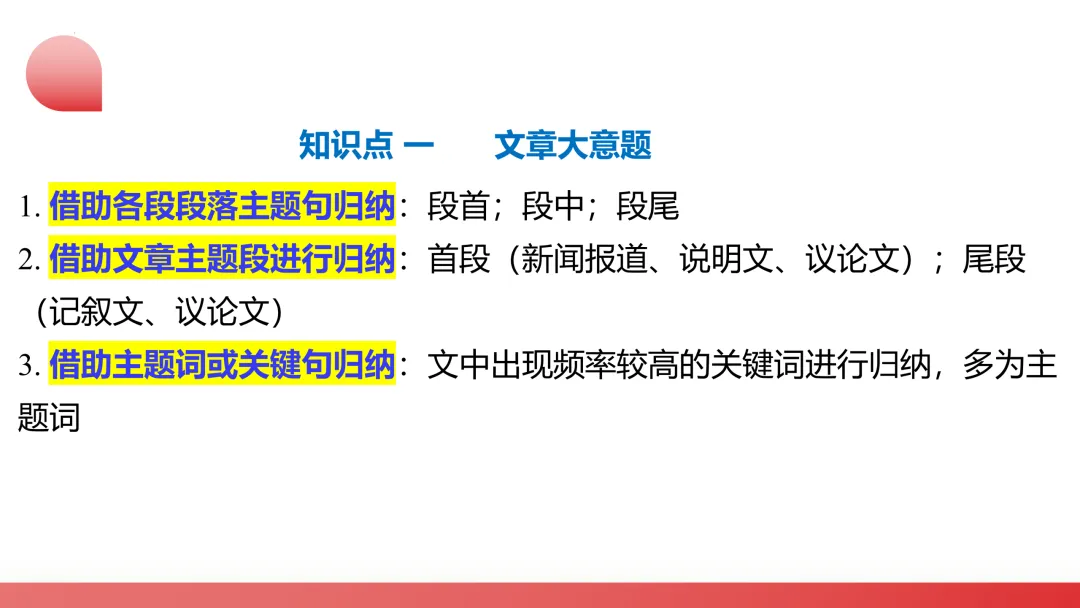
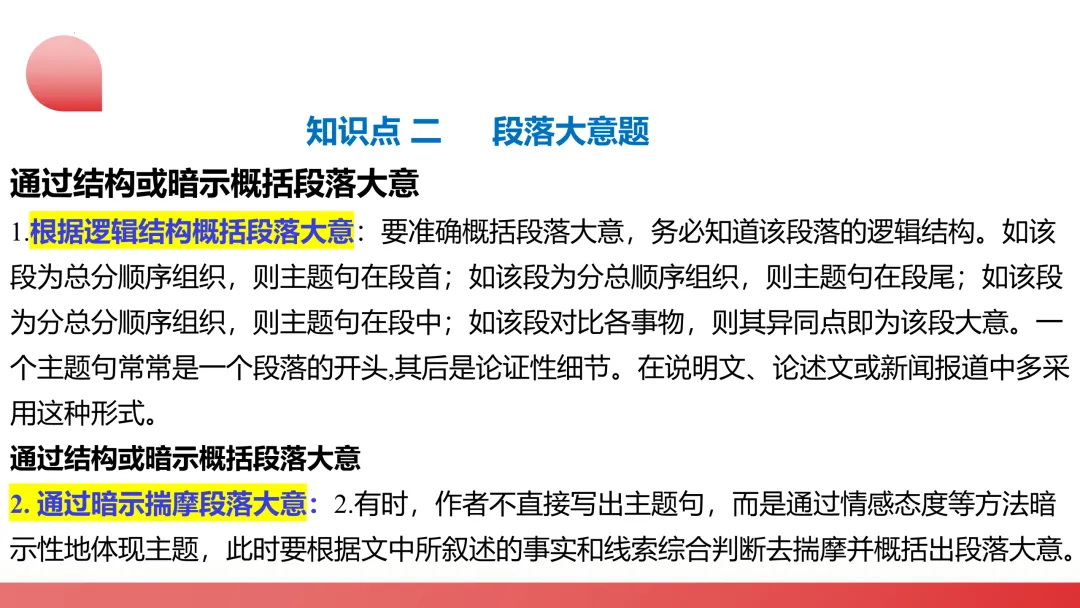
(1)借助各段段落主题句归纳:段首;段中;段尾;
(2)借助文章主题段进行归纳;
(3)借助主题词或关键句归纳:文中出现频率较高的关键词进行归纳,多为主题词;
(4)根据逻辑结构概括段落大意;
(5)通过暗示揣摩段落大意。
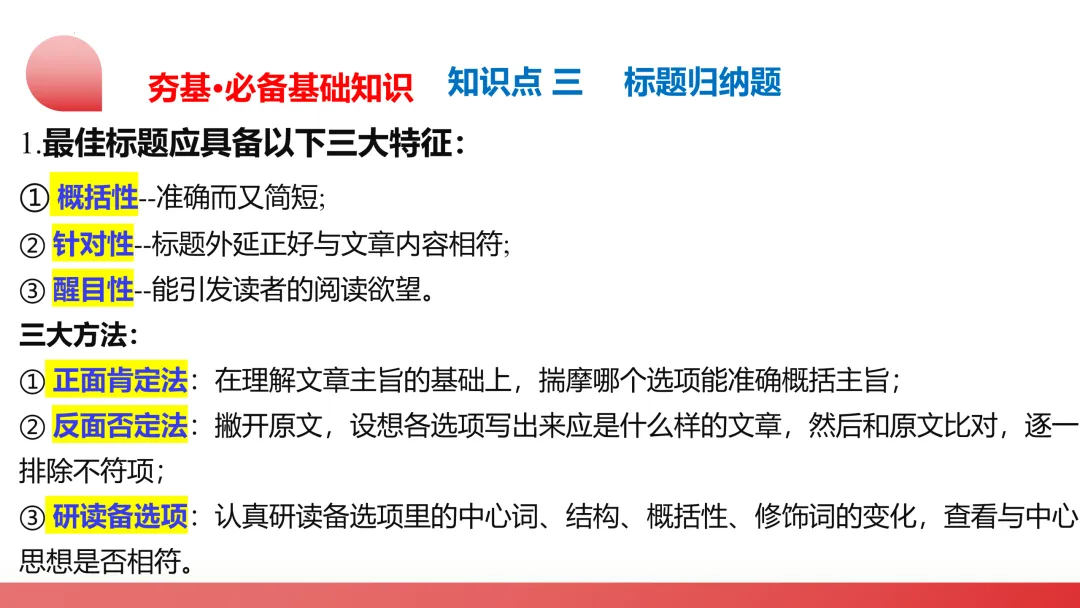
5. 标题归纳题
最佳标题应具备三大特征:① 概括性--准确而又简短;② 针对性--标题外延正好与文章内容相符;③ 醒目性--能引发读者的阅读欲望。
解题技巧:
(1)正面肯定法:在理解文章主旨的基础上,揣摩哪个选项能准确概括主旨;
(2)研读备选项:认真研读备选项里的中心词、结构、概括性、修饰词的变化,查看与中心思想是否相符。
三、典例示范
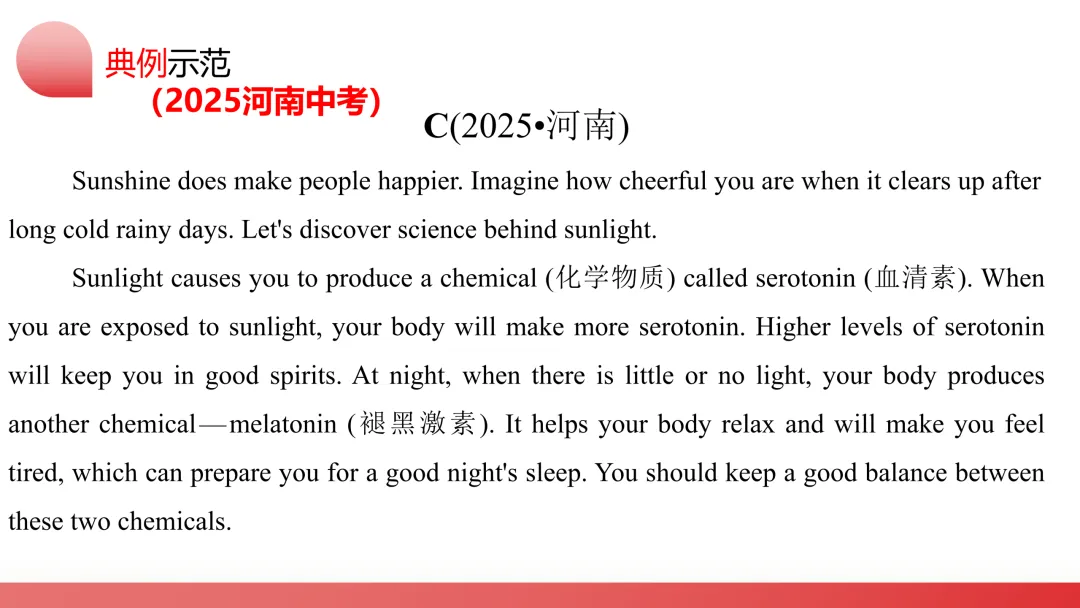
C(2025•河南)
Sunshine does make people happier. Imagine how cheerful you are when it clears up after long cold rainy days. Let's discover science behind sunlight.
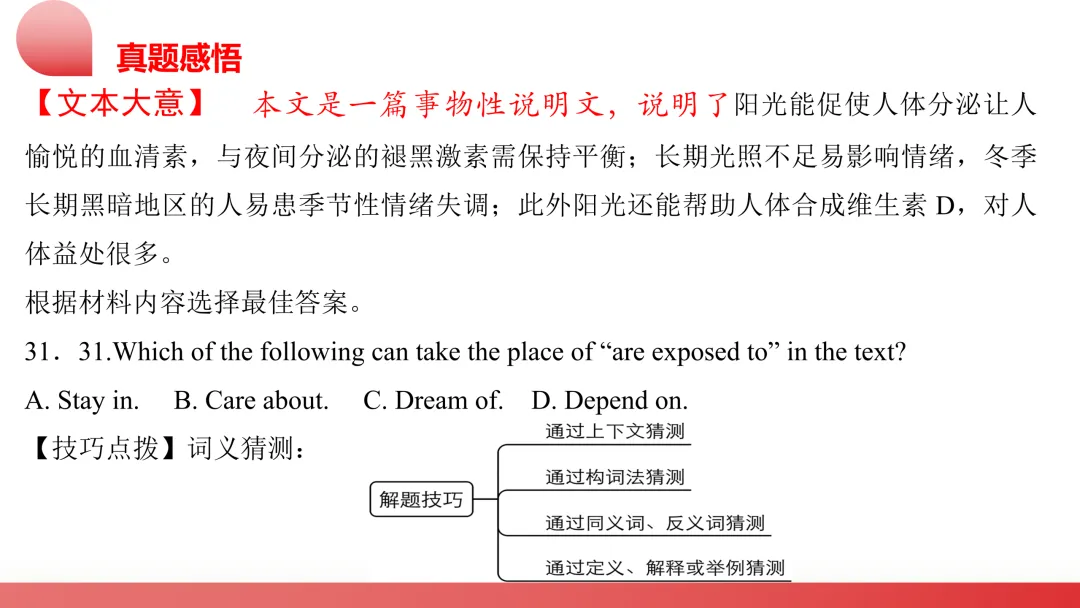
Sunlight causes you to produce a chemical (化学物质) called serotonin (血清素). When you are exposed to sunlight, your body will make more serotonin. Higher levels of serotonin will keep you in good spirits. At night, when there is little or no light, your body produces another chemical—melatonin (褪黑激素). It helps your body relax and will make you feel tired, which can prepare you for a good night's sleep. You should keep a good balance between these two chemicals.
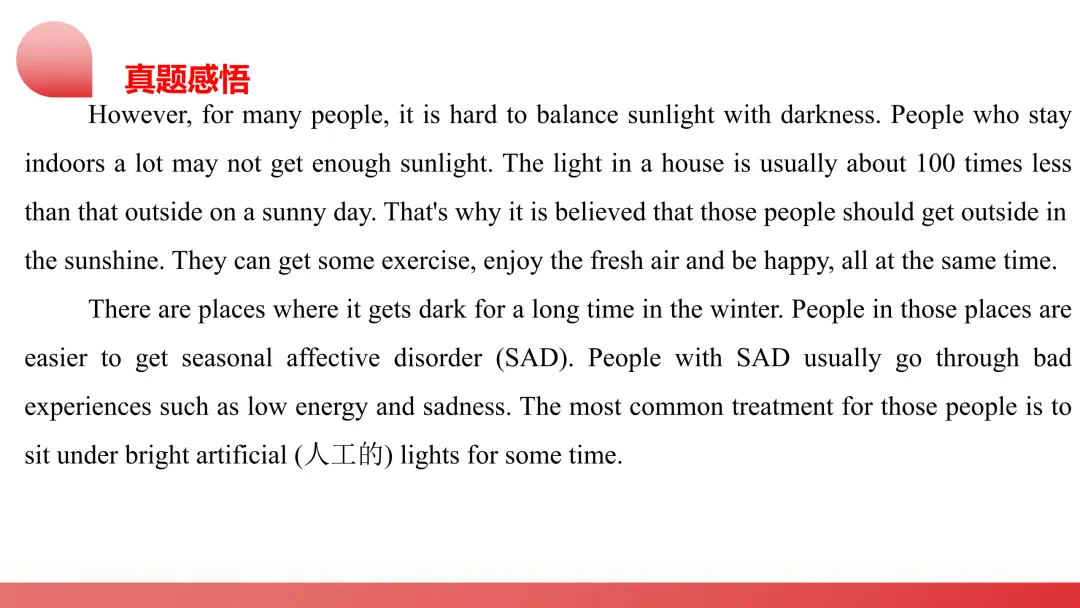
However, for many people, it is hard to balance sunlight with darkness. People who stay indoors a lot may not get enough sunlight. The light in a house is usually about 100 times less than that outside on a sunny day. That's why it is believed that those people should get outside in the sunshine. They can get some exercise, enjoy the fresh air and be happy, all at the same time.
There are places where it gets dark for a long time in the winter. People in those places are easier to get seasonal affective disorder (SAD). People with SAD usually go through bad experiences such as low energy and sadness. The most common treatment for those people is to sit under bright artificial (人工的) lights for some time.
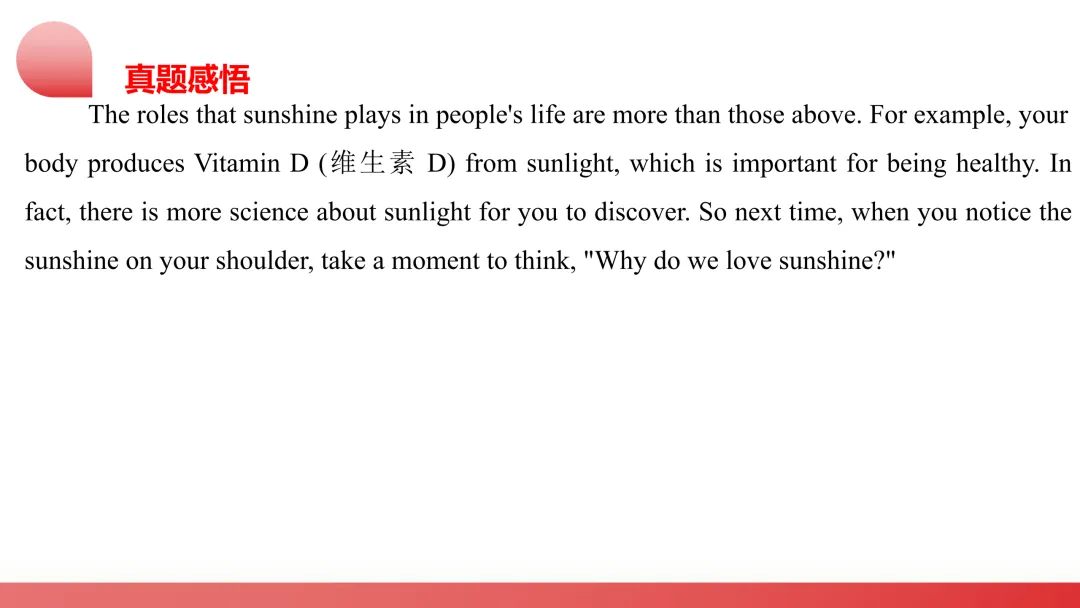
The roles that sunshine plays in people's life are more than those above. For example, your body produces Vitamin D (维生素 D) from sunlight, which is important for being healthy. In fact, there is more science about sunlight for you to discover. So next time, when you notice the sunshine on your shoulder, take a moment to think, "Why do we love sunshine?"
根据材料内容选择最佳答案
31.Which of the following can take the place of “are exposed to” in the text?
A. Stay in.B. Care about.C. Dream of.D. Depend on.
【技巧点拨】词义猜测:
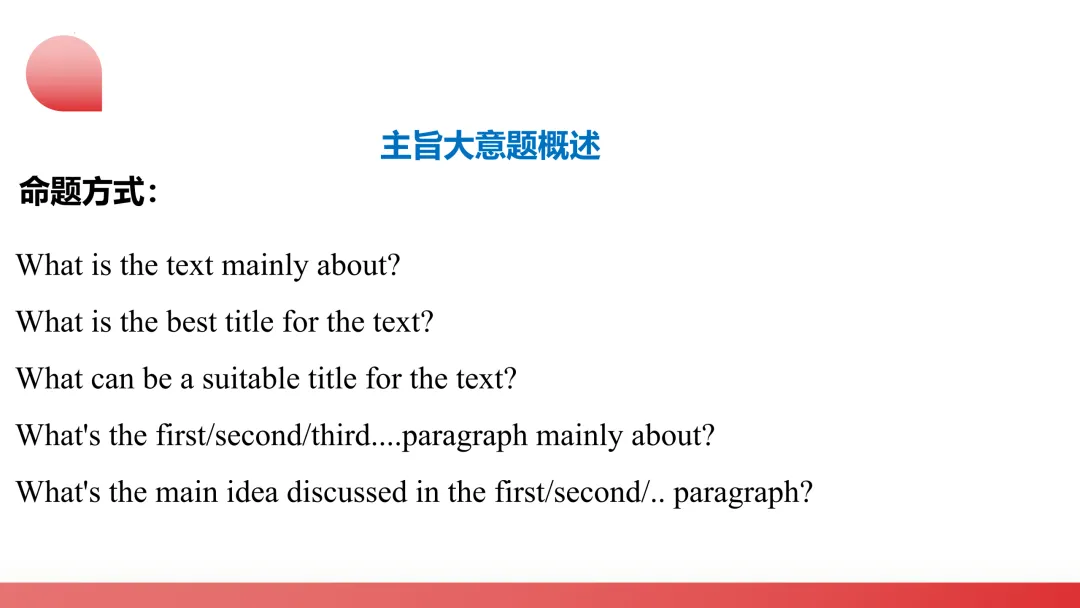
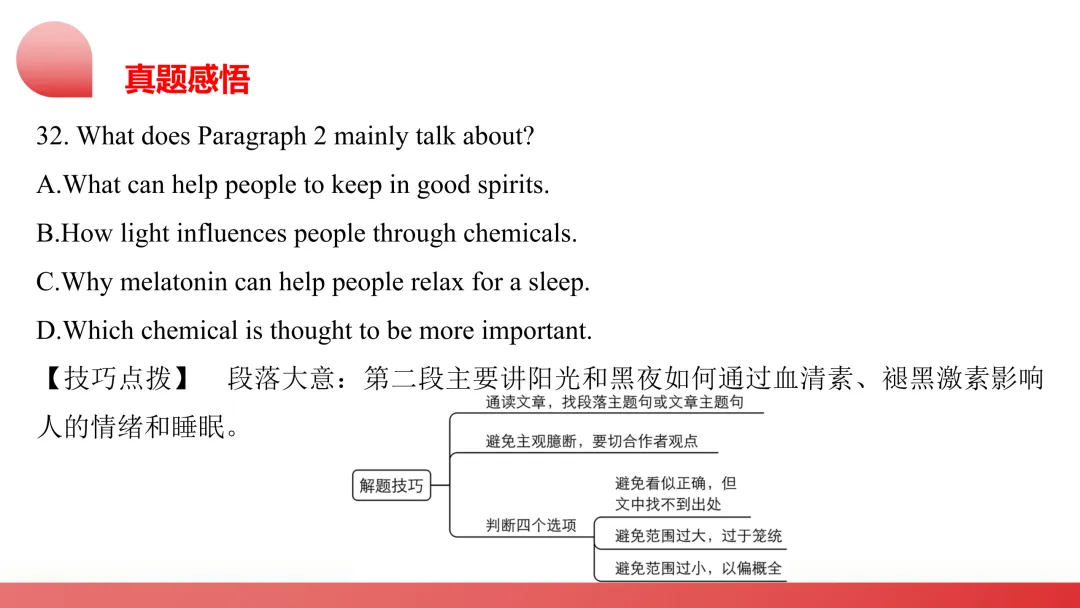
32.What does Paragraph 2 mainly talk about?
A.What can help people to keep in good spirits.
B.How light influences people through chemicals.
C.Why melatonin can help people relax for a sleep.
D.Which chemical is thought to be more important.
【技巧点拨】段落大意:第二段主要讲阳光和黑夜如何通过血清素、褪黑激素影响人的情绪和睡眠。
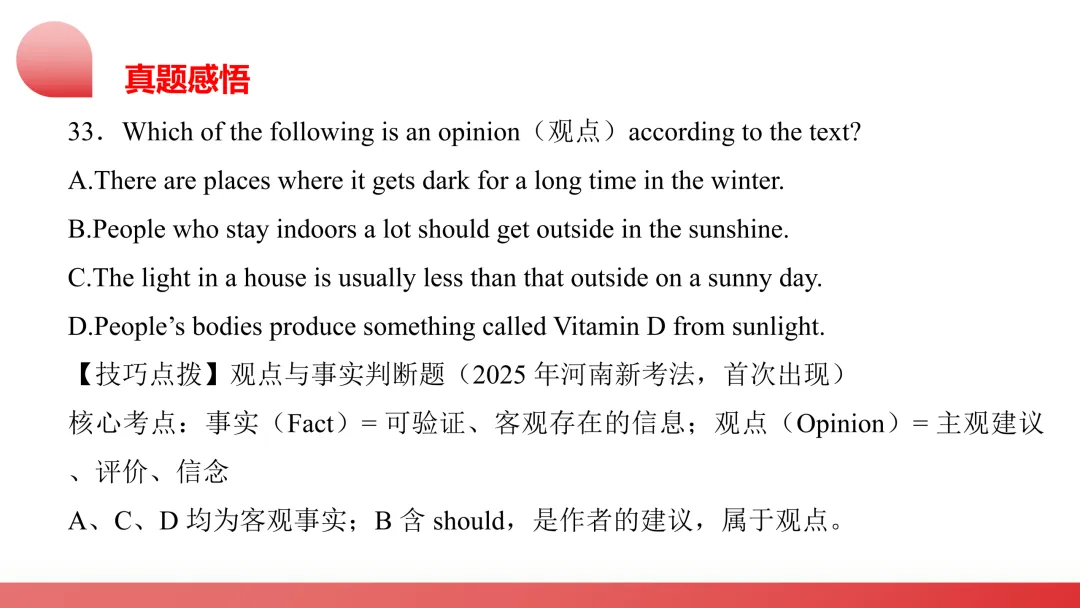
33.Which of the following is an opinion(观点)according to the text?
A.There are places where it gets dark for a long time in the winter.
B.People who stay indoors a lot should get outside in the sunshine.
C.The light in a house is usually less than that outside on a sunny day.
D.People’s bodies produce something called Vitamin D from sunlight.
【技巧点拨】观点与事实判断题(2025 年河南新考法,首次出现)
核心考点:事实(Fact)= 可验证、客观存在的信息;观点(Opinion)= 主观建议、评价、信念
A、C、D 均为客观事实;B 含 should,是作者的建议,属于观点。
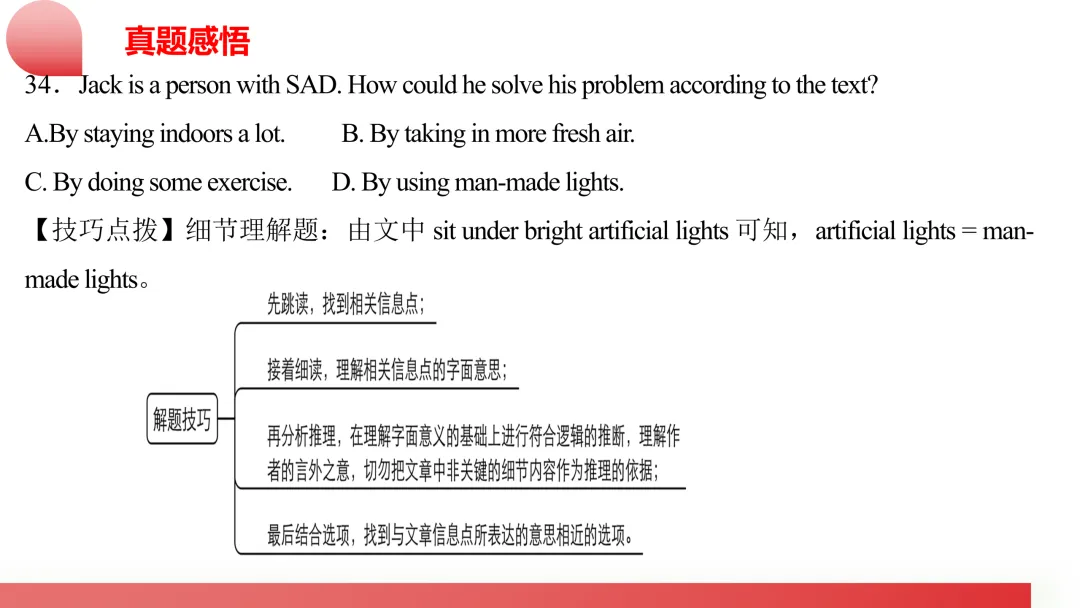
34.Jack is a person with SAD. How could he solve his problem according to the text?
A.By staying indoors a lot.B. By taking in more fresh air.
C. By doing some exercise.D. By using man-made lights.
【技巧点拨】细节理解题:由文中sit under bright artificial lights可知,artificial lights = man-made lights。
35.Why is the sentence “Why do we love sunshine?” written in the last paragraph?
A.To encourage readers to learn more about sunlight.
B. To advise readers to stay in houses for enough time.
C. To expect readers to realize the importance of Vitamin
D. To invite readers to walk into nature to enjoy the fresh air.
【技巧点拨】写作意图题:结尾用问句,目的是引发思考,鼓励读者去探索更多关于阳光的科学知识。
编辑:储欣秀 校对:程艳菊 审核:李曼