



郜慧琴初中英语名师工作室
中考英语时文解读
为深入落实英语新课标育人要求,持续夯实学生英语阅读核心素养,培养学生在真实语境下梳理信息、逻辑思辨、活用语言的能力,拓宽跨文化国际视野、锤炼学科思维品质,精准助力中考备考,本工作室持续深耕、全新上线初中英语时文语篇解读专题系列。
专题语篇选自中考阅读同源外刊优质鲜活素材,紧扣新课标人与自我、人与社会、人与自然三大主题语境,涵盖当下青少年成长热点、社会人文时事。结合初三学情梯度适度改编优化、精准把控生词难度,贴合中考篇章篇幅与命题逻辑。每个语篇配套中考同步阅读理解试题、答案分层解析、语篇脉络解读、高频考点词块积累,帮助学生巩固拓展话题知识、积累地道原生英文表达,全面提升中考英语阅读综合素养与语言应用能力。

主题语境:人与社会
语篇类型:说明文
词数:278
难度:★★★☆☆
建议用时:7分钟

阅读下面短文,从每题所给的A、B、C三个选项中,选出最佳答案。
Traditional Chinese Kite Craftsmanship
Kites, known as zhiyuan (纸鸢) in Chinese, are one of China's oldest cultural treasures, with a history of over 2,300 years. They were first created during the Eastern Zhou Dynasty by Mozi, a philosopher who carved wood into a bird-shaped kite called muyuan (木鸢). Later, Lu Ban, a famous inventor,improved the design using bamboo and silk,making kites lighter and more practical.After paper was invented in the Eastern Han Dynasty, kites became more colorful and widely used in daily life,evolving from military tools to a folk art.
The crafting process involves four key steps: tying the frame (扎), pasting paper (糊), painting designs (绘), and adjusting for flight(放).Artisans carefully bend bamboo strips into balanced shapes,glue paper smoothly onto the frame,and paint symbols like dragons or flowers to represent good luck and happiness.For example,kites from Nantong have special whistles(哨口)that create music in the wind.
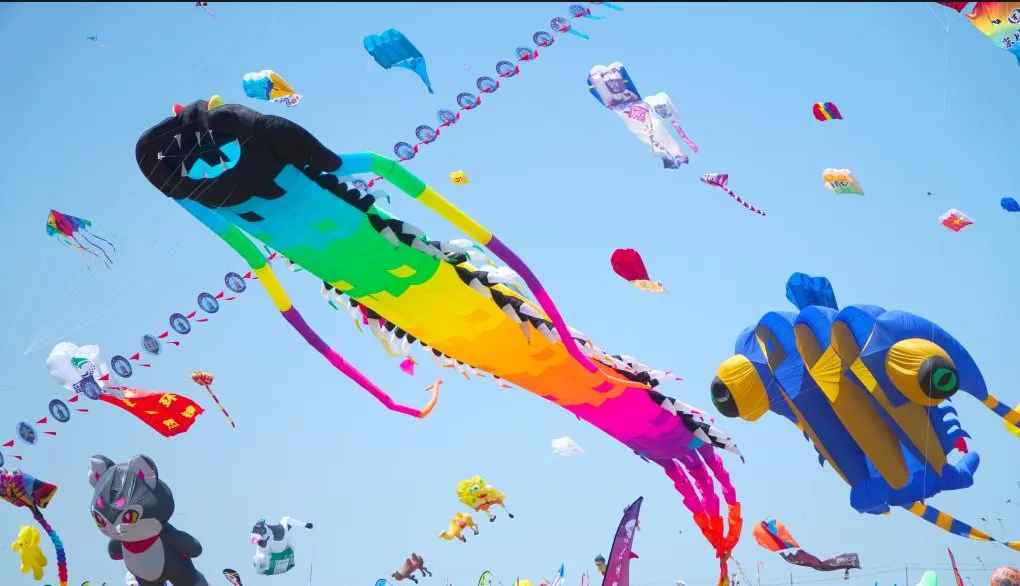
Kites hold deep cultural meanings.During festivals like Qingming Festival and Mid-Autumn Festival,people fly kites to pray for health and happiness. In ancient times,cutting the kite's string symbolized letting go of troubles.Cities like Weifang in Shandong Province,known as the World Kite Capital,host international festivals where kites shaped like animals,mythical creatures,or even modern inventions fill the sky,attracting visitors worldwide.
From Mozi's wooden bird to today's artistic wonders,Chinese kites reflect a perfect mix of science, art, and tradition.They remind us of the beauty in simplicity(简单) and humanity's endless creativity.
1.According to the passage, what was the primary material Mozi used to create the first kite?
A.Bamboo
B.Paper
C.Wood
2.Why did kites become more colorful after the Eastern Han Dynasty?
A.The introduction of silk
B.The invention of paper
C.Improvements in painting techniques
3.The underlined word "evolving" in Paragraph 1 is closest in meaning to ______.
A.escaping
B.returning
C.transforming
4.Which step in kite-making involves adjusting the balance for flight?
A.Tying the frame
B.Pasting paper
C.Painting designs
5.What is the main idea of the passage?
A.It introduces history, craftsmanship, culture and modern development of traditional Chinese kites.
B.It explains how to make traditional Chinese kites with natural materials like bamboo and paper.
C.It mainly talks about why Weifang is called the "World Kite Capital”.
语篇解读
【What】这是一篇介绍中国传统风筝工艺的说明文,以时间与工艺为线索,清晰呈现了风筝2300余年的发展脉络、“扎糊绘放”的制作流程,以及风筝的文化寓意与当代传承价值。
【Why】它以风筝为载体,渗透中华优秀传统文化,帮助学生建立文化自信;同时通过文本的逻辑结构,训练学生的阅读思维,引导他们理解文化传承与创新的关系,实现新课标下文化意识与思维品质的培养目标。
【How】文章采用“时间顺序+并列分述+首尾升华”的语篇结构,先梳理风筝千年发展历程,再并列介绍制作步骤与文化内涵,最后升华文化价值,教学中可引导学生梳理语篇脉络、分析行文结构,在读懂内容的同时掌握说明文谋篇布局方式,全面落实英语核心素养。文章共分为四个段落:
第1段(开篇总起):主要介绍中国风筝有着两千三百多年的悠久历史,追溯了从墨子创制木鸢、鲁班改良形制,再到东汉造纸术出现后,风筝从军事器具慢慢演变为民间传统艺术的发展过程。
第2-3段(传统风筝相关叙述):介绍传统风筝以竹子、纸张或丝绸为主要原料,制作有扎、糊、绘、放四大核心工序,匠人会制作造型、绘制吉祥纹样,还以南通风筝带哨口能迎风发声为例,体现工艺特色。同时,风筝蕴含深厚文化内涵,清明、中秋等节日放风筝寄托美好祝愿,古时断线寓意送走烦恼,同时山东潍坊作为世界风筝之都,以国际风筝节展现了风筝文化的影响力。
第4段(总结全文):指出中国风筝从古至今融合了科学、艺术与传统文化,既展现了质朴的美感,也彰显出人类无穷的创造能力。
答案解析
1. 答案:C
【解析】细节理解题。文中明确提到 “Their prototype was first created by Mozi...He carved wood into a bird-shaped kite called muyuan (木鸢)”,表明墨子制作第一个风筝的主要材料是木头,所以选 C。
2. 答案:B
【解析】细节理解题。根据 “After paper was invented in the Eastern Han Dynasty, kites became more colorful” 可知,东汉造纸术发明后,风筝变得更丰富多彩,原因是纸的发明,选 B。
3. 答案:C
【解析】词义猜测题。“evolving” 所在句子 “evolving from military tools to a folk art” 意思是风筝从军事工具转变为民间艺术“transforming” 有“转变,转化”之意"evolving"意思最接近选 C“escaping”意为"逃跑”,“returning”是“返回”的意思;“disappearing”为“消失”,均不符合语境。
4. 答案:A
【解析】细节理解题。制作风筝时,“tying the frame(扎制框架)”这一步中,工匠需将竹条弯曲成平衡形状,涉及调整平衡以便飞行。“pasting paper”是糊裱纸张,主要是把纸粘贴到框架上;“painting designs”是绘制图案;“adjusting for flight”侧重于整体调试飞行,并非调整平衡,所以选 A。
5. 答案:A
【解析】主旨大意题。A是正确答案,因为文章从历史、工艺、文化寓意和现代发展等多个方面,全面介绍了中国传统风筝;B只提到制作方法,C只提到潍坊风筝之都的例子,都只是文章的部分细节,无法概括全文主旨,故选A。
小贴士

philosopher /fəˈlɒsəfə(r)/ n. 哲学家
carve /kɑːv/ v. 雕刻
artisan /ˌɑːtɪˈzæn/ n. 工匠;手艺人
mythical /ˈmɪθɪkl/ adj. 神话的;虚构的
innovation /ˌɪnəˈveɪʃn/ n. 创新;革新
be created by:由……创造
be shaped into:被塑造成
involve in:涉及;参与
represent sth. as:把……描绘成;把……代表为
symbolize doing sth.:象征着做某事
be inspired by:受到……的启发


END
关注我们!
微信号:ghq18635625565
图文:尚思旋
编辑:尚思旋