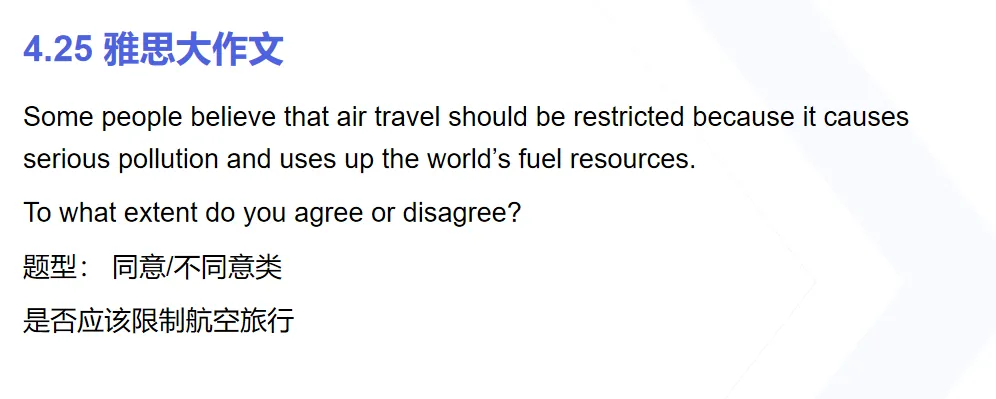
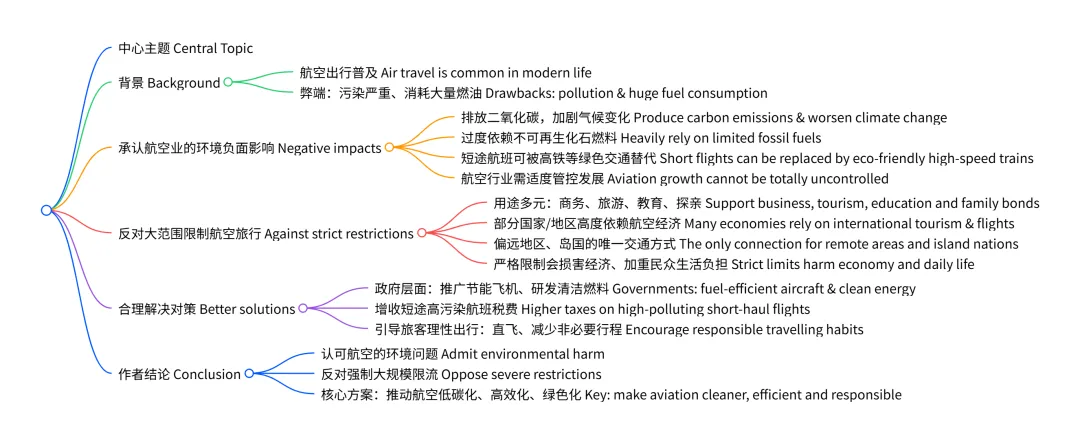
Air travel has become a normal part of modern life, but it is also true that flying creates pollution and consumes a large amount of fuel. For this reason, some people believe that air travel should be restricted. I understand this concern, but I do not think strict restrictions on flying would be the best solution. In my opinion, the focus should be on making air travel cleaner and more responsible, rather than simply limiting people’s ability to travel.There is no doubt that aviation has a negative impact on the environment. Planes produce carbon emissions, and as the number of flights increases, this adds pressure to the fight against climate change. Air travel also depends heavily on fossil fuels, which are limited resources. This is particularly worrying when flights are unnecessary or when there are greener alternatives available. For example, in some countries, short-distance flights could be replaced by high-speed trains, which are usually much less damaging to the environment. In this sense, it is reasonable to say that the aviation industry should not continue growing without any control.However, I do not believe that broad restrictions on air travel would be fair or practical. Flying is not only used for holidays. It supports international business, tourism, education and family connections. Many countries rely on foreign visitors, and many people depend on air travel for work or study. For those living in remote areas or island nations, flying may be the only realistic way to connect with the rest of the world. If air travel were severely restricted, it could harm economies and make life more difficult for ordinary people.A better approach would be to reduce the environmental damage caused by flying. Governments could encourage airlines to use more fuel-efficient aircraft and invest in cleaner fuels. They could also place higher taxes on the most polluting flights, especially short-haul routes where train travel is a practical option. At the same time, passengers should be encouraged to fly more responsibly, such as choosing direct flights or avoiding unnecessary trips. These measures would not solve the problem completely, but they would be more balanced than simply restricting air travel.In conclusion, I agree that air travel causes pollution and uses valuable fuel resources, but I do not agree that it should be heavily restricted. Flying has become too important to modern society to be treated as something that can simply be reduced by force. The more realistic solution is to make aviation cleaner, more efficient and more responsible.航空旅行已经成为现代生活中很普通的一部分,但与此同时,飞行确实会造成污染,并消耗大量燃料。正因为如此,有些人认为航空旅行应该受到限制。我理解这种担忧,但我并不认为严格限制飞行是最好的解决办法。在我看来,重点应该放在让航空旅行变得更清洁、更负责任上,而不是简单地限制人们出行的能力。毫无疑问,航空业对环境有负面影响。飞机会产生碳排放,而随着航班数量的增加,这也给应对气候变化带来了更大的压力。航空旅行也严重依赖化石燃料,而这些燃料是有限资源。当一些航班并非必要,或者存在更环保的替代方式时,这个问题就尤其令人担忧。比如,在一些国家,短途航班可以被高铁取代,而高铁通常对环境的破坏要小得多。从这个角度来看,认为航空业不应该在没有任何控制的情况下继续扩张,是有一定道理的。然而,我并不认为对航空旅行进行广泛限制是公平或现实的。坐飞机并不只是为了度假。它支撑着国际商务、旅游业、教育以及家庭之间的联系。许多国家依赖外国游客,许多人也因为工作或学习而需要航空旅行。对于那些生活在偏远地区或岛国的人来说,飞行可能是他们与外部世界连接的唯一现实方式。如果航空旅行被严重限制,它可能会损害经济,也会让普通人的生活变得更加困难。更好的做法是减少飞行所造成的环境破坏。政府可以鼓励航空公司使用更节能的飞机,并投资更清洁的燃料。政府也可以对污染最严重的航班征收更高的税,尤其是那些可以用火车替代的短途航线。与此同时,也应该鼓励乘客以更负责任的方式乘飞机,比如选择直飞航班,或者避免不必要的出行。这些措施虽然不能完全解决问题,但相比简单地限制航空旅行,它们会更加平衡。总之,我同意航空旅行会造成污染,并消耗宝贵的燃料资源,但我不同意它应该受到严重限制。飞行对现代社会来说已经太重要了,不能被看作是可以通过强制手段简单减少的事情。更现实的解决办法,是让航空业变得更清洁、更高效、更负责任。开头句:
I understand this concern, but I do not think strict restrictions on flying would be the best solution.
让步句:
There is no doubt that aviation has a negative impact on the environment.
反驳句:
Flying is not only used for holidays.
解决方案句:
A better approach would be to reduce the environmental damage caused by flying.
结尾句:
The more realistic solution is to make aviation cleaner, more efficient and more responsible.