

第二部分阅读理解(共两节,满分50分)
第一节(共15小题,每小题2.5分,满分37.5分)
阅读下列短文,从每题所给的A、B、C、D四个选项中选出最佳选项。
A
Shared mobility services like carshares and bikeshares benefit the environment greatly, yet they’re far from equally accessible to everyone. In European and US cities, such services gather in well-off areas, mainly serving younger, wealthier, able-bodied groups. Disabled, elderly, low-income people, or those without smartphones and credit cards often struggle to use them, creating a big accessibility gap.
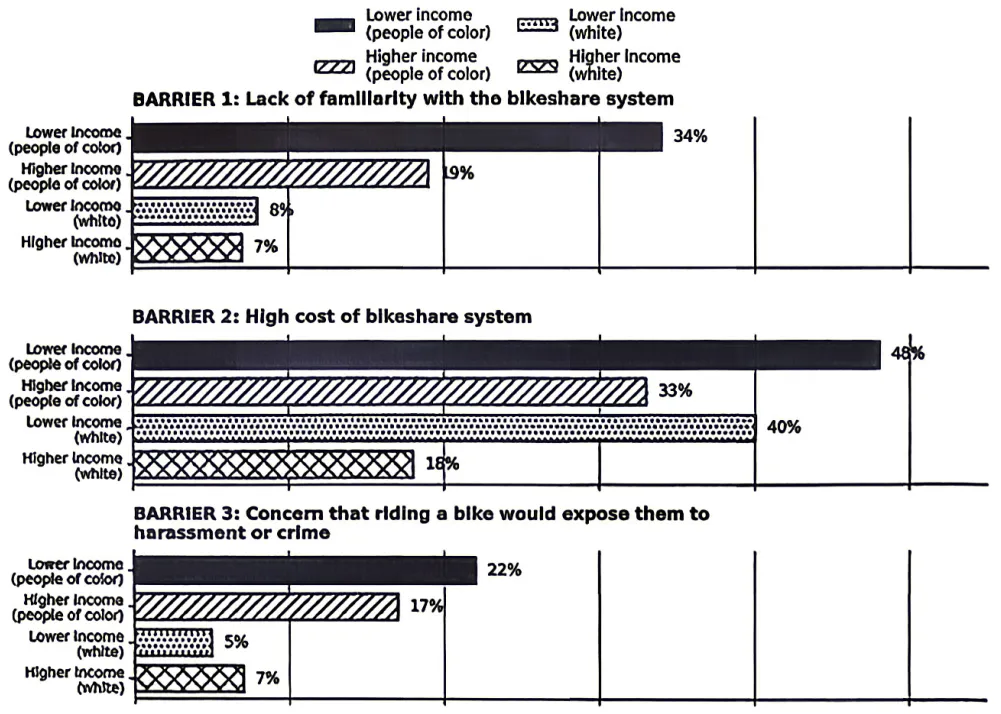
As a key part of sustainable transportation, shared mobility could cut urban vehicles by 90% and emissions by 50% if it widely replaces private cars. But obvious gap s exist: white Americans have far more shared mobility spots nearby than African Americans, who also wait longer for ride-hailing (网约车) services. Cost, lack of digital access and unfamiliarity with the systems are major barriers for low-income people of color.
Thankfully, solutions are emerging.
Publie agencies | offering subsidies and cash payment options for disadvantaged communities. |
Nonprofits like Shared Mobility Inc. | setting up free e-bike libraries with training for new riders. |
European programs such as Mobitwin | providing volunteer ride services for the elderly via phone calls, valuing human connection over digital apps. |
Austrian carshare Tim | adding wheelchair-friendly vehicles and free child seats to cater to women and families. |
True sustainable shared mobility starts with meeting everyone’s needs, not just chasing profits.
21. Who are the main users of shared mobility services?
A. Young and rich people.B. Disabled elderly people.
C. People with low income.D. People without smartphones.
22. What is the total percentage of low-income people of color facing three barriers?
A. 48%.B. 53%.C. 69%.D. 104%.
23. Which can probably highlight human bond?
A. Public agencies.B. Shared Mobility Inc.C. Mobitwin.D. Tim.
B
A teacher explained on social media that for nearly 30 years, she’s used the same approach with students who already arrive with a reputation. You know the ones — the kids every teacher hears about before the school year even begins.
Instead of pretending she hasn’t heard the warnings, she does something unexpected.
Before the year starts, she finds out who those “notorious” (名声在外的) students are — not to judge them, but to understand them. Then she visits their former teachers and asks just one question: “I know they were difficult, but what’s something good about them?” Sometimes it’s “he’s a good football player,” or “she’s a talented artist.” All she needs is one strength.
On the first day of class when that student walked in, she greeted him with, “I’ve heard about you.” At this point, the kid was ready for the usual speech: “You’d better not cause trouble in my class…” But she changed the script. “You’re that great football player I’ve been hearing about.” Instantly, his whole face changed. From there, she praised him in class and told him, “If you keep this up all week, I’m calling your mom or dad with good news.”
The 13-year-old boy’s mother initially avoided her call, assuming it was bad news. Instead of complaining, the teacher flipped the script. When told her son was amazing, the mother cried. The teacher caught him being good and that kid spent the rest of the year trying to live up to that version of himself.
Good news is powerful. And that lesson goes far beyond the classroom. Finding the good isn’t just for teachers working with “troubled” students. It can transform families, friendships, workplaces, and every part of life.
24. Why does the teacher ask about “notorious” students?
A. To figure out their advantage.
B. To know their academic results.
C. To confirm their bad reputation.
D. To check their family background.
25. What can we infer about the student from paragraph 4?
A. He didn’t get along with his parents.
B. He got used to being negatively judged.
C. He was well-known among all the teachers.
D. He was a trouble-maker in the teacher’s class.
26. What does the underlined phrase “flipped the script” in paragraph 5 probably mean?
A. Wrote a better play script.
B. Recorded their conversation.
C. Changed the usual approach.
D. Expressed her disappointment.
27. What does the teacher’s story teach us?
A. Aim high, reach high.B. Learn more, know more.
C. See good, get good.D. Speak clear, hear clear.
C
Modern agriculture’s pursuit of higher yields is silently destroying the very foundation of our food system: soil resilience (韧劲). This vital concept refers to the capacity of soil to resist, adapt to and recover from disturbances — whether from routine farming or extreme environmental events such as droughts and floods. A recent comprehensive study found that widespread intensive practices like plowing, fertilizer application, and irrigation are steadily weakening this critical capacity. While boosting short-term production, these methods remove precious organic matter, compact (压实) the ground, and disturb its delicate ecosystem. Consequently, soils become less able to cope with stresses, leading to worsening erosion (侵蚀) and declining long-term productivity.
The research, published in the journal NPJ Sustainable Agriculture, identifies several severe threats. The foremost is erosion driven by over-ploughing and deforestation, which removes fertile layers that took centuries to develop. Other major risks include pollution from pesticides and microplastics, as well as compaction from heavy machinery. Scientists emphasize that soil supports around 95% of global food production and stores more carbon than all the world’s forests combined and the decline of it is therefore a profound environmental crisis.
According to lead author Dr. Alison Carswell, healthy resilient soils are central not only to the foundation of food security but also to biodiversity and climate stability. She cautions that many current practices risk pushing farming systems toward permanent “tipping points” of collapse — points of no return — threatening global trade and stability. These complex challenges demand our attention.
The path forward requires farmers to balance immediate productivity with long-term soil health. Alternatives ranging from conservation farming to integrated pest management can help restore resilience. However, most solutions involve difficult choices, or difficult compromises, demanding a strategic shift in land management. With the UN estimating one-third of global soils already damaged, and food demand rising, the call for change is increasingly urgent. This pressing issue affects everyone. As Dr. Carswell concludes, “Breaking the cycle of soil damage is possible, but it demands a fundamental rethinking — prioritizing resilience for the coming decades, not just the next season.”
28. How does the author explain soil resilience?
A. By giving examples.
B. By defining it directly.
C. By making a comparison.
D. By citing research findings.
29. What does the underlined word “it” refer to in paragraph 2?
A. Food production.B. Carbon storage.C. The forest.D. The soil.
30. What does Dr. Carswell advocate?
A. Valuing present farming methods.
B. Prioritizing short-term productivity.
C. Focusing on long-term soil health.
D. Raising farming productivity greatly.
31. What can be the best title for the text?
A. Modern Agriculture Is Destroying Soil
B. Technology Is Revolutionizing Farming
C. Land Management Needs Urgent Change
D. Food Security Requires Rethinking Now
D
Poisoning by lead is usually thought of as a disease of relatively modern civilisations. Yet in a paper just published in Science Advances Alysson Muotri, a geneticist at the University of California, San Diego and his colleagues showed that it was also common among humanity’s pre-industrial ancestors.
Dr. Muotri and his team made their discovery while studying ancient teeth. The researchers studied 51 teeth from humans and their relatives, covering the past 2 million years. To their surprise, lead turned out to be present in 37 of the samples. The levels of lead in many of the teeth were high, with some as great as 50 parts per million. This left Dr. Muotri curious about how ancient humans coped with such high exposures.
To find out, he grew little piece of brain-like tissue known as brain organoids (脑类器官). Some of the organoids were made from cells whose genomes (基因组) contained a version of a gene called neuro-oncological ventral antigen 1 (nova1) that is found in all modern humans. Some had an ancient version of the same gene that has been found in Neanderthal genomes. The modern version of nova1 is vital for human brain development.
The researchers exposed the organoids to different amounts of lead and studied how they responded. None reacted well. But one difference jumped out. In the organoids carrying the ancient version of nova1, lead poisoning changed the expression of another gene known as foxp2. In modern humans, a properly functioning foxp2 gene is vital for learning language. Organoids with the modern version of nova1 suffered no such problems. Dr. Muotri, therefore, suggested that the evolution of the new version of the nova1 gene helped prevent lead exposure from interfering with the ability to speak.
If he is right, then a greater tolerance for lead poisoning may have been one way in which modern humans outcompeted their cousins and went on to make extraordinary things — such as leaded pipes, petrol and cosmetics with which to poison themselves all over again.
32. What do we know from the study of ancient teeth?
A. Most ancient teeth contained common diseases.
B. Lead levels were low in pre-industrial ancestors.
C. Ancient humans thought nothing of lead exposure.
D. Lead poisoning existed long before modern society.
33. Why did Dr. Muotri carry out the study on brain organoids?
A. To find how lead affects language learning.
B. To clarify how ancient humans handled lead.
C. To compare modern and ancient humans’ brains.
D. To study the function of the modern nova1 gene.
34. What effect did lead have on organoids with the ancient gene?
A. It influenced another gene.
B. It improved language skills.
C. It destroyed the organoids.
D. It strengthened brain growth.
35. What is the main purpose of the text?
A. To warn against lead poisoning.
B. To compare human differences.
C. To stress gene research importance.
D. To introduce a lead-evolution study.
第二节(共5小题;每小题2.5分,满分12.5分)
阅读下面短文,从短文后的选项中选出可以填入空白处的最佳选项。选项中有两项为多余选项。
Festive Fitness
The holidays are always the most stressful part of my year. No matter how much I plan, my usual workout routine disappears in the chaos. But I’m determined to change that this time. 36 With it in mind, I’m going to get creative to keep it up.
Staying fit doesn’t require long hours. To be efficient, I focus on high-intensity interval training (高强度间歇训练). Research shows it’s one of the most effective methods. It involves short bursts of maximum effort followed by a brief rest. A classic study found that just 4 minutes of this pattern, done regularly, improved fitness more than an hour of moderate exercise. 37
Even minutes of intensive activity count. 38 For example, a recent study linked 3. 5 minutes of daily intensive activity to a lower heart disease risk in women. Another analysis found such bursts cut the risk of heart attack and stroke by 20% for everyone.
39I think of them as “exercise snacks.” Chasing a bus, carrying heavy groceries, or sprinting through an airport all qualify. Even taking the stairs quickly helps — a study showed that intensively climbing stairs several times a week can boost cardiovascular (心血管的) fitness by 5% in just weeks.
Don’t underestimate the power of walking. While 10,000 steps is a common goal, a new study found that 7,000 steps daily is enough to significantly lower the risk of heart disease, diabetes, and other conditions. 40 Going for long walks with family becomes a perfect way to stay active and reconnect during the holidays.
A. So we can achieve a lot in very little time.
B. This makes walking a more practical activity.
C. These short bursts of intensive activity happen naturally.
D. Moderate exercise like walking is also valuable for health.
E. Consistency is key to fitness, and that requires adaptability.
F. In fact, these micro-workouts offer significant health benefits.
G. Taking a traditional approach to exercise ensures steady progress.
第三部分英语知识运用(共两节,满分30分)
第一节(共15小题;每小题1分,满分15分)
阅读下面短文,从每题所给的A、B、C、D四个选项中选出最佳选项。
I climbed a small ladder to wipe the stained kitchen fans, my skin hurting from strong cleaners. I had a sudden realization: I couldn’t spend life on 41 jobs. Each time I was exhausted, my thoughts always 42 childhood days by rivers, where my brother and I learned to figure out trout’s (鳟鱼) silent movements — a fascination deeper than a mere 43.
Born into a working-class family and 44 school without a diploma, I once thought a science career was a distant 45. For years, I worked tirelessly at 46 floors and cleaning kitchens, proud of honest labor yet longing for more. At 24, I resolved to 47: I enrolled in adult education, then gained admission to a university biology program.
The first term was extremely 48 — I failed several courses — but the resilience (韧性) 49 by years of physical labor kept me going. As my 50 improved gradually, a breakthrough came: my supervisor handed me a trout research paper and invited me to join the team. 51 with joy, I realized I was getting paid to explore my lifelong passion, turning from a 52 into an ambitious scientist.
Today, I’m pursuing a PhD on how climate change 53 Arctic trout, hiking to remote glacial lakes. Incidentally, my brother 54 my fieldwork, so we could work by the water again. Life has come full circle: my childhood river passion has become a 55, turning struggle into purpose and dream into reality.
41. A. abnormalB. exceptionalC. dangerousD. unappreciated
42. A. kept away fromB. flooded back toC. stepped back fromD. held on to
43. A. talentB. adventureC. hobbyD. tendency
44. A. attendingB. leavingC. skippingD. missing
45. A. dreamB. destinationC. sailD. memory
46. A. beatingB. diggingC. loadingD. sanding
47. A. repeatB. recallC. restartD. reflect
48. A. toughB. plainC. fundamentalD. different
49. A. controlledB. ruinedC. shapedD. protected
50. A. reactionsB. gradesC. incomesD. methods
51. A. FacedB. HitC. ChargedD. Overcome
52. A. fisherB. troublemakerC. laborerD. caregiver
53. A. affectsB. assessesC. boostsD. benefits
54. A. inspectedB. joinedC. recognizedD. witnessed
55. A. routineB. targetC. choiceD. profession
第Ⅱ卷(非选择题,满分55分)
第二节(共10小题;每小题1.5分,满分15分)
阅读下面短文,在空白处填入1个适当的单词或括号内单词的正确形式。
Tangyue Village in Guizhou Province has become a remarkable model of rural revitalization (振兴) through system innovation, 56. __________ (transform) a poverty-stricken village into a prosperous community with united villagers and 57. __________ (economic) dynamic industries.
Before 2014, Tangyue suffered from severe poverty: most young people left 58. __________ cities, leaving farmland abandoned, and a devastating flood worsened its situation by destroying houses and farmland. Determined 59. __________ (change) their fate, the village leadership launched bold reforms: villagers pooled their land into a cooperative through property right 60. __________ (confirm), turning separate and unused resources into valuable shared property. Guided by the Village Party Branch, they established 61. __________ (collect)enterprises like high-quality fruit planting teams and rural transport companies, providing stable jobs for returning villagers who once struggled to earn a living in urban areas. What’s more, rules like the “Red Nine Articles” standardized villagers’ daily behavior, fostering a harmonious social atmosphere 62. __________ neighbors help each other in both work and life.
After years of constant efforts, Tangyue has achieved a great transformation. People’s average income 63. __________ (rise) sharply, and over 90% of migrant workers have returned home to start new lives in the past ten years. The once run-down village now boasts neat buildings, developed industries 64. __________ a united community. This success proves that institutional innovation can activate rural development, showing 65. __________ practical and replicable (可推广的) path for China’s rural revitalization.
第四部分写作(共两节,满分40分)
第一节(满分15分)
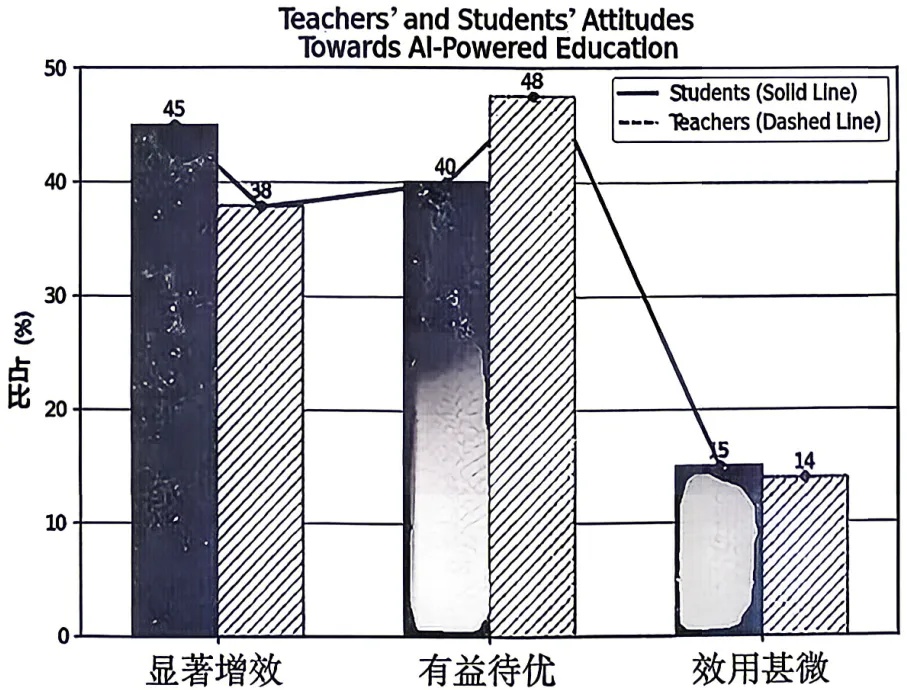
上周学校英文报面向全体师生就“AI赋能教育的认可度”开展了问卷调查。请使用图表中的调查结果写一篇短文投稿,内容包括:
(1)调查目的;
(2)调查结果;
(3)你的看法。
注意:
(1)写作词数应为80左右;
(2)请按如下格式在答题卡的相应位置作答。
第二节(满分25分)
阅读下面材料,根据其内容和所给段落开头语续写两段,使之构成一篇完整的短文。
The Map on Our Wall
Mr. Chen, our geography teacher, always said that maps tell stories. Last month, our map almost told a dangerous one.
It started as a simple assignment. We were marking our family homes on a large topographical (地形的) map of our province. My best friend Wei pinned his family’s farm near the mountainous border region. “My grandfather used to patrol(巡逻) there when he was young,” he mentioned casually. “He knows every hidden path like the back of his hand.” None of us thought much of it until the stranger appeared.
He showed up at our school gate during lunch break, well-dressed and friendly, claiming to be a university researcher studying border ecology. He showed particular interest in Wei’s grandfather, asking detailed questions about old patrol routes and whether any “unofficial paths” still existed. He offered money. Wei was excited at first, but something felt wrong. That evening, he called me, voice trembling. “He knew my grandfather’s name. He knew our village. How?”
The next morning, our class split. Some thought Wei was overreacting. “It’s just research,” they argued. “Imagine the money!” Others remembered the national security assembly (集会) we’d yawned through last term — suddenly, those warnings felt terrifyingly real. The tension peaked when the stranger returned, waiting near the gate as classes ended. Wei hid in the library, shaking. “What if he follows me home? What if he hurts my grandfather?”
That’s when our class monitor, Lin, stepped forward. She gathered us in a quiet circle and spoke firmly: “This isn’t just Wei’s problem. We’re his classmates. We’re his friends. And this involves our country too.” Within minutes, we formed a plan. Some of us walked Wei home in a group, ensuring he was never alone. Others reported the incident to our headteacher, and he immediately contacted the authorities, who took away the stranger for further investigation. For the first time, we weren’t just students — we were protectors.
注意:
(1)续写词数应为150个左右;
(2)请按如下格式在答题卡的相应位置作答。
What began as a frightening experience changed us.
Grandfather’s words redefined the meaning of the map.
21-23 ADC24-27 ABCC28-31 BDCA32-35 DBAD36-40 EAFCB 41-45 DBCBA46-50 DCACB51-55 DCABD 56. transforming57. economically58.for59.to change 60.confirmation61.collective 62.where63. has risen64.and65.a 第四部分写作 第一节(possible version) Last week,a school-wide survey was conducted to explore attitudes towards Al in education.The findings reveal interesting perspectives from both teachers and students According to the data, 45% of teachers and 38% of teachers believe AI significantly enhanceseducational efficiency.Meanwhile,40% of students and 48% of teachers think AI is helpful but needs improvement.About 15% from both groups consider AI hardly useful or distracting. Personally,AI servesas a valuable educational tool when used properly. Schools should provide guidance to maximize its benefits while addressing concerns about its limitations.
What began as a frightening experience changed us. We started paying attention to thestrangers around us, the unusual questions, and the too-generous offers. We researched our borderregions, learning about the soldiers and villagers who guard them daily. Wei's grandfather visitedour class, his weathered hands tracing the map where he'd once stood watch."National securityisn't just about soldiers with guns," he told us quietly."It's about ordinary people knowing whatmatters, and protectingit.”
Grandfather's words redefined the meaning of the map. Now it holds something deeper:the understanding that homeland security begins with awareness, with friendship, and with thecourage to act when something feels wrong. Wei walks home alone again, but he walks taller.Andwhen I look at that map, I no longer see just dots and lines. I see home ours, and everyone's-andthe quiet duty we all share to protect it. A nation's safety isn’t guaranteed by borders alone, butbythe awareness of those who live within them--students, firers grandfathers, all of us together.


