

2026年中考英语一轮话题复习宇宙探索
核心语言知识清单
核心词汇
universe (宇宙)、space (太空)、star (星星)、planet (行星)、moon (月球)、Mars (火星)、satellite (卫星)、spaceship (宇宙飞船)、rocket (火箭)、astronaut (宇航员)、explore (探索)、discover (发现)、achieve (实现)、success (成功)、technology (技术)、pioneer (先驱)、exploration (探索)
常用短语
space exploration (宇宙探索)、send into space (发射进入太空)、make a breakthrough (取得突破)、work hard for (为……努力)、the spirit of exploration (探索精神)、make great achievements (取得伟大成就)、pursue the dream (追逐梦想)、contribute to (为……做贡献)、learn from (向……学习)
关键句型
1.成就描述:China has made great achievements in space exploration in recent years.
2.动作表达:China sent the spaceship into space successfully in...
3.观点表达:I think space exploration is very important for human beings.
4.意义表达:Space exploration not only helps us know more about the universe, but also pushes the development of science and technology.
5.情感表达:We should learn from the astronauts who work hard for space exploration.
命题趋势与难度
1.内容趋势:紧扣中国航天成就(神舟系列、嫦娥工程、天问一号、空间站)、基础宇宙常识、航天探索精神,融入国际航天热点(探月/火星探索),突出中国元素,彰显家国情怀。
2.难度分布:基础题(词汇/细节/简单信息提取)占70%,中难题(信息整合、推理探索意义、书面表达观点)占30%,词汇与语篇难度适中,无超纲生僻航天术语。
3.育人导向:突出科学探索精神、坚持不懈的品质、家国情怀,引导学生了解中国航天成就,树立科学梦想,学习航天人不畏艰难、勇于探索的精神。
备考策略
1.词汇句型:按“航天工具/航天人物/航天成就/探索精神”整理词块,强化核心词汇的拼写与运用,背诵高频句型,重点掌握现在完成时(描述航天成就)的用法。
2.题型突破:听力聚焦航天“成就、时间、工具”等关键词;阅读强化航天类语篇的细节定位与主旨归纳;写作掌握“成就介绍/观点表达—论据—总结/感悟”的固定结构,积累中国航天成就相关素材。
3.素材积累:关注贴近中考的航天科普素材(简化版中国航天成就介绍)、简短的航天人物故事,避免复杂专业术语,积累可用于写作的具体例子。
4.思维训练:围绕“宇宙探索的意义”“中国航天成就的影响”“向航天人学习什么”开展简单讨论,提升观点表达与逻辑推理能力,适配书面表达与阅读推理考点。
易错点与避坑指南
1.词汇拼写:避免astronaut(少字母)、exploration(少字母/拼错)、spaceship(连写/错写)、achieve(与achievement混淆)等高频错误;区分explore(动词)与exploration(名词)、discover(发现)与invent(发明)。
2.语法易错:描述中国航天成就优先用现在完成时(have/has done);被动语态的正确使用(如The satellite was sent into space.);避免时态混用(过去时/现在完成时)。
3.写作避坑:忌空谈宇宙探索,需结合具体的中国航天成就(如神舟飞船、嫦娥探月)增强说服力;避免使用生僻航天术语,用简单准确的语言表达;观点类写作需明确立场,结合“探索精神/科技发展/家国情怀”谈理由。
4.表达规范:书面表达中介绍航天成就时,时间/事件表述准确,避免常识性错误;用firstly/besides/finally等连接词提升文章连贯性,避免句子堆砌。
语篇研读
基础知识运用
一、语法选择
The soil (土壤) from the Moon is different from the soil on Earth. The soil from the Moon has a lot of iron (铁), 1 it has little nutrition (营养). Recently, scientists are trying their best 2 plants in the soil from the Moon.
The scientists choose a kind of plant to do an experiment in 3 room. It is called “thale cress”. The plant can grow in very little soil. First, the scientists put some soil into some small boxes. Second, they water the soil and then plant the seeds. After two days of watering, the scientists see green leaves in every box. They keep on 4 after the plants day and night. In a recent report, the scientists find these plants grow more weakly than “the Earth plants”. Their roots don’t develop well, and some leaves 5 red.
The experiment is very 6 to the scientists. It greatly helps 7 study how to grow plants on the Moon. Now the scientists are studying changes in the DNA of the plants 8 . They want to find a way 9 plants grow better in the soil from the Moon. The scientists 10 it in the near future. In this way, they can learn more about space plants.
1.A.andB.ifC.butD.or
2.A.growB.to growC.growingD.grows
3.A.aB.anC.theD./
4.A.lookB.looksC.to lookD.looking
5.A.getB.growC.turnD.go
6.A.usefullyB.usefulC.more usefulD.most useful
7.A.theyB.theirsC.themD.their
8.A.busyB.busierC.busilyD.busiest
9.A.helpB.helpsC.helpedD.to help
10.A.will makeB.makesC.madeD.make
二、完形填空
Life in space is different from life on 11 . How do astronauts live and work there? It’s interesting to know.
Space food 12 more like the food we eat on the earth now. In the past, astronauts could only eat small pieces of dried food. But now the space station 13 water and iceboxes, so they can enjoy everyday food like fruit.
Astronauts have their own rooms in 14 space. Sleeping is tricky—there’s no gravity, so they tie themselves to beds 15 they fly away!
16 is important too. They exercise on bikes and other machines every day. And when they aren’t working, they 17 read books or send emails to friends.
Some people make 18 about the future: Will more people 19 outer space one day? Will the idea of living on Mars 20 ? Only time will tell!
11.A.the earthB.planetsC.starsD.the moon
12.A.isB.wasC.areD.were
13.A.findsB.hasC.doesD.makes
14.A.farB.bigC.outerD.deep
15.A.butB.andC.soD.or
16.A.SwimmingB.ExercisingC.RunningD.Chatting
17.A.mustB.shouldC.canD.need
18.A.predictionsB.storiesC.plansD.dreams
19.A.talk aboutB.look forC.live inD.learn from
20.A.come trueB.get upC.go outD.wake up
三、阅读理解
A
Yan Zhe is a middle school student from Zhengzhou, Henan. He is thirteen years old. Yan Zhe loves space (太空) and rockets (火箭). He knows a lot about them and he is good at making model (模型) rockets. People call him “rocket boy”. Now he gives space science lessons in his school.
How does Yan Zhe learn space science? He reads books about space science. He watches films about it. Yan’s parents really help him a lot. They buy many books for him. They take him to many science museums all over China and help him look for information about space there.
The computer at home is important to Yan. He uses it to find useful information. He also uses it to give space science classes. He wants other people to love space science, too.
Interest is the best teacher. Yan spends much time on space science. He works hard and wants to make rockets for our country one day.
根据材料内容选择最佳答案。
21.What is Yan Zhe good at?
A.Giving lessons.B.Making model rockets.
C.Playing computer games.D.Making films.
22.Yan’s parents help him except (除了) ________.
A.they buy many books for him.
B.they look for information about space to help him.
C.they take him to many science museums.
D.they make model planes with Yan together.
23.What is Paragraph 3 about?
A.How the computer helps Yan.B.What Yan likes to do at home.
C.Where Yan gives space lessons.D.Why Yan likes space and rockets.
24.We can know ________ from the passage.
A.it is important to learn space scienceB.parents are our first teachers
C.computers can help us a lotD.interest is the best teacher
25.What is the best title of the text?
A.A “Rocket Boy”B.A Space LessonC.A Science MuseumD.An Important Hobby
B
China’s Tiangong space station is well-known for its role in space exploration and scientific research. How much do you know about the lives of astronauts working on the space station?
For astronauts in space, exercise is important. The environment is very different in space. Doing sports can help astronauts stay healthy. How do they exercise? There is a spin bike (动感单车), a running machine, and other fitness equipment on the space station. The equipment makes it easy for astronauts to exercise.
Astronauts live in a weightless environment, so they cannot take showers as they do on Earth. They have to find different ways to keep clean. The Tiangong space station has a special bathroom. In this bathroom, they use wet towels (毛巾) to clean themselves.
How is the diet of astronauts on the Tiangong space station? They can have bread and porridge for breakfast. There are also traditional Chinese dishes, like Kung Pao Chicken, fried rice and fried noodles with pork. There is a special “fridge” to store the food. It’s made of “aerogel (气凝胶)”. The food stays cool and fresh in it.
It can be a challenge for astronauts to be away from family for a long time. How do they connect with their family? There is special communication equipment. Astronauts can have personal “sky-to-earth” calls. When the astronauts wear earphones, they can communicate freely moving around the station.
Astronauts on the Tiangong space station work and explore in space. They help us learn about space and the universe.
26.In Paragraph 1, the writer leads into the topic by ________
A.using sayingsB.asking questionsC.listing numbers
27.What does “fitness equipment” probably mean in Paragraph 2?
A.Things for exercising.
B.Things for storing food.
C.Things for communicating.
28.How many kinds of food are mentioned in the passage?
A.Three.B.Four.C.Five.
29.Which of the following is TRUE according to this passage?
A.Astronauts hardly exercise on the space station.
B.Astronauts use dry towels to clean their bodies.
C.Astronauts can call and talk with their family.
30.What is the best title for this passage?
A.Space Station Exercises
B.Life on Tiangong Station
C.Astronauts’ Daily Diet
C
Recently, a great scientific discovery amazed the world. Chinese scientists have already found a new method to produce water on the Moon, which could change how we think about living on the Moon in the future! They wrote about their discovery in a science magazine called The Innovation. Their discovery shows that by using lunar soil (月壤), scientists can create a lot of water on the Moon.
In the past, missions to the Moon showed that there might be ice at the Moon’s north and south poles (极). However, there isn’t much water in lunar soil—only a little bit, like 0.0001 percent to 0.02 percent, which makes it hard to find and use water there. So it’s difficult for people to expect to live on the Moon.
The researchers, however, found something exciting, after studying the rocks and soil from the Moon brought back by the Chang’e-5 spacecraft. One of the exciting things they discovered is that lunar soil melts (融化) when it reaches over 1,000℃. When it begins to melt, it produces water vapor (蒸气). They learned that just 100g of lunar soil can give us 5.1g to 7.6g of water. So, if we had one ton of lunar soil, we could get between 51kg and 76kg of water. That’s enough to give drinking water to 50 people for one day!
All in all, this research opens up new possibilities for finding water on the Moon. It’s important for future trips to the Moon and people who might live there someday. As we learn more about how to make water from lunar soil, we get closer to the dream of humans living on the Moon. This discovery could help make that dream come true!
31.Why does the writer mention the earlier research in Paragraph 2?
A.To show that it was totally wrong.
B.To compare it with the new discovery.
C.To prove that there is no running water on the Moon.
D.To explain why people wanted to live on the Moon before.
32.What condition is needed for lunar soil to produce water vapor according to the passage?
A.It needs to be mixed with ice from the Moon’s poles
B.It needs to be brought back to Earth by a spacecraft
C.It needs to reach a temperature over 1,000℃ and melt
D.It needs to be stored in a special box for a few days
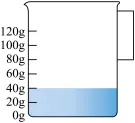
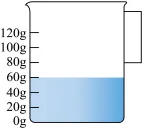
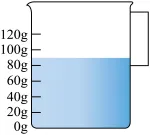
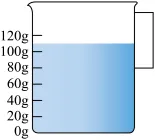
33.How much water may scientists get if they have 1,000g of lunar soil?
A.
B.
C.
D.
34.What’s the writer’s attitude (态度) towards the dream of humans living on the Moon?
A.Hopeful.B.Worried.C.Surprised.D.Doubtful.
35.Where may the passage come from?
A.In a science magazine named Nature.B.In a science magazine called Discovery
C.On the official website of Chang’e-5 mission.D.In a report released by the lunar research center.
四、选词填空
根据短文内容,从下面方框中选择适当的单词或短语填空,使短文内容完整、正确。
as wellbecomecare aboutreallyscientists |
Chang’e-6 is a new Chinese spaceship. People all over the country 36 this task because it is very important.
This mission is very difficult and 37 exciting. A lot of smart 38 worked together to make it a success. Their hard work helped Chang’e-6 39 the first spaceship in the world to get samples from the far side of the moon.
The spaceship collected rocks and soil from the moon. It will bring them back to Earth for study. This will help us learn more about the moon, and about our planet 40 .
This is a big step for China and for the whole world.
基础知识运用参考答案
1.C 2.B 3.A 4.D 5.C 6.B 7.C 8.C 9.D 10.A
【导语】本文是一篇说明文,主要讲述科学家尝试在月球土壤中种植植物的实验,并研究如何改善植物在月球土壤中的生长情况。
1.句意:月球上的土壤含有大量的铁,但它几乎没有营养。
and和;if如果;but但是;or或者。根据“The soil from the Moon has a lot of iron (铁)…it has little nutrition”可知,前后句为转折关系。故选C。
2.句意:最近,科学家们尽力在月球土壤中种植植物。
grow种植(原形);to grow种植(不定式);growing种植(现在分词/动名词);grows种植(三单)。根据“try their best”可知,后接不定式表目的。故选B。
3.句意:科学家们选择一种植物在一个房间里做实验。
a一个(修饰以辅音音素开头的单词);an一个(修饰以元音音素开头的单词);the特指;/不填。“room”为单数可数名词且首次提到,需用不定冠词,且“room”以辅音开头。故选A。
4.句意:他们日夜持续观察这些植物。
look看(原形);looks看(三单);to look看(不定式);looking看(现在分词/动名词)。根据“keep on”可知,后接动名词作宾语。故选D。
5.句意:它们的根长得不好,一些叶子变红了。
get变得;grow生长;turn转变;go去。“turn red”为固定搭配,表示颜色的变化。故选C。
6.句意:这个实验对科学家非常有用。
usefully有用(副词);useful有用的(形容词);more useful更有用的;most useful最有用的。根据“The experiment is very”可知,“very”修饰形容词原级,空处应填形容词作表语。故选B。
7.句意:它极大地帮助他们研究如何在月球上种植植物。
they他们(主格);theirs他们的(名词性物主代词);them他们(宾格);their他们的(形容词性物主代词)。“helps”为动词,需接代词宾格作宾语。故选C。
8.句意:现在科学家们正忙于研究植物DNA的变化。
busy忙的(原级);busier更忙的;busily忙碌地(副词);busiest最忙的。此处修饰动词,需用副词。故选C。
9.句意:他们想找到一种方法来帮助植物在月球土壤中更好地生长。
help帮助(原形);helps帮助(三单);helped帮助(过去式);to help帮助(不定式)。a way to do sth是固定结构,意为“做某事的方法”,此处指“找到帮助植物在月球土壤中长得更好的方法”。故选D。
10.句意:科学家们将在不久的将来实现它。
will make将实现(将来时);makes实现(三单);made实现(过去式);make实现(原形)。根据“in the near future”可知用一般将来时。故选A。
11.A 12.A 13.B 14.C 15.D 16.B 17.C 18.A 19.C 20.A
【导语】本文是一篇说明文,主要介绍了宇航员在太空中的日常生活,并展望了未来的太空居住设想。
11.句意:太空生活与地球上的生活不同。
the earth地球;planets行星;stars星星;the moon月亮。根据短文首句“Life in space is different from life on…”可知,此处是将太空生活与地球上的生活进行比较。故填A。
12.句意:太空食物现在更像我们在地球上吃的食物了。
is(用于单数名词或不可数名词);was(is的过去式);are(用于复数名词);were(are的过去式)。主语“Space food”为不可数名词,谓语动词应用单数形式;根据下文“In the past…”和“But now…”的对比以及“now”可知,本句描述现在的情况,应用一般现在时。故填A。
13.句意:但是现在空间站有水和冰柜。
finds发现;has有;does做;makes制造。根据“But now the space station…water and iceboxes”可知,此处指空间站拥有这些设施,宇航员才能享用日常食物。故填B。
14.句意:宇航员在外太空有他们自己的房间。
far遥远的;big大的;outer外部的;deep深的。固定搭配“outer space”意为“外太空,宇宙空间”。故填C。
15.句意:睡觉很棘手——因为没有重力,所以他们把自己绑在床上,以免漂走。
but但是;and和;so所以;or或者,否则。根据“they tie themselves to beds…they fly away!”可知,“把自己绑起来”是为了防止“漂走”,此处应填入表示“否则,免得”的连词。故填D。
16.句意:锻炼也很重要。
Swimming游泳;Exercising锻炼;Running跑步;Chatting聊天。根据下文“They exercise on bikes and other machines every day.”可知,此处在谈论锻炼的重要性。故填B。
17.句意:当他们不工作的时候,他们可以读书或者给朋友发邮件。
must必须;should应该;can可以,能够;need需要。根据“when they aren’t working, they…read books or send emails to friends.”可知,此处描述宇航员在闲暇时能够进行的活动,表示能力或许可。故填C。
18.句意:一些人对未来做出预测。
predictions预测;stories故事;plans计划;dreams梦想。根据下文提出的两个问题“Will more people…? Will the idea…?”可知,这些是关于未来的推测或预测。故填A。
19.句意:将来会有更多人生活在太空吗?
talk about谈论;look for寻找;live in居住在;learn from向……学习。根据“Will more people…outer space one day?”以及文章主题“太空生活”可知,此处应指“居住在”太空。故填C。
20.句意:在火星上生活的想法会实现吗?
come true实现;get up起床;go out出去;wake up醒来。根据“Will the idea of living on Mars…?”可知,此处询问这个想法是否会“实现”。故填A。
21.B 22.D 23.A 24.D 25.A
【导语】本文是一篇记叙文,主要介绍了来自河南郑州的中学生闫哲,他热爱太空和火箭,擅长制作火箭模型,被称为“火箭男孩”,并介绍了他的学习方式和梦想。
21.细节理解题。根据文章第一段“He is good at making model (模型) rockets.”可知,闫哲擅长制作火箭模型。故选B。
22.细节理解题。根据文章第二段“Yan’s parents really help him a lot. They buy many books for him. They take him to many science museums all over China and help him look for information about space there.”可知,闫哲的父母给他买了很多书,带他去中国的许多科学博物馆,并帮助他寻找有关太空的信息,但并未提及他们和闫哲一起制作飞机模型。故选D。
23.主旨大意题。根据文章第三段“The computer at home is important to Yan. He uses it to find useful information. He also uses it to give space science classes.”可知,本段主要介绍了电脑对闫哲的帮助,他使用电脑查找有用的信息,并使用电脑进行太空科学教学。故选A。
24.细节理解题。根据文章最后一段“Interest is the best teacher.”以及全文内容可知,本文主要讲述了闫哲因为对太空和火箭的兴趣,而努力学习并取得了一定的成就,因此我们可以从文章中得知兴趣是最好的老师。故选D。
25.最佳标题题。根据文章第一段“people call him ‘rocket boy’.”以及全文内容可知,本文主要介绍了被称为“火箭男孩”的闫哲的故事,因此最佳标题应为A选项“A ‘Rocket Boy’”。故选A。
26.B 27.A 28.C 29.C 30.B
【导语】本文主要介绍了中国天宫空间站上宇航员的生活情况,包括锻炼、清洁、饮食和与家人沟通等方面。
26.推理判断题。根据“How much do you know about the lives of astronauts working on the space station?”可知,作者通过提出问题引出主题。故选B。
27.词句猜测题。根据“There is a spin bike (动感单车), a running machine, and other fitness equipment on the space station.”可知,动感单车、跑步机都是用于锻炼的物品,由此可推测“fitness equipment”意为“用于锻炼的物品”。故选A。
28.细节理解题。根据“They can have bread and porridge for breakfast. There are also traditional Chinese dishes, like Kung Pao Chicken, fried rice and fried noodles with pork.”可知,太空站有五种食物。故选C。
29.细节理解题。根据“Astronauts can have personal ‘sky-to-earth’ calls.”可知,宇航员可以和家人通话交流,C项正确。故选C。
30.最佳标题题。根据“China’s Tiangong space station is well-known for its role in space exploration…working on the space station?”及阅读全文可知,本文主要讲的是宇航员的空间站生活。故选B。
31.B 32.C 33.B 34.A 35.B
【导语】本文是一篇说明文,讲述了中国科学家发现了一种在月球上生产水的新方法,这一发现有望改变未来人类在月球上生活的认知。文章介绍了过去月球探索中关于水的发现,以及此次新研究的具体内容和重要意义。
31.推理判断题。根据文章第二段“In the past, missions to the Moon showed that there might be ice at the Moon’s north and south poles (极). However, there isn’t much water in lunar soil—only a little bit...”以及第三段“The researchers, however, found something exciting...”可知,作者提到早期研究是为了与新发现进行对比,突出新发现的重要性和突破性。故选B。
32.细节理解题。根据文章第三段“One of the exciting things they discovered is that lunar soil melts (融化) when it reaches over 1,000℃. When it begins to melt, it produces water vapor (蒸气).”可知,月壤需要达到超过1000℃并融化才能产生水蒸气。故选C。
33.推理判断题。根据文章第三段“They learned that just 100g of lunar soil can give us 5.1g to 7.6g of water.”可知,100克月壤可以产生5.1克到7.6克水,那么1000克月壤(是100克的10倍)可以产生51克到76克水,选项B在这个范围内。故选B。
34.推理判断题。根据文章最后一段“As we learn more about how to make water from lunar soil, we get closer to the dream of humans living on the Moon. This discovery could help make that dream come true!”可知,作者对人类在月球上生活的梦想持乐观和希望的态度。故选A。
35.推理判断题。根据文章第一段“They wrote about their discovery in a science magazine called The Innovation.”以及全文内容可知,这篇文章可能来自一本科学杂志,且是关于新的发现,B选项“In a science magazine called Discovery”符合。故选B。
36.care about 37.really 38.scientists 39.become 40.as well
【导语】本文主要讲述了嫦娥六号这一中国新型宇宙飞船,全国人民都很关注这项任务,还介绍了此次任务的难度、参与人员以及飞船的成就等。
36.句意:全国人民都很关注这项任务,因为它非常重要。根据“People all over the country...this task”可知,此处需要一个动词短语表示人们对任务的态度,care about“关心,在意”符合语境,且句子时态为一般现在时,主语people为复数,动词用原形。故填care about。
37.句意:这次任务非常困难而且真的很令人兴奋。根据“This mission is very difficult and...exciting.”可知,此处需要一个副词修饰形容词exciting,really“真正地,确实”符合语境。故填really。
38.句意:许多聪明的科学家一起努力使它取得了成功。根据“A lot of smart...worked together”可知,此处需要一个表示人的名词,scientists“科学家”符合语境,且a lot of后接可数名词复数形式。故填scientists。
39.句意:他们的辛勤工作帮助嫦娥六号成为了世界上第一艘从月球背面获取样本的宇宙飞船。根据“helped Chang’e-6...the first spaceship”可知,help sb do sth“帮助某人做某事”,此处应用动词原形,become“成为”符合语境。故填become。
40.句意:这将帮助我们更多地了解月球,也了解我们的星球。根据“about the moon, and about our planet...”可知,此处需要一个短语表示“也”,as well“也”常用于句末,符合语境。故填as well。
综合能力提升
一、语法选择
Every time when I look at the moon, I wish I could go there. Do you wish you could fly to the moon in 1 spaceship one day?
For hundreds of years, men have wanted 2 to the moon. When they looked at the moon, they asked many 3 . Was the moon hot or cold? Were there any plants or other living things there? They asked many, many other questions. Some people said there were living plants on the moon. Others said nothing could live there 4 there was no air or water on the moon.
We know much about the moon now. Scientists 5 the moon for many years and have discovered many facts, such as the absence (不存在) of air or water.
What do we know about the moon? We find that the moon is much 6 than the earth. It is about one quarter the size of the earth. It is travelling around the earth all the time.
Days and nights on the moon are very long. One day on the moon is as long as two weeks on the earth. One night is also as long as two weeks on the earth. During the day the moon is very hot. 7 night it is very cold. The moon is much hotter and much colder than the earth.
There is 8 surprising thing. On the moon, things are not as heavy as they are on the earth. Isn't that interesting?
Now we 9 travel to the moon. 10 is great fun.
1.A./B.aC.an
2.A.travelB.to travelC.traveling
3.A.questionB.questionsC.questions’
4.A.becauseB.soC.if
5.A.studyB.is studyingC.have studied
6.A.smallB.smallerC.smallest
7.A.InB.AtC.On
8.A.otherB.anotherC.the other
9.A.mustB.shouldC.can
10.A.ItB.ItsC.It’s
二、完形填空
Where will we live in the future? Many scientists think that people may be 11 to leave the Earth and live on Mars in the near future. If you are 12 interested in the idea, you may want to 13 something about Mars.
First, days on Mars are about half an hour 14 than days on Earth and you are going to get 687 days in a 15 . So you can spend more time doing what you want to do such as sleeping! Second, be sure to pack lots of things for washing before you 16 the Earth. There is often dust storm (沙尘暴) on Mars and it can 17 for months at a time. So you are going to get 18 . Third, don’t forget to bring heavy 19 . Because Mars is farther from the Sun than the Earth, it will be colder there. The average (平均) 20 is -53℃!
11.A.afraidB.nervousC.ableD.weak
12.A.neverB.alsoC.soonD.seldom
13.A.knowB.answerC.writeD.show
14.A.smallerB.biggerC.longerD.shorter
15.A.yearB.monthC.weekD.day
16.A.visitB.leaveC.returnD.pollute
17.A.beginB.workC.stopD.last
18.A.busyB.dirtyC.dryD.tidy
19.A.foodB.waterC.clothesD.air
20.A.temperatureB.weightC.seasonD.gravity
三、阅读理解
A
Some people say that exploring space costs too much money. They argue that we should use this money to solve problems on Earth first, like hunger and pollution. However, I believe that space exploration is very important for us.
First, many useful inventions come from space research. For example, the cameras in our phones, GPS for finding directions, and even some medical tools were first made for space travel. These inventions make our daily lives better and easier.
Second, by studying other planets like Mars, we can learn more about our own. Scientists study the climate of Mars to understand climate change on Earth better. This knowledge can help us protect our planet in the future.
Finally, space exploration brings all countries together. It encourages scientists around the world to work as a team. This cooperation can lead to peace and new friendships between nations.
In conclusion, space exploration is not a waste. It gives us new technology, helps us understand Earth, and unites (团结) the world. It is an investment (投资) for our future.
21.According to the passage, which is NOT an invention from space research?
A.Phone cameras.B.GPS.C.Television.
22.What is the main purpose of studying other planets like Mars?
A.To find new places to live.
B.To learn more about our own.
C.To compete with other countries.
23.What does the underlined word “cooperation” mean in Chinese?
A.合作B.竞争C.挑战
24.How does the writer organize the passage?
A.By telling a story about a space trip.
B.By giving reasons to support an idea.
C.By comparing Earth and Mars.
25.Which is the best title for this passage?
A.Why Space Exploration is Important
B.The Problems of Space Exploration
C.A Story of Mars Exploration
B
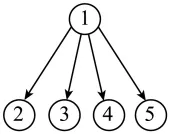
Do you know how the three Chinese astronauts (宇航员) lived in space for six months? Life there is very different from Earth. Their daily activities include four important parts: eating, sleeping, exercising, and relaxing. Let’s learn about each part!
Astronauts almost do the same things when they go to space. Food preparations vary with different food types. Some foods can be eaten in their natural (自然的) forms, such as chocolate cakes and fruits. Other foods need adding water, such as cheese (奶酪). Of course, an oven (烤箱) is provided at the space station to heat the food. But there is no fridge, so space food must be kept properly.
After a long day at work, ▲ Just like on the earth, in space astronauts go to bed at a certain time, then get up and prepare for work again. When going to sleep, they have to tie themselves, so they don’t fly around or hit their bodies against something. They usually use sleeping bags in small crew cabins (乘员舱). Each crew cabin is big enough for one person. Generally, astronauts have an eight-hour sleep each day when they finish their task.
Exercise is an important part of every astronaut’s daily life to prevent muscle loss (肌肉萎缩). Commonly, astronauts exercise two hours every day. Lifting 200 pounds on the earth may be a lot of work. But lifting that same object in space would be much easier. That means exercise equipment needs to be special, so astronauts can receive the exercise needed.
Living in space is not just all work and no play. Fun plays an important role in making their life great.
26.The phrase “vary with” in Paragraph 2 probably mean?
A.look different fromB.change because of
C.stay the same asD.taste like
27.Which of following can be put in the ▲ in paragraph 3?
A.it’s time to make a phone call.
B.reading is what an astronaut needs.
C.nothing is better than a good night’s sleep.
D.listening to music sounds like a good idea.
28.What is the main purpose of paragraph 4?
A.To show how to make exercise equipment.
B.To talk about health problems from not exercising in space.
C.To learn the difference in exercise time between space and Earth.
D.To explain why astronauts need to exercise in space and how they do it.
29.What can we learn from the text?
A.Astronauts can’t eat hot food in space.
B.The astronauts seldom have regular time to go to sleep.
C.Exercise is an important part for astronauts to get thinner.
D.Having fun is the necessary part of the astronauts’ life in space.
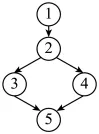
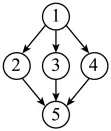
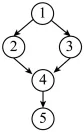
30.Which of the following shows the structure of the text? (①=Paragraph 1)
A.
B.
C.
D.
C
On May 14, 2025, China sent 12 new computing satellites into space. They used a Long March rocket from the Jiuquan Satellite Launch Center. This was a big step! It started the world’s first space computing network. It’s called the Three-body Computing Constellation (三体计算星座). The name comes from a physics problem about objects moving in space. These satellites can work right in orbit, not just send data to Earth.
Zhejiang Lab, Guoxing Aerospace, and other groups made these satellites. Each one can do 744 trillion calculations every second! Together, they form a strong network. When they circle the Earth, they can analyze (分析) data quickly. For example, they can find forest fires in seconds. They can also make 3D maps of flooded areas to help rescue teams. Before, old-style satellites took days to do such jobs.
Old satellites wasted a lot of time—70% to 90%—because of slow data sending. The new network fixes this. It works on data while in space, cutting delays from weeks to just seconds. It can help with deep-space trips, like going to Mars. By working in space, it avoids long waits for messages to reach Earth.
The satellites use laser communication which is super fast (100Gbps!). They also use AI trained on huge data. These tools help track planes and watch for disasters. They can even study space events like gamma-ray bursts (伽马射线暴). By 2035, China plans to grow the network to 2,800 satellites. This will connect space and ground centers all over the world.
Professor Wang Jian is a top engineer leading Zhejiang Lab. He said, “Space computing power will change industries. It will help in things like disaster response and city planning.” He led the team that made the satellites’ AI systems. This project shows how new ideas can turn problems into chances. It makes a path for smarter space exploration.
31.Why can the new satellites analyze data much faster than old-style ones?
A.Because they are launched by more powerful rockets.
B.Because they use a larger number of AI systems.
C.Because they process data directly in orbit.
D.Because they have a special shape that helps with data analysis.
32.What can we know about the new satellites from the passage?
A.They can only be used to detect forest fires.
B.They use traditional communication methods.
C.Each satellite can do 744 billion calculations per second.
D.They can help rescue teams by making 3D maps of flooded areas.
33.What does the underlined word “They” refer to in Paragraph 4?
A.Forest fires.B.The new satellites.
C.Old-style satellites.D.Laser communication.
34.Why does the passage mention Mars missions in Paragraph 3?
A.To show that the new satellites can help with long-distance space exploration.
B.To explain why Mars is easier to explore than Earth.
C.To prove that old satellites could already support Mars missions.
D.To compare Mars with Earth’s disaster problems.
35.What is the main idea of the passage?
A.The process of launching satellites from the Jiuquan Satellite Launch Center.
B.China’s achievement in creating the world’s first space computing network.
C.The comparison between old-style and new satellites in data sending speed.
D.The introduction of Professor Wang Jian and his work at Zhejiang Lab.
四、选词填空
在短文空白处适当填入方框中所给的词。
they; small; die; make; when; predict; with; final; three; secret |
Scientist have worked out 36 our Sun will die. It won’t be any time soon. It will be in 10 billion years. 37 it clear, scientists from the University of Manchester in the UK worked for a long time. According to their 38 , in about 5 billion years from now, the Sun will turn into a “red giant”. This is the scientific name that is given to a star at the end of its life. When our Sun becomes a red giant, its center will turn much 39 . Its outside circle will expand (扩大) as far as Mars. This means Earth will be burnt and disappear. The scientists say no humans will be on Earth when the Sun 40 out. Humans will disappear in around one billion years from now.
The Sun is still quite young in space years. It is just 4.6 billion years old. This means it is only around one 41 into its lifespan (寿命). Professor Albert Zijlstra said when a star dies, its core (核) will appear. It 42 turns off and dies. Professor Zijlstra was happy that modern science can help us know the age of stars and what will happen to 43 . He said, “ 44 its help, we even have found out 45 of how the Sun dies out.”
综合能力提升参考答案
1.B 2.B 3.B 4.A 5.C 6.B 7.B 8.B 9.C 10.A
【导语】本文主要介绍了人类对月球的探索和了解,包括月球的环境特征、科学研究和未来的旅行可能性。
1.句意:你希望有一天你能乘坐一艘宇宙飞船飞向月球吗?
/零冠词;a不定冠词,用在辅音开头的词前;an不定冠词,用在元音开头的词前。根据“Do you wish you could fly to the moon in...spaceship one day?”以及选项可知,应填不定冠词,泛指一艘宇宙飞船。spaceship以辅音音素开头,所以用a。故选 B。
2.句意:几百年来,人类一直想要去月球旅行。
travel动词原形;to travel动词不定式;traveling现在分词或动名词形式。want to do sth“想要做某事”。故选B。
3.句意:当他们看着月亮时,他们问了很多问题。
question问题;questions问题,复数形式;questions’问题的,所有格形式。many后接名词复数形式。故选B。
4.句意:其他人说那里没有生物,因为月球上没有空气或水。
because因为;so所以;if如果。根据“nothing could live there”和“there was no air or water on the moon”以及选项可知,两者之间是因果关系,前果后因,所以用because引导原因状语从句。故选A。
5.句意:科学家们已经研究月球很多年,并发现了许多事实,例如没有空气或水。
study动词原形;is studying现在进行时;have studied现在完成时。根据“for many years”以及选项可知,应用现在完成时。故选C。
6.句意:我们发现月球比地球小得多。
small原级;smaller比较级;smallest最高级。根据“than the earth”以及选项可知,应用比较级形式。故选B。
7.句意:白天月球非常热,晚上非常冷。
In在……里;At在;On在……上。at night“在晚上、在夜里”。故选B。
8.句意:还有一件令人惊讶的事情。
other其他的;another另一个;the other(两者之间)另一个。根据下一句“On the moon, things are not as heavy as they are on the earth.”以及选项可知,应用another,表示还有一件令人惊讶的事情。故选B。
9.句意:现在我们能够去月球旅行了。
must必须;should应该;can能够。根据“Now we...travel to the moon.”和常识以及选项可知,应用can,表示能力。故选C。
10.句意:这是一件非常有趣的事情。
It它;Its它的;It’s它是,It is的缩写。根据前一句“Now we...travel to the moon.”以及选项可知。应用人称代词It,指代去月球旅行这件事。故选A。
11.C 12.B 13.A 14.C 15.A 16.B 17.D 18.B 19.C 20.A
【导语】本文介绍了未来人类可能在火星上生活的设想,包括火星与地球在日长和年度天数上的差异、火星上的沙尘暴情况以及火星上的寒冷气候。
11.句意:许多科学家认为,在不久的将来,人们可能会离开地球,在火星上生活。
afraid害怕的;nervous紧张的;able能够的;weak虚弱的。根据“Many scientists think that people may be ... to leave the Earth”可知,人类可能会离开地球,be able to“能够”。故选C。
12.句意:如果你也对这个想法感兴趣,你可能想了解一些关于火星的知识。
never从不;also也;soon不久;seldom很少。根据“If you are ... interested in the idea”可知,应该是也对这个想法感兴趣。故选B。
13.句意:如果你也对这个想法感兴趣,你可能想了解一些关于火星的知识。
know知道,了解;answer回答;write写;show展示。根据“you may want to ... something about Mars.”可知,可能想要了解关于火星的知识。故选A。
14.句意:首先,火星上的天比地球上的多半个小时,一年有687天。
smaller更小的;bigger更大的;longer更长的;shorter更短的。根据“So you can spend more time doing what you want to do such as sleeping!”可知,火星上的一天比地球上的一天长半个小时。故选C。
15.句意:首先,火星上的天比地球上的多半个小时,一年有687天。
year年;month月;week周;day天。根据“you are going to get 687 days in a”可知,火星上一年有687天。故选A。
16.句意:其次,在你离开地球之前,一定要打包很多清洗的东西。
visit参观;leave离开;return返回;pollute污染。根据“be sure to pack lots of things for washing before you ... the Earth.”可知,是在离开地球之前打包清洗的东西。故选B。
17.句意:火星上经常有沙尘暴,每次持续数月。
begin开始;work工作;stop停止;last持续。根据“There is often dust storm (沙尘暴) on Mars and it can ... for months at a time.”可知,沙尘暴每次持续数月。故选D。
18.句意:所以你会变脏的。
busy忙碌的;dirty脏的;dry干燥的;tidy整洁的。根据“There is often dust storm (沙尘暴) on Mars”可知,火星上经常有沙尘暴,所以你会变得很脏。故选B。
19.句意:第三,别忘了带厚的衣服。
food食物;water水;clothes衣服;air空气。根据“Because Mars is farther from the Sun than the Earth, it will be colder there.”可知,因为火星比地球离太阳更远,所以那里会更冷,因此需要带厚的衣服。故选C。
20.句意:平均温度为-53℃!
temperature温度;weight重量;season季节;gravity重力。根据“is -53℃”可知,此处指的是温度。故选A。
21.C 22.B 23.A 24.B 25.A
【导语】本文主要论述了太空探索的重要性,反驳了“太空探索花费过高,应先解决地球问题” 的观点,并从技术发明、了解地球、促进国际团结三个方面进行阐述。
21.细节理解题。根据文章第二段“For example, the cameras in our phones, GPS for finding directions, and even some medical tools were first made for space travel.”可知,手机摄像头、全球定位系统均是来自太空研究的发明,文中未提及电视。故选C。
22.推理判断题。根据文章第三段“Second, by studying other planets like Mars, we can learn more about our own.”可知,研究火星等其他行星的主要目的是更好地了解我们自己的地球。故选B。
23.词句猜测题。根据文章第四段“It encourages scientists around the world to work as a team. This cooperation can lead to peace and new friendships between nations.”可知,cooperation指的是前文提到的“全世界科学家团队合作”,在中文中对应的意思是“合作”。故选A。
24.推理判断题。文章开篇先提出“有人认为太空探索花费过高,应先解决地球问题”这一观点,随后以“However”转折,表明自己的立场,接着从“带来有用发明”“帮助了解地球”“促进国际团结”三个方面给出理由支撑观点,最后总结升华。由此可知,作者通过给出理由支撑观点的方式组织文章。故选B。
25.最佳标题题。文章围绕“太空探索很重要”展开,从多个角度论述其重要性。选项A“Why Space Exploration is Important”最适合作为文章标题。故选A。
26.B 27.C 28.D 29.D 30.A
【导语】本文主要介绍了中国三位宇航员在太空六个月的生活,包括饮食、睡眠、锻炼和放松等方面。
26.词句猜测题。根据第二段“Food preparations vary with different food types. Some foods can be eaten in their natural forms, such as chocolate cakes and fruits. Other foods need adding water, such as cheese.”可知,一些食物可以以自然形式食用,而另一些食物需要加水,所以食物准备会因食物类型的不同而有所 “变化”,vary with表示“因……而变化”。故选B。
27.词句猜测题。根据第三段“Just like on the earth, in space astronauts go to bed at certain time, then get up and prepare for work again.”可知,此段主要讲宇航员的睡眠情况,所以空白处应与睡眠相关,选项C“没有什么比睡个好觉更好的了”符合语境。故选C。
28.主旨大意题。根据第四段“Exercise is an important part of every astronaut’s daily life to prevent muscle loss. Commonly, astronauts exercise two hours every day.”以及“That means exercise equipment needs to be special, so astronauts can receive the exercise needed.”可知,该段解释了宇航员在太空中需要锻炼的原因是防止肌肉萎缩,还介绍了他们锻炼的方式,如每天锻炼两小时以及需要特殊的锻炼设备等。故选D。
29.细节理解题。根据最后一段“Living in space is not just all work and no play. Fun plays an important role in making their life great.”可知,娱乐在宇航员的太空生活中起着重要作用,是他们生活中必不可少的一部分。故选D。
30.篇章结构题。文章第一段总述宇航员的太空生活包括饮食、睡眠、锻炼和放松四个重要部分;第二、三、四段分别介绍了饮食、睡眠和锻炼方面的内容,最后一段提及娱乐对宇航员太空生活的重要性,是对“放松”部分的简要说明,整体为总分结构。故选A。
31.C 32.D 33.B 34.A 35.B
【导语】本文是一篇新闻报道。文章主要介绍了中国在2025年5月14日发射的全球首个太空计算网络“三体计算星座”,包括其组成、功能、优势及意义等内容。
31.细节理解题。根据“These satellites can work right in orbit, not just send data to Earth.”以及“The new network fixes this. It works on data while in space, cutting delays from weeks to just seconds.”可知,新卫星能在轨道上直接处理数据,这是它比老式卫星分析数据快的原因。故选C。
32.细节理解题。根据“They can also make 3D maps of flooded areas to help rescue teams.”可知,新卫星可以通过制作洪水区域的3D地图来帮助救援队。故选D。
33.词义猜测题。根据“The satellites use laser communication which is super fast (100Gbps!). They also use AI trained on huge data.”可知,这些卫星使用速度极快的激光通信,还运用了通过海量数据训练的人工智能;据此可以推断,划线单词“They”指代的是前文提到的“The satellites”,即新卫星。故选B。
34.细节理解题。根据“It can help with deep-space trips, like going to Mars.”可知,提到火星任务是为了说明新卫星能够帮助进行远距离太空探索。故选A。
35.主旨大意题。综合全文可知,本文开篇介绍中国发射了世界首个太空计算网络,然后围绕其展开介绍,包括卫星的制造团队、功能、优势等,重点强调了中国在创建世界首个太空计算网络方面的成就。故选B。
36.when 37.To make 38.prediction 39.smaller 40.dies 41.third 42.finally 43.them 44.With 45.secrets
【导语】本文主要讲述了科学家预测太阳将在100亿年后消亡,并详细描述了太阳在生命末期将变成红巨星的过程及其对地球的影响。
36.句意:科学家已经计算出我们的太阳何时会死亡。根据“It won’t be any time soon. It will be in 10 billion years.”可知,此处介绍科学家们计算出太阳将在何时消亡。故填when。
37.句意:为了弄清楚这一点,英国曼彻斯特大学的科学家们进行了长时间的研究。make it clear表示“弄清楚;讲明白”,这里用动词不定式“To make”表目的,说明科学家长时间研究的目的是把太阳死亡相关情况弄清楚。故填To make。
38.句意:根据他们的预测,从现在起大约50亿年后,太阳将变成一个“红巨星”。根据“in about 5 billion years from now, the Sun will turn into a ‘red giant’”可知,这是科学家们的一种预测,their后接名词,predict的名词形式是prediction“预言,预测”。故填prediction。
39.句意:当我们的太阳变成红巨星时,它的中心会变得小得多。根据“When our Sun becomes a red giant, its center will turn much...”及结合选词可知,太阳变成红巨星时,中心会变得更小,much修饰比较级,small的比较级是smaller。故填smaller。
40.句意:科学家们说,当太阳熄灭时,地球上将不会有人类。die out是固定短语,意为“熄灭;灭绝”;when引导的时间状语从句,遵循主将从现原则,主语the Sun是第三人称单数,所以die用第三人称单数形式dies。故填dies。
41.句意:这意味着它的寿命才刚刚进入三分之一。根据“It is just 4.6 billion years old.”以及太阳寿命约100亿年可知,此处表示进入寿命的三分之一,one third表示“三分之一” 。故填third。
42.句意:它最终会熄灭并死亡。这里修饰动词短语“turns off and dies”,需要用副词,结合所给词,final的副词形式finally,表示“最终;最后”,符合语境。故填finally。
43.句意:Zijlstra教授很高兴现代科学能帮助我们了解恒星的年龄以及它们会发生什么。这里指代前面的“stars”,在“to”后作宾语,所以用宾格形式“them”。故填them。
44.句意:在它的帮助下,我们甚至已经发现了太阳是如何熄灭的秘密。with one’s help是固定搭配,意为“在……的帮助下”,句首单词首字母大写。故填With。
45.句意:在它的帮助下,我们甚至已经发现了太阳是如何熄灭的秘密。根据“we even have found out...of how the Sun dies out”及结合备选词汇可知,这里表示发现太阳熄灭的“秘密”,secret是可数名词,这里用复数形式secrets表泛指。故填secrets。
声明:素材源于网络,经整理分享,仅供交流学习,未经同意,禁止商用、转载或修改,特此说明!


