

这一理论指出:语言交际的核心,不在于句子是否合乎语法,而在于说话者如何组织“已知信息”与“新信息”,以实现意义的有效传递。在连续语篇中,前一句的“新信息”往往成为后一句的“已知信息”或话题起点,由此形成一条环环相扣的“信息链”。这种“已知→新知”的推进模式,是语篇实现衔接(cohesion)与连贯(coherence)的关键机制。
程教授曾举过一个生动的例子:
“各位旅客,现在列车开始供应午餐。午餐有大米、水饺、炒面等主食……需要用午餐的旅客请到列车餐厅。餐厅位于10号车厢。”
可以看到,每句话的开头都复现上句末尾的关键词(“午餐”→“餐厅”),而句尾则不断提供新信息(种类→地点)。这种自然的信息流动,正是信息结构理论的典型特征。
这让我立刻联想到中考英语阅读理解D篇的“五选五”补全短文题型——它恰恰要求学生识别并重建这样的信息链条。
与前三篇侧重细节理解不同,“五选五”阅读题型更强调整体语篇意识与逻辑推理能力,且具有显著的“连锁效应”:一旦一空误判,则会导致至少两空全部失分。
多年来,我一直在寻找一套系统、可迁移的解题方法,却始终困于自己碎片化的、不成体系的经验当中。直到接触信息结构理论,我才意识到:破解“五选五”的关键,或许在于如何摸清语篇的信息组织逻辑。
通过反复分析近四年河南中考真题,我发现:空格处所填句子的功能,通常可归为三类:
l开启下文:提出新话题,为后续内容铺垫;
l承上启下:既回应前文,又引出下文(桥梁句);
l总结上文:对前段内容进行归纳或情感收束。
学生若能基于空格前后句的语义关系,准确判断其功能定位,选项筛选便不再是盲目猜测,而成为有据可依的逻辑推断。
我们以2022年、2025年河南中考D篇“五选五”阅读题为例,对信息组织理论的实践运用一探究竟。
2022年河南中考D篇阅读原题:
Have you ever tried writing a poem? Maybe you think it is impossible, especially if you do not think you are naturally creative. But if you follow the steps below, you can also write a better poem than you expected. 36
◆ Pick a theme (主题) that interests you. Find the theme that you are interested in. 37 “Love and friendship” is always the theme for a poem.
◆ Choose a form for your poem…
◆ Use your imagination. You should always try to describe something using the five senses. 38Using imagination will lead your readers into the world of your poem and make images come alive for them.
◆ 39You could use “the heart of stone”, “as white as snow” and so on. With these expressions, your poem will be different. They can make your poem a piece of wonderful work to your readers.
◆ Read the poem out loud. Once you have completed a poem, you should read it aloud to yourself. 40Pay attention to how each line of your poem moves into the next smoothly. Keep a pen close by so you can mark any lines or words that sound difficult or strange.
选项:
A. Notice how the words sound on the page.
B. Start your poem with a clear idea.
C. They are smell, taste, touch, sight and sound.
D. Make use of special expressions.
E. You will be proud to share it with your friends.
基于信息组织理论的深度解析:
36小题:空格位于首段末尾,在说明文中通常承担承上启下的功能——既要总结前文,又要引出下文。前句指出:“如果你遵循以下步骤,也能写出不错的诗。”结合选项,只有 B(Start your poem with a clear idea)和 E(You will be proud to share it with your friends)能与之衔接。进一步结合37题内容可知,此处若选B,会导致37题无合适选项;而选E则能自然过渡:其中 “You will be proud to share it” 是对前句“写出好诗”的情感回应(已知信息),“with your friends” 则引出新的社交维度(新信息),符合信息推进规律。
37小题:该空位于段中,需起到桥梁作用。前句提到“Pick a theme that interests you”,后句举例“‘Love and friendship’ is always the theme”。显然,此处需要一个与“主题确立”相关的引导句。选项中仅 B(Start your poem with a clear idea)能承接“pick a theme”并开启具体示例,实现“建议→操作”的信息转换。
38小题:同37小题一样位于两句之间起的是桥梁的作用,但根据文意,38空格前的“using five senses”句与空格后的“Using imaginations”句之间并没有关联,因此可以判断38小题答案要么起呈上作用,要么起启下作用,结合剩下的3个选项,只能选择D答案最为合适,They are smell, taste, touch, sight and sound.(D答案)是对38空格前的five senses的解释说明,而“They are” 指代前文“the five senses”(已知信息),其后列举五感(新信息),有效弥合上下文间隙。
39小题:空格位于段首,应起总领全段的作用。后文通过“the heart of stone”“as white as snow”等例子说明修辞表达的运用。因此,此处需一个概括性句子引出“特殊表达”这一话题。选项 D(Make use of special expressions)精准匹配,既点明段落主旨,又自然引出后续例证
40小题:该空处于段中,前句建议“read the poem aloud to yourself”,后句要求“pay attention to how each line moves smoothly”。显然,中间缺失的是“朗读时应关注什么”。选项 A(Notice how the words sound on the page)恰为桥梁:“notice the sound” 是对“read aloud”的具体化(已知→新),同时为“line moves smoothly”提供听觉依据,形成完整逻辑链。
25年河南中考英语D篇阅读原题:
Puttingthings off is something a lot of students are troubled with. Between schoolwork, after-school activities and everything else, there are many things you have to deal with every day. 36 You might start falling behind and your grades might get lower.
One smart way to fight back is to break big tasks into smaller steps. Huge projects can feel like a mountain, but if you break them into smaller steps, it will make it less scary(可怕的). 37Just tell yourself, “Today, I’ll choose my topic and write a little. I’ll take care ofmore tomorrow.” Step by step, it gets done.
“Work and rest” is also a good choice for being productive. Set a timer for 25 minutes — go all in, full attention.38Have some cookies. Walk around. Once you get going, it’s easier to keep it up.
39Put away your MP3 player and any kind of toys. Find a quiet place where you won’t get interrupted (打扰) by others at all. The less noise, the better your brain can lock in.
And don’t forget to treat yourself. For example, listen to your favorite song, or watch an interesting TV program. These little things keep you going. 39Finally, you are sure to see the payoff.
选项:
A.Then take a five-minute break.
B.Also, stay away from what pulls your attention.
C.For example, you could write a five-page paper.
D.But if you keep putting them off, they can snowball.
E.Change doesn’t happen overnight, so stick to it every day.
36小题:空格位于段中,需承担承上启下的功能。前句指出“每天要处理很多事情”,后句警示“你可能会开始落后”。选项 D(But if you keep putting them off, they can snowball)恰好衔接二者:“them”复现上文“many things”(已知信息),“snowball”则引出任务堆积的后果(新信息),自然过渡到下句的“falling behind”,形成清晰的信息链。
37小题:该空同样处于段中,需连接前后语义。前句提出“将大任务拆解为小步骤”,后句以“今天选主题、写一点”为例展开。选项 C(For example, you could write a five-page paper)作为具体示例,是对上句策略的拓展说明,有效实现从抽象建议到操作细节的推进。
38小题:前句强调“专注投入(go all in, full attention)”,后句描述休息行为(“Have some cookies. Walk around.”)。此处需要一个过渡句说明“专注之后如何切换状态”。选项 A(Then take a five-minute break)精准承上启下:“take a break”是对高强度专注的合理回应,也为后续放松活动提供逻辑前提。
39小题:空格位于段首,应起总领全段的作用。后文围绕“减少干扰”展开,如“收起MP3、远离玩具、寻找安静环境”。选项 B(Also, stay away from what pulls your attention)高度概括本段主旨,既呼应前文“专注”主题,又为下文具体做法提供统领性框架。
40小题:该空处于段中,前句提到“这些小事能让你持续前进(These little things keep you going)”,后句总结“最终你会看到回报(Finally, you are sure to see the payoff)”。选项 E(Change doesn’t happen overnight, so stick to it every day)虽未直接复现“little things”,但通过“stick to it”隐含了对日常坚持的肯定,并以“change takes time”强化“坚持→回报”的因果逻辑。作为全文收尾句,它完成了从具体策略到情感升华的跃迁,符合语篇结尾的劝勉功能。
要做好D篇“五选五”阅读理解题,除了依据信息结构理论这样大的判断依据以外,还需辅以对常见干扰项的识别训练,例如:
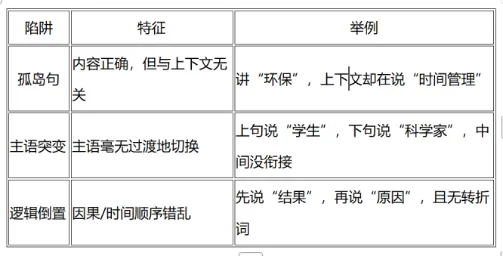
唯有宏观把握信息结构,微观警惕细节陷阱,学生才能在“五选五”的迷宫中,走出一条清晰的逻辑之路。
通过对2022—2025年河南中考D篇设空位置的梳理,可清晰看到一个趋势:
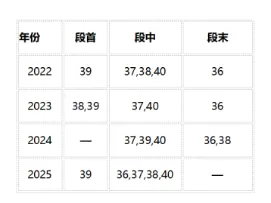
由此表可见:
段末设空逐年减少(2022–2024均有,2025年消失);
段中设空显著增加(2025年5空中有4个在段中);
段首设空保持稳定(基本每年都有1个)。
这一分布变化直接关联解题难度的变化:
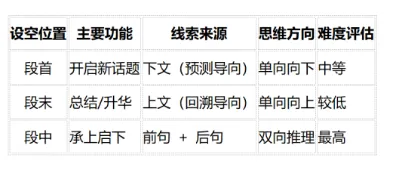
段中设空之所以最难,是因为它要求学生同时处理两个方向的信息流:
l前句的“新信息”是什么?
l后句的“已知信息”从何而来?
l中间缺失了哪一环逻辑?
任何一处误判,都会打断信息链,引发连锁错误。2025年阅读理解篇题目之所以相对前三年的题目难度有所增加,正源于此,因为它意味着学生需完成四次高精度的双向逻辑对接,这对学生的语篇整体理解能力提出了前所未有的挑战。
这一变化体现出中考命题的以下特点:
1.从“碎片提取”转向“整体建构”:不再满足于关键词匹配,而是考查学生能否追踪信息流、构建意义网络。
2.呼应新课标“语篇知识”要求:《义务教育英语课程标准(2022年版)》强调“理解语篇中显性与隐性的逻辑关系”,段中设空正是对此的直接考查。
3.区分低、高阶思维能力:能否识别“已知→新信息”的推进链条,成为区分“机械刷题者”与“真正会读语篇者”的关键标尺。
对我们一线教师而言,这意味着我们需要深入研读真题背后的设题逻辑,才能真正读懂中考的“指挥棒”。只有看清“考什么”(语篇结构)、明白“怎么考”(通过段中桥梁句考查信息衔接),我们才能在日常教学中有方向地培养学生的语篇意识。
信息结构理论之所以能成为破解“五选五”的有效工具,正是因为它揭示了语篇背后那条看不见却真实存在的“信息之河”——已知为岸,新知为流,句句相承,环环相扣。当我们教会学生不再凭感觉“猜答案”,而是学会问:
“这句话在这里起什么作用?它承接了什么?又引出了什么?”
我们就不仅是在提升学生的应试能力,更是在培养一种理解语言、组织思想、清晰表达的底层素养。
这,或许才是英语教育最深远的意义——引导学生从“学会解题”走向“乐于思考、善于学习”。
阅读到此文的有缘者,你有什么样的破解“五选五”阅读理解练习的经验或者妙招呢?期待指教。

点滴温暖,终成浩瀚。
关注我们,一起拾起教育路上那些微小却闪光的瞬间——
因为真正的成长,始于分享,成于同行。


