Hi,大家好,我是Sarah~今天想和大家聊聊中考英语阅读做题技巧。
经常有同学说:“老师,阅读的时候,我经常陷入到字词里,好像每个字都认识,可就是读不懂文章在讲什么,更别提做对题了!”
做阅读,绝不能只停留在“读字” 的层面,一定要边读边思考:
这句话在说什么?
它和前后句是什么关系?
在整个段落里又起到了什么作用?
作者想通过这句话传递什么观点?
抓住了作者的核心观点,再从整体上梳理清楚作者写作思路,才能真正读懂作者的意图。
那么,如何快速判断作者观点?又如何用观点串联起全文的逻辑呢?
以苏州四区 8B 期末考试卷阅读 A 篇 为例,来看看怎么来思考。
阅读A 篇一般是典型的新模态文本,选自真实生活场景,侧重信息分析,没有复杂情节,以实用信息传递为主。
做中考A篇这类题,抓逻辑、理结构就是高分关键。
先来看文章开头:
Imagine you are sitting in an airplane, please look down at your school. What would it look like?
这句话用一个生动的场景提问,目的是什么?很明显,是通过具象化的想象引出下文主题。
紧接着下一句:
A map shows the view of an area from above.
果然,主题揭晓——地图。
再往后读:
We use maps to find out where places are, or how far it is between places. Maps also help us to find the way. This is because they tell us which direction to take to reach a place.
这几句分别介绍了地图的两大用途,还解释了地图实用的核心原因。
把第一段的信息整合起来:作者用“高空看学校”的场景提问引出主题,接着点明地图的定义、用途及作用原理。
由此我们可以确定,“地图”是全文核心。
进一步猜测,后文大概率会围绕“地图的要素,具体使用方法,注意事项等等”展开介绍。
带着这个预判去读下文,逻辑就清晰多了:
第二段讲地图比例:介绍地图是按比例缩小绘制的,不同地图对应不同比例尺。
第三段进一步区分大比例尺地图(细节丰富,适合徒步)和小比例尺地图(涵盖范围广,细节简略)。
第四、五段讲地图标志:说明地图用符号、字母代表实物,还有图例辅助解读,同时提到地图配色的潜规则。
梳理到这里,全文结构一目了然:总分结构,围绕“地图”核心,依次介绍地图的比例和标志两大关键要素。
最后给大家分享我的阅读心法:
句子服务于段落,段落服务于篇章,篇章服务于作者观点。
用这个逻辑去读英语阅读,既能快速抓准核心、做对题目,更能跳出字词的桎梏,真正读懂文章。
附:苏州四区 8B 期末考试卷阅读 A 篇原文
Imagine you are sitting in an airplane, please look down at your school. What would it look like? A map shows the view of an area from above. We use maps to find out where places are, or how far it is between places. Maps also help us to find the way. This is because they tell us which direction to take to reach a place.
Map scales (比例)
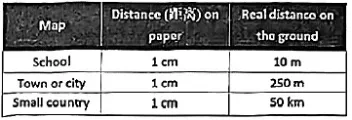
When people draw maps, they draw them much smaller than the area of land or sea the maps show. Maps are nearly always drawn to scale. Different scales are used to draw different types of map.
A large-scale map shows a small area in a lot of detail. It is the kind of map you might use if you are out walking. A small-scale map shows a large area in less detail. Who would use this type of map?
Map symbols (标志)
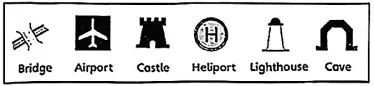
The things that maps show are shown by symbols. Some symbols are tiny pictures. Others are letters, such as "B" for bridge or "P" for car park. Most maps have a key to tell you what these different symbols mean. There are no rules about what colours are used on maps, but map-makers use the same colours for the same things. Water is usually blue, for example, and forests are green.
1.Why does the writer ask readers to imagine in paragraph 1?
A.Provide facts.
B.Show opinions.
C.Draw a conclusion.
D. Introduce the topic.
2.Which of Amy's ideas is proper after she reads this passage?
A.If Amy wants to go to her friend’s house, she can use a small-scale map.
B.When Amy sees a big "L" on a map, she knows it may show a lighthouse.
C.Amy draws a map for Suzhou, and she uses 1 cm for 30 km on the ground.
D. Amy finds two maps use two colors for fields, and she believes it’s a mistake.
3.Which book may the passage be taken from?
A.Fun Animal World
B.Amazing Geography
C.To English Learners
D. Know More about Math