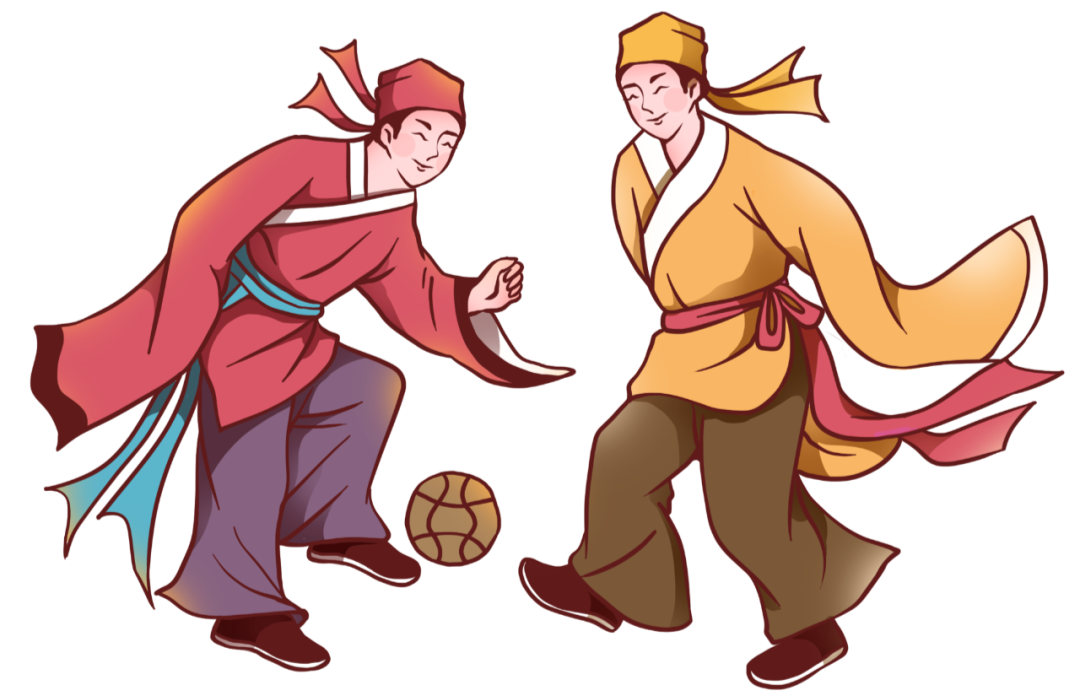
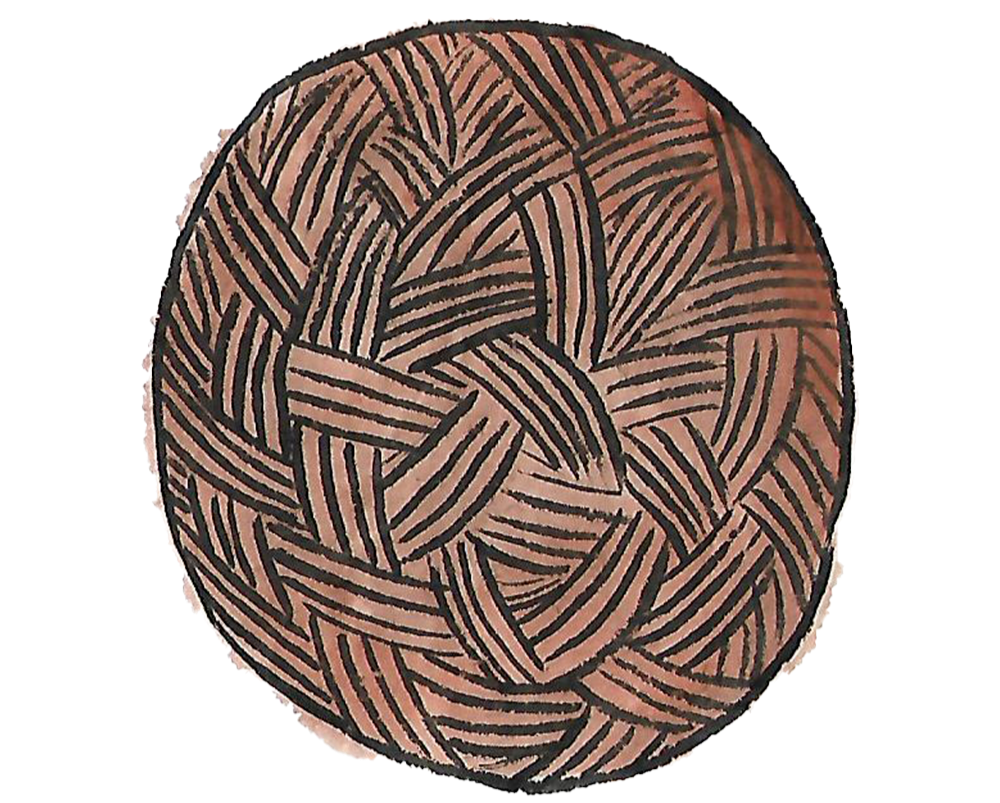
The literal translation of Cuju was “kick the ball with the foot”. Its popularity spread from the army to the royal courts and upper classes in the Han Dynasty (202 BC-220 AD). The sport was improved during the Tang Dynasty (618 AD-907 AD) and flourished during the Song Dynasty (960 AD-1279 AD), extending its popularity to all walks of life.蹴鞠,字面意思即“用脚踢球”。汉朝 (公元前202年-公元220年),蹴鞠从军队流行到宫廷和上层社会。唐朝 (公元618年-公元907年),这项运动得到了发展,宋朝 (公元960年-公元1279年) 是蹴鞠的繁荣时期,普及到社会各界。
Originally the ball was stuffed with fur but eventually they moved on to a ball similar to what we have today, an air filled ball.起初,鞠里面填充的是毛发,但是最终发展成类似我们今天所使用的充气球。
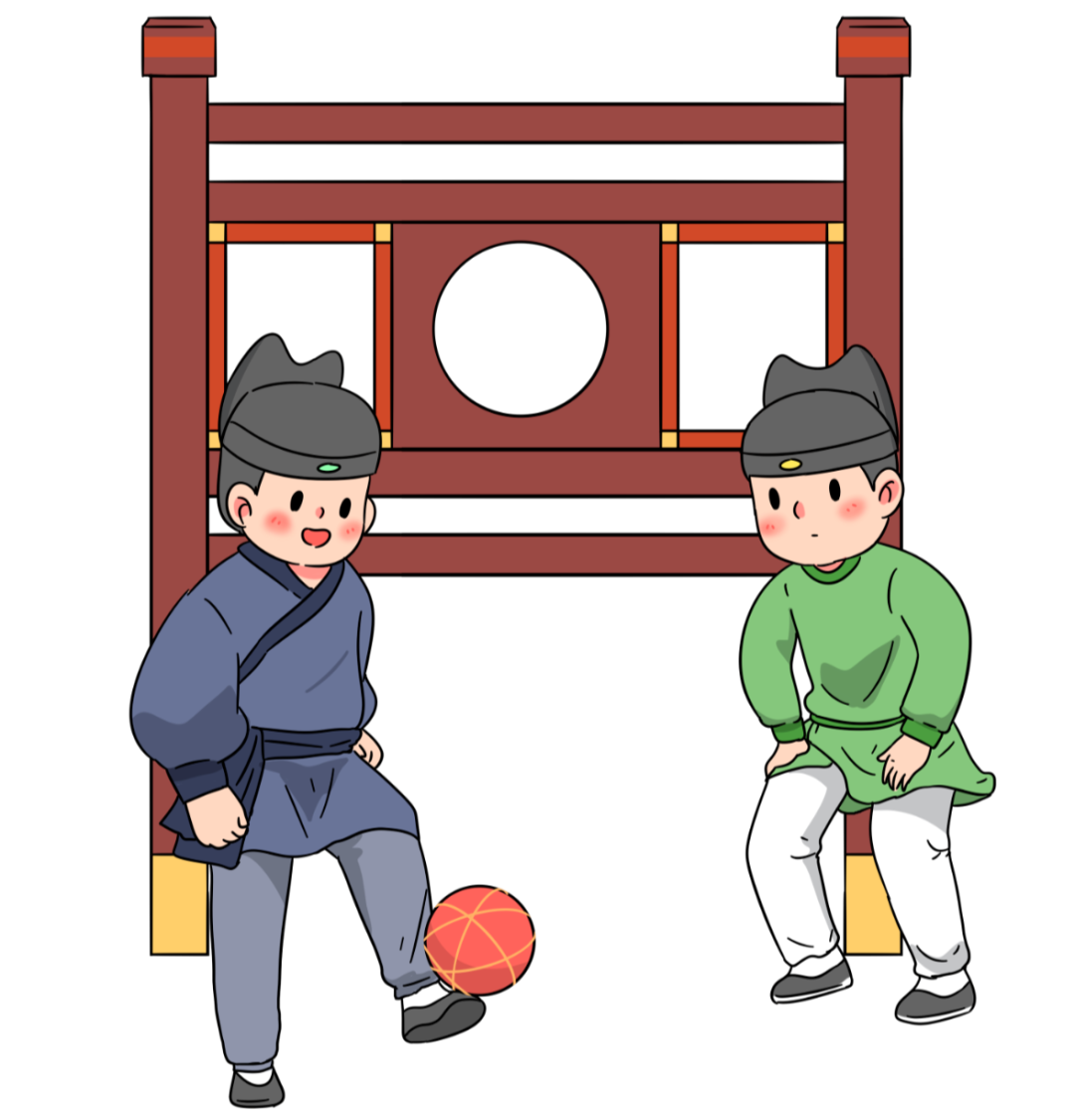
Early in its history, there was also a two-goal version of Cuju. In another version of Cuju, the singular goal was positioned in the centre of the field and featured two upright poles that were approximately 10 meters long. At the top, tied between the poles, was a net, in the middle of which there was a circular hole called fengliuyan.早期历史上,也有两个球门的蹴鞠。另一种是单个球门位于场地中央,由两根长约十米直立的柱子构成,在柱子的顶端有一个网,网的中间有一个圆洞,叫作“风流眼”。
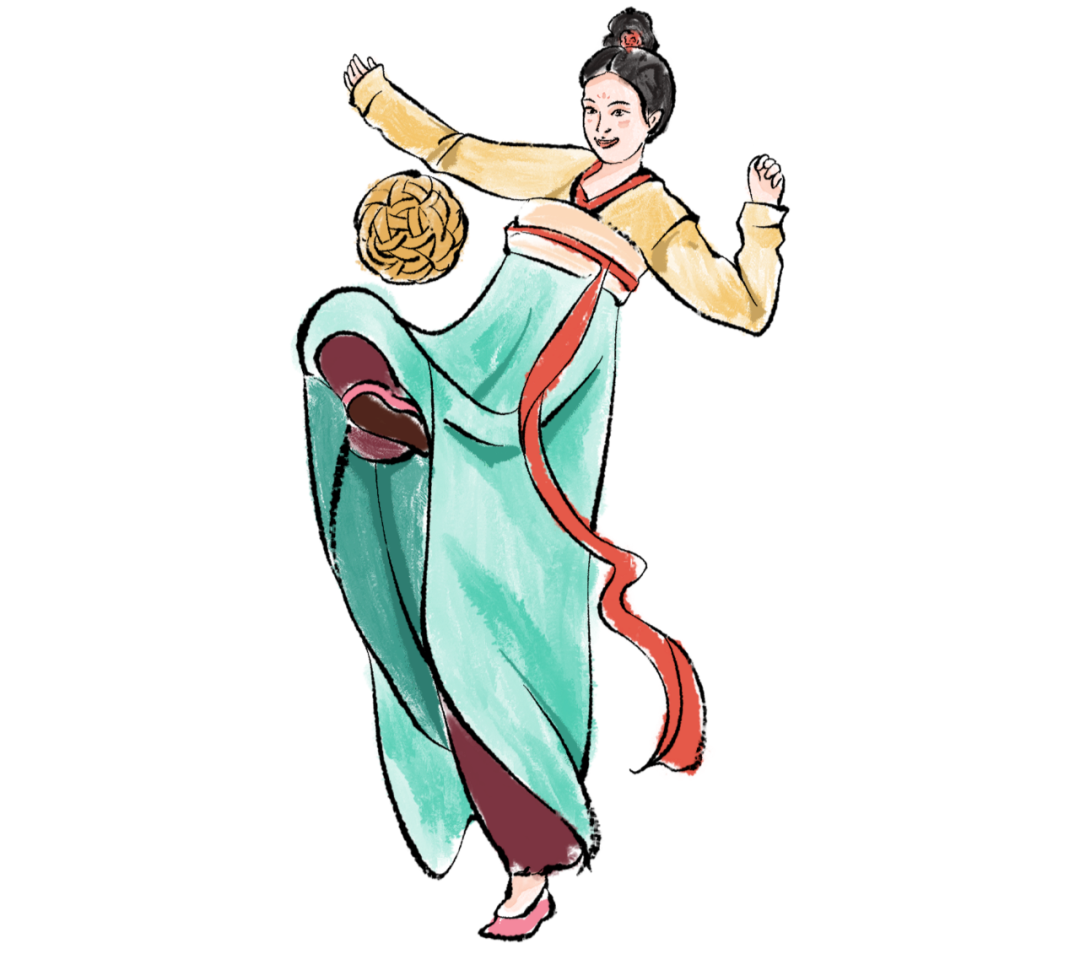
There were two principle styles of Cuju. In one version, known as baida, the goal was obsolete and the aim was to demonstrate skills in juggling with the ball. The winner is determined by the number of tricks performed and the level of skills.蹴鞠主要有两种踢法,在“白打”中,没有球门,目的是展示抛接球的技巧,它以表演花样多少和技艺高低来决定胜负。
The earliest record of women Cuju players can be traced back to the Han Dynasty. Up to the Tang Dynasty, women players prevailed at the royal court. At that time, Cuju mainly served as entertainment.关于女子蹴鞠的最早记录可以追溯到汉朝。到唐朝,踢蹴鞠的女性在宫廷中占主导地位,当时,蹴鞠主要是为了娱乐。
Words and Expressions
① flourish vi. 繁荣;兴旺② a walk of life 行业;阶层③ position vt. 安置;使处于④ feature vt. 以……为特色⑤ upright adj. 竖直的;直立的⑥ pole n. 球门柱⑦ circular adj. 圆形的;环形的⑧ obsolete adj. 淘汰的;废弃的;过时的⑨ juggle vi. 玩杂耍(连续向空中抛接多个物体)⑩ trace ... back to 把……追溯到⑪ prevail vi. 盛行;流行⑫ serve as 可用作;可当……使
Football is a team sport played between two teams of eleven players. The game is played on a rectangular field that is 105m in length and 68m in width with a goal at each end.
Football, originating from cuju, can be traced back to as far back as the Han Dynasty of Ancient China. The contemporary history of football spans more than 100 years. It began in 1863 in England, and has been an Olympic sport ever since the second modern Summer Olympic Games in 1900.
It is universally acknowledged that football serves to build ourselves up and to encourage such fine qualities as loyalty, selflessness, cooperation and team spirit. Therefore, it is enjoying increasing popularity; nowadays, it is played by about 250 million players in over 200 countries, making it the world's most popular sport.