资讯 / 正文
英语考试高频考点及易错点汇总,初三党抓紧过一篇!
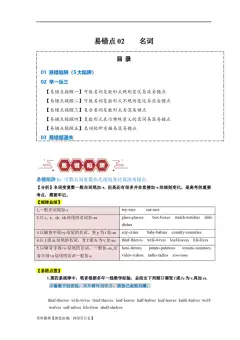
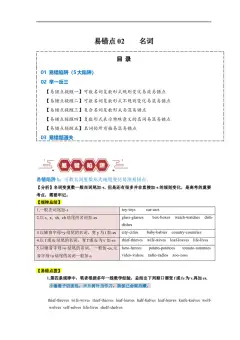
英语考试高频考点及易错点汇总,初三党抓紧过一篇!文章来源:初中英语知识 1.一般情况,直接加-s, 如:book-books, 2.以s. x. sh. ch结尾,加-es, 如:bus-buses, fox-foxes, brush-brushes, watch-watches 3.以“辅音字母+y”结尾,变y为i,再加-es, 如:family-families, strawberry-strawberries 4.以“f或fe”结尾,变f或fe为v, 再加-es, 如:knife-knives,leaf-leaves 5. 以o结尾有生命的+es,无生命的+s,元音oo结尾+s, 如: photo- photos, potato-potatoes, kangaroo-kangaroos 6.单复数形式相同的有: Chinese, Japanese, fish, deer, sheep 7.不规则名词复数: man-men, woman-women, policeman-policemen, policewoman-policewomen, mouse-mice, child-children, foot-feet, tooth-teeth, people (人们) 注意:当people表示民族,复数+s。 如:There are 56 peoples in China. 中国有56个民族。 8. 表示某国人的单词变复数时,中日不变英法变,其余s加后面。Englishman - Englishmen, Frenchman - Frenchmen, German - Germans 9.不规则变化 mouse-mice,foot-feet, child- children, tooth - teeth, man - men, woman - women, ox-oxen,grown-up-grown-ups, passer by-passers by, brother in law-brothers in law, 注意:当man与woman作定语修饰的名词改为复数时,两者都要改为复数, 如:two women doctors, many men leaders。 10. 特殊情况 ①只有复数,没有单数形式。 如:trousers裤子,clothes衣服, shorts短裤,goods商品, glasses眼镜,people人们等。 ②集合名词不能用具体的数字修饰,只能在其前加the表示全体, 如:the police,the English, the people,动词也用复数形式, 但family,class,team,group等集合名词,若指整体,看作单数形式,若指其中的成员,则看作复数形式,动词也应该有相应变化。 注意:
③同一词在不同意义下有可能可数有可能不可数
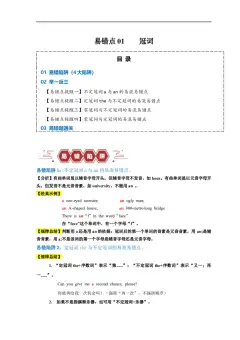
④复数形式的单数名词 有些名词看似复数形式,实际上是单数。如:news(消息),maths(数学),physics(物理)。No news is good news。 名词的所有格 1. 名词所有格一般都是在结尾加 ’s,如:Kate’s,但以s结尾的复数,只加 ’ , 如Teachers’ Day; of+名词用来表示无生命东西的所有关系, 如:the problem of the Americans。 2. 当某物为两人共有时,名词所有格为A+B’s。而当某物为各人所有时为A’s+B’s。 3. 双重属格则指:of属格+名词所有格/名词性物主代词,如:a cousin of my father's,a friend of mine。 冠词 冠词包括不定冠词(Indefinite Article)、定冠词(Definite Article)、否定冠词(Negative Article)、部分冠词(Partitive Article)和零冠词(Zero Article,即不用冠词)。 1. 不定冠词(a+辅音音素/an+元音音素) 易错说明: hour, honest, honor,uniform, European等词是元音字母开头,但是第一个发音的音素是辅音,所以前面用a 2. 定冠词(the表特定) ①表示某个或某些特定的人或物 如:Tom is the moniter of our class. 汤姆是我们班的班长。(不是别的班的) ②特指双方都明白的人或物 如:I am cold,would you please close the door. 我很冷,请把门关了。(双方都知道是哪个门) ③世界上独一无二的事物 如:The sky is blue. 天空是蓝色的。 The earth goes around the sun. 地球绕着太阳转。 ④上文提到过的人或事 如:He has a pen and the pen is given by his sisiter. 他有一支钢笔,这支钢笔是他妹妹给的。 ⑤用在序数词和最高级前面:第一the first、第二the second、第三the third 如:He is the tallest in our class. 他是我们班最高的。 ⑥用在表示乐器的名词前 如:He can play the piano/violin/guitar. 他会弹钢琴/拉小提琴/弹吉他...... ⑦用在姓氏的复数名词前 如:The Greens are watching TV. 格林一家在看电视。 ⑧用在习惯用语中 在白天in the day(在晚上at night)在早上/下午/晚上 in the morning/afternoon/ evening ⑨形容词前表示一类人或物或抽象概念 the poor 穷人, the rich 富人,the old 老人 3.零冠词用法: ① 国名、人名前通常不用定冠词:England,Mary ②泛指的复数名词,表示一类人或事物时,可不用定冠词 如:They are teachers. 他们是教师。 ③抽象名词表示一般概念时,通常不加冠词 如:Failure is the mother of success. 失败乃成功之母。 ④物质名词表示一般概念时,通常不加冠词,当表示特定的意思时,需要加定冠词 如:Man cannot live without water. 人离开水就无法生存。 ⑤在季节、月份、节日、 假日、日期、星期等表示时间的名词之前,不加冠词 如:We go to school from Monday to Friday. 我们从星期一到星期五都上课。 ⑥在称呼或表示官衔,职位的名词前不加冠词 如:The guards took the American to General Lee. 士兵们把这个美国人送到李将军那里。 ⑦在三餐、球类运动和娱乐运动的名称前,不加冠词 如:have breakfast,play chess ⑧当两个或两个以上名词并用时,常省去冠词 如:I can't write without pen or pencil. 没有钢笔和铅笔,我就写不了字。 ⑨当by与火车等交通工具连用,表示一种方式时,中间无冠词 如:by bus,by train; ⑩有些个体名词不用冠词。 school,college,prison, market,hospital,bed, table,class,town,church,court 等个体名词,直接置于介词后,表示该名词的深层含义 如:go to hospital 去医院看病 go to the hospital 去医院 (并不是去看病,而是有其他目的) ⑪不用冠词的序数词
such、so的用法 1、such的用法 such作限定词和all,no,any,some,other,another等词连用时,such放后面。 如果such修饰单数可数名词,且与不定冠词连用时需置于其前;such前有no时不用冠词。 2、so的用法 在believe,think,expect,suppose等词后用so代替前文提出的观点,在肯定句中表示与上文相同的情况,如:So do I. 固定短语 1、重点介词短语
2、易混淆的固定短语
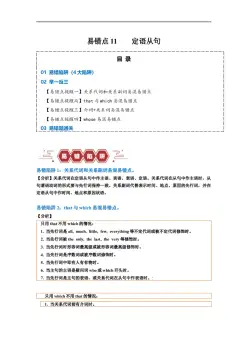
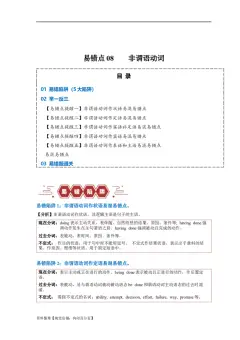
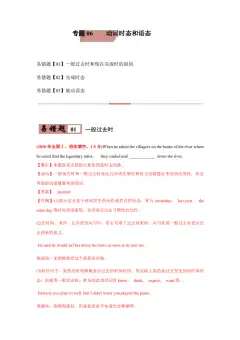
虚拟语气 1. 与现在事实相反的虚拟 If + did / were + ..., ... would/ should/ could/ might + do (动词原形) 如:If I were you, I would go abroad at once. (I am not you.) If he knew it now, he could help me. (He doesn't know it now.) 2. 与过去事实相反的虚拟 If + had done + ..., ... would (might) have done ... 如:If I had known your telephone number yesterday, I would have phoned you. (I didn't know your telephone number.) If you had come here a little earlier just now, you might have met her. (You didn't come here earlier.) 3. 与将来事实相反的虚拟 (1) If + should + v., ... would + v. (可能性很小)(译作“万一”) 如:If it should rain tomorrow, you could stay at home. If I should fail, what should Ido? (2) If + did / were to + v ..., would + v. (完全不可能) 如:If the sun were to rise in the west, I would lend you the money. If you finished it in 3 minutes, I would give you my car. 4. 特殊 ①动词后的“宾语从句”中需要用虚拟形式,即should + 动词原形。此类常见的动词有:order, ask, decide, demand, require, recommend, suggest(建议), insist(坚决要求), advise, etc. 如:He suggested that we should help them with English. The teacher ordered that the homework should be finished within half an hour. ②名词后的同位语从句中要用“should + 动词原形”(should可省去)的虚拟。此类常见的名词有:suggestion, order, request, demand, importance, proposal. 如:He made a suggestion that we (should) have a fancy dress party. I think it is a thing of importance that it (should) be done soon. ③ It is / was important / necessary / natural / essential / advisable / strange / surprising, ect. + that +主语+ should + v. 如:It is strange that you should say such a thing. It was important that you should tell me all the information. ④ wish后的宾语从句中,as if 后的状语从句中,须用下列的虚拟形式: 主 + wish+ (that) + 主 + did / were(指现在) had done(指过去) would+ v.(指将来) 如:I wish that I met my uncle now. I wish I had met my uncle yesterday. I wish I could meet my uncle tomorrow. ⑤It is (high) time that ... + did / were ... 如:It is time that you went to bed. ⑥ would rather that ... + did / were ... 如:I would rather that you were not here now. ⑦would sooner that ... + did / were ... 如:I would sooner that you got up earlier. I would sooner that you were not my brother. 时态 1、一般现在时表将来的2种情况: ①拟定或安排好的事情、一定要发生的动作 如:The train arrives at 10. ②在时间状语从句、条件状语从句、让步状语从句中一般现在时表将来 2、过去即将要发生的动作 was/were about to do sth. 3、句子中出现过去时,才会使用过去;完成时表过去的过去:一直延续到过去的动作 如:I was tired. I had been working sincedawn. 句型 1、句型It is adj. for sb.to do sth./It is adj. of sb. to do sth. It is adj. for sb.to do sth.(普通的形容词,如hard,impossible,important。) 如:It is beneficial for you to do sports.运动对你有益。 It is adj. of sb. to do sth.(形容人的性格特征:如nice,kind,clever,foolish,smart。) 如:It is kind of you to help me.你能帮我太好了。 2、经常接疑问词+不定式的动词: learn, ask, discuss, explain, know, remember, forget, understand, think, consider, decide. 如:I have to learn how to study English. 3、主谓一致 the number of+复数名词作主语时,谓语动词用单数 a number of+复数名词时,谓语动词用复数 someplentyofa lot of,谓语动词根据所修饰的词而定 a quantity of谓语动词用单数;large quantities of谓语动词用复数 4、谓语动词就近一致 either…or…/neither…nor…/not only…but also…谓语动词和靠近的主语一致 5、同位语从句 常跟同位语从句的名词或短语:belief /doubt /hope /report /word /opinion /idea… 如:We have some doubt whether they can complete the task on time. 6、直接引语和间接引语 变间接引语要向前推一个时态! 如:He said, ”I am sorry.” He said that he was sorry. 7、定语从句who/whom的用法(介词+whom) 例:He is the man who lives next door. I have many friends to whom I am going to send postcards. 8、定语从句that/which的用法 通常可以互换,但下列情况必须用that(改错常考):先行词是all,much,few,little,something等不定代词时;先行词有the only,the same,the very修饰时;主句是以which开头的特殊疑问句时;先行词既有物又有人时;先行词是序数词、形容词最高级时 9、as和which用法辨析 引导非限定性定语从句:as的先行词只能是句子,which的先行词可以是词。 10、表示一…就的引导词 as soon as/immediately/instantly/the moment/no sooner than/hardly 注意:no sooner与hardly在句首时,要求句子倒装。 11、so that 连用引导目的/结果状语从句 so adj./adv./many/few+that:There is so little time that… such adj.+名词+that:Kathy is such a lovely girl that… 12、强调句型 It is/was 被强调的部分 that/who 句子剩余部分 和定语从句的区别:It was 8 when I left home.(定语从句) 13、"wish +宾语从句",表示不大可能实现的愿望 表示现在的不能实现的愿望:主语+过去时; 表示过去的不能实现的愿望:主语+had done; 表示将来的不能实现的愿望:主语+would/could do 14、It was + 时间段+before…."过了多久才……" It was not long before…."不久,就……" It will (not) be +时间段+before…."要过多久(不久)……才……"(before从句谓语动词要用一般时态) 15、as if/though+主语+did/had done… 好像……(表示现在或将来的情况用过去时;表示过去的情况用过去完成时) 例:Our head teacher treats us as if we were her own children, so all the students in our class think highly of her. 16、as, though, although引导的让步状语从句 注意:although位于句首;though位于句首或句中;as位于句中=though。它的词序是把句中强调的形容词、副词、动词或名词放在连词前。 17、in case of…(+n.) "以防;万一";in case that…"以防,万一……"(谓语动词用一般现在时态或should+动词原形) 18. will和would的用法 will常与第二人称you连用,表示征求对方意见,will you/won’t you? would更委婉客气一些,常用短语:would like to dowould rather宁愿 19. also用于肯定句,放在系动词、助动词、情态动词后;too&as well用于肯定句,放在句末(too用逗号隔开);either用于否定句,放在句末 如:John also plays piano./He speaks French, and English as well./I want to eat an apple, too./Idon’t watch TV, either. 20. but表转折语气最强烈 while强调前后者对比Tom is reading while Jim is playing football. however表示转折常用于插入语,需要和句子用逗号隔开 though引导让步状语从句 21. 全部倒装句的常见结构 here,there,now,then,thus等副词置于句首, 谓语动词常用be, come, go, lie, run。 如:There goes the bell. 表示运动方向的副词或地点状语置于句首,谓语表示运动的动词。Out rushed a missile from under the bomber. 22、部分倒装句的结构和用法 把“so ... that ...”句型中的“so + 形容词 / 副词”部分放在句首时,be动词或助动词放在主语前面。 如:So frightened was the girl that she daren't move an inch further. 用so,neither或nor构成的特殊句型,表示另一人或物也具有和前面提到的同样情况时,出现部分倒装。 如:Jim asked the question. So did Lily.把具有“否定”意义的词语放在句首时,出现部分倒装。 如:Never shall I forget your advice. 23、特殊情形倒装 “only + 状语从句”和“not until + 从句”位于句首时,在主句中进行倒装。 如:Not until the child slept did the mother leave the room. “not only...but also...”连接两个分句,not only位于句首时,倒装在not only所在分句进行。 如:Not only were the children moved but also the adults showed their pity. 24. “no sooner...than...”句型中的nosooner位于句首时,倒装在no sooner 主句中进行;“hardly / scarcely...when...”句型中的hardly位于句首时,倒装在hardly / scarcely主句中进行。 声明 购书入口
文章来源:初中英语知识。图片来源:锐景,以上图文,贵在分享,版权归原作者及原出处所有,内容为作者观点,并不代表本公众号赞同其观点和对其真实性负责。如涉及版权等问题,请及时与我们联系,我们将立即更正或删除相关内容。
快捷英语图书官方旗舰店
购书热线 010-58383328
News
往期推荐
相关文档
- 2022高考英语考试易错题易错点01名词
- 2022高考英语考试易错题易错点04介词学生版
- 2022高考英语考试易错题易错点03代词学生版
- 高考生物50个高频考点易错点(生物资料)
- 2022高考英语考试易错题易错点06动词时态和语态学生版
- 2026年中考字形200个高频考点+100个高频易错点
- 2024高考英语考试易错题易错点18七选五四大陷阱解析版
- 2024高考英语考试易错题易错点17阅读理解主旨大意题解析版
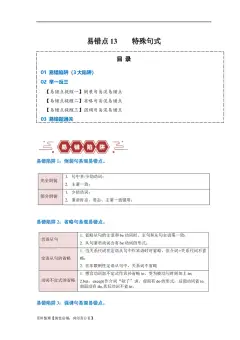
- 2024高考英语考试易错题易错点13特殊句式三大陷阱解析版
- 2022高考英语考试易错题易错点05形容词和副词学生版
- 高考物理高频考点易错点总结理科生必知5
- 备战2022高考英语考试易错题易错点02冠词赠备战2022年高考英语考试易错题路径2024一轮
- 物理116个易错知识点汇总
- 专题8.1高频易错易混点快攻解析版
- 2024高考英语考试易错题易错点19完形填空四大陷阱解析版
- 2024高考英语考试易错题易错点18七选五四大陷阱原卷版
- 2024高考英语考试易错题易错点17阅读理解主旨大意题原卷版
- 2024高考英语考试易错题易错点13特殊句式三大陷阱原卷版
- 2024高考英语考试易错题易错点11定语从句四大陷阱解析版
- 2024高考英语考试易错题易错点03代词三大陷阱解析版
- 2024高考英语考试易错题易错点01冠词四大陷阱原卷版
- 二年级上册数学高频考点易错应用题汇总练习
- 2024高考英语考试易错题易错点27读后续写五大陷阱解析版
- 2024高考英语考试易错题易错点19完形填空四大陷阱原卷版
- 2024高考英语考试易错题易错点11定语从句四大陷阱原卷版
- 2024高考英语考试易错题易错点08非谓语动词五大陷阱解析版
- 2022高考英语考试易错题易错点06动词时态和语态教师版含解析
- 2024高考英语考试易错题易错点02名词五大陷阱解析版
- 专题8.1高频易错易混点快攻原卷版
- 高考生物426个易错点汇总06
- 2026届高考化学二轮复习高频易错点专题训练:化学用语高频易错强化练
- 高中政治高频易错点必背知识点
- 2025年高考英语考试易错题(新高考通用):易错点19读后续写学生版
- 2024高考英语考试易错题易错点27读后续写五大陷阱原卷版
- 2024高考英语考试易错题易错点26应用文写作四大陷阱解析版
- 2024高考英语考试易错题易错点12名词性从句四大陷阱解析版
- 2024高考英语考试易错题易错点08非谓语动词五大陷阱原卷版
- 2022高考英语考试易错题易错点05形容词和副词教师版含解析
- 2024高考英语考试易错题易错点02名词五大陷阱原卷版
- 高中生物426个易错点汇总
- 高中生物150个易错点汇总
- 2026年中考字形200个中考高频考点+100个高频易错点(全国通用)
- 近5年全国各地语文中考语言运用50个高频考点+30个高频易错点
- 近5年全国各地语文中考名句默写100个高频考点+50个高频易错点
- 近5年全国各地中考语文病句辨析100个高频考点+50个高频易错点
- 2026届高考化学二轮复习高频易错点专题训练 实验装置图评价 高频易错强化练
- 2026届高考化学二轮复习高频易错点专题训练 元素推断题型突破 高频易错强化练
- 2025年高考英语考试易错题(新高考通用)易错点02非谓语动词 原卷版
- 2024高考英语考试易错题易错点26应用文写作四大陷阱原卷版
- 2024高考英语考试易错题易错点16阅读理解词义猜测题四大陷阱解析版