资讯 / 正文
高考英语听力:掌握这一套技巧,少踩坑多得分!
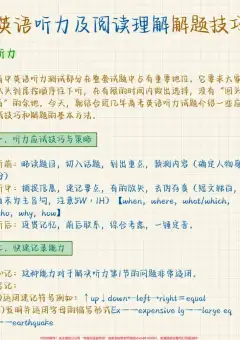
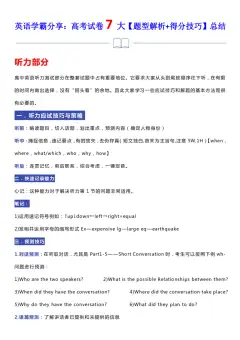
高考英语听力:掌握这一套技巧,少踩坑多得分!还有一个多月(2027年1月8日)的时间,就到高考英语听力第一次考试了,高考英语听力是不少同学的重难点。明明单词都认识,却很容易被出题“陷阱”带偏。今天整理一套完整听力解题策略,结合高考真题样例,包含听前预判、听中避坑、听后复盘,帮大家稳住听力分数。 📖听前:做好预判,抢占答题主动权 听力播放的间隙十分宝贵,拿到试卷、音频播放之前,千万不要发呆,有的同学喜欢跟着录音一起读中文题目,千万不要这样做,不要浪费每一秒钟。遵循题目分析+预测答案,快速完成4步准备工作。 1. 分析题干,抓取关键词 快速浏览题干,圈画特殊疑问词(what/when/where/who/why/how)、人物、时间、顺序词,搞清楚题目问的是谁、核心考点是什么。 常见提问形式参考: ✦ When does the train leave?(问时间) ✦ Where does this conversation take place?(问地点) ✦ How does the woman feel about James' situation?(问人物态度) 2. 对比选项,找差异点 不用逐字逐句翻译全部选项,重点抓取选项之间的核心不同,听音频时精准定位信息。 📌样题:What’s the man’s suggestion? A. Buying expensive things. B. Buying cheap things. C. Buying necessary things. 💡技巧:三个选项的核心差别在于 expensive/cheap/necessary ,听的时候重点捕捉这一维度信息。 3. 结合常识,预判答案 根据生活常识,直接排除逻辑明显不合理的选项,缩小选择范围。 📌样题:Why does the man say that he should keep away from the babies?(哪一项最不可能是答案) A. He has just become a father B. He wears dirty clothes C. He is a smoker 💡解析:刚成为父亲并不会需要远离婴儿,根据常识可以优先排除A选项。 4. 预判对话场景 长对话的2‑3道题目会串联成一条信息链,我们可以通过题干,推测对话发生场景。 📌样题 ① What kind of room does the woman need? A. A single room. B. A double room. C. A room for three. ② How much will the woman pay per night? A. $100. B. $120. C. $150. 💡解析:看到room、per night,可以直接预判对话场景为预订房间,听的时候重点关注房型、价格信息。 ✨听前小结:审题干→找选项差异→常识筛选项→预判场景。音频还没播放,对对话内容做到心中有数。 ⚠️听中:识破7大高频听力陷阱 很多时候做错题,不是听不懂单词,而是掉进命题人设置的套路。考试遇到下面这些信号,一定要高度警惕。 陷阱1:前句误导,答案藏在转折词之后 命题套路:先说一个干扰信息, but、however、though、while 后面才是说话人的真实想法。 高频句式: I’d like to…, but… / I was planning to…, but… / That’s great, but… 📌真题样题(上海卷T5) Q: What does the woman mean? A. She expected to be a better show. B. She could hardly find her seat. C. She didn't get a favorable seat. 听力原文: M:Wasn't the show any good? W:The show was good, but I could hardly see the stage from my seat. ✅答案:C 💡技巧:听到转折连词,立刻集中注意力,重点听连词后半部分内容。 陷阱2:换词不换句,警惕同义替换 命题套路:选项不会照搬原文原句,使用同义词、同义短语改写原文。 📌真题样题(全国卷一T1) Q: What will James do tomorrow? A. Watch a TV program. B. Give a talk. C. Write a report. 听力原文: W: James, you've been watching TV for the whole evening. What's on? M: It's a science program on the origin of the universe. I'll give a presentation on it in my class tomorrow. ✅答案:B 💡解析: give a presentation 和选项 give a talk 属于同义替换,不要听到TV就误选A。不要看到和原文相似词汇就选,重在理解语义。 陷阱3:虚拟语气,读懂言外之意 命题套路:用 If I were you 这类虚拟句式来表达建议,字面是假设,实则是真实观点。 📌真题样题(全国卷一T3) Q: What does the woman suggest the man do? A. Tell Kate to stop. B. Call Kate’s friends. C. Stay away from Kate. 听力原文: M: It really annoys me when Kate calls her friends during office hours. W: If I were you, I would tell her to stop. ✅答案:A 💡技巧:遇到虚拟语气,跳出字面翻译,挖掘背后真实建议。 陷阱4:数字多干扰,警惕加减运算 命题套路:音频给出两个及以上数字,正确答案需要计算,关键词: have、more、before、after、left 。 📌真题样题(全国卷一T3) Q: When does the train leave? A. At 6:30. B. At 8:30. C. At 10:30. 听力原文: W: We'd better be going now, or we’ll be late for the train. M: No rush. It's 8:30 now. We still have two hours. ✅答案:C(8:30+2h=10:30) 💡技巧:随手简单记录数字,切忌听到哪个数字就直接选哪个。 陷阱5:多人对话,分清是谁的态度 命题套路:对话出现多个人物的观点,把其中一人的看法作为干扰项。 📌真题样题(全国卷二T4) Q: What is the woman’s opinion about the course? A. Too hard. B. Worth taking. C. Very easy. 听力原文: M: This course is really difficult.(男生观点) W: I don't think it's all that bad. And we’ll benefit a lot from it.(女生观点) ✅答案:B 💡技巧:一定要看清题干提问的人物,不要张冠李戴,把别人的观点当成答案。 陷阱6:口语省略句,读懂潜台词 命题套路:大量生活化口语,句子会省略部分内容,不能只翻译字面单词。 📌真题样题(上海卷T5) Q: What will the woman most probably do? A. Take her bicycle to a repair shop. B. Leave her bicycle outside. C. Clean the garage after the rain stops. 听力原文: M: Look, it's going to pour. You'd better put your bike in the garage. W: Why bother? It's been through a lot worse and still works fine. 💡解析: Why bother? 何必麻烦呢? 完整含义=Why bother putting my bike in the garage?,女生不打算把自行车收进车库。✅答案:B 陷阱7:多个事件,理清动作先后顺序 命题套路:对话提到多件事情,题干问first / before / after之后做什么。 📌真题样题(上海卷T5) Q: What does Jenny decide to do first? A. Look for a job. B. Go on a trip. C. Get an assistant. 听力原文: M: Jenny, there is an opening for an assistant manager in our company. You should give it a try. W: Thank you, George. But I've decided to travel a bit before finding another job. ✅答案:B 💡技巧:抓住 before、after、first、last 等词,分清动作孰先孰后。 🧩真题综合小练习,巩固技巧 我们结合上面学到的方法,再来做几道经典例题检验学习效果。 1. Q: Why is Emily mentioned in the conversation?(全国卷一T5) A. She might want a ticket. B. She's looking for a man. C. She has an extra ticket. 听力材料: M: I have an extra ticket to the concert tonight. Would you like to join me? W: Thanks. But I already have one. You can ask Emily. She might be interested. ✅答案:A ✨考点:转折but之后才是关键信息。 2. Q: What does the man think of the film?(上海卷T10) A. Its ending is not good enough. B. Its special effects are not satisfying. C. It deserves an award. 听力材料: W: I think the film is good because it is scary. And special effects are amazing. M: It would deserve an award if it weren't for the last part. ✅答案:A ✨考点:虚拟语气,要不是最后一部分,电影值得获奖,暗示结局不好。 3. Q: What does the woman think of the movie ?(全国卷一T1) A. It's amusing. B. It's exciting. C. It's disappointing. 听力材料: W: Have you seen the film “Hangover”? We went to see it last night. M: How was it? W: Jason thought it was extremely amusing, but I was a bit disappointed. ✅答案:C ✨考点:区分Jason和女生两个人物的不同观点。 4. Q: What time is it now ?(全国卷一T1) A. 9:10. B. 9:50. C. 10:00. 听力材料: W: What time is your train leaving ? M: It leaves at 10. I've got 50 minutes left. ✅答案:A(10点减去50分钟=9点10分) ✨考点:数字时间减法运算。 ✍️实战答题全流程|听前‑听中‑听后 ✅听前 1. 利用间隙预读题干选项,圈画关键词; 2. 预判对话场景,借助常识初步缩小答案范围。 ✅听中 1. 数字、地点、人物态度做简短笔记; 2. 遇到没听懂的句子立刻跳过,不要纠结某一句话,防止错过后续音频; 3. 重点关注:转折词、虚拟语气、人物观点、数字计算、动作先后顺序。 ✅听后 1. 听力播放结束,立刻填涂机读卡,千万不要全部留到考试最后再涂,避免遗忘、时间不够; 2. 日常刷题练习,听完一定要对照听力原文,分析错题原因,错题可以反复重听复盘。 💡日常备考小建议 1. 多听多读,培养英语语感,尽量用英文思维理解材料,不要每一句都翻译成中文; 2. 英语听说读写看五项能力相辅相成,听力的提升,同样离不开阅读积累。 📝写在最后 听力高分不是靠“盲听碰运气”,而是科学做题方法+足量练习共同造就。平时训练熟悉出题的各类陷阱,考场上用好预读预判技巧,抓住信号词,就可以发挥自己的真实水平。 祝所有高考考生听力稳拿高分!
相关文档
- 英语听力及阅读理解解题技巧知识点总结
- 掌握设为得分点的高频虚词用法
- 2024年高考英语读后续写专项复习手册:专题01“四步”避免读后续写踩坑跑偏(PPT课件+练习题+素材,全国通用)
- 了解文类特征掌握阅读技巧
- 2026年高考语文一轮复习古诗文专题掌握设为得分点的高频虚词的用法(全国通用)
- 掌握文言断句的技巧与方法甲
- 掌握文言断句的技巧与方法乙
- 干货02古诗文类题型易错易混与避坑技巧
- 干货01积累与运用类题型易错易混与避坑技巧
- 掌握散文语言等艺术技巧赏析题答题要点
- 英语39英语学霸分享高考试卷7大题型解析加得分技巧总结
- 高考物理的34个坑
- 掌握预读技巧巧做英语四级听力选择题
- 掌握预读技巧巧做英语四级听力选择题
- 考前50天冲刺50分作文套路素材
- 2026高考语文一轮复习古诗文专题了解文类特征掌握阅读技巧
- 2027年高考英语考前听力技巧及押题卷 2026年高考英语听力满分冲刺技巧 word版
- 语法填空高中英语考试语法填空总是错?这13个得分技巧!你正需要!
- 2025年高考英语听力专项解题技巧外文训练模拟检测(六)
- 2025年高考英语听力专项复习(四):解题技巧+外文训练+模拟检测
- 2025年高考英语听力专项训练(十二):解题技巧+外文训练+模拟检测
- 2025年高考英语听力专项训练:解题技巧+外文训练+模拟检测(十三)
- 2025年高考英语听力专项复习:解题技巧+外文训练+模拟检测(十七)
- 2025年高考英语听力专项复习(九):解题技巧+外文训练+模拟检测
- 2021年全国甲卷乙卷高考英语听力专题(试题+答案+文本解密+词汇拓展+语音技巧)解析版 高考英语听力专项突破高分宝典
- 2024高考语文一轮复习文言文阅读掌握文言断句的技巧与方法(全国通用)
- 高考语文一轮复习微专题1精准分析句式效果掌握句式变换技巧通用版2022
- 高频考点77坑·地理·2026年-地理高考专项复习
- 坑神高考刷题直播训练营卷二
- 坑神高考刷题直播训练营卷一
- 2021年全国甲卷乙卷高考英语听力专题(试题+答案+文本解密+词汇拓展+语音技巧)原卷版 高考英语听力专项突破高分宝典
- 高考语文专题复习专题五文言文阅读:掌握文言文断句的技巧与方法
- 2026高考语文一轮复习现代文专题掌握散文语言等艺术技巧赏析题的答题要点
- 一年级下册语文生字解析:音序部首拼音笔画结构组词
- 1.10求比一个数多(或少)几分之几的数是多少的问题
- 坑神高考刷题直播训练营卷二解析
- 坑神高考刷题直播训练营卷一解析
- 地域城市选择志愿填报避坑指南
- 珠宝玉石·新坑种翡翠
- 小学数学第2.4节比一个数的几倍多或少几的计算方法
- 2025年高考英语听力专项解题技巧外文训练模拟检测(六)听力答案及材料
- 2022英语听力部分甲乙卷试题
- 金佰利面经防掉坑版
- 小学数学第2.4节求比一个数的几倍多或少几的数是多少
- 2022英语听力部分甲乙卷文本解析
- 2025年高考英语听力专项复习:解题技巧+外文训练+模拟检测(四)听力答案及材料
- 2025年高考英语听力专项训练(十六)听力答案及材料:解题技巧+外文训练+模拟检测
- 2025年高考英语听力专项训练(十九)听力答案及材料:解题技巧+外文训练+模拟检测
- 2022英语听力部分甲乙卷试题文本解析
- 2027届高考语文一轮总复习(贵州专版):掌握文言文断句的技巧与方法同步练习(含答案解析)