资讯 / 正文
26年全国高考一卷语法填空及巩固练习(原卷版+解析版)
资料下载步骤:
①关注公众号
②回复关键词
③收到资源链接
④按文末指引获取资料
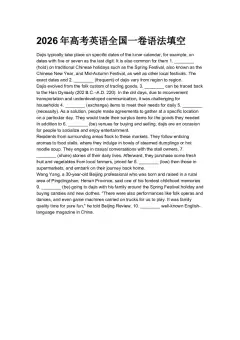
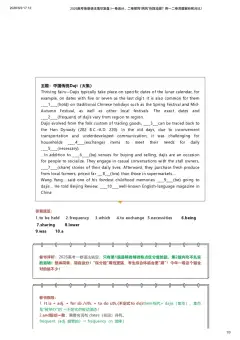
(2026新高考全国1卷,56-65)
Daji, or big open-air fairs, typically take place on specific dates of the lunar calendar, for example, on dates with five or seven as the last digit. It is also common for them 56____(hold) during traditional Chinese holidays such as the Spring Festival and the Mid-Autumn Festival, as well as other local festivals. The exact dates and 57____(frequent) of daji vary from region to region.
Daji originated from the ancient folk custom of trading goods, which dates back to 58____ Han Dynasty. As transportation and communication 59____(be) underdeveloped at that time, it was very difficult for households to obtain daily 60____(necessity). As a solution, people gathered at specific locations on set days to trade their surplus (剩余的) items 61____ what they needed.
In addition to being venues for buying and selling, daji are occasions for socializing and entertainment. People from near and far crowd into these markets on daji days. 62____(draw) by the aroma (香味) of street food, they line up in front of stands 63____ serve steaming dumplings and hot noodle soup. While eating and enjoying street performances, they chat with each other and share stories of their daily lives. Before 64____(head) home, they fill their shopping bags with fresh fruit and vegetables from local farmers, at prices significantly 65____(cheap) than those found in supermarkets.
✅ 参考答案:
56. to be held
57. frequency
58. the
59. were
60. necessities
61. for
62. Drawn
63. that / which
64. heading
65. cheaper
逐空精讲
56. to be held
考点:非谓语动词(不定式被动)
句型:It is + adj. + for sth. to do,it 是形式主语,后面不定式是真正主语。
逻辑主语 them(指代 daji 大集)和 hold(举办)之间是被动关系:大集“被举办”,所以用不定式被动 to be held 。
易错提醒:很多学生直接写 to hold,忽略被动!
翻译:大集在春节、中秋等传统节日期间举办,这也很常见。
57. frequency
考点:词性转换:形容词 → 名词
and 并列两个主语:the exact dates 和 ____,dates 是名词,并列位置也要用名词。
frequent(adj. 频繁的)→ frequency(n. 频率)
frequency 不可数名词,不用变复数。
翻译:大集的确切日期和举办频率因地而异。
58. the
考点:定冠词
固定规则:the + 朝代名称
the Han Dynasty 汉代;the Tang Dynasty 唐朝
👉 朝代专有名词前面必须加 the。
59. were
考点:时态 + 主谓一致
时间标志:at that time(在那时)→ 一般过去时。
主语 transportation and communication,and 连接两个名词,看成复数,be动词用 were。
翻译:因为那时交通和通讯都不发达。
60. necessities
考点:名词单复数
necessity 含义区分:
① 表“必要性”:不可数;
② 表“必需品”:可数名词。
daily necessities = 日常必需品,必需品有很多种,必须用复数 necessities。
61. for
考点:介词,固定搭配 trade A for B
trade A for B:用A交换B
trade their surplus items for what they needed:拿多余物品换取自己需要的东西。
易混:trade with sb. 和某人交易;trade A for B 用A换B。
62. Drawn
考点:非谓语,过去分词作状语
逻辑主语是主句主语 they(人们);they 和 draw(吸引)是被动关系:人们“被香味吸引”,所以用过去分词 Drawn。
✅ 被动含义 → done;主动含义 → doing
注意首字母大写!
63. that / which
考点:定语从句关系代词
先行词 stands(摊位,指物);关系词在从句中作主语,所以用 that 或者 which。
❌ 不能用 where,where 在从句里作状语,本句从句缺主语。
从句还原:the stands serve steaming dumplings...
64. heading
考点:介词后接动名词
before 在这里是介词(不是连词),介词后面 + doing;before heading home = before they head home。
补充:before 作连词,后面可以接完整句子:Before they head home...
65. cheaper
考点:形容词比较级
标志词 than(比),提示用比较级;
cheap 的比较级 cheaper。
significantly 副词,修饰比较级,表“远远、明显地”。
翻译:价格明显比超市里的便宜。
整体考点汇总
1. 不定式被动 to be done
2. 形变名(-cy名词后缀)
3. 定冠词 the(朝代)
4. 一般过去时、主谓一致
5. 可数名词复数(词义决定单复数)
6. 固定介词搭配 trade A for B
7. 过去分词作状语(主被动判断)
8. 定语从句关系代词
9. 介词 + doing
10. 形容词比较级(than 提示)
配套变式巩固练习题(和本篇语法填空考点一一对应,适合当堂小测)
说明:一共10小题,严格对标上面10个空考点;题型同样为语法填空,附答案+简要提示,方便批改讲解。
考点清单对照:
①不定式被动 ②形容词变名词 ③定冠词the(朝代)④一般过去时+主谓一致 ⑤名词复数 ⑥trade A for B介词搭配 ⑦过去分词作状语 ⑧定语从句关系代词 ⑨介词+doing ⑩形容词比较级
1. It is common for traditional folk activities ______ (hold) during important festivals.
2. The ______ (frequent) of this kind of activity changes in different villages.
3. This custom first appeared in ______ Song Dynasty.
4. Roads and information ______ (be) not well-developed hundreds of years ago.
5. At that time, it was hard for people to get daily ______ (necessary).
6. Ancient farmers often traded crops ______ tools they needed.
7. ______ (attract) by beautiful lanterns, many visitors walk around the old street.
8. The snacks ______ are sold there taste really good.
9. After ______ (buy) lots of food, they go back home happily.
10. The local food is much ______ (cheap) than food in big restaurants.
✅ 答案:
1. to be held(考点:It is +adj.+for sth. to do,被动)
2. frequency(考点:形容词→名词)
3. the(考点:the+朝代)
4. were(考点:and并列主语为复数,一般过去时)
5. necessities(考点:必需品,可数复数)
6. for(考点:trade A for B)
7. Attracted(考点:过去分词作状语,被动,首字母大写)
8. that / which(考点:定语从句,先行词物,从句缺主语)
9. buying(考点:介词after后接动名词)
10. cheaper(考点:than提示比较级)
拓展版本(拔高版,适合基础好的学生,增加易混干扰)
1. It’s natural for these old stories ______ (pass) down from generation to generation.
2. We are surprised at the ______ (frequent) of such big events.
3. This painting was created in ______ Qing Dynasty.
4. Paper and printing ______ (be) great inventions in ancient China.
5. Clean water and food are basic ______ (necessary) for all people.
6. She wants to trade her old storybook ______ a new magazine.
7. ______ (surprise) by the lively performance, the audience cheered loudly.
8. The gifts ______ we prepared are for the elderly.
9. Before ______ (visit) the market, make a shopping list.
10. The vegetables here are far ______ (fresh) than those in the city.
✅ 拔高版答案:
1. to be passed
2. frequency
3. the
4. were
5. necessities
6. for
7. Surprised
8. that / which
9. visiting
10. fresher
(本文资料为原创资料,仅供课内自主学习,禁止二次打包、转载商用。)
资料整理不易,如果对您有用,文末点个红心👍,欢迎在评论区交流学习问题。
相关文档
- 全国一卷语法填空
- 考点巩固卷11语法填空(原卷版)
- 考点巩固卷11语法填空(解析版)
- 2026高考英语一卷二卷语法填空真题及答案详细解析版
- 寒假作业12语法填空(巩固培优)(原卷版)(1)学生版
- 2025高考英语二轮复习语法填空有提示词的单句填空加语法填空专题01练习原卷版
- 语法填空(原卷版)(新高考专用)
- 2024年高考英语一轮复习考点通关卷(新高考)考点巩固卷01-22 考点巩固卷11语法填空 原卷版
- 2024届高考英语考前词汇·语法·题型精练突破(新高考通用)专题02常考语法考前巩固:语法填空易错精练100题(原卷版)
- 2024年高考英语一轮复习考点通关卷(新高考)考点巩固卷11 语法填空 解析版
- 专题08语法填空(原卷版)
- 语法填空综合(测试)(原卷版)
- 2025高考英语二轮复习语法填空有提示词的单句填空加语法填空专题01练习解析版
- 2024年高考英语一轮复习考点通关卷(新高考通用)考点巩固卷11语法填空 解析版
- 2026版高考英语二模试题分类汇编(新高考专用)专题06语法填空(新高考一卷·学生版)
- 2024高考数学二轮复习讲练专题语法填空(练习)(原卷版)
- 2024年高考英语时文阅读之语法填空专项训练基础篇巩固篇:专题02登山探险(原卷版)
- 高考英语时文阅读语法填空专项训练专题07宇宙探秘(原卷版)
- 2024年高考英语时文阅读之语法填空专项训练基础篇巩固篇专题06全球气候原卷版
- 高考英语时文阅读语法填空专项训练专题01海洋探险(原卷版)
- 精品解析:2025年全国高考一卷英语真题原卷版
- 2024年高考英语新课标卷真题深度解析与考后提升 专题26语法填空(2024全国甲卷)原卷版
- 2024高考英语复习冲刺过关语法填空查漏补缺专题04原卷版(全国通用)
- 2025年全国高考一卷英语真题原卷版(含参考版解析)
- 高考英语时文阅读语法填空专项训练:专题04自然灾害与防范(原卷版)
- 2024年高考一模试题分类汇编英语语法填空(原卷版·全国卷专用)
- 专题07语法填空(讲练)(原卷版)
- 专题01语法填空20篇(原卷版)
- 词汇知识专题05语法填空词形转换高频词汇(2)(练习)(原卷版)
- 词汇知识专题04语法填空词形转换高频词汇(1)(练习)(原卷版)
- 词汇知识专题05语法填空词形转换高频词汇(2)(练习)(原卷版)
- 词汇知识专题04语法填空词形转换高频词汇(1)(练习)(原卷版)
- 2024中考英语一轮复习讲练测语法填空第08讲练习原卷版(全国通用)
- 2024届高考英语语法填空抢分热点精选精练:高考语法填空抢分热点之介词(原卷版)
- 2024年高考英语三模试题分类汇编 专题07 语法填空 原卷版 全国通用
- 2024届高考英语考前词汇语法题型精练突破(新高考通用)专题02常考语法考前巩固:语法填空易错精练100题解析版
- 2026年英语高考语法填空专项练习:时事新闻语法填空练习3篇
- 2026年英语高考语法填空专项练习:时事新闻语法填空练习3篇
- 2024年高考英语短语词汇句子专项训练基础巩固练习 专题06高考真题全国甲卷语法填空剖析整理共28个短语
- 2024全国一卷高考英语完形填空真题精练
- 2023全国一卷高考英语完形填空真题精练
- 2022全国一卷高考英语完形填空真题精练
- 2021全国一卷高考英语完形填空真题精练
- 2020全国一卷高考英语完形填空真题精练
- 2019全国一卷高考英语完形填空真题精练
- 2018全国一卷高考英语完形填空真题精练
- 2025年高考全国一卷数学真题 精品解析 原卷版+参考版解析
- 2024年高考一模试题分类汇编英语(全国卷专用)专题06 语法填空(原卷版)
- 2024高考英语一轮复习语法填空专题训练:2022-2023高考英语8套语法填空真题(原卷版,含详细解析)
- 2022年新高考全国一卷英语真题精品解析 原卷版