资讯 / 正文
初一孩子做英语“七选五”总踩坑?这几个“连环陷阱”,连老师看走眼都会选错!
初一孩子做英语“七选五”总踩坑?这几个“连环陷阱”,连老师看走眼都会选错! 晚上陪儿子对英语卷子,一道“七选五”的阅读填空题,他硬是改了好几遍,结果还是完美避开了正确答案。他委屈地说:“妈,这几个选项看着都能填进去啊,意思都挺通顺的。”说实话,我把这篇关于“芬兰森林课堂”的文章拿过来自己做了一遍,如果只看单句意思,连我第一眼都选错了。用豆包搜了一下解析,竟然也错了!! 为什么?因为初一的“七选五”已经升级了,它考的根本不是“翻译”,而是“段落功能”和“隐蔽的逻辑连接词”。今天把这几个连老师都容易掉进去的“连环坑”拆解出来。 📝 硬核解析:这3道题,到底藏着什么玄机? 易错点一:(3) 很多孩子甚至大人第一眼会选 C,但正确是 E 正确选项 E: These colourful class activities make learning so interesting! (这些丰富多彩的课堂活动让学习变得太有趣了!) 迷惑项 C: It also teaches them to love and help nature. (它还教导他们去热爱和帮助大自然。) · 为什么容易选错: 前面一直在讲森林,孩子一看“love nature”,觉得特别契合,顺手就选了。 · 破局点(看段落功能): 空格前,文章列举了“数树学数学”、“观察动植物学科学”、“画花朵学美术”。这是在罗列具体的活动。E选项中的 These colourful class activities 完美指代了前面这一长串,做了一个总结收尾。 · 而C选项是用来讲“好处”的,下一段开头刚好是“Having classes in nature helps students...(有很多帮助)”,所以C应该放到下一段去。 易错点二:(4) 孩子错选 F,正确应选 C 正确选项 C: It also teaches them to love and help nature. (它还教导他们去热爱和帮助大自然。) 迷惑项 F: Teachers also think students can learn and grow well in forests. (老师们也认为学生能在森林里学好、成长好。) · 为什么容易选错: 两个选项里都有一个 also,看着都像并列关系。 · 破局点(看主语身份): 这一段的主语是谁?是“大自然”。前文说了大自然的好处:让人健康、学会团队合作。C选项用 It(指代大自然)继续递进补充好处(热爱自然),逻辑严密。 · 而F选项的主语是“老师(Teachers)”。这段根本没提老师,填进去直接逻辑断层。 易错点三:(5) 孩子错选 E,正确应选 F 正确选项 F: Teachers also think students can learn and grow well in forests. (老师们也认为学生能在森林里学好、成长好。) 迷惑项 E: These colourful class activities make learning so interesting! (这些课堂活动让学习太有趣了!) · 为什么容易选错: 空格前面是一句学生的原话:“我在森林里学习总是很开心”。孩子一看“开心”,就觉得E选项“有趣”非常合适。 · 破局点(看视角转换): 既然前面是“学生说(one student says)”,填F,逻辑就变成了:“学生觉得开心,老师们也(also)觉得孩子能学好、成长好”。由学生视角自然过渡到老师视角,严丝合缝。 · 而E选项是总结活动的,如果放在这里,文章就没有结尾的升华了。 💡 陪读妈妈的提分干货:做七选五的“3找”口诀 孩子把选项排列组合了一圈还是错,说明他做题时,只在读句子的“表面意思”,没有找“逻辑连接”。 小总结逻辑口诀(这种阅读还原题)
1. 看代词:these / it / also 找前面对应的内容
2. 看段落功能:
- 罗列活动 → 后面总结活动有趣(E)
- 讲好处,有also → 继续加好处(C)
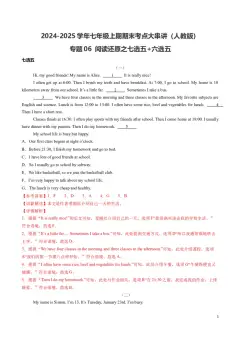
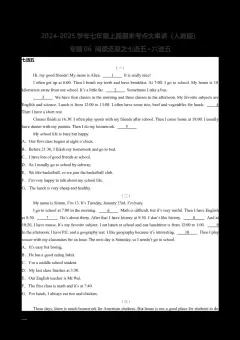
- 学生说完 → also 补充老师观点(F) (H)七选五 原文+答案+逐空解析 原文: In Finland, children do not always have classes in the classroom. (1)___ Finland has many forests(森林). Many schools are near trees and green places. Students sometimes walk out of their classrooms to take classes in forests. It’s a big part of their school life. (2)___ They can learn maths through(通过) activities like counting trees. They often learn science by watching different kinds of plants and animals. Sometimes they draw pictures of flowers in art classes. (3)___ Having classes in nature(大自然) helps students in many ways. It keeps them healthy because they can run and play. When everyone works together to make things better, they learn teamwork(团队合作). (4)___ Many students love the classes. “I’m always happy when I study in the forest,” one student says. “I can play under the trees and hear birds sing, not just read about them in books.” (5)___ Would you like to study at a school near a forest and have a class in nature—just like Finnish students do? 选项: A. What do students learn in forests? B. Nature is another “classroom” for them. C. It also teaches them to love and help nature. D. There are no desks or chairs in Finnish schools. E. These colourful class activities make learning so interesting! F. Teachers also think students can learn and grow well in forests. ✅正确答案: (1) B (2) A (3) E (4) C (5) F 把这篇解析拿给孩子看,告诉他:“连老师第一眼都会掉坑里,你不是不会翻译,你是没看懂它藏在暗处的线索。” 只要掌握了这个“找线索”的思维,七选五绝对是送分题! 关注“两间教室”,从幼儿园到初中,陪你看懂孩子成长的每一个细节。
1. 看代词:these / it / also 找前面对应的内容
2. 看段落功能:
- 罗列活动 → 后面总结活动有趣(E)
- 讲好处,有also → 继续加好处(C)
- 学生说完 → also 补充老师观点(F)
相关文档
- 三年级语文上册句子变换练习题
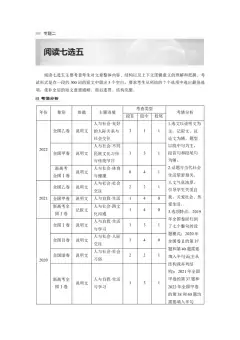
- 2025年高考英语大题突破限时集训(新高考通用)三轮冲刺大题精做 阅读七选五大题05 解析版
- 2025年高考英语大题突破限时集训(新高考通用)三轮冲刺大题精做 阅读七选五大题05 原卷版
- 人教二年级下册综合与实践数学连环画活动一连环画分享会全品教案26春
- 2023高考英语大题突破阅读理解七选五专题05解析版(新高考)
- 2024高考英语考前十天冲刺宝典 专题02 高考七选五真题31篇(思维导图+命题规律)解析版
- 2025年高考英语大题突破+限时集训(新高考通用)三轮冲刺大题精做:大题预测06七选五+完形填空(二)解析版
- 2025年高考英语三轮冲刺大题突破限时集训(新高考通用):大题预测05七选五+完形填空(一)解析版
- 2023高考英语大题突破阅读理解七选五专题05原卷版(新高考)
- 2024高考英语考前十天冲刺宝典:专题02考前必做高考七选五真题31篇(思维导图+命题规律)原卷版
- 2025年高考英语大题突破限时集训(新高考通用)三轮冲刺大题精做:大题预测05 七选五+完形填空(一)原卷版
- 2023高考英语大题突破阅读理解七选五专题03原卷版
- 2023高考英语大题突破阅读理解七选五专题03解析版
- 2024高考英语考试易错题易错点18七选五四大陷阱解析版
- 2024高考英语考试易错题易错点18七选五四大陷阱原卷版
- 2025年英语真题阅读理解七选五新高考I卷II卷及1月浙江卷学生版(2026版高考一二三轮复习)
- 2025年英语真题阅读理解七选五新高考I卷II卷及1月浙江卷学生版(2026版高考一二三轮复习)
- 三年级语文上册内容填空练习(老师整理打印版)
- 高考英语易错点18七选五四大陷阱解析版新高考
- 2025年英语真题阅读理解七选五新高考I卷II卷及1月浙江卷教师版(真题精做+考点探究+以读促写)
- 2025年英语真题阅读理解七选五新高考I卷II卷及1月浙江卷教师版(2026版高考一二三轮复习)
- 三年级上册数学计算图形周长问题专项
- 2024届中考英语题型过关专题七阅读理解七选五解题技巧解析版
- 2024届中考英语题型过关专题七阅读理解七选五解题技巧原卷版
- 5·3B·专题十三阅读补全(七选五)
- 5·3B·专题十三 阅读补全(七选五)(试题word)·专题十三阅读补全(七选五)(试题word)
- 四升五英语开学必背重点(五年级上册)
- 2026届高考英语一轮复习文章精读 25年新1卷七选五(文章+音频+视频)
- 2026年英语高考精讲近五年高考英语七选五及考情分析:七选五真题实操精讲6 用“四步法”+“先易后难”
- 高考英语七选五高效解题策略真题实操 四步法与先易后难 近五年高考七选五及考情分析
- 2026年高考英语七选五真题实操精讲9:四步法+先易后难(近五年高考英语七选五及考情分析)
- 2026年高考英语七选五真题实操精讲8:四步法+先易后难(近五年高考英语七选五及考情分析)
- 2026年高考英语七选五真题实操精讲7:四步法+先易后难(近五年高考英语七选五及考情分析)
- 高考英语七选五真题实操精讲5:四步法与先易后难(近五年真题及考情分析)
- 高考英语七选五真题实操精讲4:四步法与先易后难(近五年真题及考情分析)
- 2026年高考英语七选五真题实操精讲3:四步法+先易后难(近五年七选五及考情分析·一二三轮复习)
- 2026年高考英语七选五真题实操精讲2:四步法+先易后难(近五年七选五及考情分析·一二三轮复习)
- 2026高考英语专项复习:七选五真题实操精讲15——用“四步法”+“先易后难”(近五年高考七选五及考情分析)
- 2026年高考英语专项复习精讲:近五年高考英语七选五及考情分析之七选五真题实操精讲14——用“四步法”+“先易后难”
- 2026年高考英语专项复习精讲:近五年高考英语七选五及考情分析之七选五真题实操精讲13——用“四步法”+“先易后难”
- 2026年高考英语专项复习 近五年高考英语七选五及考情分析 真题实操精讲12 四步法与先易后难
- 2026年高考英语专项复习 近五年高考英语七选五及考情分析 真题实操精讲10 四步法与先易后难
- 统编版语文五年级上册《七彩课堂》教案 连环画模板
- 2023高考英语二轮复习七选五阅读专题对点讲练第2讲解题策略
- 2023高考英语二轮复习七选五阅读专题对点讲练第1讲命题规律解析
- 2023年高考英语七选五解题技巧解析版
- 2023年高考英语七选五解题技巧原卷版
- 2026届高考英语七选五真题实操精讲16四步法与先易后难讲义
- 人教版七年级下册英语专题06阅读还原七选五六选五期末必刷15篇解析版期末考点大串讲
- 人教版七年级下册英语专题06阅读还原七选五六选五期末必刷15篇原卷版期末考点大串讲
- 二年级下册数学期末复习重点必练资料
- 四年级下册语文第八单元基础练习一线老师整理版
- 二年级下册数学列式计算应用题期末重点考点练习
- 七选五
- 5·3B·专题十三 阅读补全(七选五)(专题资料包)·专题十三阅读补全(七选五)(专题资料包)
- 人教版九年级全册英语专题16选择句子补全短文七选五教师版专项练习
- 人教版九年级全册英语专题16选择句子补全短文七选五学生版专项练习
- 考点19记叙文类七选五(解析版)
- 考点19记叙文类七选五(原卷版)
- 考点18说明文类七选五(解析版)
- 考点18说明文类七选五(原卷版)
- 二年级数学暑假作业二升三暑假学习提升练习
- 二年级下册数学期末常考典型例题 老师精心整理 家长打印练习
- 二年级下册数学1-8单元易错题整理归纳
- 二年级下册数学填空专项练习题(期末常考题老师汇总)
- 2024高考英语专题12阅读理解七选五(学生版)
- 高考英语2024年二轮热点题型归纳与变式演练专题14阅读七选五(解析版·新高考)
- 考点巩固卷16七选五(解析版)
- 考点巩固卷16七选五(原卷版)
- 2023年高考英语二轮复习新高考版第1部分阅读理解与七选五专题2第3讲根据逻辑关系化解阅读七选五
- 2023年高考英语二轮复习新高考版第1部分阅读理解与七选五专题2第2讲依据线索词汇巧解阅读七选五
- 2023年高考英语二轮复习新高考版第1部分阅读理解与七选五专题2第1讲利用设空位置快解阅读七选五
- 人教二年级下册数学连环画绿卡图书教案26春
- 2024高考英语专题12阅读理解七选五(教师版)
- 2024年高考一模试题分类汇编英语七选五(解析版·新高考七省专用)
- 小学语文一年级重点知识归纳(家长收藏)
- 2024高考英语二轮热点题型阅读七选五专题14原卷版(新高考)
- 专题11阅读七选五(答题模板)(解析版)
- 2025届高考英语名校模拟真题速递 专题03七选五12篇 第二期 教师版 新高考八省专用
- 2024年高考一模试题分类汇编英语新高考七省专用专项复习03七选五原卷版
- 2025高考英语专题12阅读理解七选五(北京专用)(学生版)
- 二年级语文下册期末检测卷(一线老师整理版)
- 二年级语文下册基础知识重点汇总 13页 词语搭配多音字组词四字成语及解释 期末复习打印资料
- 2023年高考英语二轮复习全国版第1部分阅读理解与阅读七选五专题2第3讲根据逻辑关系化解阅读七选五
- 2023年高考英语二轮复习全国版第1部分阅读理解与阅读七选五专题2第2讲依据线索词汇巧解阅读七选五
- 2023年高考英语二轮复习全国版第1部分阅读理解与阅读七选五专题2第1讲利用设空位置快解阅读七选五
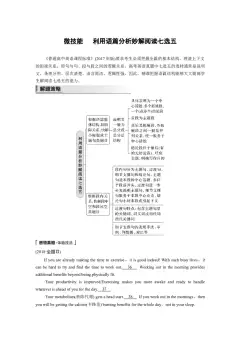
- 2023年高考英语二轮复习全国版第1部分阅读理解与阅读七选五专题2微技能利用语篇分析妙解阅读七选五
- 幼升小幼小衔接必知反义词学习资料
- 英语完形填空必背28组重点短语固定搭配 一线老师整理版
- 2025高考英语专题12阅读理解七选五(北京专用)(教师版)
- 小学数学求阴影面积难点重点练习 可收藏打印
- 专题11阅读七选五(答题模板)(原卷版)
- 高中英语60课时第15讲高考题型七选五解题方法及实战
- 一升二数学暑假作业25天(暑期衔接打印练习)
- 2025年高考英语大题突破+限时集训 大题05 阅读七选五 学生版 新高考通用
- 笔杆子每日晨读思维导图:坚持“四把标尺”做“四有”好老师(教育、教师节话题)
- 小学数学三年级第六单元测试卷(期末复习可打印)
- 二年级下册语文期末复习知识点汇总
- 2025年高考英语大题突破限时集训(新高考通用)专项复习 阅读七选五 教师版
- 2025年高考英语热点话题题型专练体育健康七选五教师版