机器人掌勺餐厅时文:完形+选择题、小程序点读跟读、双语视频与可打印PDF全套配齐
初二这一年,很多孩子英语成绩第一次出现“断崖”——不是不背单词,而是一碰到完形和单选就烦:“老外根本不这么说话!”上周和临夏回族自治州一位初二妈妈聊,她女儿也这样:追星刷剧时英语溜得很,一到语法填空就摔笔,被老师说“浮躁”。其实孩子不是态度差,是没在真实语境里见过那些“死规则”怎么活起来。今天这篇太原机器人餐厅的时文,正好把 order、serve 这些课标词放进点餐、炒菜、上菜的全流程里,让孩子先看见语言怎么用,再回头理解考试为什么那么考。
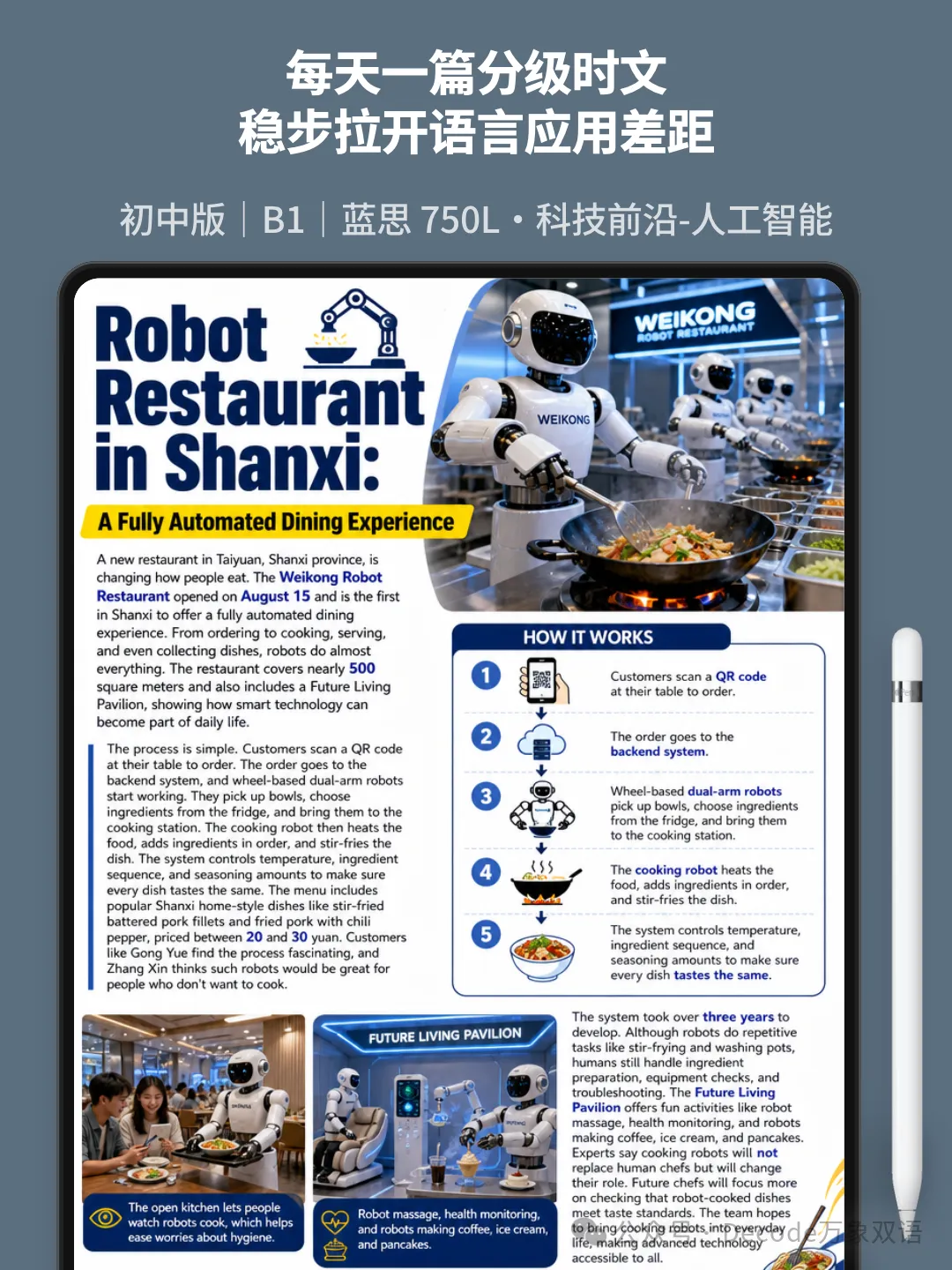
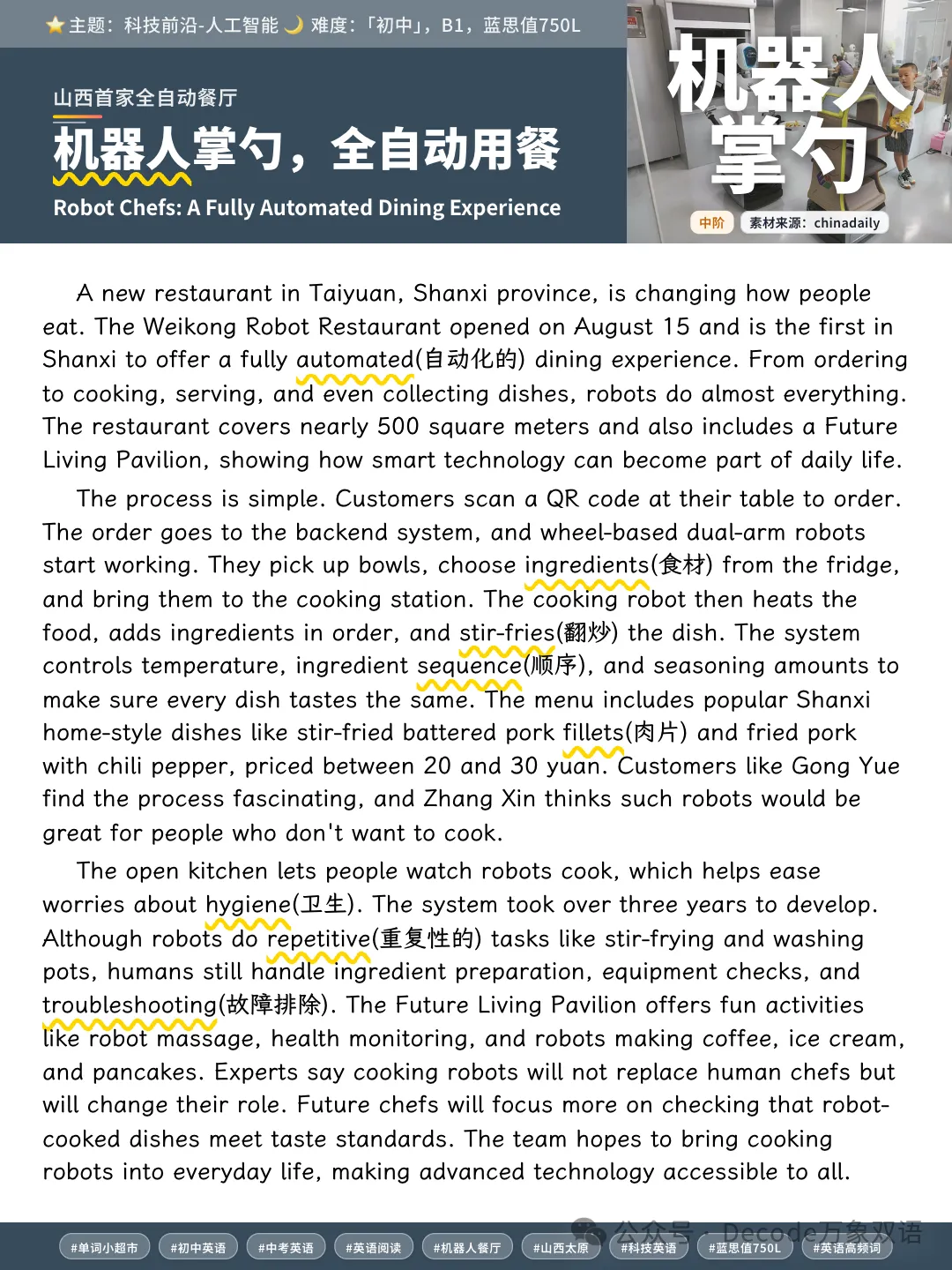
Robot Restaurant in Shanxi: A Fully Automated Dining Experience
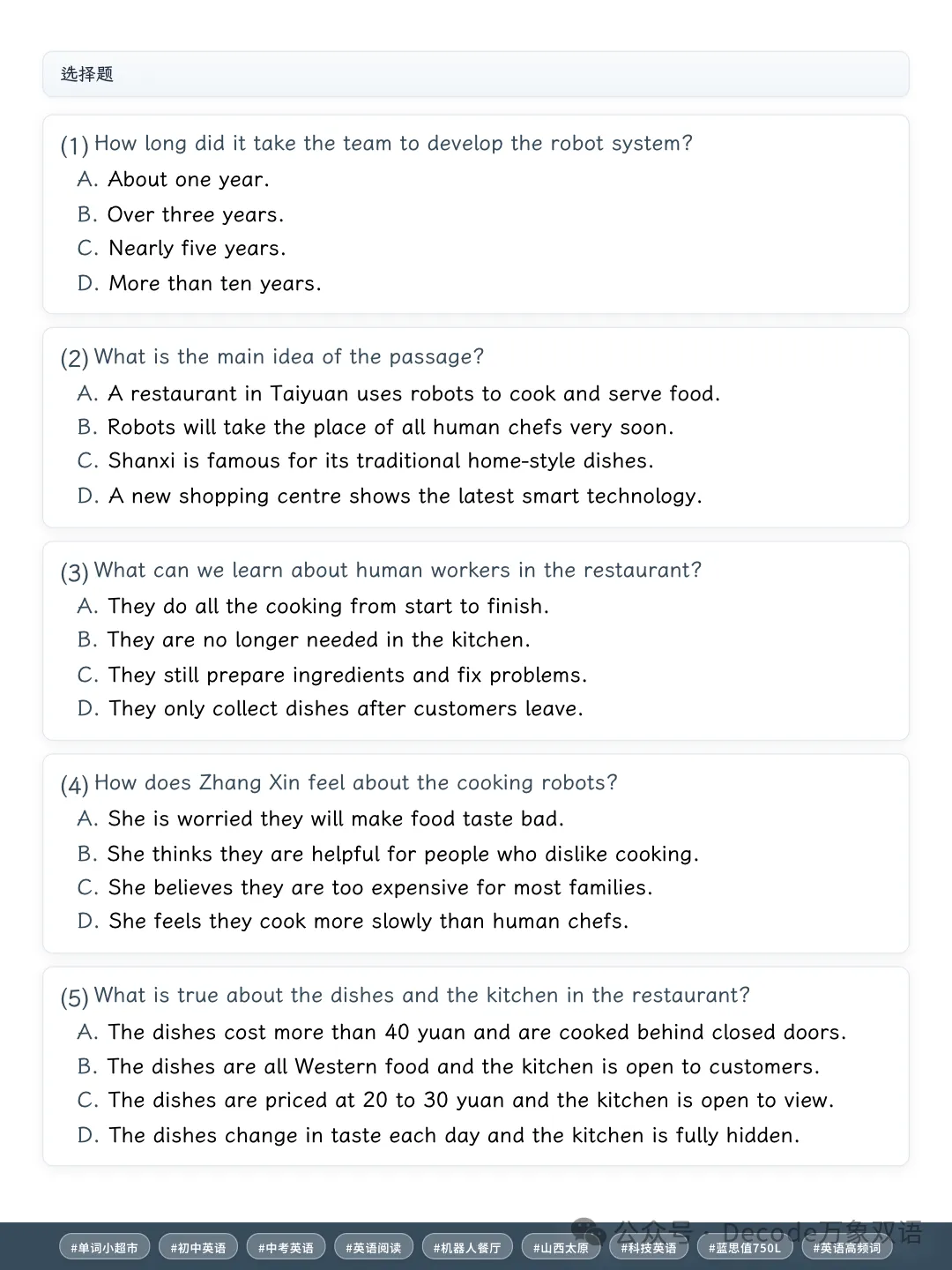
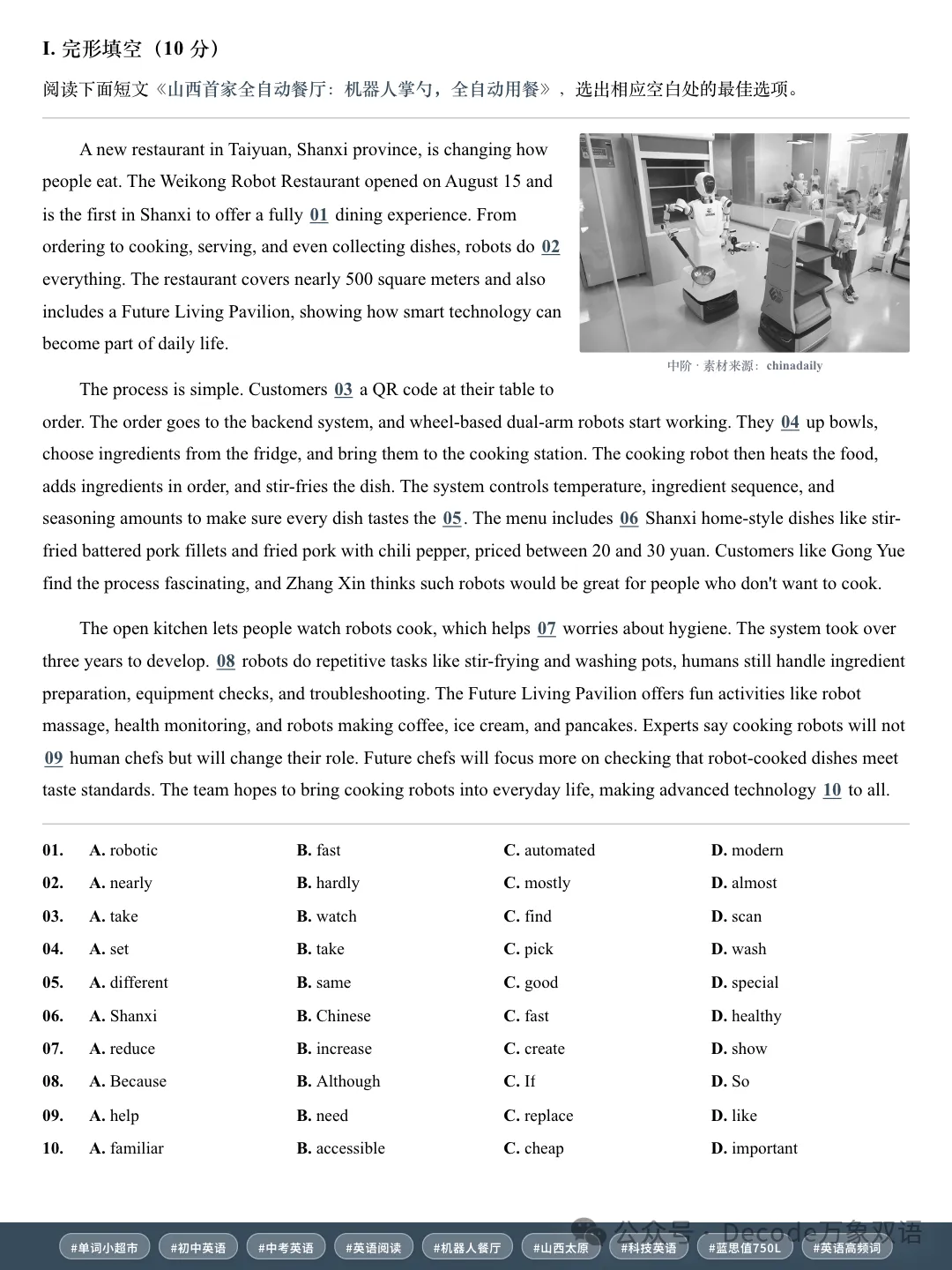
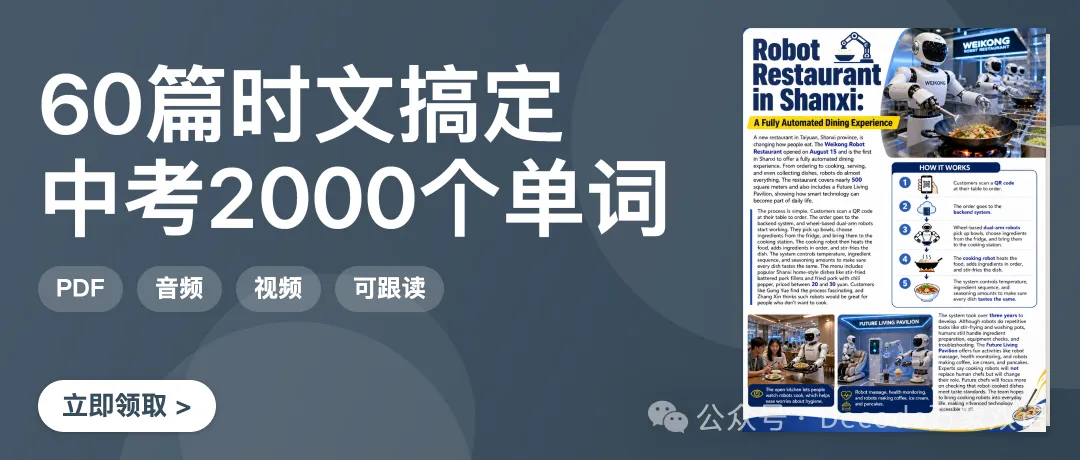
A new restaurant in Taiyuan, Shanxi province, is changing how people eat. The Weikong Robot Restaurant opened on August 15 and is the first in Shanxi to offer a fully automated(自动化的) dining experience. From ordering to cooking, serving, and even collecting dishes, robots do almost everything. The restaurant covers nearly 500 square meters and also includes a Future Living Pavilion, showing how smart technology can become part of daily life.
The process is simple. Customers scan a QR code at their table to order. The order goes to the backend system, and wheel-based dual-arm robots start working. They pick up bowls, choose ingredients(食材) from the fridge, and bring them to the cooking station. The cooking robot then heats the food, adds ingredients in order, and stir-fries(翻炒) the dish. The system controls temperature, ingredient sequence(顺序), and seasoning amounts to make sure every dish tastes the same. The menu includes popular Shanxi home-style dishes like stir-fried battered pork fillets(肉片) and fried pork with chili pepper, priced between 20 and 30 yuan. Customers like Gong Yue find the process fascinating, and Zhang Xin thinks such robots would be great for people who don't want to cook.
The open kitchen lets people watch robots cook, which helps ease worries about hygiene(卫生). The system took over three years to develop. Although robots do repetitive(重复性的) tasks like stir-frying and washing pots, humans still handle ingredient preparation, equipment checks, and troubleshooting(故障排除). The Future Living Pavilion offers fun activities like robot massage, health monitoring, and robots making coffee, ice cream, and pancakes. Experts say cooking robots will not replace human chefs but will change their role. Future chefs will focus more on checking that robot-cooked dishes meet taste standards. The team hopes to bring cooking robots into everyday life, making advanced technology accessible to all.
山西机器人餐厅:全自动用餐体验
山西省太原市新开的一家餐厅正在改变人们的用餐方式。味空机器人餐厅于8月15日开业,是山西首家提供全自动用餐体验的餐厅。从点餐到烹饪、上菜甚至收餐,几乎一切由机器人完成。餐厅占地近500平方米,还设有未来生活馆,展示智能技术如何融入日常生活。
流程很简单。顾客在餐桌扫描二维码点餐,订单传到后台系统,轮式双臂机器人开始工作。它们取碗、从冰箱选食材,并送到烹饪站。烹饪机器人随后加热食物、按顺序加料并翻炒。系统控制温度、食材顺序和调料用量,确保每道菜口味一致。菜单包括炒肉片、辣椒炒肉等受欢迎的山西家常菜,价格在20至30元之间。顾客龚悦觉得整个过程很有趣,张欣认为这样的机器人对不想做饭的人来说很棒。
开放式厨房让顾客观看机器人烹饪,有助于消除对卫生的担忧。该系统研发耗时三年多。虽然机器人负责翻炒、洗锅等重复性任务,但人类仍负责食材准备、设备检查和故障排除。未来生活馆提供机器人按摩、健康监测以及机器人制作咖啡、冰淇淋和煎饼等趣味活动。专家表示,烹饪机器人不会取代人类厨师,但会改变他们的角色。未来的厨师将更专注于检查机器人烹饪的菜肴是否符合口味标准。团队希望将烹饪机器人带入日常生活,让先进技术惠及所有人。
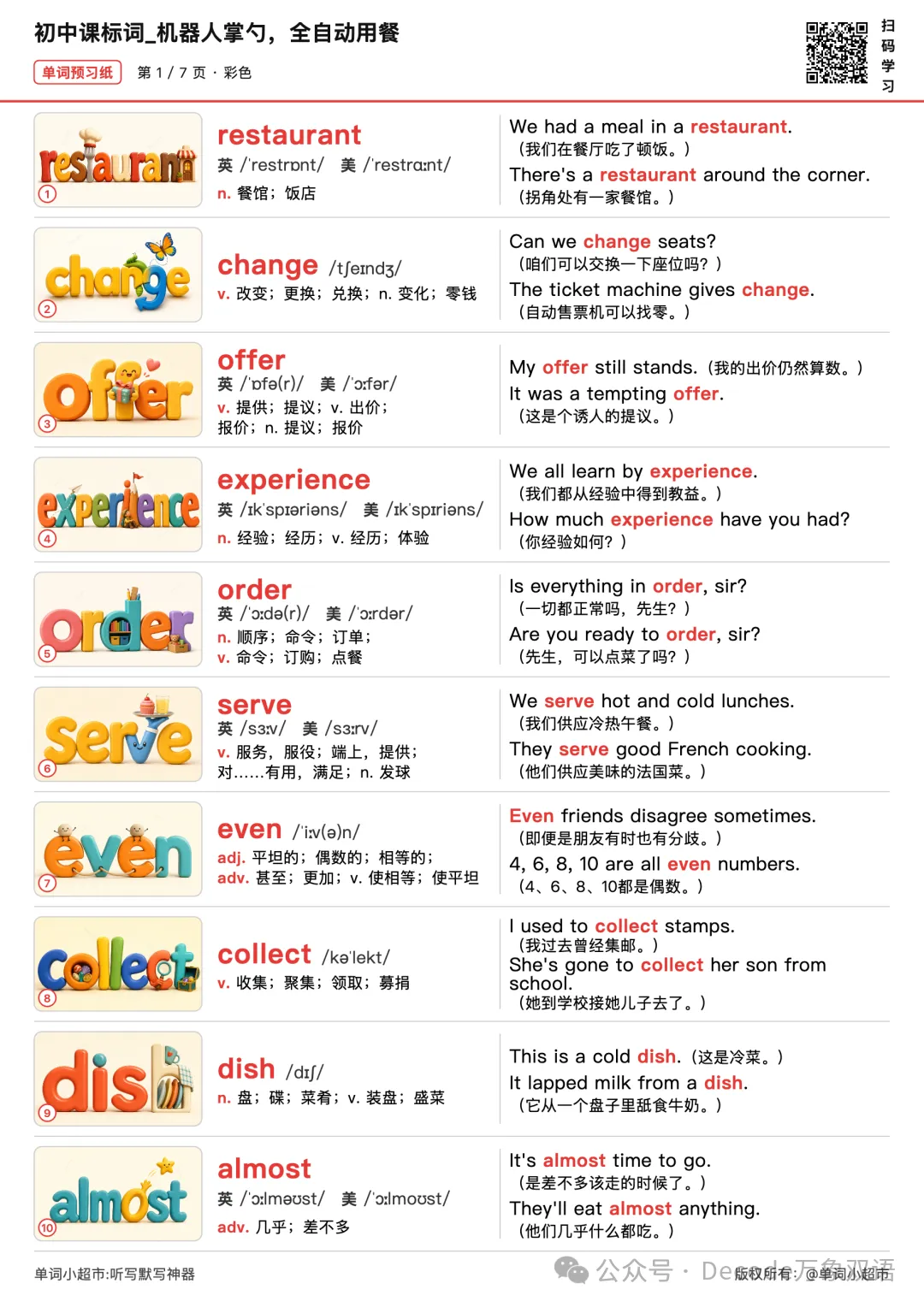
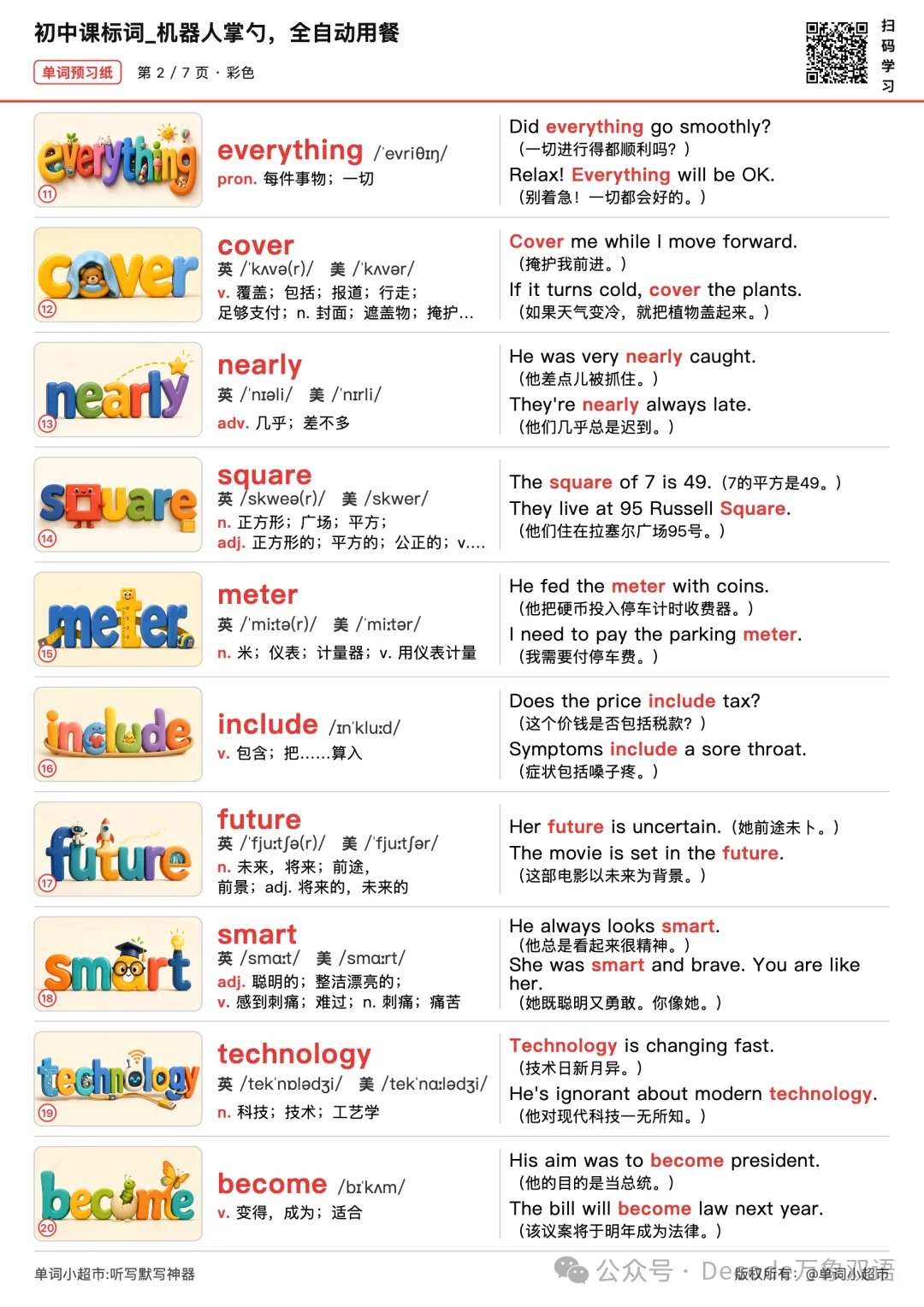
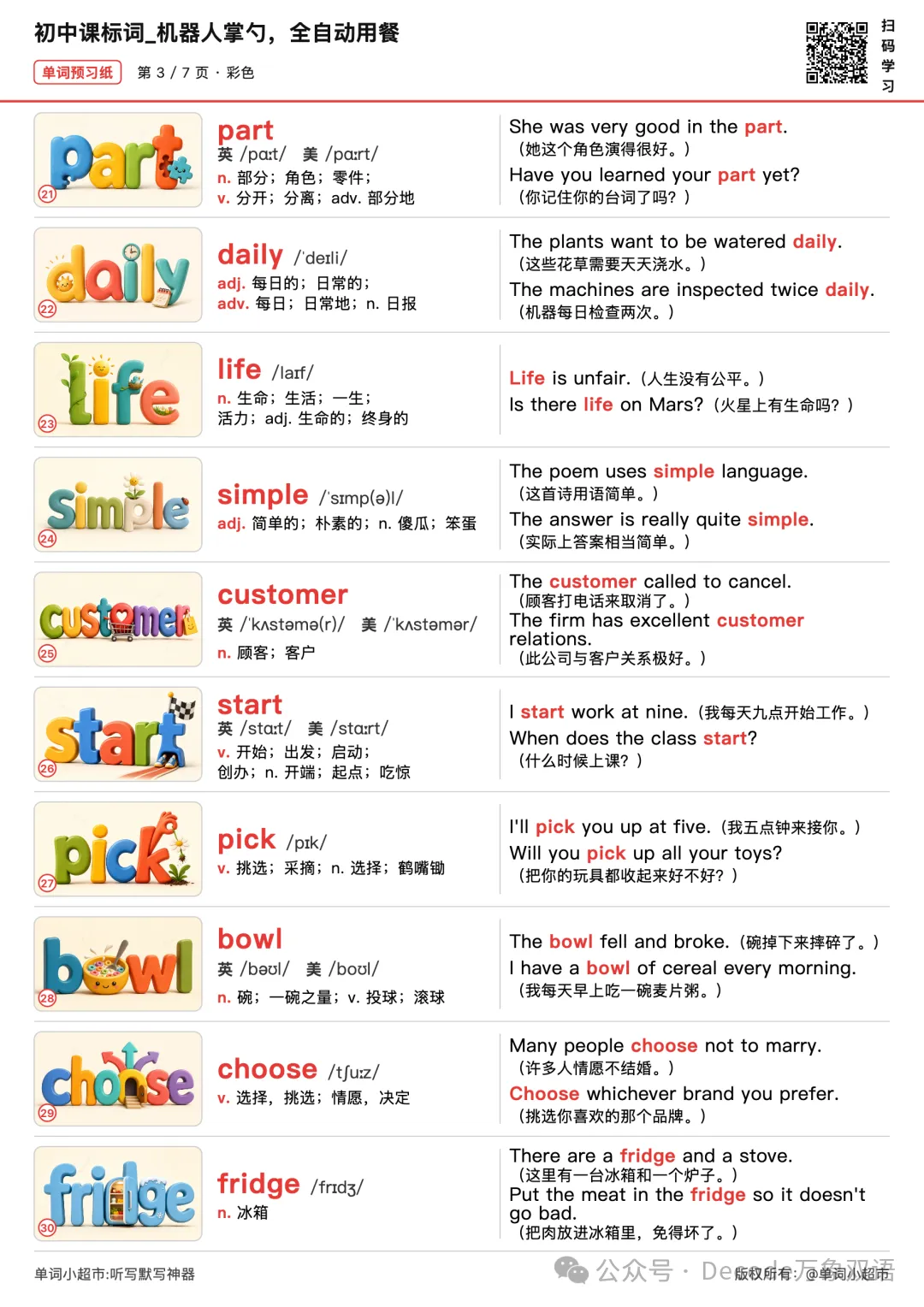
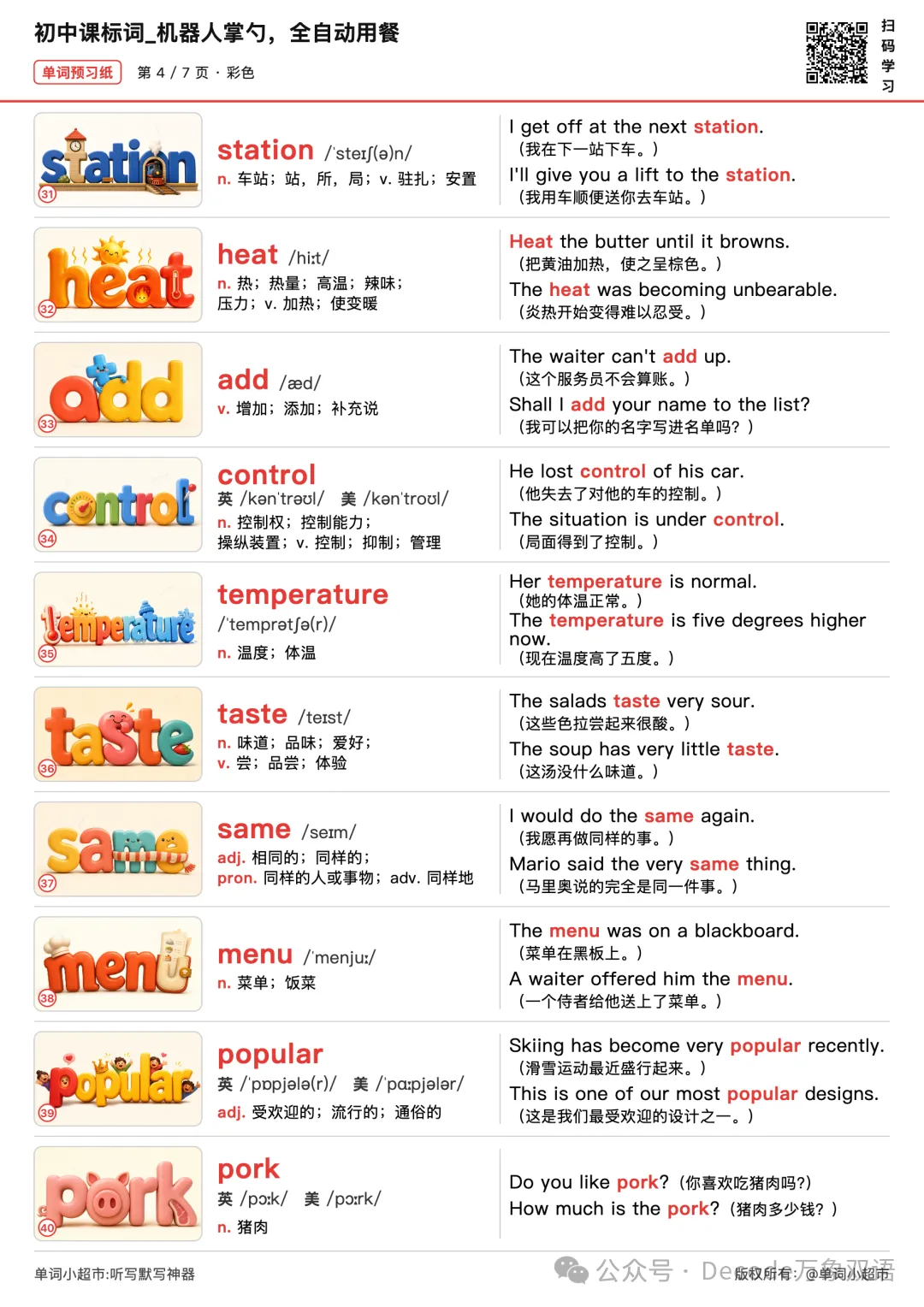
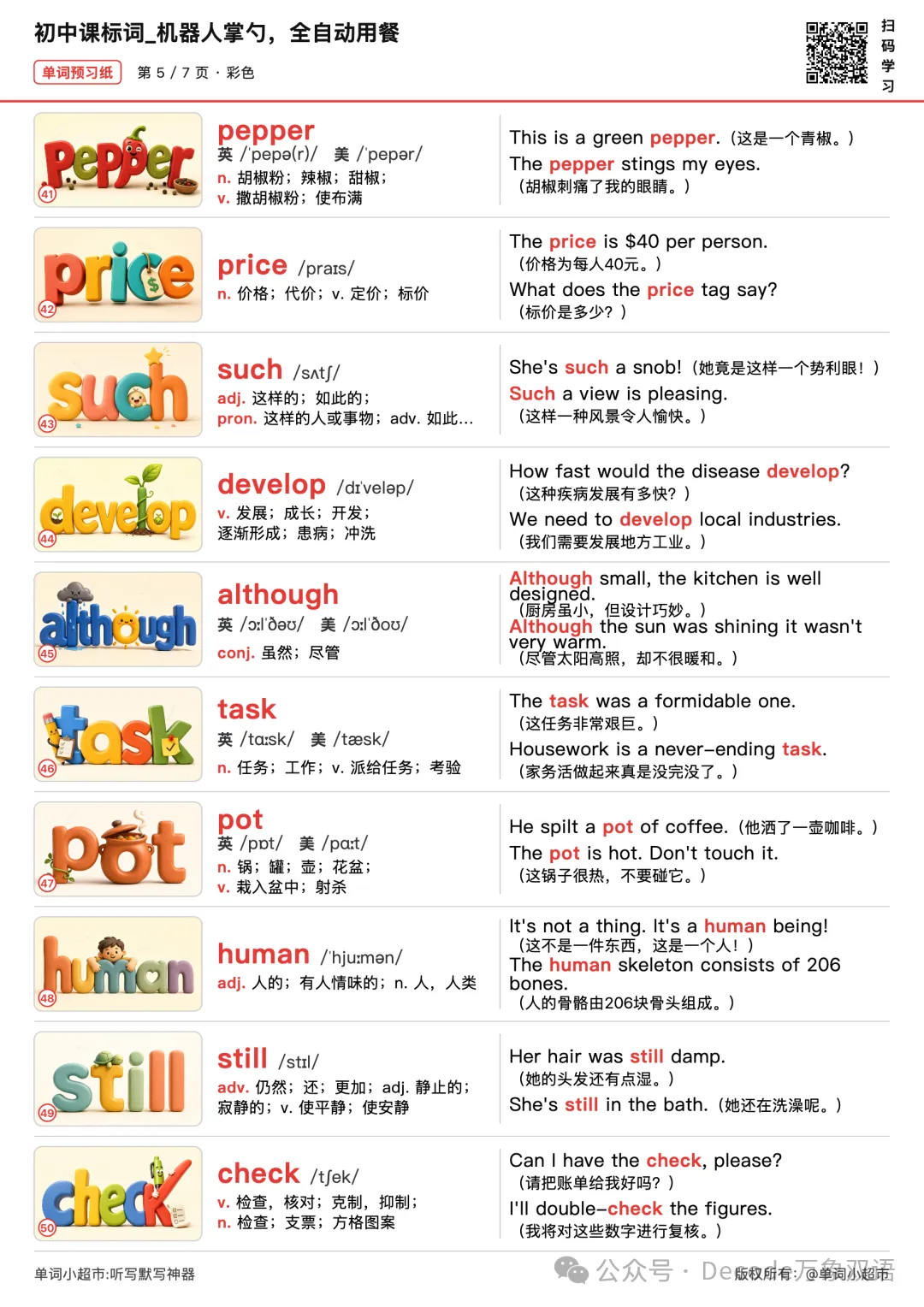
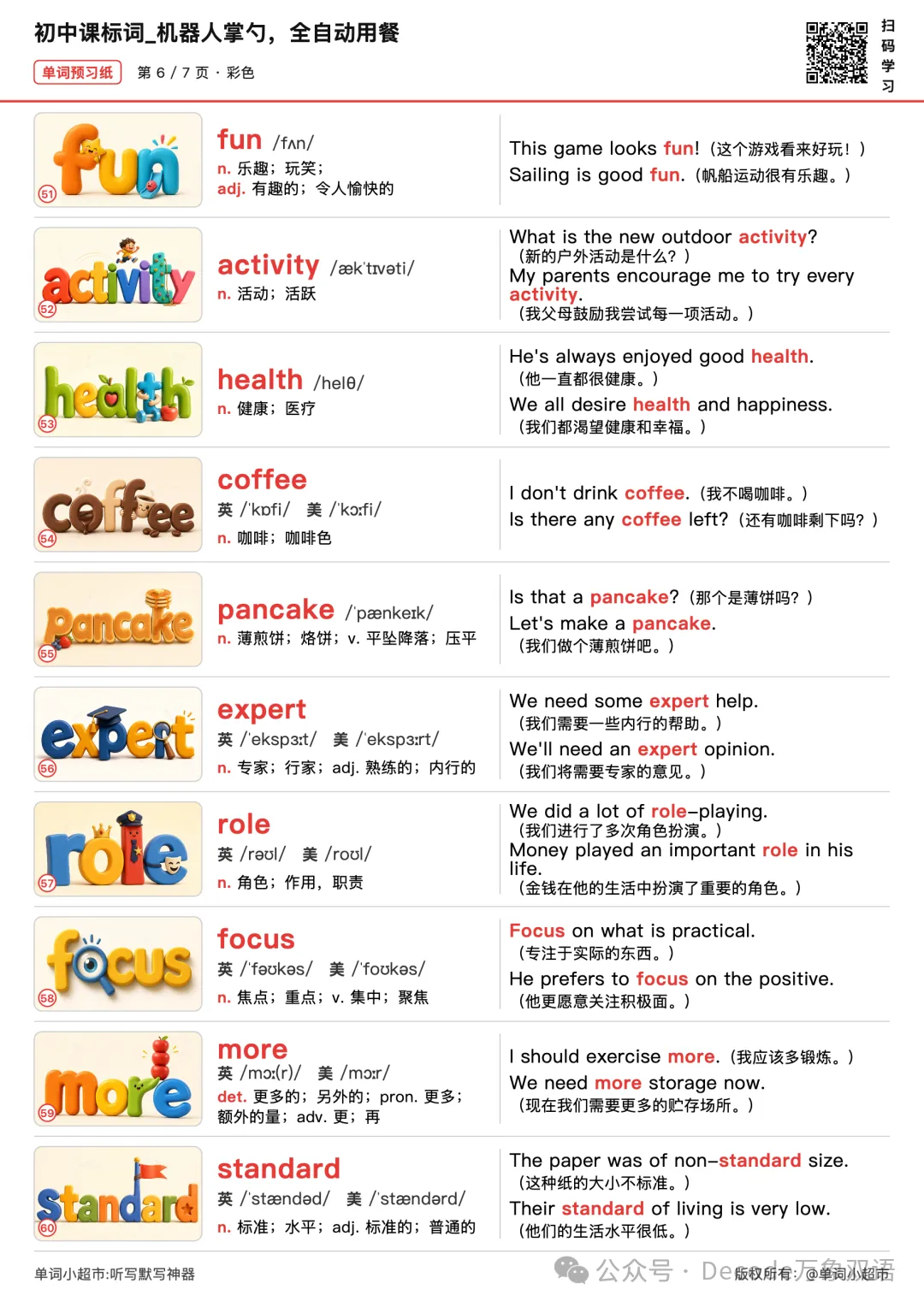
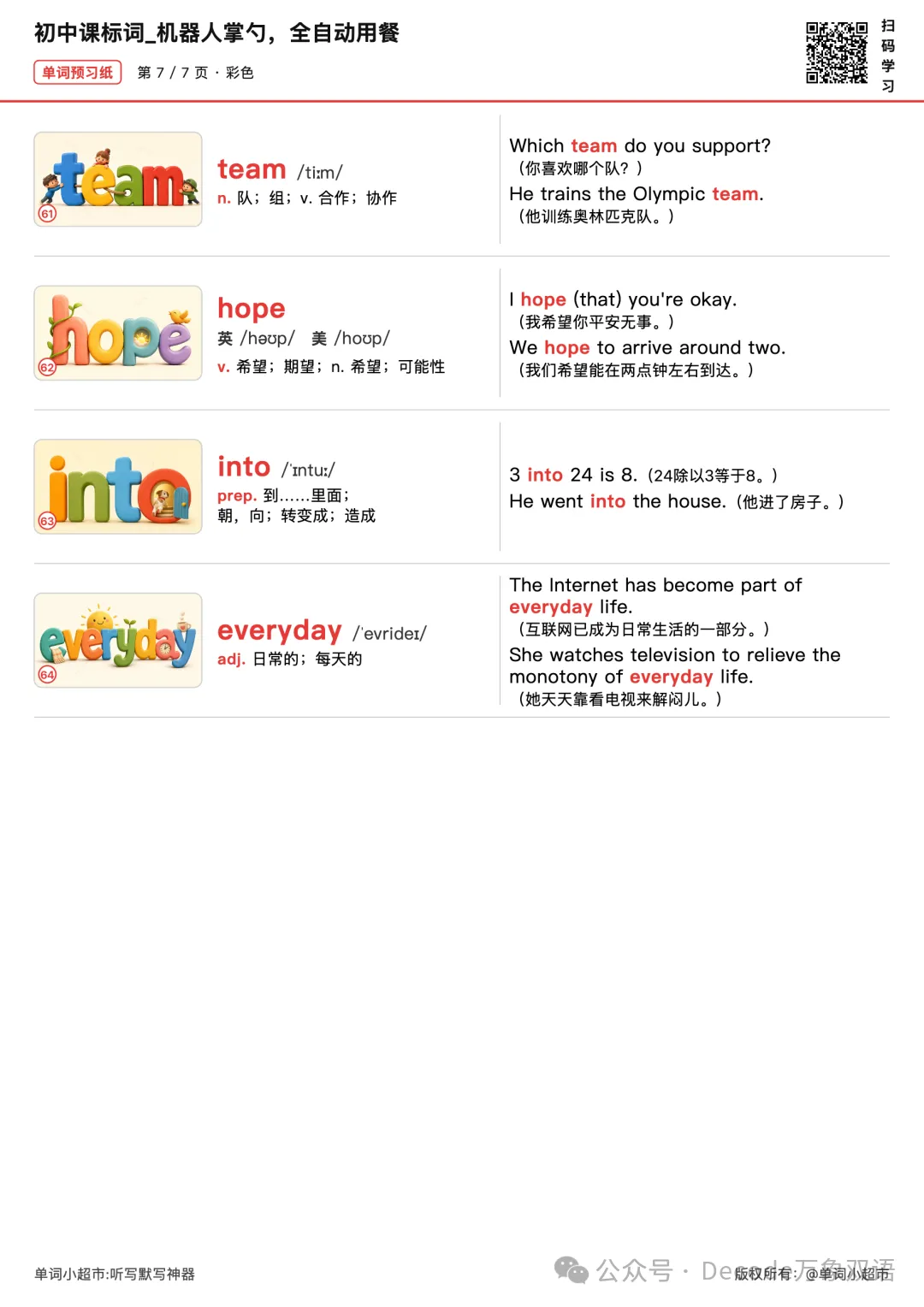
初中课标词
/ˈrestrɒnt/ | |
/tʃeɪndʒ/ | |
/ˈɒfə(r)/ | |
/ɪkˈspɪəriəns/ | |
/ˈɔːdə(r)/ | |
/sɜːv/ | |
/ˈiːv(ə)n/ | |
/kəˈlekt/ | |
/dɪʃ/ | |
/ˈɔːlməʊst/ | |
/ˈevriθɪŋ/ | |
/ˈkʌvə(r)/ | |
/ˈnɪəli/ | |
/skweə(r)/ | |
/ˈmiːtə(r)/ | |
/ɪnˈkluːd/ | |
/ˈfjuːtʃə(r)/ | |
/smɑːt/ | |
/tekˈnɒlədʒi/ | |
/bɪˈkʌm/ | |
/pɑːt/ | |
/ˈdeɪli/ | |
/laɪf/ | |
/ˈsɪmp(ə)l/ | |
/ˈkʌstəmə(r)/ | |
/stɑːt/ | |
/pɪk/ | |
/bəʊl/ | |
/tʃuːz/ | |
/frɪdʒ/ | |
/ˈsteɪʃ(ə)n/ | |
/hiːt/ | |
/æd/ | |
/kənˈtrəʊl/ | |
/ˈtemprətʃə(r)/ | |
/teɪst/ | |
/seɪm/ | |
/ˈmenjuː/ | |
/ˈpɒpjələ(r)/ | |
/pɔːk/ | |
/ˈpepə(r)/ | |
/praɪs/ | |
/sʌtʃ/ | |
/dɪˈveləp/ | |
/ɔːlˈðəʊ/ | |
/tɑːsk/ | |
/pɒt/ | |
/ˈhjuːmən/ | |
/stɪl/ | |
/tʃek/ | |
/fʌn/ | |
/ækˈtɪvəti/ | |
/helθ/ | |
/ˈkɒfi/ | |
/ˈpænkeɪk/ | |
/ˈekspɜːt/ | |
/rəʊl/ | |
/ˈfəʊkəs/ | |
/mɔː(r)/ | |
/ˈstændəd/ | |
/tiːm/ | |
/həʊp/ | |
/ˈɪntuː/ | |
/ˈevrideɪ/ |
教研精读笔记:在机器人餐厅里,把课标词“用”明白
1. order:从“点餐”到“顺序”,一个词串起整篇文章
短文里两次用到 order:顾客 scan a QR code to order(扫码点餐),系统控制 ingredient sequence and seasoning amounts——这里的 order 就藏在 sequence 背后,指“顺序”。很多孩子完形填空一看到 order 就只想到“命令”,结果在“in order to”“out of order”“place an order”之间反复丢分。本文给了最生动的语境:机器人按顺序加料,靠的就是 order。中考写作里,想表达“有条理地做某事”,把 do things carefully 换成 do things in order,立刻高一个档次。
2. serve:不只是“服务”,更是“端上桌、供应”
原文说 robots do almost everything—from ordering to cooking, serving, and even collecting dishes。serve 在这里是“上菜、端上桌”,不是抽象的“服务”。中考完形常考 serve 的搭配:serve customers(服务顾客)、serve food(上菜)、serve as(充当)。阅读辨析里,serve 和 offer 容易混:offer 偏“主动提供”,serve 偏“把做好的东西端给某人”。写作中,想夸一家店“服务好”,别只写 good service,可以写 The restaurant serves customers well,动词用起来,句子就活了。
3. change:熟词生义,从“改变”到“改变角色”
第一段 is changing how people eat,change 是“改变”;最后一段 Cooking robots will not replace human chefs but will change their role,change 又落到“改变角色”上。change 是中考高频动词,完形里常考 change...into...(把……变成……)、change one’s mind(改变主意)。阅读辨析中,change 和 become 也常放一起考:change 强调“变化动作”,become 强调“变化结果”。写作替换上,把“越来越多人用机器人”写成 More and more people are changing the way they live,比用 use 更有动态感。
点睛:单词在流动的语境里才有生命
孤立背 order=命令、serve=服务,孩子记住的只是标签;放回机器人餐厅的完整流程里,order 是点餐也是顺序,serve 是上菜也是服务,change 是改变也是角色转变。语境让单词“活”起来,孩子才能在完形和阅读里一眼认出它、在写作里自然用出来。
今晚读完这篇,就能做:打开单词小超市小程序,让孩子跟着音频把全文跟读一遍,再对照本篇配套的视频和 PDF 精读——里面的选择题和完形填空,正好把 order、serve、change 这三个词在真实语境里再练一遍。别贪多,一篇文章吃透三个词,比刷十篇都有用。
💡 【许乃夫老师 · 本期学情诊断】
(许乃夫/UncleJack:前新东方20周年功勋教师,前剑桥KET、PET口语考官)
本期学生案例:临夏回族自治州初二女生,市区优质公立初中,英语兴趣浓、追星追剧都爱用英语,但极度反感完形填空和单项选择的语法规则,被老师批“态度浮躁”,应试成绩被压制。
难在哪儿:她不是学不会,是觉得“老外不这么说话”,把语感和应试对立起来了。其实缺的是在真实语境里见够“规则怎么用”,而不是硬背规则。
接下来一周能做的三个建议:
1. 每天挑一篇她感兴趣的时文(科技、明星、美食都行),先读通意思,再回头找文中出现的课标词,让她自己说“这个词在这里什么意思”,建立“词在句子里”的直觉。
2. 完形和单选错题别急着讲语法,先让她把整句翻译成中文,再问“如果老外说这句话,会怎么讲”,把规则还原成表达需要,消解对抗情绪。
3. 如果词汇量少、想短期突破,推荐每天一组我们教研组精心编排的中考/高考 688 高频词预习单,按主题成组记忆,配合语境例句,比孤立背单词快得多,也更容易坚持。
别再刷三千词表了:688个高考高频词,一页十词,把义项钉进句子