

斑马为什么有条纹?最常见的答案也是 Camouflage——黑白条纹可以让狮子看不清,或者一群斑马跑起来以后条纹混在一起,捕食者分不清到底该追哪一只。听起来非常合理。问题是:科学研究并不特别支持这个经典答案。2014 年,一项发表于 Nature Communications 的研究把几个最著名的解释——camouflage、predator avoidance、heat management、social interaction、biting flies——放进同一个比较模型,结果真正稳定和斑马条纹分布相关的,不是狮子,而是 blood-sucking flies。后来实验更直接:2019 年,研究者给普通马穿上黑色外套、白色外套和 zebra-striped coat,然后观察 horseflies 怎么飞。结果:苍蝇照样接近,但是到了最后准备 landing 的时候,条纹开始起作用了——很多苍蝇飞过头、撞一下,或者根本停不下来。所以斑马条纹可能不是在告诉狮子"你看不见我",而是在告诉一只小小的 horsefly:"Good luck landing."
Tim Caro et al.,Published: 1 April 2014
研究者系统比较了 5 类长期流行的解释,并结合不同 equid 物种、亚种的条纹程度与环境变量进行分析。结果发现:条纹程度与 tabanid biting fly activity 和部分 tsetse fly 分布存在较稳定关联;而研究没有发现对 camouflage、predator avoidance、heat management、social interaction 的同等一致支持。
原文链接:nature.com/articles/ncomms4535
Tim Caro et al.,Published: 20 February 2019
研究直接比较活体 zebras 和 domestic horses 周围 horsefly 的行为,还让同一匹马依次穿 black coat、white coat、striped coat。结果显示:条纹并没有明显减少苍蝇从远处 approach / circle,但是明显减少了最终 successful landings。
原文链接:journals.plos.org/plosone/article?id=10.1371/journal.pone.0210831
后续研究继续问:到底是条纹的宽度?黑白 contrast?polarization?还是某种视觉错觉?实验发现:强烈黑白 contrast 和被打碎的小型 dark patches 特别有效;大面积、连续的深色区域更容易吸引 horseflies。研究者认为:斑马细密条纹可能通过 breaking up large dark regions,降低苍蝇在最后接近阶段成功着陆的概率。
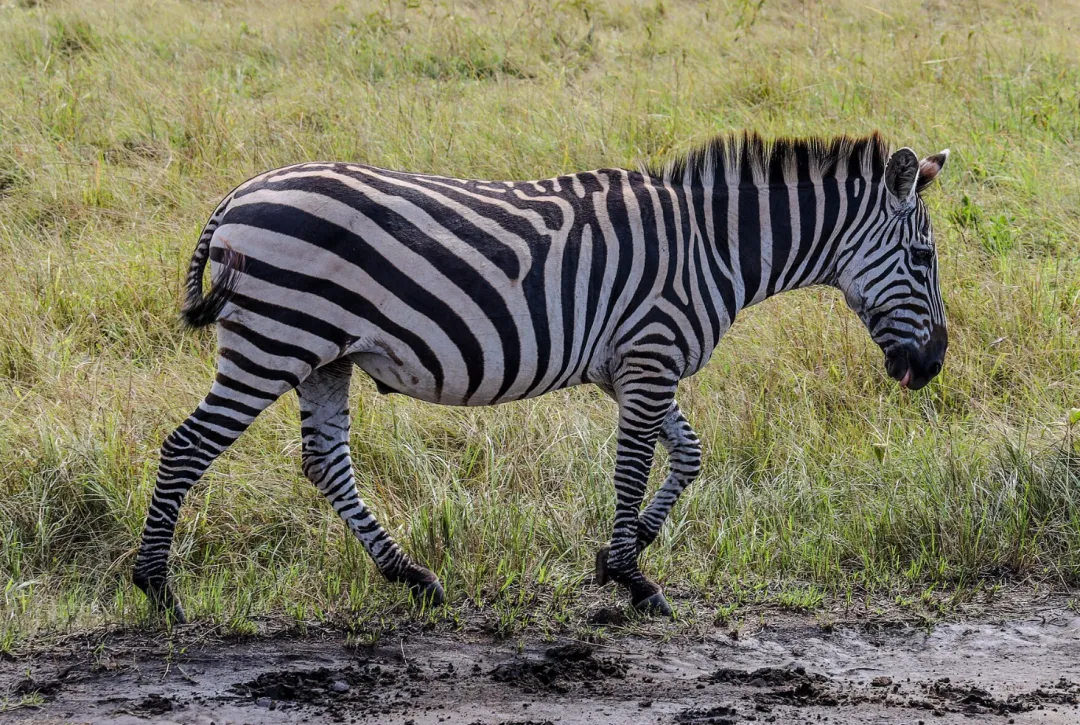
For more than a century, scientists have debated why zebras evolved such dramatic black-and-white coats. One obvious explanation is camouflage. Perhaps the stripes help zebras blend into grass or confuse predators such as lions when a herd begins to run. Other ideas have suggested that stripes help zebras recognize one another, regulate body temperature or avoid biting insects.
The difficulty is that all of these explanations sound reasonable. Science therefore needs more than a good story.
In 2014, researchers compared the major hypotheses systematically. They examined how strongly different zebra and equid populations were striped and compared those patterns with environmental factors. If predators were the main evolutionary pressure, stronger striping might be expected where predator pressure was greater. If cooling were the key, striping should correspond closely with temperature. Instead, one of the strongest and most consistent relationships involved biting flies. Regions associated with greater activity of tabanid horseflies and tsetse flies tended to be associated with stronger striping.
This was useful evidence, but it still did not explain how stripes protected an animal. Researchers therefore moved from geographic comparison to direct experiments.
In a 2019 study, scientists observed horseflies around captive zebras and domestic horses living in similar conditions. The flies approached and circled both types of animals at similar rates. The difference appeared at the final stage. Horseflies landed much less successfully on zebras. High-speed video showed that flies approaching ordinary horses usually slowed down before landing. Near zebras, however, many continued flying too fast, passed over the animal or collided briefly with the coat instead of making a controlled landing.
The researchers then performed a clever control experiment. Domestic horses wore black, white and zebra-striped cloth coats on different occasions. Because the same horse could wear all three patterns, smell, body shape and much of the animal's behavior remained constant. Again, far fewer flies successfully landed on the striped coat than on the plain black or white coats. Interestingly, the horse's uncovered head did not gain this protection. That result helped show that the pattern itself — rather than simply some difference between horses and zebras — influenced fly behavior.
But one puzzle remained. Why exactly do stripes interfere with landing? Researchers have proposed several mechanisms. Stripes might create misleading motion signals, disrupt the visual outline of a large dark object, or interact with the limited resolution of a fly's visual system.
A 2023 experiment tested horses wearing many different patterns. Large dark regions attracted more landings, while sharply contrasting patterns broken into smaller dark areas attracted fewer. This supported the idea that stripes interfere with the visual information flies use during close approach.
Even so, the exact mechanism continues to be refined. That is an important part of the story. Scientists can have strong evidence that a trait provides a benefit before they completely understand the sensory mechanism producing that benefit.
The zebra's stripes may no longer be quite the mystery they once were. But "we know what they help with" is not always the same as "we know exactly how they work."
Camouflage 为什么流传这么久?因为它 sounds plausible——黑白条纹、一群斑马、高速奔跑、狮子眼花,故事非常完整。但科学需要问:What prediction does this explanation make?然后拿真实数据去比。2014 年的跨物种、跨地区比较没有发现 predator avoidance 和 striping 之间同样一致的关系,却发现了 biting-fly 变量。
它主要做的是 comparative analysis:比较不同物种、亚种、地理范围、环境变量。它发现 striping 和 biting fly exposure 关系最稳定,但这首先属于 association evidence——不是把一群斑马随机分成"有条纹"和"没条纹"。
为什么这个实验强很多?假如只比较 zebra 和 horse,你会遇到大量 confounding variables:它们可能气味不同、行为不同、毛发不同、体型也有差异。所以研究人员干脆用 the same horse 换不同外套。
Same horse + white coat
Same horse + striped coat
→ 气味、体型、行为基本恒定,关键变量更接近 pattern。
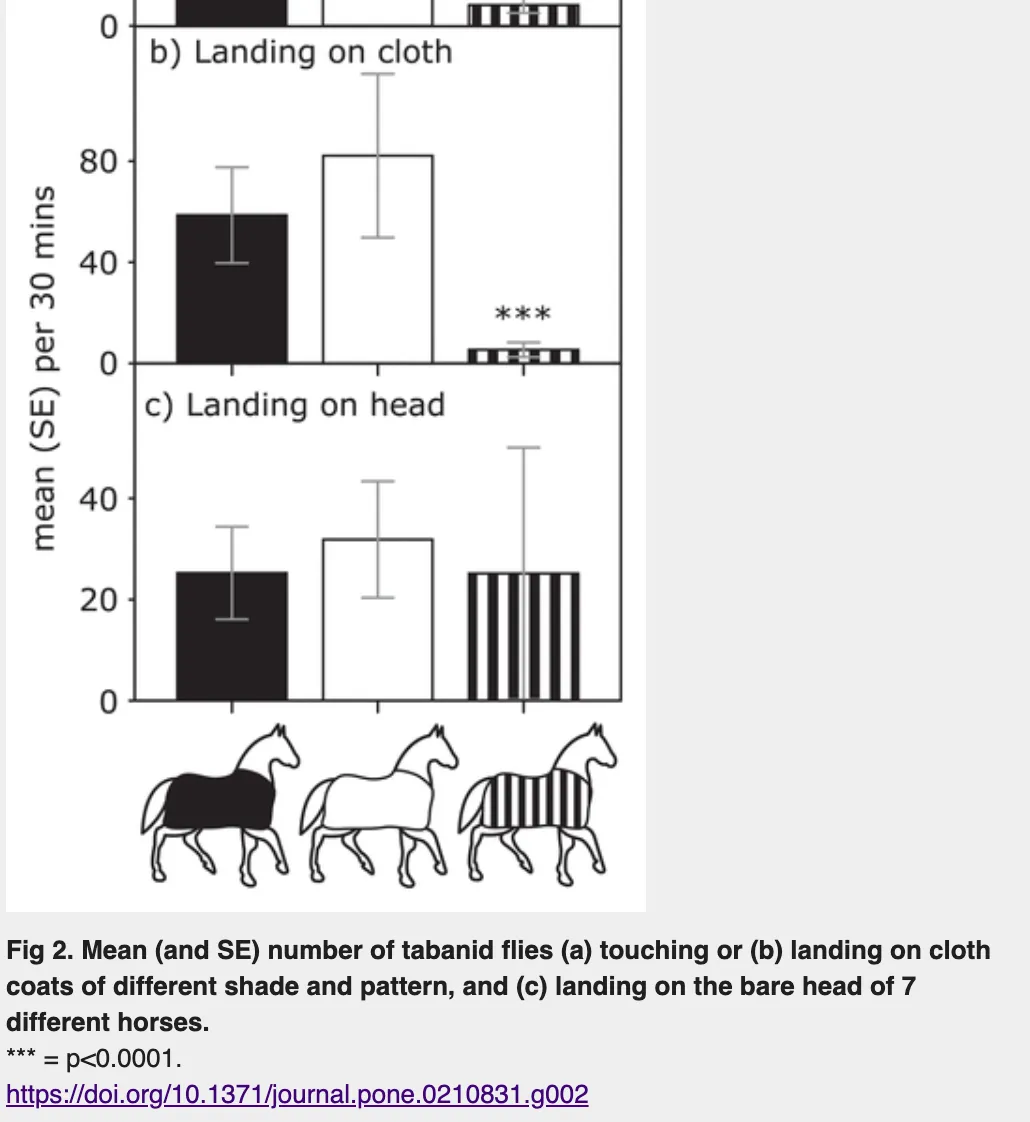
如果斑马条纹的功能是"让苍蝇远远看见就不来",那么研究应该发现 zebra 周围 circling flies 明显少。但是 2019 实验发现:苍蝇围绕 zebra 和 horse 接近、盘旋的频率没有显著差异。真正差别是 landing。所以条纹更可能影响 final approach,而不是 long-distance attraction。
successful landing:zebra 上显著更少
2019 年的 video analysis 发现:horseflies 接近普通马时会 decelerate(减速),像飞机准备 landing;但接近 zebra 时,它们更容易继续高速靠近,结果 overshoot 或者 briefly touch 然后离开。所以研究人员推测:条纹影响了苍蝇在最后几厘米或较近距离里的 visual control of landing。
因为知道 stripes work 还不等于知道 what property of stripes works——可能是条纹很细?黑白反差?polarized light?视觉 motion illusion?所以研究人员让马穿上灰色、大黑色三角、checkerboard、不同 contrast 的 stripe 等各种外套。结果:large dark patches 更容易吸引 landing,而被高对比、小块图案打碎的大面积轮廓更少被落上。
高对比、被分割成小块 dark patches:更不容易被降落
现在证据可以比较有力地支持 function:条纹有助于减少 biting-fly landings。但是 mechanism——苍蝇的视觉系统究竟在哪一步、为什么、如何被干扰——还在继续研究。2023 实验更支持大面积 dark object 被高对比图案打散的解释,并没有支持当时测试的 polarization 以及若干经典视觉错觉机制;2025 年的建模研究又提出,条纹可能通过视觉采样中的 aliasing 干扰苍蝇对运动的分析,说明机制层面的解释仍在继续发展。
Mechanism(机制):苍蝇视觉系统如何被干扰——仍在继续研究
也不要说太过。2014 研究的准确结论是:在他们的系统比较中,没有发现 consistent support for camouflage / predator avoidance。这和"条纹在任何时候绝对没有任何视觉防御作用"仍然不是同一个强度。科研语言特别喜欢 no consistent support,而不是 impossible。
因为 biting flies 并不只是"烦"。雌性 tabanid horseflies 需要 blood meal 帮助产卵,它们会造成 blood loss 和 irritation;更重要的是,在非洲环境中,一些吸血昆虫还可以传播对 equids 严重的疾病。2014 研究因此讨论了 zebra 较短的 coat hair、parasite attack、disease transmission 以及 blood loss 可能产生的选择压力。
2.flies land less ≠ flies cannot see zebras
3.same approach rate ≠ same landing success
4.striped coat reduces landings ≠ zebras differ only because of smell
5.evidence favors one hypothesis ≠ all alternatives are impossible
6.function ≠ mechanism
7.mechanism still debated ≠ function completely unknown
8.major evolutionary benefit ≠ only possible effect of stripes
2. camouflage— provide camouflage,伪装。
3. parasite— blood-sucking parasite,寄生生物。
4. deter— deter biting flies,阻止、使不愿接近。注意:不一定等于完全 prevent。
5. land— a fly lands on the animal,降落。
6. decelerate— decelerate before landing,减速。反义:accelerate。
7. contrast— strong black-and-white contrast,对比。
8. mechanism— the precise mechanism remains debated,机制。
3 分钟— 画三层证据:2014 Where are stripes strongest? → fly exposure;2019 Do stripes actually change fly behavior? → fewer landings;2023 What visual feature matters? → contrast + broken dark areas。让学生看到:科学结论是一层一层加证据。
5 分钟— 做 Q2、Q3、Q6,分别训练:控制变量、作用发生在哪一步、function 和 mechanism 不能混。结束。
难度参考:高考 D 篇—考研英语阅读
核心题型:竞争假说、比较研究、实验设计、控制变量、机制解释、研究意义、科学语言强度、综合结论、最佳标题
association → proof
approach → landing
deter → make invisible
favored explanation → only possible function
mechanism uncertain → evidence absent
no consistent support → impossible
研究系统比较 5 类主要斑马条纹假说,并控制 phylogeny 等因素后发现,多项 striping measures 与 tabanid biting-fly annoyance 指标及部分 tsetse 分布显著相关,而没有发现对 camouflage、predator avoidance、heat management 和 social interaction 的同样一致支持。(nature.com/articles/ncomms4535)
PLOS ONE|2019— Benefits of zebra stripes: Behaviour of tabanid flies around zebras and horses,Tim Caro et al.,*PLOS ONE* 14(2): e0210831,Published: 20 February 2019
研究直接观察英国同一农场环境中的 zebras 和 domestic horses,发现 horseflies 围绕两者盘旋的频率相近,但成功降落在 zebras 上的苍蝇显著更少。让普通马分别穿 black、white 和 zebra-striped coats 后,条纹外套同样显著降低 touching 和 landing;高速视频还显示,flies 靠近 zebra 时更容易无法正常减速和控制着陆。主体阅读材料为根据上述研究整理改写的高考化版本,非原文全文。文章采用 CC BY 开放许可。(journals.plos.org/plosone/article?id=10.1371/journal.pone.0210831)
University of Bristol / Journal of Experimental Biology|2023— Why don't horseflies land on zebras?
研究继续拆解 striping 的视觉机制,让马穿着不同 contrast、patch size 和 pattern 的外套。结果显示,大面积深色区域更容易吸引 horseflies landing,而高对比、被分割成较小 dark patches 的图案更不容易被降落;实验没有为当时测试的 polarization 和若干"视觉运动错觉"解释提供明显支持。(bristol.ac.uk/news/2023/february/zebra-stripes.html)
Many plausible stories→ Comparative evidence→ Controlled experiment→ Mechanism experiment
一开始的问题是 Why do zebras have stripes? 后来问题越来越精准:Which hypothesis best fits the geographic evidence? At what stage do stripes affect flies? Is it approach or landing? Which feature of the pattern matters?
这就是高考 D 篇和考研阅读里最值得识别的一种科学写法:一个好听的解释很便宜。真正昂贵的是:designing evidence that can separate it from all the other explanations that also sound reasonable.
下期外刊精读,继续带你押考点


