

🎧 本篇主旨·先听我梳理一分钟
前三篇分别练了科技报道(老鼠与机器人)、议论文(CEO 薪酬)、新闻评论(马德里限行),这次是第四种高频体裁——世代特征型说明文。2020 英语二 Text 4,Z 世代(95 后)毕业进场。
这类文章有个典型坑:两代人的特征被并排摆着——千禧代(1981–1995)要灵活,Z 世代要稳定。题目最爱把两代人的特征对调着考,你不盯紧"题干问的是哪一代",一眼就掉坑。这篇 5 段,先标段落号。
第一步实战:30 秒抓住主旨
扫 5 题题干:36 题问 graduating college this spring 的 Z 世代——关注;37 题问 keenly aware(清醒意识到什么);38 题问 assuage 词意;39 题问 Paragraph 3 能学到什么;40 题问 Michelsen 眼里 Z 世代相比千禧代怎样。主题锁定:Z 世代是一群什么样的新人。
注意 40 题的 compared with millennials——这是全篇的对照轴。作者一路在拿千禧代当镜子照 Z 世代。
全文脉络(5 段):
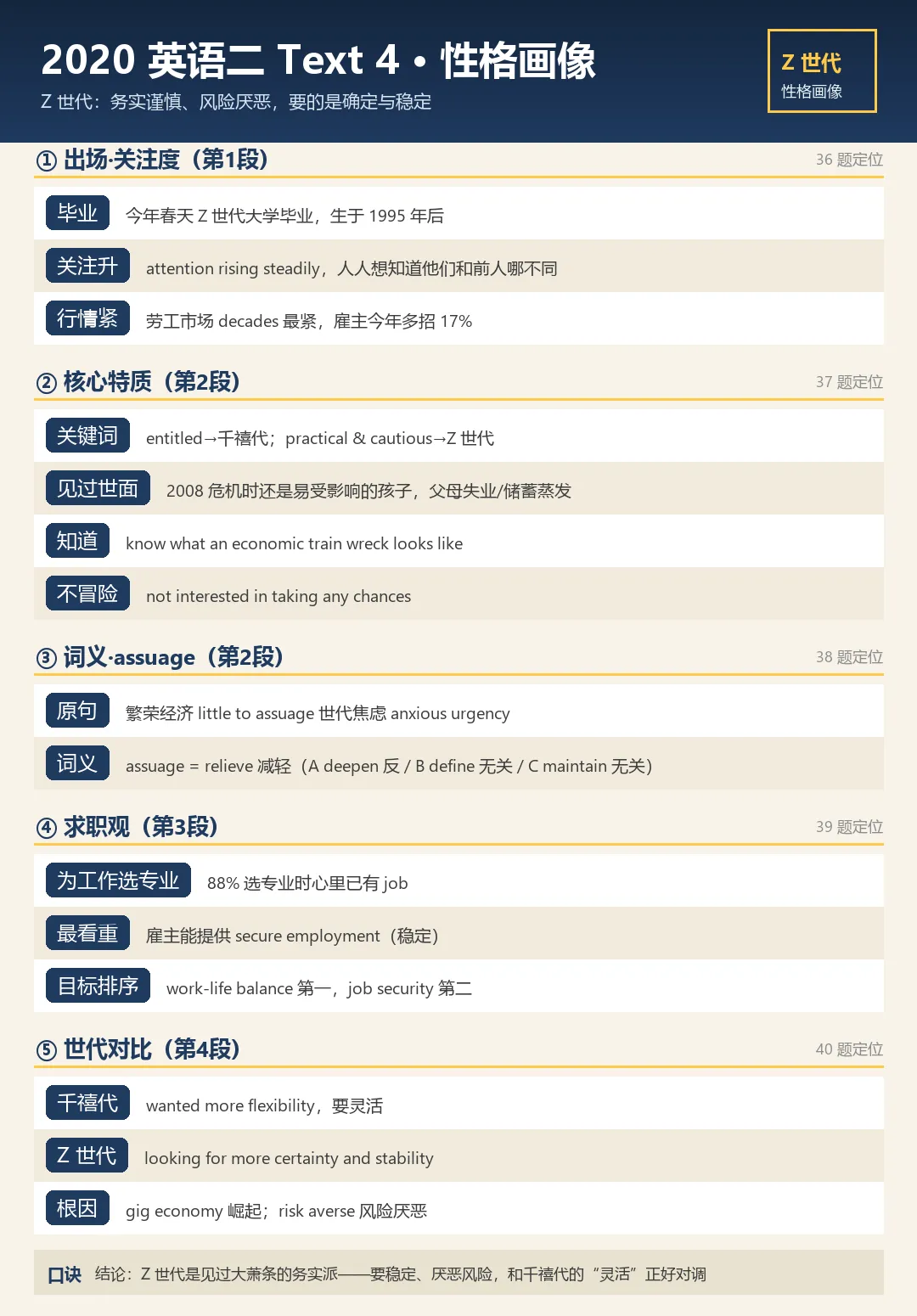
① 出场:Z 世代今春毕业,关注度 steadily 上升,劳工市场 decades 最紧 → ② 核心特质:务实谨慎(practical & cautious),见过 2008 危机,知道经济火车脱轨长啥样,不爱冒险 → ③ 求职观:88% 为工作选专业,要稳定、要 work-life balance → ④ 对照:千禧代要灵活,Z 世代要确定性、风险厌恶(Michelsen)
开篇第 1 段是"现象引入"型:先抛关注度 + 紧俏行情,把 Z 世代推到台前。作者主旨不在第一句,在第 2 段第一句的判断——If "entitled" is the catchword for millennials, the catchwords for Gen Z are practical and cautious。后面所有段落都在展开这两个词。
作者态度一句话:Z 世代是见过大萧条的务实派——要稳定、厌恶风险,和千禧代的"灵活"正好对调。
36. 细节题 —— D
陷阱:B(对劳工市场乐观)和 C(偏爱坐班 offer)最勾人——原文确有"劳工市场紧俏""empty office cubicles",但那是背景描写,不是 Z 世代的"态度"或"偏好"。A(因能力被认可)原文压根没提。
怎么破:graduating college this spring → 锁第 1 段。
Now that members of Generation Z are graduating college this spring ... the attention has been rising steadily in recent weeks. ... Everybody wants to know how the people who will soon inhabit those empty office cubicles will differ ...
attention rising steadily = drawing growing public attention。
[A] 因能力被认可 ❌ 原文无(无中生有) [B] 对劳工市场乐观 ❌ 紧俏是背景,未说 Z 世代"乐观"(偷换概念) [C] 偏爱坐班 offer ❌ empty office cubicles 是意象,非"偏爱"(偷换概念) [D] are drawing growing public attention ✅ attention has been rising steadily 的同义改写
37. 细节题 —— C
陷阱:D 最险——"他们和前人有何不同"(how they differ)确实是全文主题,但那是人人都想知道的事,不是 Z 世代自己清醒意识到的事。题干问的是 Gen Zs are keenly aware(Z 世代意识到什么),主语是 Z 世代本人。
怎么破:keenly aware → 锁第 2 段。
Despite graduating into the best economy in the past 50 years, Gen Zs know what an economic train wreck looks like. They were impressionable kids during the crash of 2008 ...
know what an economic train wreck looks like = what a tough economic situation is like。
[A] 父母对他们的期望 ❌ 原文无(无中生有) [B] 顾问建议多有价值 ❌ 原文无(无中生有) [C] what a tough economic situation is like ✅ know what an economic train wreck looks like 的同义改写 [D] how they differ from past generations ❌ 那是"人人想知道",非 Z 世代自知的(偷换主语)
38. 词义题 —— D
陷阱:这题不用背单词。A(加深)是原文逻辑的反面——若选 deepen,句意变成"繁荣经济加深了焦虑",和前面"他们是务实谨慎的一代、不爱冒险"接不上;B(定义)、C(维持)放进去都说不通。
怎么破:assuage 在 line 9, para 2,看它修饰谁、逻辑是顺是逆。
The booming economy seems to have done little to assuage this underlying generational sense of anxious urgency, especially for those who have college debt.
前面说他们有"anxious urgency(焦虑急迫感)",经济繁荣"几乎没能让它___"。能跟"焦虑"搭配、且被"little(几乎没)"否定的,只能是减轻。
[A] deepen ❌ 加深,逻辑反了 [B] define ❌ 定义,说不通(无中生有) [C] maintain ❌ 维持,说不通(无中生有) [D] relieve ✅ 减轻,与 anxious urgency 搭配、逻辑成立
39. 段落推断题 —— B
陷阱:A(把职业培训当头等大事)看着最稳——第 3 段确实列了"专业发展培训"是雇主第二大吸引点。但"第二大"≠"top priority",而且全段职业目标排序里 work-life balance 才是第一、job security 第二。C、D 更是无中生有。
怎么破:Paragraph 3 → 整段读,找"能学到什么"而非"哪句最显眼"。
88 percent of graduating seniors this year chose their major with a job in mind.
为工作选专业 = 对自己的未来职业有清晰想法。
[A] 把职业培训当头等大事 ❌ 培训是雇主吸引点第 2,且 work-life balance 才是目标第 1(偷换概念) [B] have a clear idea about their future job ✅ chose their major with a job in mind 的同义改写 [C] 不在乎工作表现 ❌ 原文无(无中生有) [D] 觉得 work-life balance 难实现 ❌ 原文说它是第 1 目标,非"觉得难"(正反混淆)
40. 态度对比题 —— B
陷阱:A(less realistic 更不现实)是方向反转——原文称 Z 世代 practical and cautious、economic pragmatists,是更务实,不是更不现实。C(更勤奋)、D(更慷慨)原文都没提。
怎么破:Michelsen + compared with millennials → 锁第 4 段。
"Millennials wanted more flexibility in their lives," notes Michelsen. "Generation Zs are looking for more certainty and stability ... they are quite risk averse."
千禧代要 flexbility(灵活/爱冒险),Z 世代要 certainty(确定)且 risk averse(厌恶风险)→ Z 世代更不冒险(less adventurous)。
[A] less realistic ❌ 方向反——Z 世代更务实,不是更不现实(正反混淆) [B] less adventurous ✅ 千禧代灵活 → Z 世代风险厌恶,对调即"更不冒险" [C] more diligent ❌ 原文无(无中生有) [D] more generous ❌ 原文无(无中生有)
答案速查
🎧 真题五题带练·2020英语二Text 4
五题同义替换链:
36:attention has been rising steadily / everybody wants to know ↔ drawing growing public attention 37:know what an economic train wreck looks like ↔ what a tough economic situation is like 38:done little to assuage anxious urgency ↔ relieve(逻辑反义推断) 39:chose their major with a job in mind ↔ have a clear idea about their future job 40:millennials flexibility ↔ Gen Z certainty & risk averse ↔ less adventurous
本篇沉淀三个新招
前三篇练了"张冠李戴排除""常识合理干扰""方向反转""缺席对策",这篇世代特征文再加三招:
① 跨段分清"谁的特征"。 40 题把千禧代和 Z 世代对调着考——一定要先圈题干问的是哪一代,再回原文找对应的代词/专名。两代人的形容词一混,整题就废。
② 词义题靠"逻辑反义"。 38 题 assuage 不认识也能做:它修饰的是 anxious urgency(焦虑),前面还有 little(几乎没)否定——能填进去让句子顺的,只能是"减轻"。看它修饰什么、逻辑是顺是逆,比背单词靠谱。
③ 数字/排序题找"原文对应词"。 39 题问段落能学到什么,A 选项把"雇主吸引点第 2"偷换成"top priority"。原文的真排序词是 number one / second most important——回原文对着排序词挨个对,谁第几一目了然。
三步还是那三步:先抓方向,再找位置,最后比对。世代特征文比新闻评论简单在——它不藏态度,特征都摊在明面上;难也难在两代人的特征并排,题目专挑你混淆的时候考。下一期继续真题实战。
🎧 收尾·本篇三招


