

Day 70 · 每日一练初一英语阅读理解每天一篇,轻松提分适用对象:初一学生及家长 | 难度:★★★★☆【宾语从句】
建议用时:8-10分钟|字数:约200词|话题:科技未来
🔥 坚持「初一英语阅读理解」每日打卡,100天拿捏初一英语阅读理解!
Reading 阅读材料/ Passage
请认真阅读上文,完成以下「初一英语阅读理解」练习题。
🤖 Technology and the Future
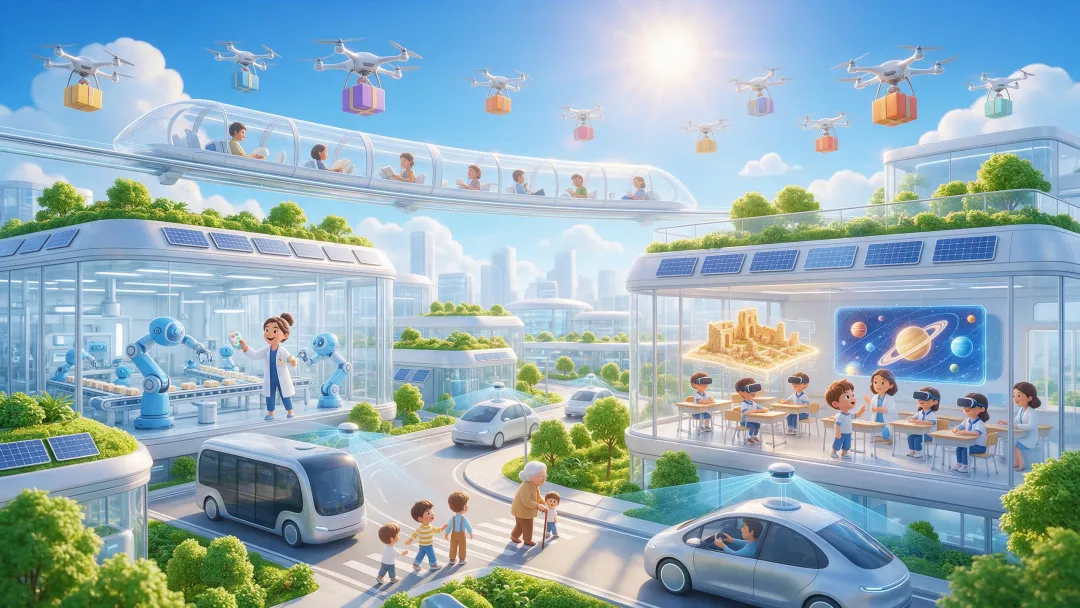
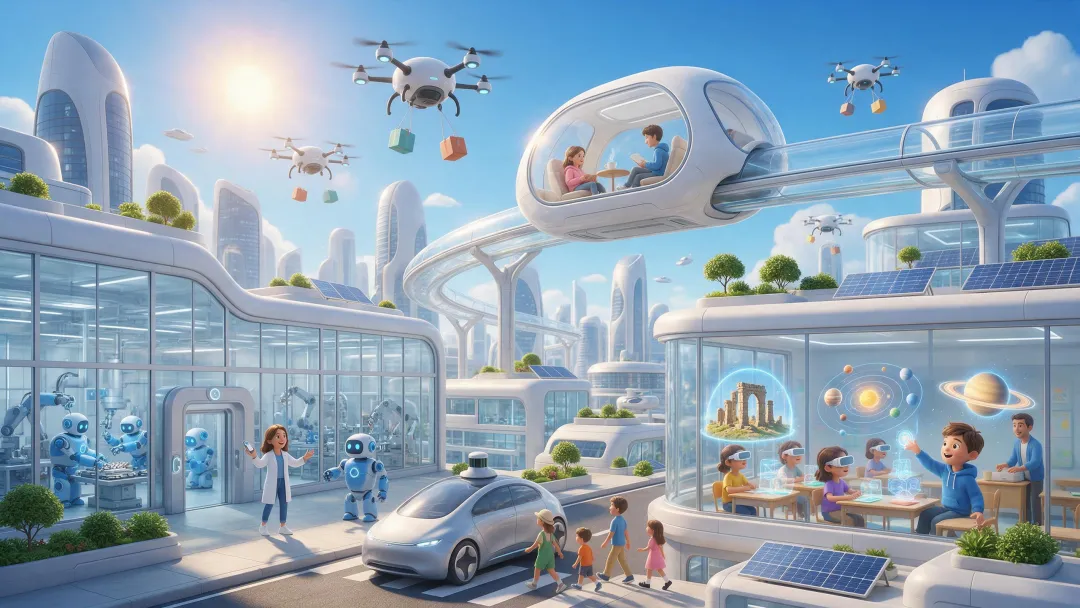
Technology is changing our world faster than ever before. Many people believe thatartificial intelligence will change the way we live and work. Scientists think thatrobots will help humans do dangerous jobs in the future.
Robots are already used in many factories. Workers know that robots can work day and night without getting tired. Some people wonder whether robots will take away human jobs. However, experts believe that robots will create new types of jobs instead. "I think that humans and robots will work together," says Dr. Lee, a robot scientist.
Virtual reality, or VR, is another exciting technology. Students can visit ancient cities or explore the solar system without leaving the classroom. Teachers hope thatVR will make learning more fun and effective. "I wonder ifstudents will ever want to leave the VR classroom!" jokes one teacher.
Self-driving cars are also coming soon. Many companies are testing them on roads right now. People ask whether self-driving cars are safe enough. Engineers say thatthe technology is improving every day. They believe that self-driving cars will reduce traffic accidents in the future.
Technology brings both opportunities and challenges. I think that we should embrace new technology, but we must also be careful. As one scientist said, "I wonder ifwe truly understand how fast technology is changing our lives. The future is closer than we think."
Questions 阅读理解题/ Choose the best answer
请认真阅读上文,完成以下「初一英语阅读理解」练习题。
1. What do scientists think robots will do in the future?
A. They think robots will replace all human workers.
B. They think robots will help humans do dangerous jobs.
C. They think robots will teach students in classrooms.
D. They think robots will drive all cars on the road.
2. What do some people wonder about robots?
A. They wonder whether robots can feel emotions.
B. They wonder whether robots will take away human jobs.
C. They wonder whether robots are too expensive.
D. They wonder whether robots can speak Chinese.
3. How can VR help students according to the passage?
A. It can help students pass exams without studying.
B. It can let students visit ancient cities or explore the solar system.
C. It can replace all teachers in the classroom.
D. It can help students build their own robots.
4. What can we infer from the last paragraph?
A. Technology only brings benefits and no problems.
B. We should fully reject new technology to stay safe.
C. Technology changes so fast that we may not fully realize its impact.
D. The future is still very far away and we don't need to worry.
5. Which sentence contains a correct object clause (宾语从句)?
A. I wonder if will robots take away our jobs.
B. I wonder if robots will take away our jobs.
C. I wonder if robots will take away our jobs?
D. I wonder if will robots take away our jobs?
Answers 答案详解/ Detailed Analysis
以下是「初一英语阅读理解」Day 70 的详细答案与解析。
✅ 先自己做,再看答案哦!
答案 1: B
原文第一段提到:"Scientists think that robots will help humans do dangerous jobs in the future."(科学家们认为,机器人将来会帮助人类做危险的工作。)易错点:A选项"replace all human workers"过于绝对,且与原文"work together"矛盾;C选项"teach students"是VR的功能,不是机器人的;D选项"drive all cars"是自动驾驶汽车的功能。解题技巧:注意宾语从句"think that..."后的内容就是科学家的观点。
答案 2: B
原文第二段提到:"Some people wonder whether robots will take away human jobs."(有些人想知道机器人是否会夺走人类的工作。)易错点:A选项"feel emotions"原文未提及;C选项"too expensive"原文未提及;D选项"speak Chinese"原文未提及。解题技巧:注意"wonder whether"引导的宾语从句,whether表示"是否",引出了人们的疑问。
答案 3: B
原文第三段提到:"Students can visit ancient cities or explore the solar system without leaving the classroom."(学生可以不用离开教室就参观古城或探索太阳系。)易错点:A选项"pass exams without studying"无中生有;C选项"replace all teachers"过于绝对,原文只说"make learning more fun";D选项"build robots"与VR功能无关。解题技巧:注意"hope that"引导的宾语从句描述了老师对VR的期望,前面的句子解释了VR的具体功能。
答案 4: C
原文最后一段提到:"I wonder if we truly understand how fast technology is changing our lives. The future is closer than we think."(我想知道我们是否真正理解科技改变我们生活的速度有多快。未来比我们想象的更近。)结合前文"Technology brings both opportunities and challenges",可以推断科技变化之快超出了我们的认知。易错点:A选项"only benefits"与"challenges"矛盾;B选项"fully reject"与"embrace new technology"矛盾;D选项"very far away"与"closer than we think"矛盾。解题技巧:推理题要抓住"wonder if we truly understand"这一反问语气和"closer than we think"这一结论,理解作者对科技快速发展既期待又警惕的态度。
答案 5: B
"I wonder if robots will take away our jobs."结构正确:主句"I wonder" + 宾语从句"if robots will take away our jobs"。宾语从句使用陈述语序(主语 + 谓语),不是疑问语序。易错点:A选项"if will robots"错误——宾语从句不能用疑问语序(倒装),应为"if robots will";C选项和D选项结尾用问号错误——整个句子是陈述句(主句是陈述),不是疑问句,不能用问号。D选项同时犯了语序和标点两个错误。解题技巧:宾语从句的核心规则——陈述语序(主语在前,谓语在后),且整个复合句的标点由主句决定(主句是陈述句则用句号,主句是疑问句则用问号)。
Grammar Focus 语法聚焦/ Simple Past Tense
本篇「初一英语阅读理解」重点考察一般过去时的运用,请同学们认真掌握。
什么是宾语从句?
宾语从句是在复合句中充当宾语的句子,放在及物动词或介词之后。根据引导词的不同,宾语从句分为三类:that引导(陈述句变来的)、whether/if引导(一般疑问句变来的)、疑问词引导(特殊疑问句变来的)。
一、that 引导的宾语从句(陈述事实或观点) that 在从句中不充当成分,无实际意义,口语中常省略。 文中例句:Many people believe that AI will change the world. 文中例句:Scientists think that robots will help humans. 文中例句:Workers know that robots can work day and night. 文中例句:Teachers hope that VR will make learning fun. 二、whether / if 引导的宾语从句(表示"是否") whether 和 if 都表示"是否",由一般疑问句转换而来。 文中例句:Some people wonder whether robots will take away jobs. 文中例句:I wonder if students will want to leave the VR classroom. 文中例句:People ask whether self-driving cars are safe. 文中例句:I wonder if we truly understand how fast technology is changing. |
三条核心规则(考试必考!)
规则一:宾语从句必须用陈述语序(主语 + 谓语)! ✓ I wonder if robots will take away our jobs.(主语robots + 谓语will take away) ✗ I wonder if will robots take away our jobs.(错误!用了疑问语序) 口诀:"宾语从句不倒装,主语在前谓语后" 规则二:that 可省略,whether/if 不可省略。 I think (that) robots will help us. → that 可省略 I wonder whether robots will help us. → whether/if 不可省略 规则三:whether 和 if 的区别 whether:可用于句首、介词后、or not 前,更正式 if:不能用于句首或介词后,常用于口语 I don't know whether he will come or not.(不能用if替代) 记忆口诀:that可省whether不可,陈述语序不倒装! |
Vocabulary 核心词汇/ Key Words
📌 今日必背词汇
单词 | 音标 | 释义 |
artificial | /ˌɑːtɪˈfɪʃəl/ | adj. 人工的,人造的 |
intelligence | /ɪnˈtelɪdʒəns/ | n. 智能,智力 |
robot | /ˈrəʊbɒt/ | n. 机器人 |
expert | /ˈekspɜːt/ | n. 专家 |
virtual | /ˈvɜːtʃuəl/ | adj. 虚拟的 |
reality | /riˈæləti/ | n. 现实 |
opportunity | /ˌɒpəˈtjuːnəti/ | n. 机会,机遇 |
Parent Tips 家长辅导指南/ For Parents
本栏目为家长提供「初一英语阅读理解」家庭辅导建议,帮助孩子高效学习。
1.结合科技话题激发兴趣:这篇阅读材料涉及AI、机器人、VR和自动驾驶汽车等前沿科技,非常吸引初一学生。建议家长和孩子讨论:"Do you think that robots will replace human workers?"(你认为机器人会取代人类工人吗?)让孩子用"I think that..."或"I wonder if..."表达观点,在讨论科技的同时自然练习宾语从句。
2.重点掌握that和whether/if两类宾语从句:本文大量使用了believe that、think that、know that(that引导)以及wonder whether、wonder if、ask whether(whether/if引导)。建议家长引导孩子区分两类从句:that引导陈述性内容,whether/if引导疑问性内容("是否")。
3.攻克陈述语序这一核心难点:宾语从句必须用陈述语序(主语在前,谓语在后),这是考试最高频考点。学生常因受疑问句影响写成"I wonder if will robots..."(错误倒装)。建议家长反复强调:宾语从句=引导词+主语+谓语,并做语序改错练习:"Do you know where is he?" → "Do you know where he is?"
4.理解whether和if的区别:两者都表示"是否",但whether更正式,可用于句首、介词后和or not前面;if较口语化,不能用于句首或介词后。建议家长出对比练习:"I don't know ___ he will come or not."(答案:whether,不能用if)让孩子在具体语境中体会差异。
5.拓展科技主题写作:建议家长鼓励孩子用宾语从句写一段"我对科技未来的看法"短文,要求使用至少两个that引导和两个whether/if引导的宾语从句。例如:"I think that AI will make our life easier. I wonder whether robots will have feelings one day."这种写作练习既巩固了语法,又培养了批判性思维。
Progress 每日打卡/ Daily Check-in
今天是「初一英语阅读理解每日一练」第 70 天
进入第二阶段 难度上升
坚持 100 天,阅读理解不再是弱项
📌 明天预告 Day 71:家庭周末类 · 一般过去时 vs 一般现在时对比 每天中午11:00 准时推送,记得来看! 持续练习「初一英语阅读理解」,每天进步一点点!
下载完整版看这里👇
后台回复「初一英语阅读每日一练」即可领取完整版资料


