

文章核心观点
本文是一篇说明文,介绍了非营利性组织——暑期科学项目(Summer Science Program, SSP)。文章从项目定位、运营特色、录取标准、学习模式、研究方向和日常安排等多个维度,系统展示了SSP如何为即将申请大学的高中生提供沉浸式科学体验。作者的核心立场是:SSP不仅是一个科学项目,更是一个促进个人成长与集体联结的综合性教育平台,其独特之处在于由前成员运营、以合作研究取代竞争考试、并为所有录取学生提供经济援助。
逐题精讲
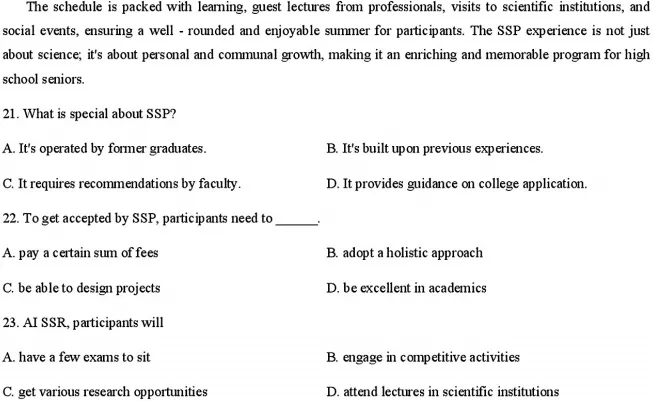
第21题:选 A
It’s operated by former graduates.
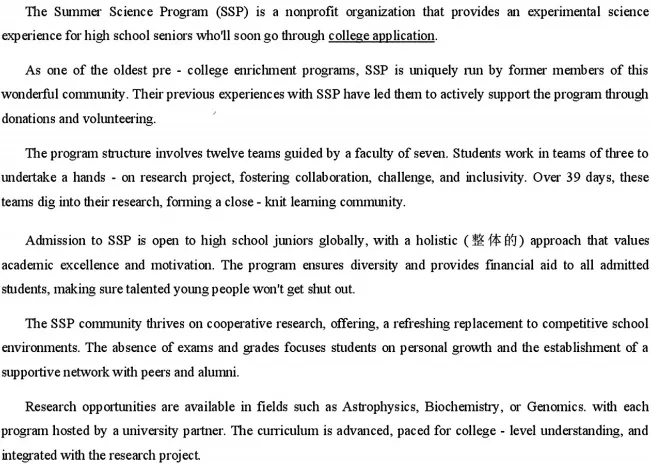
上文承接: 文章首段先总述SSP的性质——“a nonprofit organization that provides an experimental science experience for high school seniors”,为全文奠定介绍基调。第二段以"As one of the oldest pre-college enrichment programs"作为递进铺垫,用最高级"oldest"和程度副词"uniquely"双重强调,引出核心信息——“SSP is uniquely run by former members of this wonderful community”。此处的"uniquely"直接回应了题目中的"special",暗示这正是SSP区别于其他同类项目的关键特征。后文紧接"These previous experiences with SSP have led them to actively support the program through donations and volunteering",解释了前成员运营项目的内在动机:正是因为他们亲身经历过SSP的价值,才愿意回馈社区,形成了"前成员经历→捐赠与志愿→运营项目"的因果逻辑链。
下文铺垫: 确认了SSP由前成员运营这一特色后,文章紧接着展开项目的具体组织结构——“The program structure involves twelve teams guided by a faculty of seven. Students work in teams of three to undertake a hands-on research project”,用具体的数字(12支队伍、7位导师、3人一组)让读者对"前成员运营"的落地形态有具象认识。这些细节并非孤立存在,而是在"前成员运营"这一特色框架下的展开说明,使抽象的"特殊之处"变得可感知。
第22题:选 D
be excellent in academics
上文承接: 文章在前面几段已分别介绍了项目定位、运营特色和团队学习模式,第四段自然过渡到录取标准话题。关键句"Admission to SSP is open to high school juniors globally, with a holistic approach that values academic excellence and motivation"中,"holistic approach"是评价方式,“values academic excellence and motivation"才是筛选的核心标尺。值得注意的是,前文第二段已埋下伏笔——SSP旨在"challenge and inspire talented and motivated high school students”,其中"talented"一词已暗示了对学术潜质的要求,此处"academic excellence"是对前文"talented"的正式明确化。
下文铺垫: 紧接着后文写道"The program ensures diversity and provides financial aid to all admitted students, making sure talented young people won’t get shut out",这是在录取标准之外的重要补充——只要学术优秀且有动力,不论经济背景如何都有机会参与。这一句与D选项形成完美呼应:前半句确立"学术优秀"的门槛,后半句扫除"经济障碍",构成了"选拔标准→保障机制"的逻辑递进。B选项"adopt a holistic approach"具有较强迷惑性,但原文说的是录取"采用"整体评价方式,而非要求参与者"采纳"某种方法,属于偷换主客体。
第23题:选 C
get various research opportunities
上文承接: 文章在第五段以"Research opportunities are available in fields such as Astrophysics, Biochemistry, or Genomics"总起,一口气列举了三个研究领域,直接对应选项中的"various"一词。在此之前,第二段已提到"Students work in teams of three to undertake a hands-on research project",为"研究项目"埋下伏笔;第三段的合作研究理念和无考试模式,则进一步铺垫了SSP的学习重心——真正做研究,而非应试。此处列举具体领域,是对前文"research project"的具体化展开。
下文铺垫: 确认研究领域后,后文从三个维度继续补充:“each program hosted by a university partner”(院校合作层面)、“The curriculum is advanced, paced for college-level understanding”(课程难度层面)、“integrated with the research project”(学研融合层面)。末段再用"The schedule is packed with learning, guest lectures from professionals, visits to scientific institutions, and social events"等丰富活动,进一步印证SSP为参与者提供了多元的学习与研究机会,形成了"研究方向→院校合作→课程体系→日常活动"的层层递进结构。D选项"attend lectures in scientific institutions"是对原文"guest lectures from professionals, visits to scientific institutions"的拼凑篡改——讲座的主讲人是专业人士,地点并非都在科研机构,属于细节张冠李戴。
总结
本文采用清晰的"总—分—总"说明文结构。首段一句话总述SSP的非营利性质与服务对象;中间段落从运营特色(前成员运营)、组织架构(12队/7导师/3人组)、录取标准(学术优秀+学习动力+经济援助)、学习理念(合作研究取代竞争、无考试无分数)、研究领域(天体物理/生物化学/基因组学)、日程安排(讲座+参访+社交)六个维度逐一展开分述;末段以"The SSP experience is not just about science; it’s about personal and communal growth"收束全文,升华主题。


