


2010 年英语(二)阅读 Text 1 精讲
第五段
①What makes this slump different from the last, he says, is that there are still buyers in the market. ②Almost everyone who was interviewed for this special report said that the biggest problem at the moment is not a lack of demand but a lack of good work to sell. ③The three Ds—death, debt and divorce—still deliver works of art to the market. ④But anyone who does not have to sell is keeping away, waiting for confidence to return.他认为,这次衰退与上次的不同之处在于,市场中依然存在买家。几乎每位接受这个特别报道采访的人都说,当前最大的问题不是缺乏需求,而是没有好的作品出售。三D因素——死亡、债务和离婚——依然会把艺术品输送到市场上。但是,那些不急于出手的人依然远离市场,等待市场信心的回归。
①What makes this slump different from the last, he says, is that there are still buyers in the market.他认为,这次衰退与上次的不同之处在于,市场中依然存在买家。
he指上一段的Edward Dolman(爱德华·多尔曼)
这里是间接引语,主谓放在了句子中间
现在看句子:What makes this slump different from the last is that there are still buyers in the market.
what部分是个主语从句。
slump n. 下降;衰退,= downturn。
the last指 “The current downturn in the art market is the worst since the Japanese stopped buying Impressionists at the end of 1989.”,就是1989年的这次衰退。
that部分是表语从句:that there are still buyers in the market.
buyer n. 买家。
【逻辑梳理】这里是说,这一次衰退和上一次衰退的不同之处在于,这次衰退,市场上还有买家,而上一次是日本人停止购买印象派作品,完全不买了,没有买家了。(本质是说,这次衰退还有希望)
②Almost everyone who was interviewed for this special report said that the biggest problem at the moment is not a lack of demand but a lack of good work to sell.几乎每位接受这个特别报道采访的人都说,当前最大的问题不是缺乏需求,而是没有好的作品出售。
句子主干:everyone said that
who部分是定语从句,修饰everyone:who was interviewed for this special report
interview vt. 采访。
this special report指这篇文章本身,这篇文章是《经济学人》2009.11.28这一期中的special report部分的文章。这里出题人应该做处理的,但是,没有,算是个bug(犯的小错误,出题人犯错是正常的,当然,除了这里,也估计永远都不会有人告诉你了,出题人在英语一二中都犯过这样的小错误,当然,也可能是出题人觉得不可能有人能够分析到我们这种地步,所以不会被发现,anyway)吧!
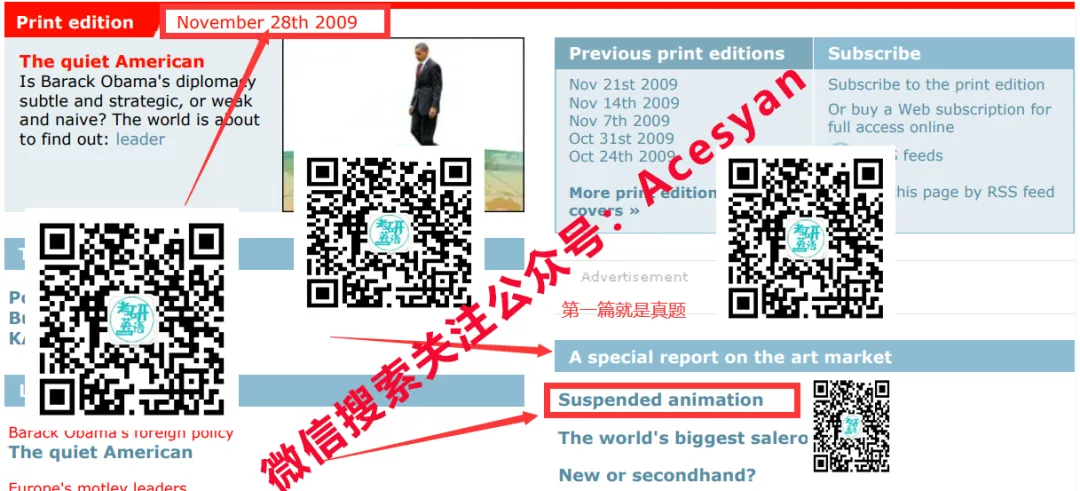
这是2009年11月28日,杂志《经济学人》官方的正式印刷版(Print edition,就是拿出卖的,最终卖到消费者手里的)杂志的目录,2010年这篇文章就是出自这一期杂志的“A special report on the art market”这个板块(Section)的文章,第一篇就是本篇真题,文章标题叫做:“Suspended animation(暂缓的活跃)”
that部分是宾语从句:that the biggest problem at the moment is not a lack of demand but a lack of good work to sell.
at the moment:现在
not...but...:不是...而是...。
demand n. 需求
to sell是不定式后置定语,修饰work
【逻辑梳理】这里为什么说市场上没有好的作品出售了呢?因为,市场衰退,价格下跌了,谁有好的作品会拿出卖,除非他是傻子。所以,现在市场上还是有买家的,只是价格的下跌,没有人再把好的作品拿出来卖了。
③The three Ds—death, debt and divorce—still deliver works of art to the market.三D因素——死亡、债务和离婚——依然会把艺术品输送到市场上。
破折号部分是解释3 Ds是什么
debt n. 债务。
divorce n. 离婚。
deliver vt. 递送。
【逻辑梳理】这里是说,这三个因素会导致人们把家里收藏的艺术品,拿去卖掉。债务就不说了。死亡,比如,老年人喜欢收藏,但是,过世以后,他们收藏的东西,一般都会被年轻一代卖掉(尤其是年轻一代根本不喜欢的东西)。离婚就更好理解了,涉及财产分割,带不走的,太多了,就直接卖掉。这里本质是接着上一句说的,上一句说,市场上有买家,但是,没有好的作品出售,但是,就说了,这三个因素会让人把好的作品送到市场上(拿去卖),言外之意就是,各个买家不要慌,好的作品还是会有的。
④But anyone who does not have to sell is keeping away, waiting for confidence to return.但是,那些不急于出手的人依然远离市场,等待市场信心的回归。
who部分是定语从句,修饰anyone。
not have to:没必要(就是不慌(着急)卖的人)
keep away:不靠近;远离(这里是不靠近市场,就是不卖的意思)。
waiting部分和keeping部分是并列的,你看的懂的应该是这样的:is keeping away and waiting for confidence to return,但是,英语中,逗号也可以起到and的作用。
总结:第五段是说,当前的问题不是没有买家,而是没有卖家,但是,也不慌,3Ds因素会把好的艺术品送到市场上,而且,那些不慌出手的人,也在等待时机,市场重新涨起来,就会卖。所以,这里是说,这个市场不是完全就垮了,而是会再复兴起来。等市场一好转,大量的好作品就会上市。
【题目精讲】
21. In the first paragraph, Damien Hirst’s sale was referred to as “a last victory” because ______.
21. 在文章第一段,达明·赫斯特的作品大卖被称为 “最后的胜利”,是因为 ______。
解释:
A答案:与文章相反,文章说的是:“It was a last victory” 最后一场胜利了。一系列的说法属于无中生有。
B答案:无中生有,文章说的是有两部作品没有卖出去,没说谁买走了。
C答案:无中生有。
D答案:in New York one of the oldest banks on Wall Street, Lehman Brothers, filed for bankruptcy. 这个答案需要一点背景知识,雷曼兄弟银行就是在2008年金融危机时,申请破产的。从后文也可以知道,从这以后,艺术市场就衰退了。美国“次贷危机”是从2006年春季开始逐步显现的。2007年8月开始席卷美国、欧盟和日本等世界主要金融市场。所以,D正确。
A. the art market had witnessed a succession of victories艺术市场见证了一系列的成功
B. the auctioneer finally got the two pieces at the highest bids拍卖员最终以高价购得那两部作品
C. Beautiful Inside My Head Forever won over all masterpieces记忆中的永恒之美胜过了所有的杰作
D. it was successfully made just before the world financial crisis它在世界金融危机前成功完成了
22. By saying “spending of any sort became deeply unfashionable” (Line 1-2, Para. 3), the author suggests that ______.
22. 作者在第三段中说到 “任何花销都变得不再时尚”,这表明 ______。
解释:
A答案:这个答案来自于:“In the art world that meant collectors stayed away from galleries and salerooms.” 即:少去画廊,远离拍卖行。所以,A正确。
B答案:文章说的是艺术品的花费,不是各种花费。这里是对spending of any sort的曲解,文章说的是在艺术品这个领域的各种花费,不是,所有的花费,比如,买大米的花费,要吃饭,这个不能停,而B答案说every kind of spending每一种花费都停了,与文章不符。
C答案:首先文章就没有说收藏艺术品是一种时尚,其次,失去吸引力的说法文章没有说,文章说的是这个市场衰退了。
D答案:无中生有,不值得购买的说法与文章相反,文章说的是这个市场里还有买家的,不是不值得购买了。而且文章说的是花钱购买艺术品(就是在这个时候花钱)不合时宜,而不是艺术品过时,张冠李戴,东拉西扯。
A. collectors were no longer actively involved in art-market auctions收藏者们不再积极参与到艺术品市场的拍卖会中
B. people stopped every kind of spending and stayed away from galleries人们停止了各种花销并远离了画廊
C. art collection as a fashion had lost its appeal to a great extent艺术品收集的时尚在很大程度上失去了吸引力
D. works of art in general had gone out of fashion so they were not worth buying总体来说,艺术品已经过时,因此不值得购买
23. Which of the following statements is NOT true?
23. 下面哪项表述是错误的?
解释:
A答案:来自于:“Sales of contemporary art fell by two-thirds” 即,大幅下降,与文章一致。
B答案:与The world art market had already been losing momentum for a while after rising bewilderingly since 2003. 这里相反,艺术品市场已经失去了动力,而且,文章并没有将这个市场和其他的市场做比较。所以,B答案是:“NOT true的”,所以,B正确。
C答案:是第三、四段的总结,即:销量下降、价格下降、拍卖公司也亏钱(赔保证金给别人),所以,整体上来说,艺术品市场是在以各种方式下滑(就是各方面都表现出下滑的趋势)。
D答案:与But anyone who does not have to sell is keeping away, waiting for confidence to return. 这句一致。
A. Sales of contemporary art fell dramatically from 2007 to 2008从 2007 年到 2008 年当代艺术品的销售明显下降
B. The art market surpassed many other industries in momentum在市场推动力方面,艺术品市场超过了其他很多产业
C. The art market generally went downward in various ways总体上,艺术品市场以各种方式下滑
D. Some art dealers were awaiting better chances to come一些艺术品交易者在等待好机会的到来
24. The three Ds mentioned in the last paragraph are ______.
24. 文章在最后一段提到 “3Ds” 是 ______。
解释:
A答案:无中生有。
B答案:无中生有。
C答案:3Ds因素会让人们把艺术品拿去卖掉。所以,C正确。
D答案:无中生有。
A. auction houses’ favorites拍卖行的最爱
B. contemporary trends当代趋势
C. factors promoting artwork circulation促进艺术品流通的因素
D. styles representing impressionists印象派画家的风格
25. The most appropriate title for this text could be ______.
25. 这篇文章最恰当的标题可能是 ______。
解释:
A答案:只是文章的部分信息,无法概括全文。
B答案:无中生有。
C答案:文章说的就是艺术品市场失去动力,衰落了,所以,C正确。
D答案:无中生有,文章完全没有说到转变兴趣的内容。
A. Fluctuation of Art Prices艺术品价格的波动
B. Up-to-date Art Auctions最新的艺术品拍卖
C. Art Market in Decline艺术品市场的衰退
D. Shifted Interest in Arts对艺术品兴趣的转变