满分技巧

北京中考英语阅读理解 CD 篇,很多同学之所以无法获得满分,核心原因:1.词汇不熟;2.同义替换不熟悉;3.长难句分析不清晰;我特整理了近 3 年 24 套练CD 篇练习题,把相应的技巧和内容进行相应的分享。

问
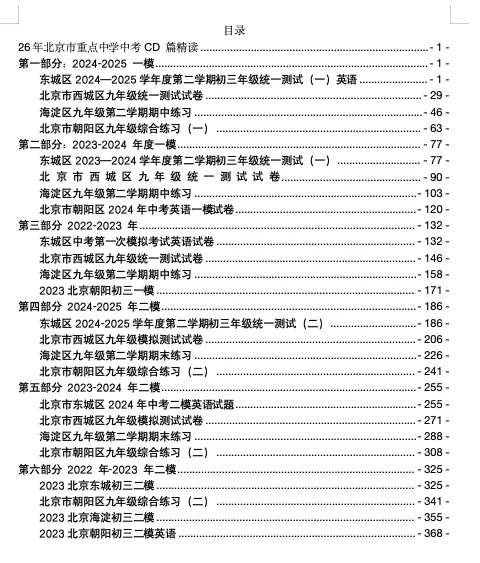
有目录吗?
具体内容的目录如下:
问
具体的内容什么样的?
C
In our lively world, where there are crowds everywhere, there’s a group of people who prefer the quiet, less populated environments. But what is it that drives this preference?
For some people who don’t like crowds, spending time alone brings peace and safety. Imagine standing in a busy market, with people moving and talking nonstop. The sensory input—all the sounds, smells, and the movements around them—can be difficult for these people to deal with. They often find comfort in calm spaces such as libraries, parks, or their bedrooms. In a crowded environment, it’s easy for them to get lost and forget about themselves. But they can focus on their thoughts and feelings when they’re alone.
However, not all who avoid crowds do so out of choice. A recent study at a famous university found that some people experience great fear and anxiety (焦虑) in crowded places. Their hearts beat fast, they sweat (出汗), and they have a strong wish to get away. This condition influences how they behave in social situations. For these people, avoiding crowds is a necessary way to manage their anxiety.
Interestingly, the study also showed that people who don’t like crowds aren’t necessarily unsociable. In fact, they often enjoy smaller, closer gatherings (聚会). Whether it’s a dinner with close friends or a family reunion, these smaller settings allow them to focus on the conversation, communicate with others, and build deeper relationships. Without the distractions (干扰) of a crowd, they can truly enjoy the company of their loved ones.
For people who dislike crowds, dealing with social situations can be a challenge. However, there are ways to make these experiences more manageable. For example, they can choose to attend smaller, closer gatherings rather than large parties or events. They can also take breaks from social interactions when needed, stepping away to a quieter area to relax. Additionally, it’s important for these people to communicate their needs and preferences to others. By doing so, they can help others understand their dislike of crowds and find ways to meet their needs.
Remember, everyone’s comfort levels and preferences are different. What might feel energizing to some can feel tiring to others. The key is empathy (共情), understanding, and respect for each other’s personal spaces and comfort zones.
27. What do we know about people who dislike crowds?
A. They are in poor physical condition.
B. They have little interest in social activities.
C. They feel troubled by too much sensory input.
D. They dislike building relationships with others.
28. How can people who dislike crowds manage social situations?
A. By taking an active part in large events.
B. By avoiding telling others their real feelings.
C. By taking a break in a quieter area when necessary.
D. By pushing themselves to talk with people all around.
29. What is the passage mainly about?
A.People’s different choices in social situations.
B. Reasons for crowd discomfort and ways to ease it.
C. Problems in dealing with social situations and solutions.
D. People’s different preferences for crowds and the reasons.
一、C 篇 高频必考词汇(按文中出现先后顺序标号,完整同根拓展・中考高分句型)
lively /ˈlaɪvli/adj. 热闹的,充满活力的
✅主线固定搭配:a lively world 热闹的世界
中考高分例句:We live in a lively world full of chances and challenges.
翻译:我们生活在一个充满机遇与挑战、生机勃勃的世界。
同根词拓展
① live /lɪv/v. 居住;生活;生存
搭配:live a happy life 过幸福的生活
例句:We should learn to live in harmony with nature.
翻译:我们应该学会与大自然和谐共处。
② live /laɪv/adj. 现场直播的;活的
搭配:a live show 现场演出
例句:I watched a live sports show with my parents yesterday evening.
翻译:昨晚我和父母观看了一场体育直播。
③ alive /əˈlaɪv/adj. 活着的;有活力的(表语形容词,不能前置修饰名词)
搭配:stay alive 活下去
例句:As long as hope exists, our dreams stay alive.
翻译:只要希望尚存,梦想就不会消逝。
④ living /ˈlɪvɪŋ/adj. 现存的;活着的 n. 生计
搭配1:living things 生物
例句:Water is necessary for all living things on Earth.
翻译:水对地球上所有生物而言必不可少。
搭配2:make a living 谋生
例句:Many local people make a living by developing tourism.
翻译:许多当地人依靠发展旅游业谋生。
crowd /kraʊd/n. 人群 v. 挤满
主线搭配:
① a crowd of 一群
例句:A crowd of teenagers volunteer to clean up the park on weekends.
翻译:一群青少年志愿者周末清理公园。
② crowded environment 拥挤的环境
同根词
crowded /ˈkraʊdɪd/adj. 拥挤的
搭配:be crowded with 挤满……
例句:The subway is always crowded with passengers during rush hours.
翻译:高峰时段地铁里总是挤满乘客。
prefer /prɪˈfɜː(r)/v. 更喜欢
主线固定搭配:prefer A to B 比起 B 更喜欢 A
例句:Most teenagers prefer outdoor activities to staying indoors.
翻译:比起宅在家里,大多数青少年更喜欢户外活动。
同根词
preference /ˈprefrəns/n. 偏爱;偏好
搭配:personal preference 个人偏好
例句:Everyone has different preference for social environments.
翻译:每个人对于社交环境有着不同偏好。
populate /ˈpɒpjuleɪt/v. 居住于;构成…… 人口
主线搭配:less populated 人烟稀少的
例句:The mountain area is less populated and has fresh air.
翻译:这片山区人烟稀少,空气清新。
同根词
population /ˌpɒpjuˈleɪʃn/n. 人口
搭配:a large/small population 人口众多 / 稀少
例句:The city has a large population and rapid development.
翻译:这座城市人口众多,发展迅速。
drive /draɪv/v. 驱使;推动;驾驶 n. 驱动力
主线搭配:drive the preference 促成这种偏好
例句:Curiosity drives the preference for exploring new places.
翻译:好奇心驱使人们偏爱探索陌生地方。
同根词
driven /ˈdrɪvn/adj. 受驱动的;奋发努力的
搭配:self-driven 自律上进的
例句:Self-driven students are more likely to achieve their goals.
翻译:自律上进的学生更容易实现目标。
nonstop /ˌnɒnˈstɒp/adj./adv. 不停的(地)
主线搭配:talk nonstop 喋喋不休
例句:Some people talk nonstop when they feel excited.
翻译:有些人兴奋起来就会滔滔不绝。
同根词
stop /stɒp/v. 停止 n. 车站
搭配:stop doing sth. 停止做某事
例句:We should stop wasting limited natural resources.
翻译:我们应当停止浪费有限的自然资源。
sensory /ˈsensəri/adj. 感官的
主线搭配:sensory input 感官信息
例句:Too much sensory input will make some people anxious.
翻译:过量的感官信息会使一部分人感到焦虑。
同根词
① sense /sens/n. 感官;感觉 v. 感觉到
搭配:a sense of peace 平静感
例句:Being alone brings him a sense of peace.
翻译:独处给他带来平静感。
② sensation /senˈseɪʃn/n. 感觉;感知
搭配:a strange sensation 异样的感受
例句:He had a strange sensation after entering the crowded hall.
翻译:走进拥挤大厅后,他产生了一种不适感。
comfort /ˈkʌmfət/n. 舒适 v. 安慰
主线搭配:find comfort in 在…… 中寻求慰藉
例句:Many young people find comfort in quiet music after a long day.
翻译:许多年轻人在漫长的一天过后,于轻音乐中寻求慰藉。
同根词
① comfortable /ˈkʌmftəbl/adj. 舒适的
搭配:comfortable space 舒适的空间
例句:A quiet bedroom offers us a comfortable space to relax.
翻译:安静的卧室为我们提供放松的舒适空间。
② comforting /ˈkʌmfətɪŋ/adj. 令人宽慰的
搭配:comforting words 暖心的话语
例句:Her comforting words helped me get through hard times.
翻译:她暖心的话语帮助我渡过难关。
avoid /əˈvɔɪd/v. 避开,回避
主线搭配:avoid crowds 避开人群
例句:To feel relaxed, she chooses to avoid crowds during holidays.
翻译:为保持放松,她选择节假日避开人群。
同根词
avoidance /əˈvɔɪdns/n. 回避;逃避
搭配:the avoidance of crowds 回避人群
例句:The avoidance of crowds is not equal to being unsociable.
翻译:回避人群并不等同于不善社交。
anxiety /æŋˈzaɪəti/n. 焦虑
主线搭配:experience anxiety 感到焦虑
例句:It’s normal to experience anxiety before important exams.
翻译:大型考试前感到焦虑是十分正常的。
同根词
① anxious /ˈæŋkʃəs/adj. 焦虑的;担忧的
搭配:feel anxious 感到焦虑
例句:Don’t feel anxious when you meet difficulties.
翻译:遇到困难时不要焦虑。
② anxiously /ˈæŋkʃəsli/adv. 焦虑地
搭配:wait anxiously 焦急等待
例句:He waited anxiously for the final result of the competition.
翻译:他焦急地等待比赛最终结果。
necessary /ˈnesəsəri/adj. 必要的
主线搭配:a necessary way 必要方式
例句:Proper rest is a necessary way to keep healthy.
翻译:适度休息是维持健康的必要方式。
同根词
① necessity /nəˈsesəti/n. 必需品;必要性
搭配:daily necessities 日用品
例句:Water and food are basic necessities for human beings.
翻译:水和食物是人类的基本必需品。
② necessarily /ˈnesəsərəli/adv. 必然地
搭配:not necessarily 未必,不一定
例句:Good grades do not necessarily mean strong practical ability.
翻译:优异的成绩未必代表强大的实践能力。
manage /ˈmænɪdʒ/v. 控制,处理;管理
主线搭配:manage anxiety 调节焦虑
例句:We can learn useful skills to manage anxiety in daily life.
翻译:我们可以学习实用技巧,在日常生活中调节焦虑。
同根词
① management /ˈmænɪdʒmənt/n. 管理;管控
搭配:time management 时间管理
例句:Good time management helps us improve learning efficiency.
翻译:良好的时间管理有助于提升我们的学习效率。
② manageable /ˈmænɪdʒəbl/adj. 容易应对的
搭配:make pressure manageable 使压力易于承受
例句:Small goals make huge tasks more manageable.
翻译:拆分小目标可以让艰巨任务更容易完成。
necessarily /ˈnesəsərəli/adv. 必定地,必然
主线搭配:not necessarily 未必
例句:People who love quiet are not necessarily unsociable.
翻译:喜爱安静的人未必不善交际。
同根词查阅上文necessary,不再重复罗列
unsociable /ʌnˈsəʊʃəbl/adj. 不善社交的
主线搭配:be unsociable 不善交际
例句:He is not unsociable; he just needs more private time.
翻译:他并非不善交际,只是需要更多私人时间。
同根词
① social /ˈsəʊʃl/adj. 社交的;社会的
搭配:social skills 社交能力
例句:After-school activities improve teenagers’ social skills.
翻译:课外活动能够提升青少年的社交能力。
② society /səˈsaɪəti/n. 社会
搭配:harmonious society 和谐社会
例句:Every person should make contributions to society.
翻译:每个人都应当为社会做出贡献。
③ sociable /ˈsəʊʃəbl/adj. 善于交际的
搭配:a sociable teenager 善于交际的少年
例句:My deskmate is friendly and sociable.
翻译:我的同桌友善且善于交际。
gathering /ˈɡæðərɪŋ/n. 聚会
主线搭配:small gatherings 小型聚会
例句:I prefer small gatherings with close friends to big parties.
翻译:比起大型派对,我更喜欢和挚友参加小型聚会。
同根词
gather /ˈɡæðə(r)/v. 聚集;收集
搭配:gather together 聚在一起
例句:Family members gather together to celebrate festivals.
翻译:家人们团聚在一起欢度节日。
reunion /ˌriːˈjuːniən/n. 团聚
主线搭配:family reunion 家庭团聚
例句:The Spring Festival offers a chance for family reunion.
翻译:春节为阖家团聚提供契机。
同根词
① unite /juˈnaɪt/v. 联合;团结
搭配:unite together 团结一致
例句:We should unite together to face difficulties.
翻译:我们应当团结一致面对困难。
② reunite /ˌriːjuˈnaɪt/v. 重聚;重逢
搭配:reunite with relatives 和亲人重逢
例句:Many people reunite with their families during holidays.
翻译:许多人在节假日与家人团聚。
distraction /dɪˈstrækʃn/n. 干扰,分心的事物
主线搭配:without distractions 不受干扰
例句:I can focus better on study without distractions.
翻译:没有干扰时,我能够更加专注学习。
同根词
① distract /dɪˈstrækt/v. 使分心;转移注意力
搭配:distract sb. from study 使某人学习分心
例句:Mobile phones often distract students from their homework.
翻译:手机常常使学生写作业时分心。
② distracting /dɪˈstræktɪŋ/adj. 使人分心的
搭配:distracting noise 扰人的噪音
例句:The noisy street is distracting for readers.
翻译:喧闹的街道容易让读书的人分心。
interaction /ˌɪntərˈækʃn/n. 交流,互动
主线搭配:social interactions 社交互动
例句:Face-to-face social interactions strengthen friendship.
翻译:面对面的社交互动能够巩固友谊。
同根词
① interact /ˌɪntərˈækt/v. 互动;交流
搭配:interact with others 和他人交流互动
例句:It is important to learn how to interact with different people.
翻译:学会和不同的人沟通互动十分重要。
② interactive /ˌɪntərˈæktɪv/adj. 互动的
搭配:interactive activities 互动活动
例句:Interactive classes make learning more interesting.
翻译:互动课堂让学习变得更加有趣。
additionally /əˈdɪʃənəli/adv. 此外,另外
主线例句:Additionally, we should respect others’ personal space.
翻译:除此之外,我们应当尊重他人的私人空间。
同根词
① addition /əˈdɪʃn/n. 增加
搭配:in addition 此外(中考高频衔接短语)
例句:Reading broadens our horizons. In addition, it shapes our mind.
翻译:阅读拓宽视野,此外,它塑造我们的思想。
② additional /əˈdɪʃənl/adj. 额外的
搭配:additional time 额外时间
例句:You can get additional time to finish the task.
翻译:你可以获得额外时间完成这项任务。
empathy /ˈempəθi/n. 共情,同理心
主线搭配:show empathy 展现同理心
例句:Good friends show empathy when you meet trouble.
翻译:当你遇到困境时,好朋友会给予理解与共情。
同根词
① empathize /ˈempəθaɪz/v. 共情;体谅
搭配:empathize with others 体谅他人
例句:Try to empathize with others and respect their feelings.
翻译:试着体谅他人,尊重别人的感受。
② empathetic /ˌempəˈθetɪk/adj. 有同理心的
搭配:an empathetic person 富有同理心的人
例句:An empathetic person can easily understand others’ feelings.
翻译:富有同理心的人更容易理解他人的感受。
energizing /ˈenədʒaɪzɪŋ/adj. 令人精力充沛的
主线搭配:an energizing activity 让人充满活力的活动
例句:Outdoor running is an energizing activity in the morning.
翻译:晨跑是一项使人活力满满的活动。
同根词
① energy /ˈenədʒi/n. 精力;能量
搭配:full of energy 精力充沛
例句:Teenagers are usually full of energy every day.
翻译:青少年通常每天都精力充沛。
② energetic /ˌenəˈdʒetɪk/adj. 精力旺盛的
搭配:energetic young people 充满活力的年轻人
例句:Energetic students take part in all kinds of activities.
翻译:精力充沛的学生踊跃参加各类活动。
③ energize /ˈenədʒaɪz/v. 使充满活力
搭配:energize oneself 给自己充电
例句:Enough sleep can energize us for a new day.
翻译:充足睡眠让我们为新的一天充满活力。
comfort zone 固定短语 舒适区
主线搭配:stay in one’s comfort zone 待在舒适区
例句:If you want to make progress, don’t always stay in your comfort zone.
翻译:如果你想要取得进步,不要一直停留在舒适区。
同根词查阅上方comfort
二、C 篇题目深度解读 + 选项逐句翻译
27. What do we know about people who dislike crowds?
题干翻译:关于不喜欢人群的人,我们能了解到什么?
题型:细节理解题(中考高频)
A. They are in poor physical condition.
翻译:他们身体状况很差。
B. They have little interest in social activities.
翻译:他们对社交活动几乎没有兴趣。
C. They feel troubled by too much sensory input.
翻译:过多的感官信息会让他们感到困扰。
D. They dislike building relationships with others.
翻译:他们不喜欢和他人建立人际关系。
28. How can people who dislike crowds manage social situations?
题干翻译:不喜欢人群的人可以如何应对社交场景?
题型:细节理解题(方法建议类)
A. By taking an active part in large events.
翻译:积极参加大型活动。
B. By avoiding telling others their real feelings.
翻译:避免告诉别人自己真实的感受。
C. By taking a break in a quieter area when necessary.
翻译:必要时去安静区域休息一下。
D. By pushing themselves to talk with people all around.
翻译:强迫自己和周围所有人交谈。
29. What is the passage mainly about?
题干翻译:这篇文章主旨是什么?
题型:主旨大意题
A. People’s different choices in social situations.
翻译:人们在社交场景中不同的选择。
B. Reasons for crowd discomfort and ways to ease it.
翻译:对人群感到不适的原因以及缓解不适的方法。
C. Problems in dealing with social situations and solutions.
翻译:应对社交场景遇到的难题与解决办法。
D. People’s different preferences for crowds and the reasons.
翻译:人们对人群不同的偏好及其原因。
三、对应题型通用答题方法论(北京中考标准)
细节理解题(27、28 题)
①圈画题干关键词,回原文精准定位;
②选项和原文同义替换为正确答案;
③绝对词 (little, all)、无中生有、过度推断、偷换概念一般是错误选项;
④遵循 “原文有据可依,不靠主观想象”。
主旨大意题(29 题)
方法:串读首段、各段中心句;
正确选项:同时覆盖文章两大核心板块;
干扰项特征:只概括某一段内容、范围过大/ 过小。
四、C 篇原文逐句摘抄|中英对照 + 习惯用法提炼
In our lively world, where there are crowds everywhere, there’s a group of people who prefer the quiet, less populated environments.
译文:在这个热闹喧嚣、人群随处可见的世界里,有一群人偏爱安静、人烟稀少的环境。
习惯用法:where 引导定语从句修饰 world;a group of 一群;less populated 人烟稀少的
拓展例句:We like places where there are fewer tourists.
翻译:我们喜欢游客较少的地方。
But what is it that drives this preference?
译文:但是什么促成了这种偏好?
习惯用法:强调句型what is it that… 究竟是什么……
拓展例句:What is it that makes you upset?
翻译:究竟是什么让你心烦?
For some people who don’t like crowds, spending time alone brings peace and safety.
译文:对于一些不喜人群的人来说,独处能带来平静与安全感。
习惯用法:动名词短语(spending…) 作主语
拓展例句:Reading every day brings me happiness.
翻译:每日阅读带给我快乐。
Imagine standing in a busy market, with people moving and talking nonstop.
译文:想象一下站在热闹的集市里,人们来回走动、喋喋不休。
习惯用法:imagine doing sth 想象做某事;with + 宾语 + doing(伴随状语)
拓展例句:Imagine living by the sea.
翻译:想象住在海边。
The sensory input—all the sounds, smells, and the movements around them—can be difficult for these people to deal with.
译文:各类感官信息—— 周遭所有声音、气味、人影晃动 —— 会让这类人难以承受。
习惯用法:破折号作插入解释;be difficult for sb to deal with 某人难以应对
拓展例句:The problem is hard for me to deal with.
翻译:这个问题我很难处理。
They often find comfort in calm spaces such as libraries, parks, or their bedrooms.
译文:他们常常在图书馆、公园或是卧室这类安静空间中寻求慰藉。
习惯用法:find comfort in… 在…… 中获得慰藉;such as 例如
In a crowded environment, it’s easy for them to get lost and forget about themselves.
译文:身处拥挤环境,他们很容易迷失,失去自我。
习惯用法:it is +adj.+for sb to do;get lost 迷失
But they can focus on their thoughts and feelings when they’re alone.
译文:但独处时,他们可以专注自身思绪与感受。
习惯用法:focus on 专注于
拓展例句:Please focus on your homework.
翻译:请专心写作业。
However, not all who avoid crowds do so out of choice.
译文:然而,并非所有回避人群的人都是自愿的。
习惯用法:not all 部分否定(并非全部);out of choice 出于自愿
中考考点提醒:not all ≠ 全部否定
A recent study at a famous university found that some people experience great fear and anxiety in crowded places.
译文:一所知名大学近期的研究发现:有些人身处拥挤场所时,会感到强烈恐惧与焦虑。
Their hearts beat fast, they sweat, and they have a strong wish to get away.
译文:他们心跳加速、出汗,迫切想要逃离。
习惯用法:have a strong wish to do 迫切想要做某事;get away 逃离
This condition influences how they behave in social situations.
译文:这种状态会影响他们在社交场合中的行为。
For these people, avoiding crowds is a necessary way to manage their anxiety.
译文:对这类人而言,避开人群是调节焦虑的必要方式。
Interestingly, the study also showed that people who don’t like crowds aren’t necessarily unsociable.
译文:有意思的是,该研究还表明:不喜欢人群的人未必不善交际。
习惯用法:not necessarily 不一定,未必(中考高频短语)
In fact, they often enjoy smaller, closer gatherings.
译文:事实上,他们常常喜欢规模更小、关系更亲近的聚会。
Whether it’s a dinner with close friends or a family reunion, these smaller settings allow them to focus on the conversation, communicate with others, and build deeper relationships.
译文:无论是和好友共进晚餐,还是家庭团聚,这种小型场合让他们能够专注对话、与人交流,建立更深的人际关系。
习惯用法:whether…or… 无论…… 还是……;build relationships 建立关系
Without the distractions of a crowd, they can truly enjoy the company of their loved ones.
译文:没有人群带来的干扰,他们才能真正享受亲人的陪伴。
习惯用法:enjoy the company of sb 享受某人的陪伴;loved ones 亲人
For people who dislike crowds, dealing with social situations can be a challenge.
译文:对于不喜人群的人来说,应对各类社交场合是一种挑战。
习惯用法:deal with a challenge 应对挑战
However, there are ways to make these experiences more manageable.
译文:不过,有一些方法能够让这些经历更容易承受。
For example, they can choose to attend smaller, closer gatherings rather than large parties or events.
译文:举例来说,他们可以选择参加小型亲密聚会,而非大型派对或活动。
习惯用法:rather than 而不是
They can also take breaks from social interactions when needed, stepping away to a quieter area to relax.
译文:必要时,他们也可以暂停社交互动,走到安静区域放松片刻。
习惯用法:take breaks from… 暂停……;step away 暂时离开
Additionally, it’s important for these people to communicate their needs and preferences to others.
译文:除此之外,这类人需要向他人表达自己的需求与偏好。
By doing so, they can help others understand their dislike of crowds and find ways to meet their needs.
译文:这样做,他们能让他人理解自己不喜欢人群的特点,一同找到满足自身需求的方式。
习惯用法:by doing so 通过这样做;meet one’s needs 满足某人需求
Remember, everyone’s comfort levels and preferences are different.
译文:请记住,每个人的舒适限度与偏好各不相同。
What might feel energizing to some can feel tiring to others.
译文:有些人觉得充满活力的场景,另一些人可能觉得疲惫不堪。
The key is empathy, understanding, and respect for each other’s personal spaces and comfort zones.
译文:关键在于共情、相互理解,尊重彼此的私人空间与舒适区。
习惯用法:respect for sth 对…… 的尊重;comfort zone 舒适区
五、C 篇原文定位 + 逐题解析
27 答案:C
定位句:The sensory input—all the sounds, smells, and the movements around them—can be difficult for these people to deal with.
解析:过多感官信息让他们困扰,同义替换C。
A 无中生有,文章没提身体健康;
B、D 错误:第四段明确他们喜欢小型聚会,愿意建立亲密关系,并非不爱社交。
28 答案:C
定位句:They can also take breaks from social interactions when needed, stepping away to a quieter area to relax.
A 与原文相反;B 错,原文建议主动沟通感受;D 文中未提及。
29 答案:B
文章结构:
第1-4 段:解释人们讨厌拥挤人群的两类原因(单纯偏爱安静 / 焦虑导致);
第5 段:给出应对社交、缓解不适的方法;
尾段总结。
A 范围太宽泛;C 核心偏差,文章主体不是 “社交难题”;D 只讲了原因,缺少后半部分【解决方法】,概括不全。