Section II Reading Comprehension
Part A
Directions: Read the following four texts. Answer the questions below each text by choosing A, B, C or D. Mark your answers on the ANSWER SHEET.
Text 3
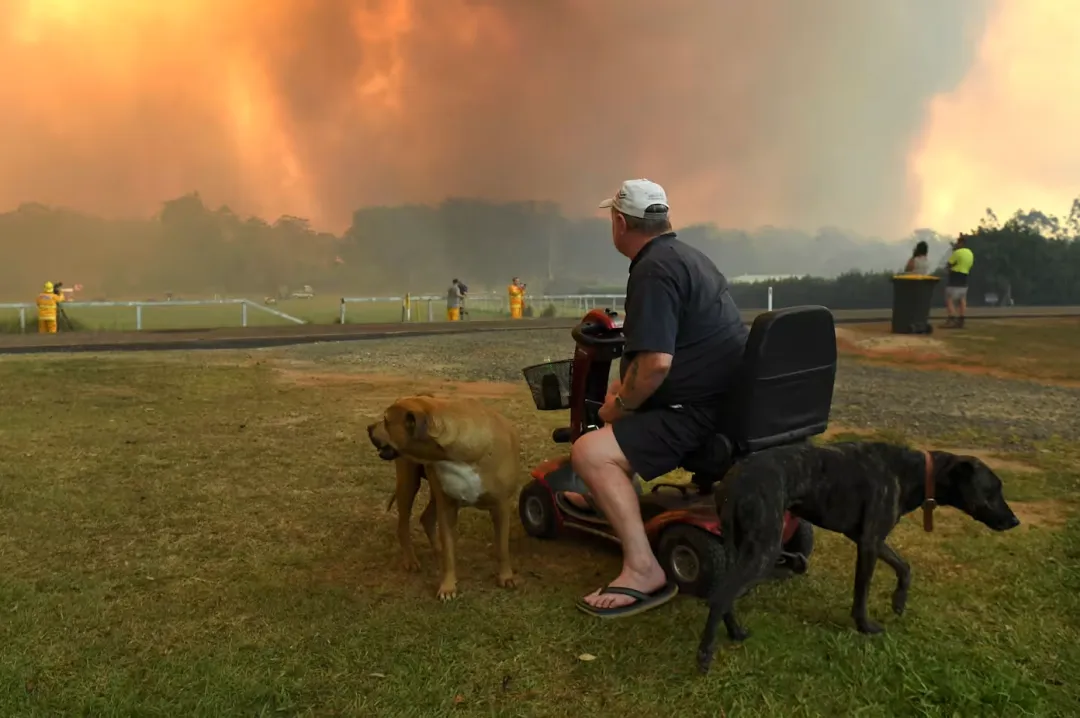
When mobile phones across Australia erupted in sirens and warning messages this week, it marked the trial of a nationwide emergency alert system born from tragedy. The system answers a recommendation issued after the 2019–2020 Black Summer bushfires, a catastrophe that killed 33 people, destroyed thousands of homes, consumed millions of acres of farmland, and cost the country billions of dollars.
The parallels with today's blazes across Europe and Canada are not lost on researchers. Jason Sharples, a bushfire scientist at the University of New South Wales, points to the 38 extreme fire events, known as pyrocumulonimbus, or firestorms, recorded during that Australian disaster, phenomena that have since been studied worldwide for their volatility. Rising temperatures, he notes, make such events increasingly common everywhere, not just in Australia.
Officials warn that complacency remains one of the greatest dangers. Fire authorities describe a familiar pattern: residents assume they are safe until flames draw near, by which point it is often too late to prepare. In the years since Black Summer, a lengthy official inquiry has pushed Australia toward a more proactive posture—deliberately burning excess vegetation before it can fuel a catastrophic blaze, carving firebreaks through high-risk terrain, and pressing households to clear gutters and maintain defensible space around their homes well before smoke appears on the horizon. The same inquiry also called for expanded emergency powers for government and a coordinated national fleet of firefighting aircraft.
Similar recalibrations are under way elsewhere. Portugal, after fires killed more than a hundred people in 2017, began replacing flammable eucalyptus plantations with native oak and chestnut trees that both resist ignition and retain more moisture. Finland, whose forests cover three-quarters of its land, limits the spread of fire by clearing forest floors, conducting controlled burns, and dividing commercial woodland into smaller parcels separated by waterways and wide paths. China has planted vast green firebreaks—corridors of low-flammability trees and shrubs—across hundreds of thousands of kilometres.
These national efforts increasingly feed into global coordination: a United Nations hub convened last summer brought together fire experts to align early-warning systems, risk mapping and vegetation management across borders. Matthew Jones, who studies wildfire and climate change at the University of East Anglia, frames the response as operating on two timelines at once. The long game is cutting the greenhouse-gas emissions that intensify heat and drought; the short game is actively managing vegetation, especially around the edges of cities, and identifying ground that could shelter firefighters when a blaze approaches populated areas.
Not every ignition can be prevented, Jones acknowledges, but each one stopped in its early stages spares firefighting resources for blazes that do take hold—a reminder that resilience, not elimination, may be the more realistic goal.
31. The reference to fires in Europe and Canada in Paragraph 2 mainly serves to ____
[A] indicate that European and Canadian authorities directly contributed data used to design Australia's alert system
[B] suggest that a phenomenon first documented in Australia now carries relevance well beyond its borders
[C] imply that firestorms are becoming an increasingly rare occurrence worldwide
[D] demonstrate that wildfire frequency, rather than intensity, is the primary global concern
32. According to Paragraph 3, the inquiry following Black Summer recommended that Australia ____
[A] concentrate available resources exclusively on aerial firefighting capability
[B] place the primary responsibility for prevention on government agencies alone
[C] aim to eliminate bushfire risk entirely within populated areas
[D] shift from responding to fires after they ignite toward reducing risk well in advance
33. What do the approaches adopted by Portugal, Finland and China have in common?
[A] deliberately reshaping the vegetation landscape to slow the spread of fire
[B] relying primarily on advanced satellite-based detection technology
[C] abandoning the use of controlled burns as a management tool
[D] adopting measures in direct response to a single coordinated international directive
34. According to Jones, addressing wildfire risk requires ____
[A] prioritising emissions reduction above every other available measure
[B] focusing primarily on protecting rural communities rather than urban edges
[C] pursuing a distant structural goal alongside more immediate, practical measures
[D] relying mainly on international agreements rather than local action
35. Which of the following best reflects the overall message of the text?
[A] modern warning systems have made catastrophic bushfires unlikely to ever recur
[B] international cooperation has become the single most decisive factor in fire management
[C] the measures described are expected to eliminate wildfire ignitions entirely within populated regions
[D] managing wildfire risk realistically means building resilience rather than achieving complete prevention
附注:根据历年考研英语真题阅读题源外刊等,摘选最新文章,模拟仿真出题。
参考答案见以下。
Quick look: BDACD
31.【正确答案】B
【解析】题型:举例目的题
定位:第二段"The parallels with today's blazes across Europe and Canada are not lost on researchers...Rising temperatures, he notes, make such events increasingly common everywhere, not just in Australia."
分析:本段提及欧洲与加拿大当前的野火,其作用并非说明这些地区参与了警报系统的设计,而是指出——最初在澳大利亚被记录和研究的"火风暴"现象,如今在全球范围内正变得越来越普遍。选项B准确概括了这一"从个案到全球现象"的论证功能。
干扰项:[A]"表明欧洲与加拿大当局直接为澳大利亚警报系统的设计提供了数据"——无中生有,原文未提及任何数据协作;[C]"暗示火风暴现象在全球范围内正变得越来越罕见"——事实相反,原文明确指出气温上升使此类事件"到处都变得更常见";[D]"证明野火的发生频率而非强度才是全球关注的首要问题"——无中生有并偷换概念,原文讨论的是firestorms这一特定的极端强度现象,并未在频率与强度之间做比较。
32.【正确答案】D
【解析】题型:细节理解题
定位:第三段"an official inquiry has pushed Australia toward a more proactive posture—deliberately burning excess vegetation before it can fuel a catastrophic blaze, carving firebreaks through high-risk terrain, and pressing households to...maintain defensible space...well before smoke appears on the horizon."
分析:调查报告推动澳大利亚从"火灾发生后再应对"转向"提前主动降低风险",选项D准确概括了这一策略转变的核心。
干扰项:[A]"将现有资源集中用于空中灭火能力"——无中生有,原文虽提及协调的国家航空消防队,但并未说资源"专门"用于此项;[B]"将预防的主要责任完全归于政府机构"——张冠李戴,原文明确提到家庭同样承担清理排水沟、维护房屋防护空间等责任,并非仅政府一方;[C]"旨在彻底消除人口聚居区内的丛林火灾风险"——程度夸大,原文强调的是"降低风险"而非"彻底消除"。
33.【正确答案】A
【解析】题型:推理判断题
定位:第四段"Portugal...began replacing flammable eucalyptus plantations with native oak and chestnut trees...Finland...limits the spread of fire by clearing forest floors, conducting controlled burns, and dividing commercial woodland into smaller parcels...China has planted vast green firebreaks."
分析:葡萄牙更换树种、芬兰清理并划分林地、中国种植绿色防火带,三者的共同点在于都是通过主动改变植被本身的构成或布局来延缓火势蔓延。选项A准确概括了这一共同逻辑。
干扰项:[B]"主要依赖先进的卫星探测技术"——无中生有,三国的做法均未提及卫星技术;[C]"放弃使用可控燃烧作为管理手段"——事实相反,芬兰明确仍在使用controlled burns;[D]"是为响应某一项统一的国际指令而采取的措施"——无中生有并以偏概全,联合国相关协调机制是下一段才引入的内容,本段未提及三国行动源于某项统一指令。
34.【正确答案】C
【解析】题型:细节理解题
定位:第五段"The long game is cutting the greenhouse-gas emissions...the short game is actively managing vegetation...and identifying ground that could shelter firefighters."
分析:Jones将应对野火风险描述为同时在两条时间线上推进——"长期博弈"(削减温室气体排放)与"短期博弈"(积极管理植被、确定可庇护消防员的地点)。选项C精准概括了这一"长短兼顾"的框架。
干扰项:[A]"将减排置于高于其他一切可用措施的优先地位"——偷换概念,原文呈现的是长期与短期两条并行的策略,并未将减排排在"高于一切"的位置;[B]"主要聚焦于保护农村社区而非城市边缘地带"——事实相反,原文明确提到植被管理"尤其"围绕城市边缘展开;[D]"主要依赖国际协议而非本地行动"——无中生有,本段谈的是长短期措施的结合,并未在国际与本地之间做主次判断。
35.【正确答案】D
【解析】题型:主旨大意题
定位:末段"Not every ignition can be prevented, Jones acknowledges, but each one stopped in its early stages spares firefighting resources for blazes that do take hold—a reminder that resilience, not elimination, may be the more realistic goal."
分析:全文从澳大利亚的警报系统切入,历经Black Summer的教训、多国的植被管理实践、联合国层面的协调,最终在末段收束为一个明确立场——应对野火风险的现实目标是建立"韧性"而非追求"彻底消除"。选项D精准概括了这一核心论点。
干扰项:[A]"现代预警系统已使Black Summer式的灾难性丛林火灾不太可能再次发生"——程度夸大并事实相反,末段反而强调起火事件"无法被全部阻止";[B]"国际合作已成为火灾管理中最具决定性的单一因素"——以偏概全,国际协调只是全文提及的多项措施之一,并未被赋予"最具决定性"的地位;[C]"文中所述措施预计将彻底消除人口聚居区内的野火起火事件"——事实相反,末段明确承认并非每一次起火都能被阻止。
【词汇注释】
recalibration: noun (ADJUSTMENT) the process of adjusting or fine-tuning something, especially in response to new information 调整;重新校准
defensible: adjective (PROTECTABLE) capable of being defended or protected against attack or damage 可防御的(文中指经过整理后能抵御火势蔓延的房屋周边空间)
volatility: noun (INSTABILITY) the quality of being unpredictable or subject to rapid, extreme change 不稳定性;剧烈易变性
ignition: noun (START OF FIRE) the action of starting a fire or causing something to catch fire 点燃;起火
monoculture: noun (SINGLE CROP) the cultivation of a single crop or plant species over a wide area 单一种植(文中指桉树的大面积单一种植)
corridor: noun (STRIP OF LAND) a strip of land, often long and narrow, connecting two areas or serving a particular function 廊道;地带
resilience: noun (RECOVERY ABILITY) the capacity to recover quickly from difficulties or to withstand ongoing pressure 韧性;恢复力
【长难句】Not every ignition can be prevented, Jones acknowledges, but each one stopped in its early stages spares firefighting resources for blazes that do take hold—a reminder that resilience, not elimination, may be the more realistic goal.
Not every ignition can be prevented为主干,Jones acknowledges为插入语,标注这一让步判断的信息来源; but连接转折的第二个分句:each one stopped in its early stages spares firefighting resources for blazes that do take hold为主干,stopped in its early stages为过去分词短语作后置定语修饰each one,that do take hold为定语从句修饰blazes; 破折号后a reminder that resilience, not elimination, may be the more realistic goal为同位语,对全句意义做出概括,that引导的从句说明reminder的具体内容,resilience与elimination构成对比。
【参考译文】
本周,当全澳大利亚的手机同时响起警报声并弹出警告信息时,这标志着一个源于悲剧的全国性紧急警报系统正式进入试运行阶段。该系统是根据2019至2020年“黑色之夏”丛林大火后提出的建议而建立的——那场灾难造成33人丧生,数千户住宅被毁,数百万英亩农田被烧毁,并给该国造成数十亿美元的损失。
研究人员注意到了这一事件与当前欧洲和加拿大各地山火之间的相似之处。新南威尔士大学的山火科学家杰森·夏普尔斯指出,在那场澳大利亚灾难期间,共记录到38起被称为“火积雨云”(pyrocumulonimbus)或“火风暴”的极端火灾事件,此后,全球各地的研究人员都针对这种现象的剧烈性展开了研究。他指出,气温的上升使得此类事件在世界各地越来越常见,而不仅仅是在澳大利亚。
官员们警告称,麻痹大意仍是最大的危险之一。消防部门描述了一种常见的模式:居民总以为自己很安全,直到火焰逼近,而到那时往往已经来不及做准备了。自“黑色之夏”以来,经过长达数年的官方调查,澳大利亚已采取更积极主动的应对措施——在过剩植被可能引发灾难性大火之前有计划地进行控制性焚烧,在高风险地带开辟防火隔离带,并敦促各家庭在烟雾出现在地平线之前,就清理屋檐排水沟并保持住宅周围的防火空间。该调查还呼吁扩大政府的紧急权力,并建立一支协调统一的国家消防飞机机队。
其他地区也在进行类似的调整。葡萄牙在2017年山火造成百余人丧生后,开始用抗燃且保水性更强的本土橡树和栗树取代易燃的桉树种植园。森林覆盖率达国土面积四分之三的芬兰,则通过清理林地地面、实施控制性焚烧,并将商业林地划分为由水道和宽阔小径分隔的较小地块,来限制火势蔓延。中国已在数十万平方公里的范围内种植了广阔的绿色防火带——由低可燃性树木和灌木组成的走廊。
这些国家层面的努力正日益融入全球协调机制:去年夏天,联合国召集了一个协调中心,汇集了火灾专家,旨在协调跨境的早期预警系统、风险测绘和植被管理。东安格利亚大学研究野火与气候变化的马修·琼斯将这一应对措施描述为同时在两个时间线上运作。长远之计是削减加剧高温和干旱的温室气体排放;短期之策则是积极管理植被——尤其是城市周边的植被——并确定当火势逼近人口稠密地区时,哪些区域可为消防员提供避难场所。
琼斯承认,并非每起火灾都能被预防,但每起在早期阶段被扑灭的火灾,都能为那些确实蔓延开来的火势节省消防资源——这提醒我们,韧性而非彻底消除,或许才是更现实的目标。
附注: