剑桥大学三一学院(Trinity College) 的纯化学面试非常硬核。它通常作为 Physical NatSci(物理自然科学)或 Chemical Engineering & Biotechnology(化学工程与生物技术)面试的核心组成部分。
三一学院的化学考官极其讨厌死记硬背。在面试(通常使用 Miro 共享白板)中,他们会直接给出超越 A-Level 考纲的大学级分子或物理化学情境,来观察你的空间逻辑、热力学直觉以及画电子转移(Curly Arrows)的严谨度。
基于刚结束不久的上一季真实面试复盘与官方最新公开的化学学科备考材料,为你整理 10 道原汁原味的三一学院纯化学面试真题:
1. 【高频热题】计算“水的浓度”
【真题】What is the concentration of pure water? Prove your answer with calculations.(纯水的浓度是多少?请通过计算证明你的答案。)
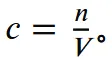 主动假设 1 升(1000 mL)的纯水:由于水的密度约为 1 g/mL,1 升水的质量为 1000 g。水的摩尔质量为 18 g/mol。因此,1 升水中水的物质的量
 最终得出纯水的浓度恒等于 55.56 mol/L。
2. 【化学键与热力学】氟气(F₂)的反常键能
【真题】 If you look at the halogen group, bond dissociation energy typically decreases as you go down the group (Cl₂ > Br₂ > I₂). However, Fluorine (F₂) has a much lower bond energy than Chlorine. Explain this anomaly.
(在卤素族中,化学键解离能通常随着原子序数增大而变小。然而,氟气(F₂)的键能却远低于氯气,请解释这种反常现象。)
3. 【无机非金属】二氧化碳与氯化钠的溶解性质差异
【真题】Why does carbon dioxide dissolve in water to form an acidic solution, but sodium chloride dissolves to give a neutral one? What does this tell you about their bonding?(为什么二氧化碳溶于水会形成酸性溶液,而氯化钠溶解后却是中性溶液?这表现出它们在化学键上有什么本质区别?)
4. 【过渡金属】过渡金属的最高氧化态限制
【真题】Why does fluorine never form compounds in a positive oxidation state, whereas chlorine can reach an oxidation state of +7 (e.g., in HClO₄)?(为什么氟元素在化合物中从未出现过正氧化态,而同族的氯元素却可以达到 +7 氧化态(例如在 HClO₄ 中)?)
第二部分:结构化学与分子轨道 (Structure & Bonding)
5. 【微观图形题】臭氧(O₃)的分子轨道配置
【真题】 Sketch the Lewis structure of Ozone (O₃), and then derive and draw its molecular orbital (MO) configuration for the π system.(请画出臭氧(O₃)的路易斯结构式,并推导并画出其 π 电子系统的分子轨道(MO)空间排布。)
6. 【结构与相图】超临界流体与超临界点
【真题】Discuss the concept of the "Triple Point" and the "Critical Point" on a Pressure-Temperature (P-T) phase diagram of water. What happens to the interface between liquid and gas beyond the critical point?(讨论水的压强-温度(P-T)相图上的“三相点”和“临界点”。越过临界点后,气液两相的界面会发生什么?)
第三部分:有机化学与反应机理 (Organic Chemistry)
在三一学院的有机化学面试中,考官最喜欢给一个巨大的未知分子,要求你玩“电子转移棋(Curly Arrows)”。
7. 【无仪器定性】不用任何仪器的液体鉴别
【真题】You are given two identical-looking colourless liquids: one is pure ethanol, and the other is pure cyclohexane. Without using any laboratory instruments, spectroscopic techniques, or tasting them, how would you distinguish between them?(给你两瓶外观完全相同的无色液体:一瓶是纯乙醇,另一瓶是纯环己烷。在不使用任何实验室仪器、光谱技术且不品尝的前提下,你如何鉴别它们?)
8. 【立体化学】从天然薄荷醇合成薄荷烯的机理
【真题】Consider the dehydration reaction of Menthol to form Menthene using an acid catalyst. Draw the reaction mechanism using curly arrows. Will it produce a single isomer or a mixture? Why?(考虑使用酸催化剂将薄荷醇脱水转化为薄荷烯的反应。请使用弯曲箭头画出其反应机理。该反应会产生单一的异构体还是混合物?为什么?)
9. 【高能有机】探究环丙烷(Cyclopropane)的反常高活性
【真题】 Alkanes are typically known for being highly unreactive. However, cyclopropane readily undergoes ring-opening reactions with bromine at room temperature, behaving more like an alkene. Explain the chemical driving force behind this.(烷烃通常以极低的反应活性著称。然而,环丙烷在室温下极易与溴发生开环反应,表现得更像一个烯烃。请解释这背后的化学驱动力。)
10. 【热力学/动力学耦合】催化剂对熵与焓的终极拷问
【真题】A catalyst speeds up a chemical reaction without being consumed. Does it change the enthalpy (Δ H) of the reaction? What about the entropy (Δ S)? Justify your reasoning using a Gibbs Free Energy approach.
(催化剂能在不被消耗的前提下加速反应。它会改变反应的焓变(Δ H)吗?那熵变(Δ S)呢?请使用吉布斯自由能的方法来论证你的推导。)
 )。利用 Δ G = Δ H - TΔ S,催化剂改变了过渡态的吉布斯自由能(动力学活化垒),但始态和终态之间的
 (热力学平衡常数)保持绝对不变。