
READING PASSAGE 1
You should spend about 20 minutes on Questions 1-13, which are based on Reading Passage 1.
A new voyage round the world
A very old travel book that holds an unusual place in English literature
A Part travelogue, part historical record of the Caribbean pirates, part scientific treatise, A New Voyage Round the World was William Dampier's account of his twelve-year series of journeys around the globe from 1679 to 1691. The wealth and novelty of Dampier's descriptions, combined with the highly comical accounts of his comrades’ escapades, proved so popular with a public hungry for tales of discovery and adventure that A New Voyage went into its third reprint within a year of publication. So ground-breaking was Dampier’s account that the writers Swift and Defoe were inspired to create two of the most famous books in the English language, Gulliver’s Travels and Robinson Crusoe.
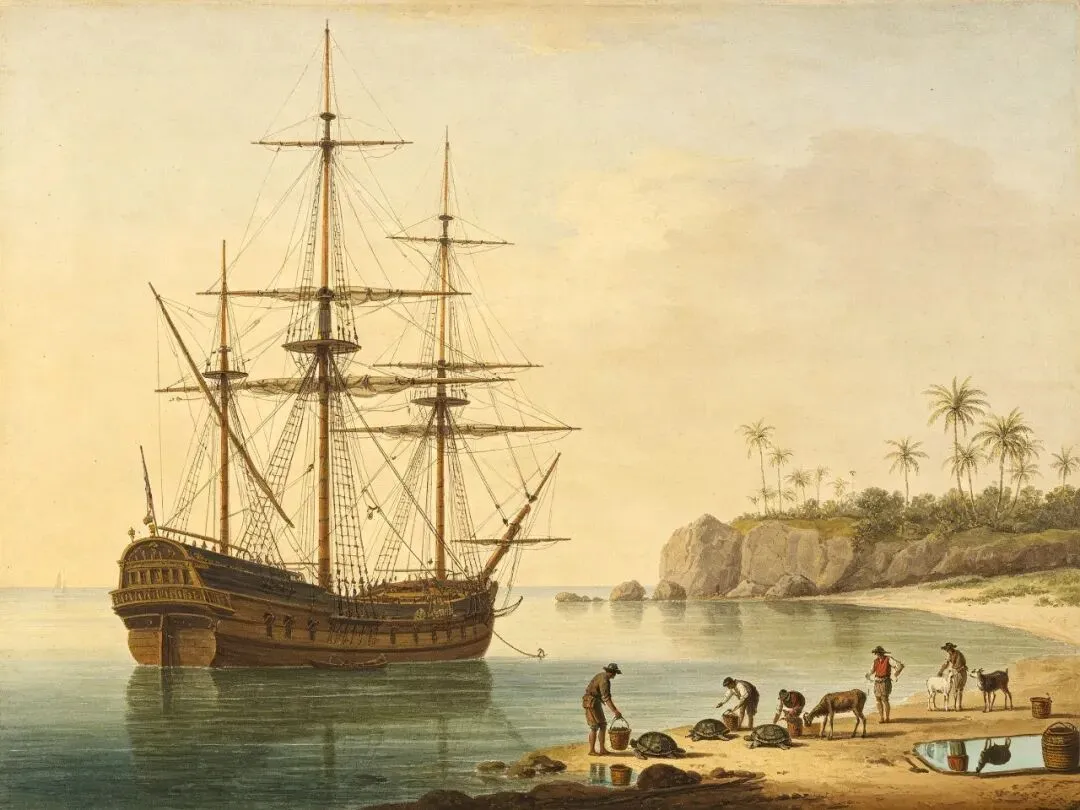
B Dampier’s commentators have portrayed him as an unusual, not to say peculiar, man. Notwithstanding his undoubted qualities as an observer, he has been variously characterised as aloof, arrogant, hot-tempered and a weak leader of men. When he arrived on the western coast of Australia, he promptly elected to leave and head north out of dislike for the cold of more southerly latitudes. This physical sensitivity has often been seized on by his detractors, who point out that, as a result, Dampier missed out on becoming the name forever associated with the European discovery of Australia, that honour instead going to Captain James Cook some 80 years later. Yet it should be remembered that he was able to endure a never-ending plague of discomforts and ailments in the tropics. And once, wrecked off Ascension Island in the South Atlantic Ocean, he managed with his crew to survive for five weeks without help, living entirely on turtles and goats.
C What of his early life, then? Dampier was born in 1651 in Somerset, England, the son of a tenant farmer, George, and his wife Ann. His birthplace, Hymerford House, stands to this day. His parents died before he reached seniority and his guardians apprenticed the young William to a ship's captain, the boy having shown ‘very early inclinations to see the world’. There was nothing in his childhood to set Dampier apart from the numerous other young boys who were sent to sea at this time.
D Having made brief passages to France and Newfoundland, he completed a more extended voyage to Java, where he began to learn the art of navigation. Returning briefly to Somerset, a neighbour offered Dampier a position overseeing his plantation in Jamaica, which he took up for a time, but he soon returned to sea on a trading voyage among the Caribbean islands. From the viewpoint of posterity, the most significant aspect of this time was that, as plantation manager, Dampier first started to keep a journal.
Questions 27-40
Choose the correct letter, A, B, C or D.
Write the correct letter in boxes 27-31 on your answer sheet.
27 Which of the following best summarizes the writer’s point in the first paragraph?
A. Dampier’s book does not fall into a single category.
B. Readers were not interested in books on the subject of travel.
C. Today’s readers do not appreciate the style of Dampier’s writing.
D. Dampier sailed round the world more quickly than anyone before.
28 The writer refers to Swift and Defoe in order to
A. provide more information regarding Dampier’s sources.
B. compare Dampier to two earlier writers.
C. give an example of Dampier’s influence.
D. highlight two of Dampier’s critics.
29 Dampier left the western coast of Australia because
A. he wanted to get to the north before Cook arrived.
B. he found the temperature there unpleasant.
C. he had problems with the crew.
D. he required medical attention.
30 What point does the writer make about Dampier in the second paragraph?
A. He could cope with physical hardship.
B. He was more adventurous explorer than Cook was.
C. He had a kinder personality than he is given credit for.
D. He was calm in a crisis.
31 What information is given about Dampier’s early life?
A. He had difficult relationship with the people looking after him.
B. He was different from other youths who went to sea.
C. He wanted to travel from a young age.
D. He came from a family of sailors.
私信up主免费领取完整原文,答案,解析,机考刷题账号!