雅思阅读真题 The History of Glass(玻璃的历史)
剑桥雅思 12 Test 8 Passage 1
题材:人文历史类 | 篇目:The History of Glass(玻璃的历史)
官方原版阅读原文
The History of Glass
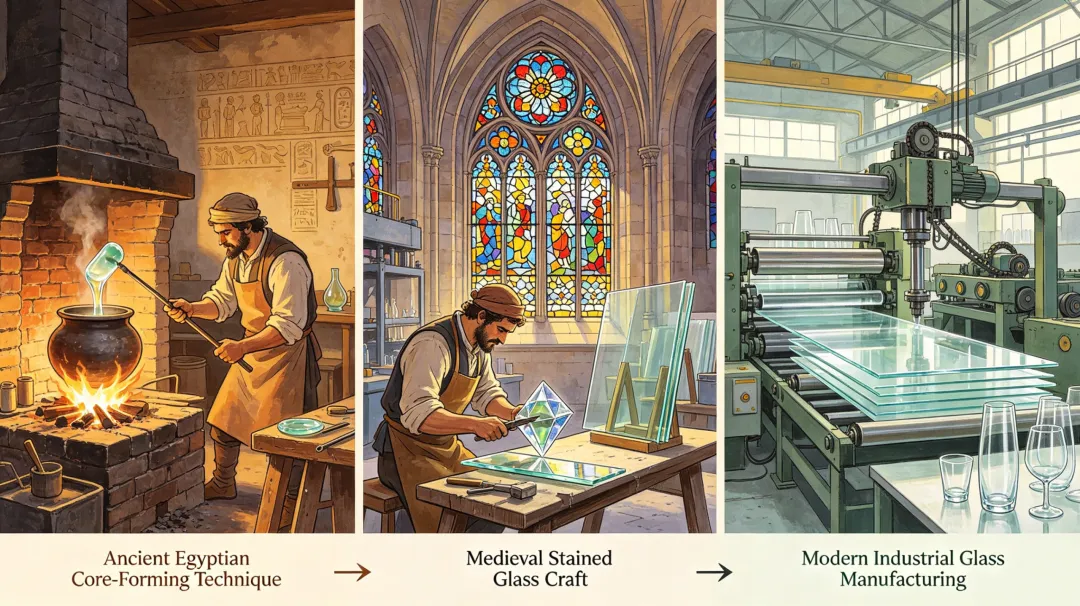
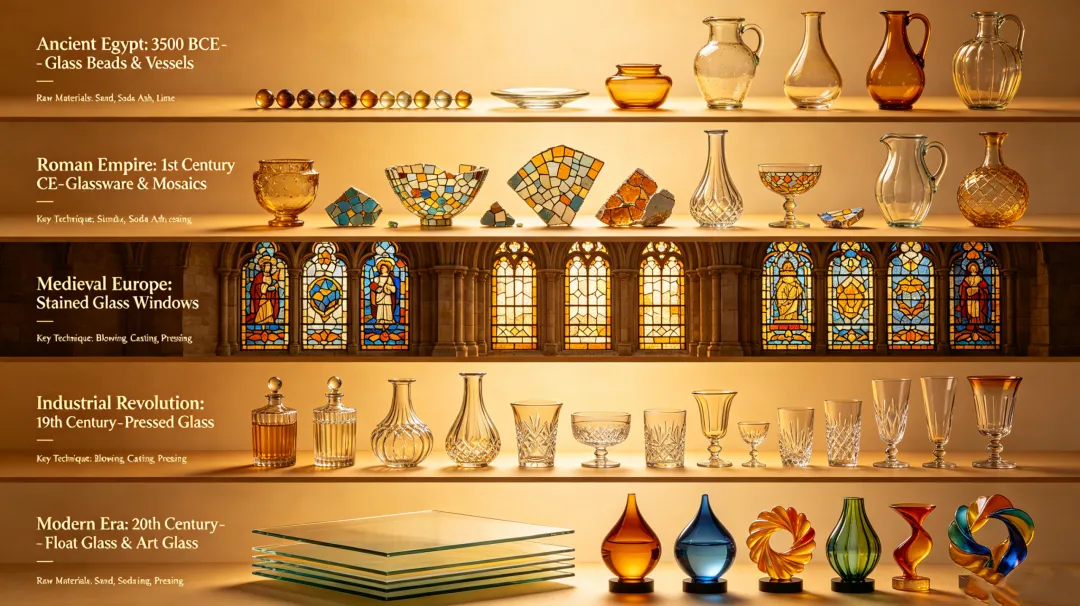
Glass has been used by human civilisations for thousands of years. The first man-made glass was probably produced in Mesopotamia around 3500 BC, and the earliest glass objects date from about 1500 BC in Egypt. For a long time, glass was regarded as a precious material, and only the wealthy could afford it. It was not until the Roman Empire, however, that glass was produced on a large scale, and glass objects became available to ordinary people. The Romans developed the technique of glassblowing, which allowed glass to be shaped quickly and cheaply. Roman glass was traded across the empire, and examples have been found as far away as China.
After the fall of the Roman Empire, glassmaking skills declined in Europe. The centre of glass production moved eastwards, to the Middle East. In the 7th century, Arabs in Syria and Persia developed new ways of decorating glass, such as gilding and colouring. These techniques were brought back to Europe by Crusaders in the 11th and 12th centuries, and led to a revival of glassmaking in Venice, Italy. By the 14th century, Venice had become the most important glassmaking centre in Europe. Venetian glass was famous for its clarity and beauty, and glassmakers were forbidden from leaving the city, to protect the secrets of their craft.
The 17th century saw a great advance in British glassmaking. In 1676, George Ravenscroft invented lead crystal glass, a type of glass that is heavier and clearer than ordinary glass, and makes a ringing sound when struck. Lead crystal became extremely popular, and was used to make drinking glasses and decorative objects. At the same time, the British government put a heavy tax on glass, which meant that glass remained an expensive luxury for many years. The tax was not removed until 1845, and in the years after that, glass production increased rapidly.
The Industrial Revolution in the 19th century brought huge changes to glass production. New machines were invented that could make glass bottles automatically, in large quantities and at low cost. In 1887, the first machine for making glass bottles was developed in the USA. It could produce 900 bottles an hour, compared to 100 a day made by hand. Later, in 1902, Irving W. Colburn invented the sheet glass machine, which made it possible to produce large, flat sheets of glass of uniform thickness. This invention made window glass much cheaper, and helped the construction industry to develop.
Today, glass is one of the most common materials in the world. It is used in buildings, cars, food packaging, screens and many other products. New types of glass are constantly being invented, for new uses. For example, fibre-optic glass cables carry telephone and internet signals across the world. Bulletproof glass is used in cars and buildings for security. Glass is also used in medicine, to make surgical instruments and containers for dangerous chemicals. Glass, one of the oldest materials made by humans, is still helping us to develop new technologies.
The History of Glass 玻璃的历史 全套原版英文试题
Questions 1–7 TRUE / FALSE / NOT GIVEN
Do the following statements agree with the information given in Reading Passage 1?
In boxes 1–7 on your answer sheet, write
TRUE if the statement agrees with the information
FALSE if the statement contradicts the information
NOT GIVEN if there is no information on this
Early humans first made glass in Egypt.
Glass was affordable for most people in the Roman Empire.
Roman glass was more popular in China than in other countries.
After the Roman Empire collapsed, Europeans continued to make glass of high quality.
Venetian glassmakers were not allowed to travel abroad.
Lead crystal glass is the most common type of glass used today.
The British glass tax was introduced in the 17th century.
Questions 8–13 Table Completion
Complete the table below. Choose ONE WORD AND/OR A NUMBER from the passage for each answer.
Write your answers in boxes 8–13 on your answer sheet.