 雅思阅读真题 The Little Ice Age(小冰期)
剑桥雅思 10 Test 2 Passage 2
题材:自然环境类 | 篇目:The Little Ice Age(小冰期)
官方原版阅读原文
The Little Ice Age
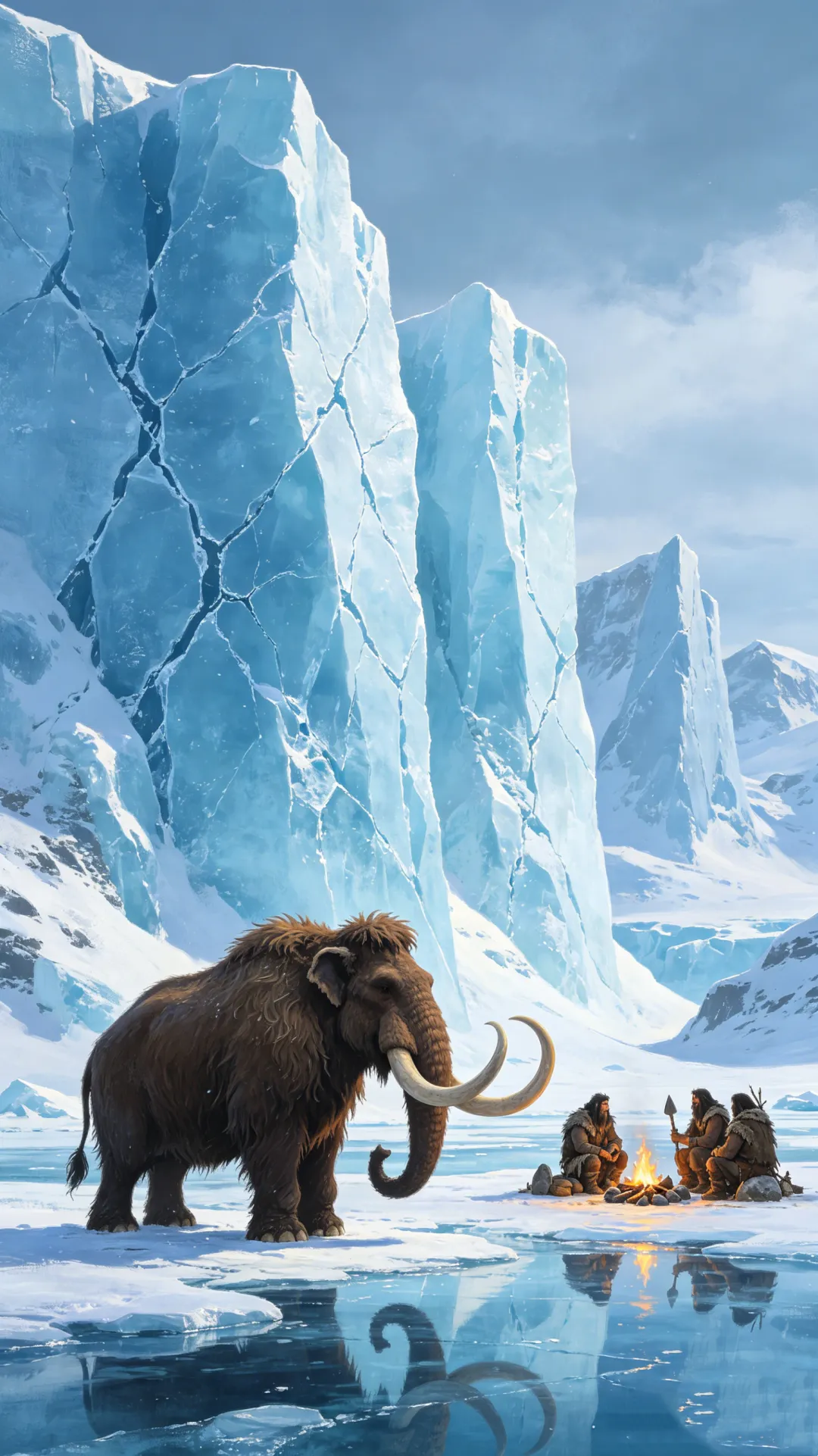
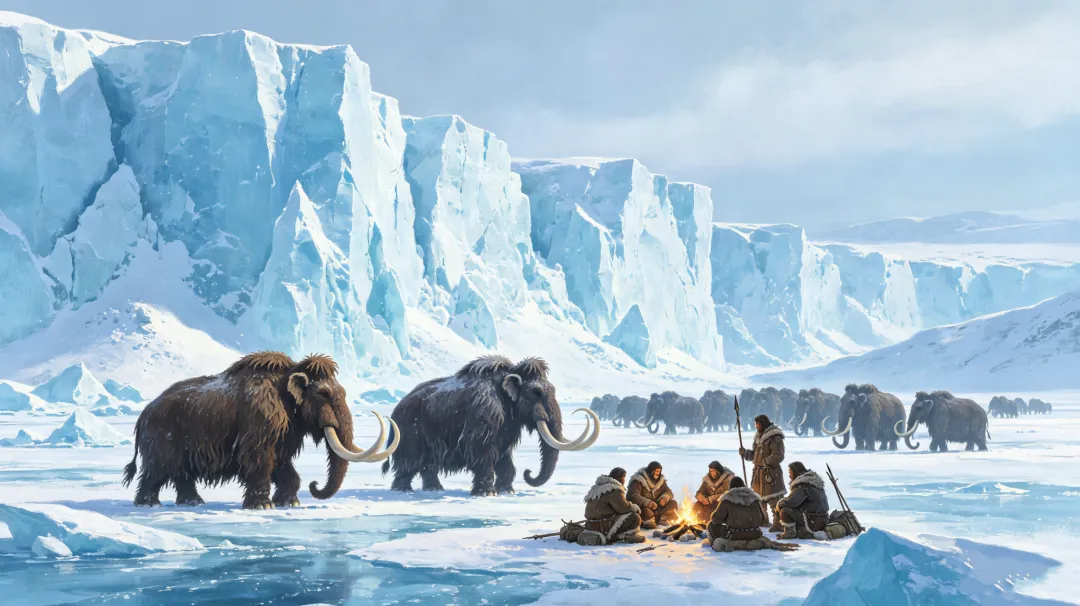
The Little Ice Age lasted from roughly 1300 until the middle of the nineteenth century. Only two centuries ago, Europe experienced a cycle of bitterly cold winters; mountain glaciers in the Swiss Alps were the lowest in recorded memory, and pack ice surrounded Iceland for much of the year. The climatic events of the Little Ice Age did more than help shape the modern world. They are the deeply important context for the current unprecedented global warming. The Little Ice Age was far from a deep freeze, however; rather an irregular seesaw of rapid climatic shifts, few lasting more than a quarter-century, driven by complex and still little understood interactions between the atmosphere and the ocean. The seesaw brought cycles of intensely cold winters and easterly winds, then switched abruptly to years of heavy spring and early summer rains, mild winters, and frequent Atlantic storms, or to periods of droughts, light northeasterly winds, and summer heat waves.
Reconstructing the climate changes of the past is extremely difficult, because systematic weather observations began only a few centuries ago, in Europe and North America. Records from India and tropical Africa are even more recent. For the time before records began, we have only 'proxy records' reconstructed largely from tree rings and ice cores, supplemented by a few incomplete written accounts. We now have hundreds of tree-ring records from throughout the northern hemisphere, and many from south of the equator, too, amplified with a growing body of temperature data from ice cores drilled in Antarctica, Greenland, the Peruvian Andes, and other locations. We are close to a knowledge of annual summer and winter temperature variations over much of the globe going back 600 years.
This book is a narrative history of climatic shifts during the past ten centuries, and some of the ways in which people in Europe adapted to them. Part One describes the Medieval Warm Period, roughly 900 to 1200. During these three centuries, Norse voyagers from Northern Europe explored northern seas, settled Greenland, and visited North America. It was not a time of uniform warmth, for then, as always since the Great Ice Age, there were constant shifts in rainfall and temperature. Mean European temperatures were about the same as today, perhaps slightly cooler.
Part Two describes the Little Ice Age, which followed the Medieval Warm Period. The vast majority of the human population of the time knew nothing of these grand cycles. They lived and died in strict accordance with the seasons, and their lives were bounded by the limits of agricultural productivity. The first signs of the Little Ice Age came in the late thirteenth century, when glaciers began to advance in the Alps after several hundred years of retreat. Harvest failures became commonplace in northern Europe by 1300, as the weather turned significantly colder and wetter. The fourteenth century brought even more trouble, with incessant rains and cold spells that reduced growing seasons by up to six weeks in some years. Millions died in the Great Famine of 1315-1319, when rains and cold weather destroyed cereal crops across northern Europe.
The Little Ice Age produced climate shifts that affected not just farming but also international trade. The freezing of the North Sea and Baltic Sea in the late seventeenth century was an extreme example of cold conditions that disrupted shipping and fishing. The Hanseatic League, a commercial alliance of northern European cities, lost much of its power as trade routes shifted southwards. In contrast, countries like the Netherlands and England adapted by developing heavy fishing fleets and specialised trading ships that could operate in icy conditions. These nations also benefited from a longer-term shift in storm tracks across the Atlantic, which brought milder winters and more reliable rainfall to their territories.
Part Three examines the nineteenth and twentieth centuries, a period of prolonged warming that has brought us to the modern warm period. This warming began slowly, then accelerated sharply after 1850, fuelled by human activities such as deforestation and the burning of fossil fuels. The unprecedented rise in global temperatures over the past century has coincided with a rapid growth in human population, from just over one billion in 1850 to more than six billion today. The rapid expansion of humanity and its increasing dependence on fossil fuels have pushed the global climate into unknown territory. We are entering a period of climatic change with far more rapid shifts than anything experienced during the Little Ice Age, and with consequences we can only guess at.
Questions 14–17 Matching Paragraph Information
Look at the following statements (Questions 14–17) and the list of paragraphs A–F below.
Match each statement with the correct paragraph, A–F.
Write the correct letter, A–F, in boxes 14–17 on your answer sheet.
14. the biological and human systems whose records help us understand past climates
15. a description of the part of the book which deals with the climate before the Little Ice Age
16. an example of how some countries adapted better than others to difficult climatic conditions
17. an explanation of why the Little Ice Age was a period of climatic instability
Questions 18–22 Summary Completion
Complete the summary using ONE WORD ONLY from the passage.
Write your answers in boxes 18–22 on your answer sheet.
Weather during the Little Ice Age
Documentation of past weather conditions is limited: our main sources of knowledge for long-ago periods are (18), in addition to some written histories.
Scientists have been able to put together a picture of temperature changes over the past 600 years, using studies of (19) and ice cores from different parts of the world.
The Medieval Warm Period did not involve constant warm weather, and average temperatures in Europe were about the same as they are today, or maybe slightly (20).
The beginning of the Little Ice Age was signalled by the growth of (21) in the Alps in the late 1200s.
The cold temperatures and excessive rain of the early 1300s led to widespread (22)______ in northern Europe, where millions of people died.
Questions 23–26 Multiple Choice TWO Answers
Choose TWO letters, A–E.
Write the correct letters in boxes 23 and 24 on your answer sheet.
23–24 Which TWO of the following statements about the Little Ice Age are mentioned by the writer?
A. Its coldest winters all took place in the fourteenth century.
B. It had a greater effect on farming than on trade.
C. It involved both very cold and very dry periods.
D. It lasted for roughly 550 years.
E. It caused the collapse of the Hanseatic League.
Choose TWO letters, A–E.
Write the correct letters in boxes 25 and 26 on your answer sheet.
25–26 Which TWO of the following results of climatic change in the 19th–20th centuries are mentioned?
A. The growth of human populations
B. A decline in fossil fuel use
C. More rapid climatic change than in the Little Ice Age
D. The spread of tree-ring research
E. Deforestation on a global scale