

中考英语语法题占分30-40分,很多孩子不是不会,而是不知道"考点在哪里"。今天把最近5年中考最高频的10个语法考点整理出来,每个考点都附详细讲解+典型例题+避坑指南,建议收藏打印!

10个语法考点


时态考点
核心知识点:
中考英语最常考的6种时态:
一般现在时:表示经常发生的动作或客观事实
标志词:often, usually, always, every day
例句:She often goes to school by bus.
一般过去时:表示过去某个时间发生的动作
标志词:yesterday, last week, in 2020, ago
例句:I visited my grandma last Sunday.
一般将来时:表示将来要发生的动作
标志词:tomorrow, next week, in the future
结构:will + 动词原形 / be going to + 动词原形
例句:We will have a picnic tomorrow.
现在进行时:表示此刻正在进行的动作
标志词:now, look, listen, at the moment
结构:am/is/are + doing
例句:Look! The children are playing basketball.
过去进行时:表示过去某个时刻正在进行的动作
标志词:at 8:00 yesterday, when he came in
结构:was/were + doing
例句:I was doing my homework at 8:00 last night.
现在完成时:表示过去发生但对现在有影响的动作
标志词:already, yet, ever, never, since, for
结构:have/has + 过去分词
例句:I have finished my homework already.
典型例题:
题目: My father ______ in this factory for 20 years.
A. works B. worked C. has worked D. will work
答案: C
解析: 句子中"for 20 years"表示从过去持续到现在的时间段,需用现在完成时。
避坑指南:
⚠️ 陷阱1: 看到"for + 时间段"不一定是现在完成时,如果动作已结束要用一般过去时
❌ He has lived in Beijing for 3 years. (他已不在北京)
✅ He lived in Beijing for 3 years.
⚠️ 陷阱2: "yesterday"和"since yesterday"区别巨大
❌ I have seen him yesterday. (错误!)
✅ I saw him yesterday. (一般过去时)
✅ I have seen him since yesterday. (现在完成时)
可套用答题技巧:
找时间标志词 → 确定时态
看动作是否持续到现在 → 判断现在完成时
注意主从句时态一致性

被动语态
核心知识点:
被动语态的结构:be + 过去分词
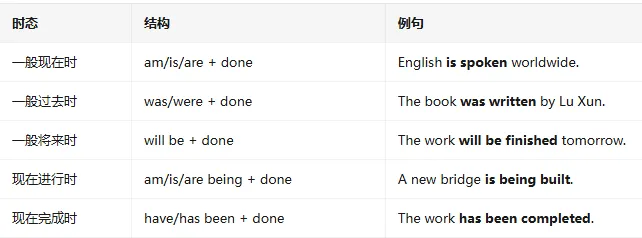
典型例题:
题目: The new hospital ______ next year.
A. will build B. will be built C. builds D. is built
答案: B
解析: 医院是"被建",且时间是next year(将来),所以用一般将来时的被动语态will be built。
避坑指南:
⚠️ 陷阱1: 主动形式表示被动意义
❌ The book sells well. (这本书很畅销) → 不用is sold
✅ The book sells well. (主动表被动)
⚠️ 陷阱2: by短语可省略
中文常说"被…",但英文被动语态中by短语经常省略
✅ Rice is grown in the south. (省略了by farmers)
可套用答题技巧:
看主语是动作的发出者还是承受者
找不到动作执行者时,多半用被动语态
记忆口诀:“被动语态不用怕,be加过去分词就能拿”

定语从句
核心知识点:
定语从句=形容词,修饰前面的名词(先行词)
关系代词:
who:指人,在从句中作主语或宾语
whom:指人,在从句中作宾语
which:指物,在从句中作主语或宾语
that:既可指人也可指物,作主语或宾语
whose:表示"…的",后接名词
关系副词:
when:指时间,= 介词 + which
where:指地点,= 介词 + which
why:指原因,= for which
典型例题:
题目: This is the school ______ I studied 3 years ago.
A. where B. which C. that D. when
答案: A
解析: 先行词是school(地点),定语从句I studied 3 years ago不缺主语或宾语,缺地点状语,所以用where。
避坑指南:
⚠️ 陷阱1: 区分关系代词作主语还是宾语
如果从句缺主语 → 用who/which/that
如果从句缺宾语 → 用whom/which/that(可省略)
⚠️ 陷阱2: that和which的区别
先行词被最高级修饰时 → 只用that
先行词是all, everything, nothing时 → 只用that
可套用答题技巧:
三步法:找先行词 → 看从句缺什么成分 → 选关系词
口诀:“缺主缺宾用代词,缺地缺时副到来”

名词考点
核心知识点:
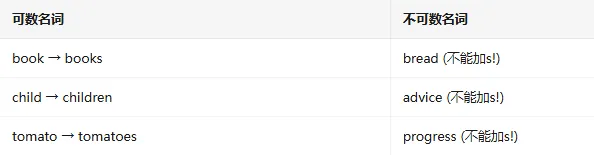
1. 可数名词 vs 不可数名词
申请开头:I am writing to apply for…
能力展示:First…Second…In addition…
礼貌结尾:I would appreciate it if…
2. 名词所有格
有生命的名词:'s (Tom’s book)
无生命的名词:of (the cover of the book)
时间/距离/重量:'s (today’s news, ten minutes’ walk)
3. 名词作定语
通常用单数:apple tree → apple trees
例外:sports meeting, goods train
典型例题:
题目: There are three ______ and seven ______ in the basket.
A. tomato; potato B. tomatoes; potatoes C. tomatoes; potato D. tomato; potatoes
答案: B
解析: tomato和potato都是可数名词,变复数要加-es。
避坑指南:
⚠️ 陷阱1: 不可数名词表示"种类"时可变复数
❌ I like fruits. (错误!fruit通常不可数)
✅ I like fruit. (正确)
✅ I like different fruits. (表示不同种类,可用复数)
⚠️ 陷阱2: 集体名词的单复数
family, class, team等词,强调整体用单数,强调成员用复数
My family is a big one. (整体)
My family are watching TV. (成员)
可套用答题技巧:
见到a/an → 后面名词用单数
见到these/those → 后面名词用复数
记忆常见不可数名词:advice, progress, information, news

代词考点
核心知识点:
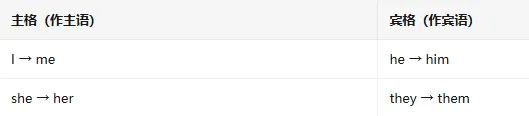
1. 人称代词主格 vs 宾格
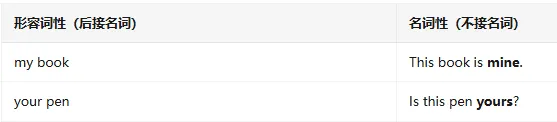
2. 形容词性物主代词 vs 名词性物主代词
3. 反身代词
myself, yourself, himself, herself, itself, ourselves, yourselves, themselves
固定搭配:by oneself (独自), enjoy oneself (玩得开心), help oneself to (随便吃)
4. 不定代词
some 用于肯定句和表示请求/建议的疑问句
any 用于否定句、疑问句和条件句
no = not any
none 指人或物的"没有一个",回答how many/much的提问
典型例题:
题目: Help ______ to some fish, children.
A. yourself B. yourselves C. himself D. themselves
答案: B
解析: 固定搭配help oneself to,且children是复数,所以用yourselves。
避坑指南:
⚠️ 陷阱1: it, one, that的区别
it 指代同一物
one 指代同类异物(泛指)
that 指代同类异物(特指,用于比较)
⚠️ 陷阱2: other, others, the other, the others的区别
other + 名词复数(泛指"其他的")
others = other + 名词(不接名词)
the other + 名词(特指"两者中的另一个")
the others = the other + 名词(特指"其余全部")
可套用答题技巧:
看空格后有无名词 → 决定用形容词性还是名词性物主代词
看指代范围(两者/三者以上/全部/部分)→ 选正确的不定代词
记忆口诀:“形物后接名,名物可独行”

形容词和副词考点
核心知识点:
1. 形容词 vs 副词
形容词修饰名词:a beautiful girl
副词修饰动词/形容词/副词:She sings beautifully.
2. 比较级和最高级
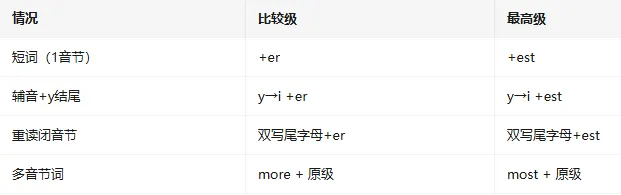
3. 不规则变化
good/well → better → best
bad/badly → worse → worst
many/much → more → most
little → less → least
far → farther/further → farthest/furthest
4. 比较级句型
比较级 + than(比…更…)
as + 原级 + as(和…一样…)
not as/so + 原级 + as(不如…)
the + 比较级…, the + 比较级…(越…越…)
比较级 + and + 比较级(越来越…)
典型例题:
题目: The more you practice, ______ your English will be.
A. the better B. the best C. better D. best
答案: A
解析: 固定句型"The + 比较级…, the + 比较级…“表示"越…越…”。
避坑指南:
⚠️ 陷阱1: 比较级前可用much, even, still, far等修饰,不能用very
❌ My English is very better than yours.
✅ My English is much better than yours.
⚠️ 陷阱2: 最高级前要用the,但副词最高级可省略the
✅ He is the tallest in our class.
✅ He runs (the) fastest in our class.
可套用答题技巧:
看到than → 用比较级
看到in/of短语表示范围 → 用最高级
看到"the + 比较级…, the + 比较级…" → 毫不犹豫填比较级

介词考点
核心知识点:
1. 时间介词
at:具体时刻 (at 8:00, at noon, at night)
on:具体某天 (on Monday, on June 1st, on a cold morning)
in:年/月/季节/上午下午晚上 (in 2020, in summer, in the morning)
2. 方位介词
in:在…里面
on:在…上面(接触)
at:在某地点(小地点)
to:朝…方向
from…to…:从…到…
3. 方式介词
by:by bus, by phone, by doing sth.
with:用工具 (write with a pen)
in:用语言/材料 (in English, in ink)
4. 常用介词搭配
look : look at, look for, look after, look up
get: get up, get on, get off, get to
take: take off, take place, take care of
make: make up, make sense, make progress
典型例题:
题目: The students often help ______ the old man ______ his housework.
A. with; with B.不填; with C. with; 不填 D.不填; 不填
答案: B
解析: help后接宾语不需要介词,help sb. with sth.是固定搭配,表示"帮助某人做某事"。
避坑指南:
⚠️ 陷阱1: 时间介词in/on/at的细微区别
有形容词修饰morning/afternoon/evening → 用on
✅ on a cold morning (正确)
❌ in a cold morning (错误)
⚠️ 陷阱2: "还差…就到…"用to而不是from
✅ It’s ten to eight. (7:50)
❌ It’s ten from eight.
可套用答题技巧:
记忆时间介词口诀:“at时刻on天,in加年月和下午”
看到动词 + 介词搭配 → 立刻想到固定短语
介词后接动词 → 用-ing形式

情态动词考点
核心知识点:
1. 常用情态动词及含义
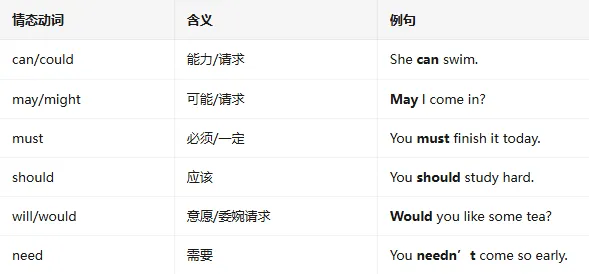
2. 情态动词+have done(对过去的推测)
must have done:一定做过某事(肯定推测)
can’t have done:不可能做过某事(否定推测)
should have done:本应该做某事(实际没做)
needn’t have done:本不必做某事(实际做了)
3. 回答must问句
Must I…? → Yes, you must. / No, you needn’t. (不用mustn’t!)
典型例题:
题目: The ground is wet. It ______ last night.
A. must rain B. must have rained C. must be raining D. must rained
答案: B
解析: 地面是湿的,推测昨晚一定下过雨了,对过去的肯定推测用must have done。
避坑指南:
⚠️ 陷阱1: can和may表示"可能"时的区别
can 表示理论上的可能性(常用于否定和疑问句)
may 表示事实上的可能性(常用于肯定句)
⚠️ 陷阱2: mustn’t和needn’t的区别
mustn’t:禁止,不允许
needn’t:不必
可套用答题技巧:
看到对过去的推测 → 立刻想到"情态动词 + have done"
回答must问句 → 否定用needn’t,不用mustn’t
记忆口诀:“can表能力may表可,must必须should该”

非谓语动词
核心知识点:
1. 不定式 to do
表示目的或将来:I came here to see you.
固定搭配:want to do, decide to do, hope to do, plan to do
疑问词 + to do:I don’t know what to do.
2. 动名词 doing
作主语:Swimming is good for health.
作宾语:I enjoy reading.
介词后:He is good at playing basketball.
固定搭配:finish doing, practice doing, mind doing, suggest doing
3. 现在分词 doing vs 过去分词 done
现在分词表示主动或进行:a sleeping baby (正在睡觉的)
过去分词表示被动或完成:a broken cup (被打破的)
典型例题:
题目: I remember ______ you somewhere before.
A. see B. to see C. seeing D. saw
答案: C
解析: remember doing sth. 记得做过某事(已做);remember to do sth. 记得要去做某事(未做)。根据句意"我记得以前在某处见过你",用seeing。
避坑指南:
⚠️ 陷阱1: stop/forget/remember + to do 和 + doing的区别
stop to do: 停下来去做另一件事
stop doing: 停止正在做的事
forget to do: 忘记要去做(未做)
forget doing: 忘记做过(已做)
remember to do: 记得要去做(未做)
remember doing: 记得做过(已做)
⚠️ 陷阱2: 有些动词后只接to do,有些只接doing,有些都接但意思不同
只接to do:want, hope, decide, plan, refuse, promise
只接doing:enjoy, finish, practice, mind, suggest, keep
都接但意思不同:stop, forget, remember, try, mean
可套用答题技巧:
介词后 → 用doing
固定搭配 → 背下来
see/hear/watch + sb. do/doing的区别:do表示全过程,doing表示正在进行

主谓一致
核心知识点:
1. 语法一致原则
主语是单数 → 谓语用单数
主语是复数 → 谓语用复数
2. 意义一致原则
family, class, team, group等集体名词
强调整体 → 单数谓语
强调成员 → 复数谓语
3. 就近一致原则
there be句型:There is a pen and two books. (由最靠近的主语决定)
either…or…, neither…nor…, not only…but also…: 由最靠近谓语的主语决定
4. 就远一致原则
with, together with, as well as, besides, except等:谓语由前面的主语决定
Tom, along with his parents, is going to Beijing. (谓语由Tom决定)
5. 不定代词作主语
everyone, someone, anyone, no one, each等 → 单数谓语
both, few, many, several等 → 复数谓语
典型例题:
题目: Neither he nor I ______ from Canada. We are from Australia.
A. is B. are C. am D. be
答案: C
解析: neither…nor…遵循就近一致原则,最靠近谓语的主语是I,所以用am。
避坑指南:
⚠️ 陷阱1: 看到with就以为主语是复数
❌ The teacher with his students are visiting the museum.
✅ The teacher with his students is visiting the museum. (主语是the teacher)
⚠️ 陷阱2: 不可数名词作主语时用单数谓语
❌ The news are exciting.
✅ The news is exciting. (news是不可数名词)
可套用答题技巧:
找真正的主语(排除with, together with等插入语)
记住就近一致和就远一致的区别
不可数名词(news, maths, physics)作主语 → 单数谓语


考前速查:10大语法考点核心表格

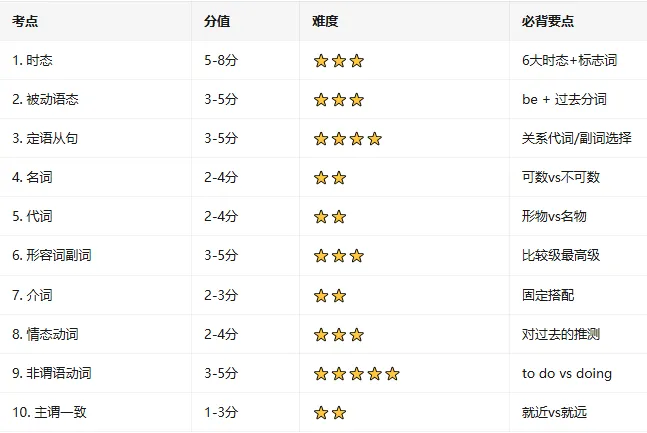
语法提分3个关键
1. 系统梳理(10分)
制作语法知识树
每个考点整理典型例题3-5道
建立错题本,分析错误原因
2. 巧记规则(10分)
用口诀记忆复杂规则
分类记忆固定搭配
对比记忆易混淆知识点
3. 实战演练(10分)
每天做10道语法题
限时训练(每题不超过1分钟)
总结命题规律和陷阱



END
每个考点抄写3遍——形成肌肉记忆
背下核心表格——考试快速查阅
每天练习10题——保持题感
语法满分不是梦,关键是系统学+反复练!


