

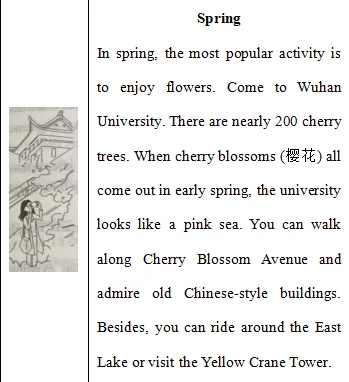
1. In spring, the most popular activity is to enjoy flowers.
In spring:时间状语(介词短语)
the most popular activity:主语(名词短语)
is:系动词
to enjoy flowers:表语(不定式短语)
2. There are nearly 200 cherry trees.
There:引导词(存在句结构)
are:谓语(系动词)
nearly 200 cherry trees:主语(名词短语,存在句中位于谓语之后)
3. When cherry blossoms all come out in early spring, the university looks like a pink sea.
When cherry blossoms all come out in early spring:时间状语从句
When:从属连词
cherry blossoms:主语
all:同位语/强调词(修饰主语)
come out:谓语动词短语
in early spring:时间状语(介词短语)
the university:主语
looks:系动词
like a pink sea:表语(介词短语作表语)
4. You can walk along Cherry Blossom Avenue and admire old Chinesestyle buildings.
You:主语
can walk... and admire...:并列谓语(情态动词+动词原形)
walk along Cherry Blossom Avenue:谓语部分
walk:谓语动词
along Cherry Blossom Avenue:地点状语(介词短语)
admire old Chinesestyle buildings:谓语部分
admire:谓语动词
old Chinesestyle buildings:宾语(名词短语)
5. Besides, you can ride around the East Lake or visit the Yellow Crane Tower.
Besides:连接副词(作状语)
you:主语
can ride... or visit...:并列谓语
ride around the East Lake:谓语部分
ride:谓语动词
around the East Lake:地点状语(介词短语)
visit the Yellow Crane Tower:谓语部分
visit:谓语动词
the Yellow Crane Tower:宾语(名词短语)
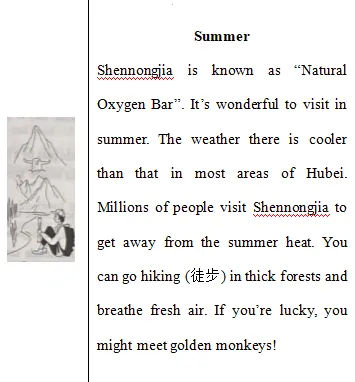
句子1: Shennongjia (天然) is known as “Natural Oxygen Bar.”
Shennongjia:主语(专有名词)
(天然):插入语或注释(可忽略)
is known as:谓语动词短语(被动语态,意为“被称为”)
“Natural Oxygen Bar”:主语补足语(或称主语保留补足语,说明主语的别称)
语法点:被动结构 be known as + 身份/名称。
句子2: It’s wonderful to visit in summer.
It:形式主语(指代后面的不定式短语)
’s (is):系动词
wonderful:表语(形容词)
to visit in summer:真正主语(不定式短语)
to visit:不定式核心
in summer:时间状语(介词短语)
语法点:It is + adj. + to do sth. 句型。
句子3: The weather there is cooler than that in most areas of Hubei.
The weather there:主语
The weather:中心词
there:后置定语(副词)
is:系动词
cooler:表语(形容词比较级)
than that in most areas of Hubei:比较状语从句(省略形式)
than:比较连词
that:代词,指代 the weather
in most areas of Hubei:介词短语作后置定语修饰 that
语法点:比较结构 cooler than...,用 that 避免重复。
句子4: Millions of people visit Shennongjia to get away from the summer heat.
Millions of people:主语(名词短语)
visit:谓语动词(及物动词,一般现在时)
Shennongjia:宾语
to get away from the summer heat:目的状语(不定式短语)
to get away:不定式核心
from the summer heat:介词短语作状语修饰 get away
句子5: You can go hiking in the forest and breathe fresh air.
You:主语
can go hiking:谓语部分(情态动词 + 动词短语)
can:情态动词
go hiking:动词短语,go + Ving 表示活动
in the forest:地点状语(介词短语),修饰 go hiking
and:并列连词
breathe fresh air:并列谓语部分
breathe:动词(省略情态动词 can)
fresh air:宾语
语法点:情态动词 can 同时控制两个并列动词 go 和 breathe。
句子6: If you’re lucky, you might meet golden monkeys!
If you’re lucky:条件状语从句
If:从属连词
you:从句主语
’re (are):从句系动词
lucky:从句表语
you:主句主语
might meet:谓语动词短语(情态动词 might + 动词原形)
golden monkeys:宾语
语法点:真实条件句,主句用 might 表示可能性。
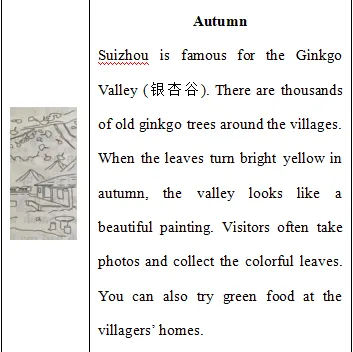
句子1:Suizhou is famous for the Ginkgo Valley (银杏谷).
Suizhou:主语(专有名词)
is:系动词
famous:表语(形容词)
for the Ginkgo Valley :状语(介词短语,表示“因……而闻名”的方面)
语法点:be famous for + 事物,表示“因……而著名”。
句子2:There are thousands of old ginkgo trees around the villages.
There:引导词(存在句结构)
are:谓语(系动词,表示存在)
thousands of old ginkgo trees:主语(名词短语,位于谓语之后)
thousands of:数量短语
old:定语(形容词)
ginkgo trees:中心词
around the villages:地点状语(介词短语)
语法点:There be + 名词 + 地点,表示“某处有某物”。
句子3:When the leaves turn bright yellow in autumn, the valley looks like a beautiful painting.
整体结构:主从复合句,包含时间状语从句+ 主句。
时间状语从句:When the leaves turn bright yellow in autumn
When:从属连词
the leaves:主语
turn:系动词(表示“变成”)
bright yellow:表语(形容词短语,bright修饰yellow)
in autumn:时间状语(介词短语)
主句:the valley looks like a beautiful painting
the valley:主语
looks:系动词
like a beautiful painting:表语(介词短语)
语法点:when引导时间状语从句;turn + 颜色形容词表示变色;look like + 名词表示“看起来像”。
句子4:Visitors often take photos and collect the colorful leaves.
Visitors:主语
often:频率副词(状语)
take photos and collect the colorful leaves:并列谓语
take photos:第一个谓语(及物动词+宾语)
take:动词
photos:宾语
and:并列连词
collect the colorful leaves:第二个谓语(及物动词+宾语)
collect:动词
the colorful leaves:名词短语作宾语,其中 colorful 为定语
语法点:主语发出两个并列动作,时态为一般现在时。
句子5:You can also try green food at the villagers’ homes.
You:主语
can try:谓语动词短语(情态动词can + 动词原形try)
also:副词(状语)
green food:宾语(名词短语)
at the villagers’ homes:地点状语(介词短语)
语法点:情态动词can表示能力或可能性;also位于情态动词之后、实义动词之前。
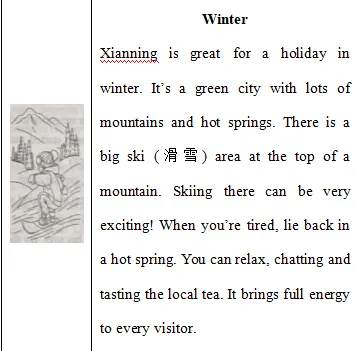
句子1:Xianning is great for a holiday in winter.
Xianning:主语(专有名词)
is:系动词
great:表语(形容词)
for a holiday:状语(介词短语,表示“在……方面”)
in winter:时间状语(介词短语)
语法点:be great for sth. 表示“对……很合适/很好”。
句子2:It's a green city with lots of mountains and hot springs.
It:主语(代词,指代Xianning)
's (is):系动词
a green city:表语(名词短语)
with lots of mountains and hot springs:定语(介词短语,修饰city)
语法点:with短语作后置定语,表示“拥有……”。
句子3:There is a big ski area at the top of a mountain.
There:引导词(存在句)
is:谓语(系动词)
a big ski area:主语(名词短语)
big:定语
ski:定语(名词作定语)
area:中心词
at the top of a mountain:地点状语(介词短语)
语法点:There be句型表示存在。
句子4:Skiing there can be very exciting!
Skiing there:主语(动名词短语)
Skiing:动名词中心词
there:地点状语(副词)
can be:谓语动词短语(情态动词+系动词)
very exciting:表语(形容词短语)
语法点:动名词短语作主语;情态动词can表示可能性。
句子5:When you're tired, lie back in a hot spring.
整体结构:主从复合句,包含时间状语从句+ 主句(祈使句)。
时间状语从句:When you're tired
When:从属连词
you:主语
're (are):系动词
tired:表语(形容词)
主句(祈使句):lie back in a hot spring
lie back:谓语动词(祈使句省略主语you)
in a hot spring:地点状语(介词短语)
语法点:when引导时间状语从句;主句为祈使句表示建议。
句子6:You can relax, chatting and tasting the local tea.
You:主语
can relax:谓语动词短语(情态动词+动词原形)
chatting and tasting the local tea:伴随状语(现在分词短语)
chatting 和 tasting:并列的现在分词
the local tea:tasting的宾语
语法点:现在分词短语作伴随状语,表示与主要动作同时发生的次要动作。注意逗号分隔。
句子7:It brings full energy to every visitor.
It:主语(代词,指代前面提到的整个体验或Xianning)
brings:谓语动词(及物动词,一般现在时)
full energy:直接宾语
to every visitor:间接宾语(介词短语,也可视为目的状语)
语法点:bring sth. to sb. 结构,表示“给某人带来某物”。


