题目:
The best way to protect the environment is to use local resources (e.g. food, building materials) rather than to transport resources from other places.
To what extent do you agree or disagree with this idea?
中文:
保护环境的最佳方法是使用本地资源(例如食物、建筑材料),而不是从其他地方运输资源。你在多大程度上同意或不同意这个观点?
题目解读
题目要求我们探讨保护环境的最佳方法是否是使用本地资源。注意,我们需要讨论本地资源和运输资源的优劣,但是也要讨论本地资源的使用是否是“最佳方法”
在论证过程中,我们可以从依赖本地资源造成的资源浪费影响和生态环保影响,以及运输资源的环保影响两个方向展开
并且,讨论是否是“最佳方法”类的问题,往往从“不是最佳方法”的角度入手,更加容易得到科学的论证,从而展现出我们逻辑思维的严谨性和全面性
写作框架
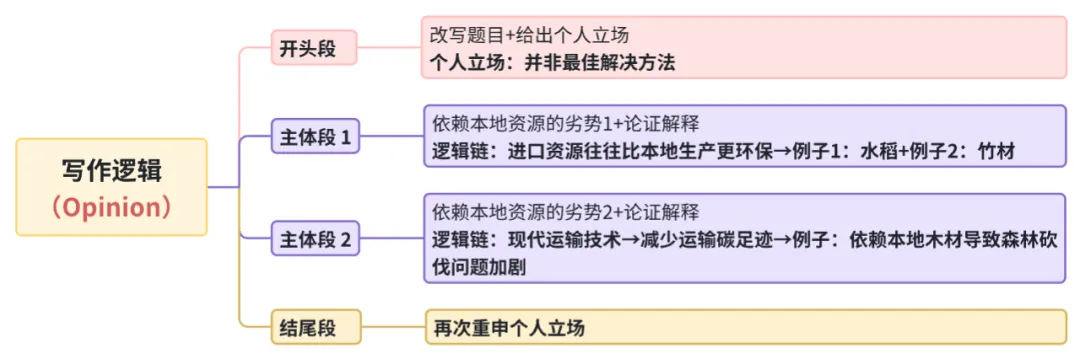
1.开头段(Introduction)
减少商品运输并依赖本地资源通常被认为是保护环境的有效方式。然而,我认为限制资源运输并不一定是最佳解决方案,因为全球贸易的战略性利用可以带来更大的可持续性和环境效益
Minimizing the transportation of goods by relying on local resources is often seen as an effective way to protect the environment. However, I believe that limiting resource transportation is not necessarily the best solution, as a strategic use of global trade can lead to greater sustainability and environmental benefits.
2.主体段
主体段1:
主题:从其他地区进口资源往往比完全依赖本地材料更环保
解释1:某些地区由于气候或地理条件的优势,能够更高效地生产特定商品
例子1:在干旱地区种植水稻需要大量水资源,而从水资源丰富的地区进口则能减少资源消耗
例子2:一些建筑材料(如竹子)在热带地区的可持续性远高于在不适宜的气候条件下强行生产
解释2:利用自然资源丰富的地区的材料,可以减少因本地低效生产造成的环境压力
主体段2:
主题:由于技术和物流的进步,大规模资源运输已变得更加可持续
解释1:现代运输方式(如节能货轮和电气化铁路运输)已显著降低了全球贸易的碳足迹。
解释2:相比之下,过度依赖本地资源可能导致附近生态系统的过度开发
举例1:如果每个城市仅依靠本地木材,人口稠密地区的森林砍伐将加剧
解释3:通过全球范围内合理分配资源开采,我们可以防止局部环境退化,并给生态系统恢复的机会
结尾段(Conclusion)
尽管使用本地资源看似环保,但这并不总是最佳选择。可持续的全球贸易能促进资源高效利用,防止本地环境破坏,并利用现代环保运输方式。因此,与其限制进口,更有效的策略是关注负责任的采购和改进运输技术,以最大限度地减少环境影响
While using local resources may seem environmentally responsible, it is not always the best approach. Sustainable global trade enables efficient resource use, prevents local environmental damage, and leverages modern eco-friendly transportation methods. Therefore, rather than restricting imports, a more effective strategy would be to focus on responsible sourcing and improved transportation technology to minimize environmental impact.
范文精析版
⭐️ 蓝色部分-生动动作表达:增加写作词汇丰富程
⭐️ 黄色部分-地道名词形容词表达:增加写作词汇丰富程度
⭐️ 橙色部分-必备连接词汇:增加写作连接词的积累
⭐️ 绿色部分-高级语法积累:提高写作时语法多样性和准确性
▼
范文
Minimizing the transportation of goods by relying on local resources is often seen as an effective way to protect the environment. However, I believe that limiting resource transportation is not necessarily the best solution, as a strategic use of global trade can lead to greater sustainability and environmental benefits.
Importing resources from other regions can often be more environmentally friendly than relying solely on local materials. Certain areas naturally produce specific goods more efficiently due toclimate or geography. For example, growing rice in arid regions requires excessive water consumption, whereasimporting it from water-rich areas minimizes resource depletion. Similarly, some construction materials, likebamboo, are far more sustainable when sourced from tropical regions rather than forcing production in unsuitable climates. By using materials from places where they are naturally abundant, we reduce the environmental straincaused by inefficient local production.
Additionally, large-scale resource transportation has become more sustainabledue toadvances in technology and logistics. Modern shipping methods, such asenergy-efficient cargo ships and electrified rail transport, have significantly lowered the carbon footprint of global trade. In contrast, excessive reliance on local resources can lead to overexploitation of nearby ecosystems. For instance, if every city depended only on its own timber, deforestation in densely populated areas would accelerate. By distributing resource extraction globally, we prevent localized environmental degradation and allow ecosystems to recover.
In conclusion, while using local resources may seem environmentally responsible, it is not always the best approach. Sustainable global trade enables efficient resource use, prevents local environmental damage, and leverages modern eco-friendly transportation methods. Therefore, rather than restricting imports, a more effective strategy would be to focus on responsible sourcing and improved transportation technology to minimize environmental impact.
高分表达
reduce the environmental strain 减轻环境压力
prevent localized environmental degradation 防止局部环境退化
allow ecosystems to recover 让生态系统恢复
prevents local environmental damage 防止当地环境破坏
leverages modern eco-friendly transportation methods 利用现代环保运输方式
minimize environmental impact 最小化环境影响
an effective way to protect the environment 一种有效的保护环境的方法
greater sustainability and environmental benefits 更高的可持续性和环境效益
climate or geography 气候或地理
excessive water consumption 过度的水资源消耗
resource depletion 资源枯竭
forcing production in unsuitable climates 在不适宜的气候条件下强行生产
naturally abundant 自然丰富
large-scale resource transportation 大规模资源运输
more sustainable 更具可持续性
advances in technology and logistics 技术和物流的进步
energy-efficient cargo ships and electrified rail transport 节能货船和电气化铁路运输
the carbon footprint 碳足迹
global trade 全球贸易
overexploitation of nearby ecosystems 对附近生态系统的过度开发
not always the best approach 并不总是最佳方法
Sustainable global trade 可持续全球贸易
responsible sourcing and improved transportation technology 负责任的采购和改进的运输技术
①
Minimizing the transportation of goods by relying on local resourcesis often seen as an effective way to protect the environment.
减少商品运输并(介词by+动名词表方式)依赖本地资源通常被认为是保护环境的有效方式
②
However, I believe that limiting resource transportation is not necessarily the best solution, as a strategic use of global trade can lead to greater sustainability and environmental benefits.
然而,我认为(动名词ing表示动作名词化)限制资源运输并不一定是最佳解决方案,因为全球贸易的战略性利用可以带来更大的可持续性和环境效益
③
Similarly, some construction materials, like bamboo, are far more sustainable when sourced from tropical regions rather than forcing production in unsuitable climates.
同样,一些建筑材料(如竹子)(状语从句省略主语)在热带地区的可持续性远高于在不适宜的气候条件下强行生产
④By using materials from places where they are naturally abundant, we reduce the environmental straincaused by inefficient local production.
(介词by+动名词表方式)利用(定语从句)自然资源丰富的地区的材料,可以减少(过去分词后置定语)因本地低效生产造成的环境压力
▼