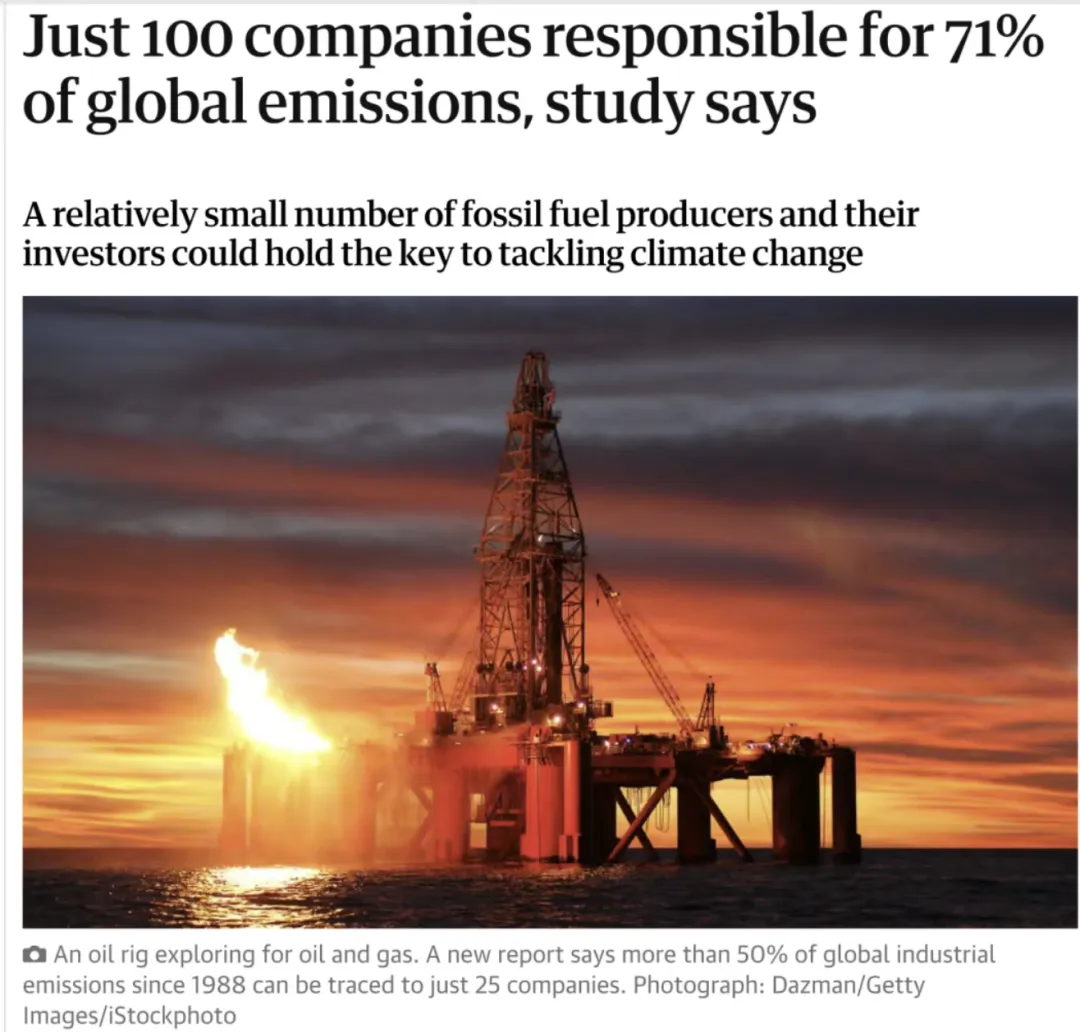
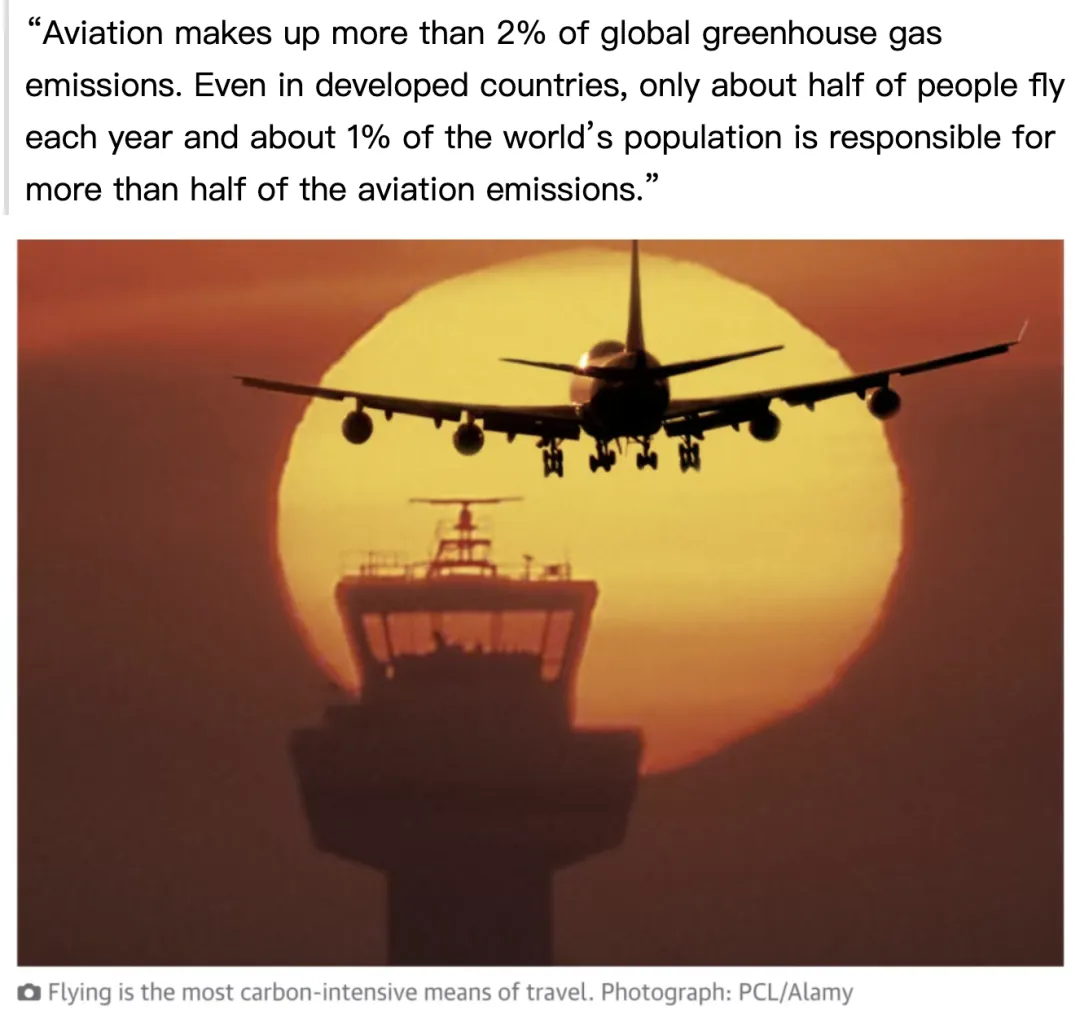
大众普遍认为航空是污染 “重灾区”,但权威数据打破了这一偏见。《卫报》明确指出,全球航空业碳排放仅占总排放量的 2% 左右。对比发电、工业生产、公路运输等领域,航空业的污染贡献度微乎其微。即便大幅削减航班,对全球气候变化的改善效果也极为有限,单纯限制航空旅行并非解决问题的关键。高分写作句式According to The Guardian, the aviation sector accounts for only about 2% of global emissions, suggesting that its overall contribution to climate change is relatively limited compared with major sectors such as energy production and industry. Consequently, even a substantial reduction in air travel may have only a marginal impact on global emission levels.
二、本质真相:气候问题是结构性矛盾
讨论航空污染时,人们常忽略污染责任的核心归属。《卫报》援引报告显示,1988 年以来,全球超 70% 的温室气体排放仅来自 100 家公司,埃克森美孚、壳牌、英国石油等化石能源企业是主要排放方。这意味着,气候变化从不是单纯的个人行为问题,而是全球能源体系的结构性问题。将责任归咎于 “个人少坐飞机”,是对复杂问题的过度简化,无法触及问题根源。高分写作句式According to a widely cited report covered by The Guardian, just 100 fossil fuel companies have been responsible for more than 70% of global greenhouse gas emissions since 1988. This suggests that the climate crisis is not simply the result of individual choices such as air travel, but is deeply rooted in the structure of global energy production.
三、现实细节:航空排放分布极不均衡
航空旅行并非全民性活动,其排放呈现高度集中的特点。《卫报》数据显示,即便在发达国家,每年仅约一半人会乘坐飞机,全球 1% 的人口贡献了超 50% 的航空排放。这一事实说明,对所有旅客实施一刀切的航空限制,既缺乏效率,也有失公平,无法精准解决排放问题。高分写作句式Air travel is not a universal activity. In fact, a small fraction of the global population accounts for the majority of aviation emissions.
相关研究证实,通过提升效率、精简头等舱等优化方式,无需减少航班数量,就能实现航空排放减半,这才是兼顾环保与需求的可行方案。高分写作句式Some recent studies suggest that aviation emissions could be significantly reduced without limiting flights, simply by improving efficiency and aircraft design.
五、雅思 9 分范文(改写精简版供参考)
Introduction
In recent years, concerns about climate change have sparked calls to restrict air travel due to its pollution and fossil fuel consumption. While this view seems reasonable, it oversimplifies a complex problem. This essay holds that restricting air travel across the board is ineffective and unfair, and climate change requires systematic and targeted solutions rather than simple limitations.
Body Paragraph 1
Admittedly, aviation emits greenhouse gases and consumes fossil fuels, but its environmental impact is often overestimated. Data shows the aviation sector accounts for a small share of global carbon emissions compared with power generation and road transport. Focusing only on air travel will ignore more critical pollution sources.
Body Paragraph 2
More importantly, climate change is a structural issue rather than a result of individual behaviour. As The Guardian reported, 100 fossil fuel companies have caused over 70% of global greenhouse gas emissions since 1988. Blaming individual air travel ignores the deep-seated systemic causes of the climate crisis.
Body Paragraph 3
Besides, aviation emissions are unevenly distributed, with a small number of frequent flyers contributing most of them. Blanket restrictions are inefficient and unfair. Targeted measures like regulating frequent flyers, developing sustainable aviation technologies and improving efficiency are more effective, and can cut emissions without reducing flights.
Conclusion
In conclusion, air travel has a limited and unevenly distributed impact on global emissions. Restricting aviation alone cannot solve climate change and may distract from core structural problems. Governments should adopt systematic reforms and targeted interventions instead of broad restrictions on air travel.