题目:
Some people think a rapid population growth in cities only benefits people who live there. Some think there are disadvantages.
Discussion both views and give your own opinion.
中文:
一些人认为城市人口的快速增长只对当地居民有利。而另一些人则认为存在弊端。讨论这两种观点并给出你自己的看法
题目解读
题目要求我们探讨城市人口快速增长对当地居民的利弊,我们需要讨论两方观点,并且给出自己的立场
一方面,我们需要人口快速增长对当地居民产生的利益,可以从就业、创新、文化的角度进行;另一方面,我们需要分析人口快速增长的负面影响,可以从住房、环境、社会矛盾的角度进行。最后,我们需要明确给出个人立场,可能倾向于某一方,或者给出中立的立场
写作框架
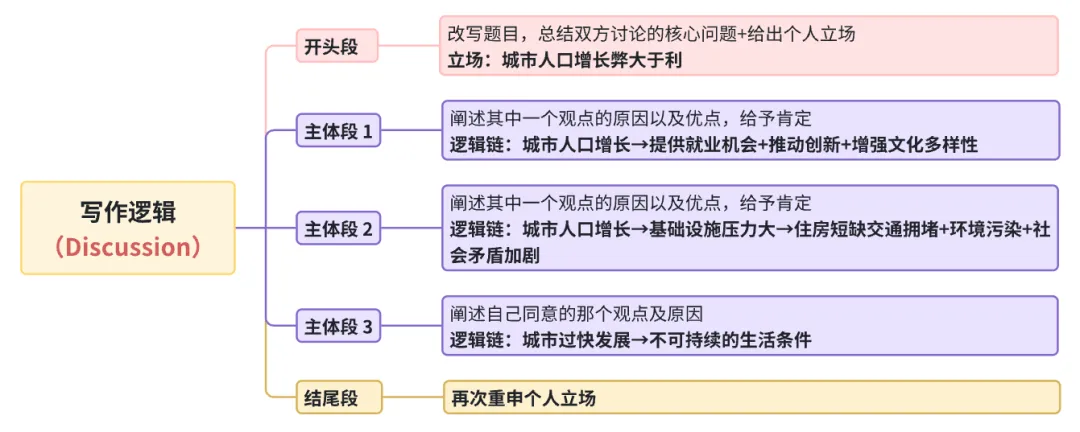
1.开头段(Introduction)
城市人口增长是一把双刃剑,它在某些方面惠及城市居民,但同时也带来了重大弊端。就我个人而言,我认为尽管快速城市化能够推动经济发展,但其在基础设施和生活质量方面的缺点远远超过其优势
Urban population growth is a double-edged sword, benefiting city dwellers in some ways while also bringing significant disadvantages. Personally, I believe that while rapid urbanization can drive economic progress, its drawbacks, particularly in terms of infrastructure and quality of life, outweigh its advantages.
2.主体段
主体段1:
主题:城市人口增长可以促进经济发展并丰富文化多样性
解释1:更庞大的劳动力吸引企业入驻,创造就业机会,提高生产力
举例1:纽约和上海等城市因能容纳不断增长的劳动力市场而蓬勃发展
解释2:人口扩张推动创新,因为高素质人才的集中能激发竞争和知识交流
解释3:人口流动带来了多元文化,丰富了传统、饮食和语言,提升了居民的社会体验
主体段2:
主题:不受控制的城市人口增长可能会压垮基础设施并降低生活质量
解释1:快速扩张会导致人口过剩、住房短缺和交通拥堵,使日常生活变得更加紧张
举例1:孟买等城市因人口过多而面临公共服务不足和空气污染加剧的问题
解释2:对水、电和医疗等资源的需求激增,往往超过供应能力,尤其影响低收入群体
解释3:高人口密度可能导致犯罪率上升和社会矛盾加剧,使某些城市地区变得不安全
主体段3:
主题:尽管经济增长是城市快速扩张的重要理由,但其弊端不容忽视
解释1:城市若增长过快而缺乏合理规划,将难以持续发展,最终生活质量的下降会抵消经济收益
解释2:政策制定者必须实施智能城市规划策略
举例1:如改善公共交通、投资保障性住房等,以确保城市发展惠及所有居民
结尾段(Conclusion)
尽管城市人口增长能够促进经济繁荣、增强文化多样性,但其对基础设施、公共服务及整体生活质量的挑战更为严峻。若管理不当,快速城市化的负面影响将超过其潜在收益
While population growth in cities can stimulate economic prosperity and enrich cultural diversity, it also poses serious challenges related to infrastructure, public services, and overall quality of life. Without effective management, the negative consequences of rapid urbanization will outweigh its potential benefits.
范文精析版
⭐️ 蓝色部分-生动动作表达:增加写作词汇丰富程
⭐️ 黄色部分-地道名词形容词表达:增加写作词汇丰富程度
⭐️ 橙色部分-必备连接词汇:增加写作连接词的积累
⭐️ 绿色部分-高级语法积累:提高写作时语法多样性和准确性
▼
范文
Urban population growth is a double-edged sword, benefitingcity dwellers in some ways while also bringing significant disadvantages. Personally, I believe that while rapid urbanization can drive economic progress, its drawbacks, particularly in terms of infrastructure and quality of life, outweigh its advantages.
On one hand, a growing population in cities can boost economic development and cultural diversity. A larger workforce attracts businesses, leading tojob creation and increased productivity. For example, cities likeNew York and Shanghai have thrived due to their ability to accommodate a growing labor market. Moreover,population expansionfosters innovation, as the concentration of skilled individuals encourages competition and knowledge exchange. Additionally, cultural vibrancy improves as migration introduces diverse traditions, cuisines, and languages, enhancing social experiences for residents.
On the other hand, unchecked urban population growth can overwhelm city infrastructure and degrade living conditions. Rapid expansion leads to overcrowding, housing shortages, and traffic congestion, making daily life more stressful.For instance, cities likeMumbai struggle with overpopulation, resulting in inadequate public services and worsening air pollution. Moreover, rising demand for resourcessuch as water, energy, and healthcare often exceeds supply, disproportionately affecting lower-income groups. Furthermore, higher population density can escalate crime rates and social tensions, making some urban areas less safe.
Although economic growth is a compelling argument for rapid urban expansion, its disadvantages are too severe to overlook. A city that grows too fast without proper planning risks becoming unsustainable, with deteriorating living conditions outweighing financial gains. Policymakers must implement smart urban planning strategies, such as improving public transportation and investing in affordable housing, to ensure that city growth benefits all residents.
In conclusion, while population growth in cities can stimulate economic prosperity and enrich cultural diversity, it also poses serious challengesrelated to infrastructure, public services, and overall quality of life. Without effective management, the negative consequences of rapid urbanization will outweigh its potential benefits.
高分表达
drive economic progress 推动经济发展
boost economic development and cultural diversity 促进经济发展和文化多样性
fosters innovation 促进创新
overwhelm city infrastructure 使城市基础设施不堪重负
degrade living conditions 降低生活质量、使生活条件恶化
struggle with overpopulation 因人口过剩而陷入困境、艰难应对人口过剩问题
escalate crime rates and social tensions 使犯罪率上升和社会紧张局势加剧
implement smart urban planning strategies 实施明智的城市规划策略
stimulate economic prosperity 促进经济繁荣
enrich cultural diversity 丰富文化多样性
poses serious challenges 带来严峻挑战
a double-edged sword 双刃剑
city dwellers 城市居民
infrastructure and quality of life 基础设施和生活质量
job creation and increased productivity 创造就业机会和提高生产力
accommodate a growing labor market 容纳不断增长的劳动力市场
population expansion 人口增长
knowledge exchange 知识交流
cultural vibrancy 文化活力
unchecked urban population growth 不受控制的城市人口增长
overcrowding, housing shortages, and traffic congestion 过度拥挤、住房短缺和交通拥堵
inadequate public services 公共服务不足
rising demand for resources 对资源不断增长的需求
a compelling argument 一个有说服力的论据
potential benefits 潜在的好处
①Urban population growth is a double-edged sword, benefiting city dwellers in some ways while also bringing significant disadvantages
城市人口增长是一把双刃剑,(句尾comma-ing表结果)它在某些方面惠及城市居民,(状语从句省略主语)但同时也带来了重大弊端
②Personally, I believe that while rapid urbanization can drive economic progress, its drawbacks, particularly in terms of infrastructure and quality of life, outweigh its advantages.
就我个人而言,我认为(状语从句表让步)尽管快速城市化能够推动经济发展,但其在基础设施和生活质量方面的缺点远远超过其优势
③A larger workforce attracts businesses,leading to job creation and increased productivity.
更庞大的劳动力吸引企业入驻,(句尾comma-ing表结果)创造就业机会,提高生产力
④Moreover, population expansion fosters innovation, as the concentration of skilled individuals encourages competition and knowledge exchange
此外,人口扩张推动创新,(状语从句表原因)因为高素质人才的集中能激发竞争和知识交流
▼