

在刚刚过去的 4 月 25 日雅思写作考试中,有一道题再次引发争议:
Some people believe that air travel should be restricted as it causes serious pollution and will use up the world’s fuel resources.
这几乎是一个“情绪上很容易同意”的观点。
飞机污染严重,燃料消耗巨大——所以,限制航空旅行,好像理所当然。
但问题在于:“看起来正确”,不等于“真正有效”。
🌫️ 第一层误区:我们高估了航空业的污染占比

📰 来自 The Guardian的原文
“The aviation sector currently accounts for about 2% of global emissions.”
也就是说,全球航空业的碳排放,仅占总排放的约 2%–3%。
相比之下:
发电(煤炭、天然气) 工业生产 公路运输
才是“真正的大头”。
换句话说——即使我们大幅减少飞行,对整体气候变化的影响,其实相对有限。
高级英文表达(可直接用于写作)
你可以把这一层逻辑这样写出来:
According to The Guardian, the aviation sector accounts for only about 2% of global emissions, suggesting that its overall contribution to climate change is relatively limited compared to major sectors such as energy production and industry. Consequently, even a substantial reduction in air travel may have only a marginal impact on global emission levels.
第二层现实:污染,从来不是“平均分配的”
当我们讨论是否应该限制航空旅行时,一个更深层的问题往往被忽略:
污染究竟是谁造成的?
根据 The Guardian报道:
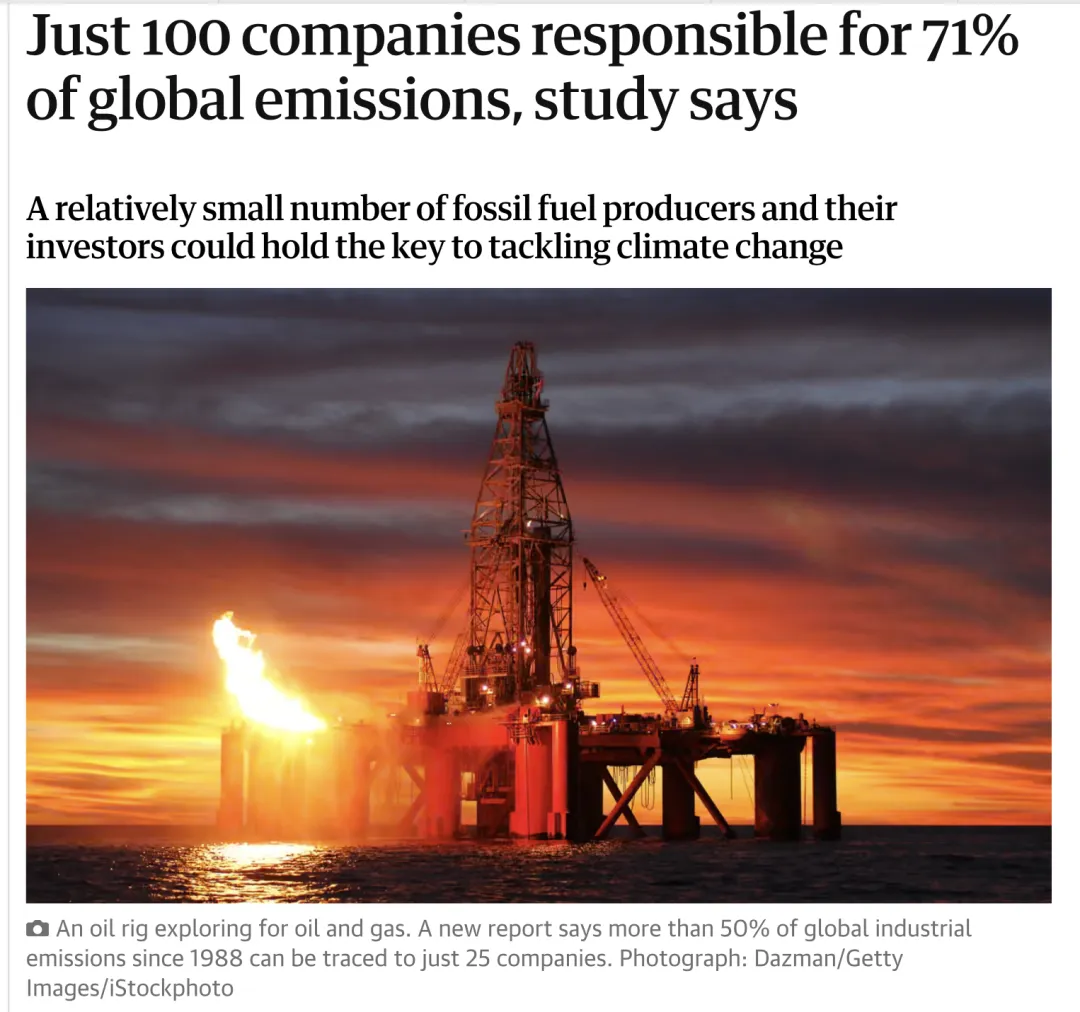
Just 100 companies have been the source of more than 70% of the world’s greenhouse gas emissions since 1988
自 1988 年以来,仅 100 家公司就贡献了超过 70% 的全球碳排放。
这篇文章也进一步指出:
ExxonMobil, Shell, BP and Chevron are identified as among the highest emitting investor-owned companies since 1988. If fossil fuels continue to be extracted at the same rate over the next 28 years as they were between 1988 and 2017, says the report, global average temperatures would be on course to rise by 4C by the end of the century. This is likely to have catastrophic consequences including substantial species extinction and global food scarcity risks.
这意味着什么?
-气候问题,本质上是一个结构性问题而不是简单的“个人行为问题”
换句话说——
把责任简单归结为“少坐飞机”,很可能只是一个看起来正确、却过于简化的答案。
高级英文表达(可直接用于写作)
你可以把这一层逻辑这样写出来:
According to a widely cited report covered by The Guardian, just 100 fossil fuel companies have been responsible for more than 70% of global greenhouse gas emissions since 1988. This suggests that the climate crisis is not simply the result of individual choices such as air travel, but is deeply rooted in the structure of global energy production. Focusing solely on aviation therefore risks oversimplifying a problem that is largely driven by a small number of major emitters.
🌍 第三层现实: “飞行其实是少数人的行为”
📰 来自 The Guardian的原文
“Aviation makes up more than 2% of global greenhouse gas emissions. Even in developed countries, only about half of people fly each year and about 1% of the world’s population is responsible for more than half of the aviation emissions.”
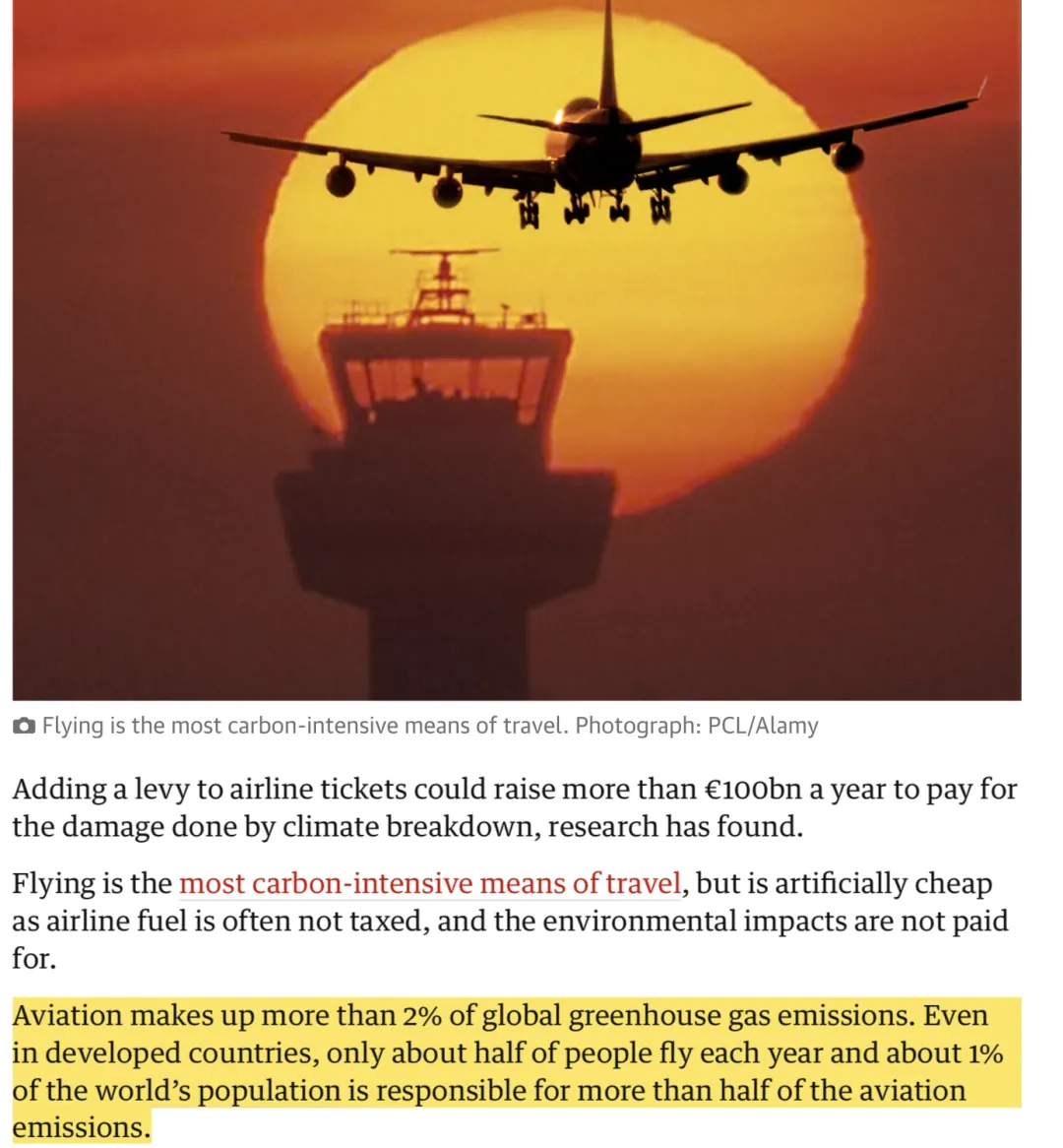
即使在发达国家,也只有一半的人口经常乘飞机 甚至 1%的人贡献了50%的航空排放
高级英文表达(可直接用于写作)
你可以把这一层逻辑这样写出来:
Air travel is not a universal activity. In fact, a small fraction of the global population accounts for the majority of aviation emissions.
这句话非常“外刊感”,而且直接提升你文章档次
⚖️ 第四层答案:问题不在“是否飞”,而在“如何飞”
真正成熟的外刊讨论,很少停在“限制”这种简单答案上。
更现实的方向是:
提高燃料效率 发展可持续航空燃料 优化航线与载客结构 用高铁替代短途飞行
换句话说:
不是停止飞行,而是让飞行变得更聪明
最新外刊对这一问题也给出了答案
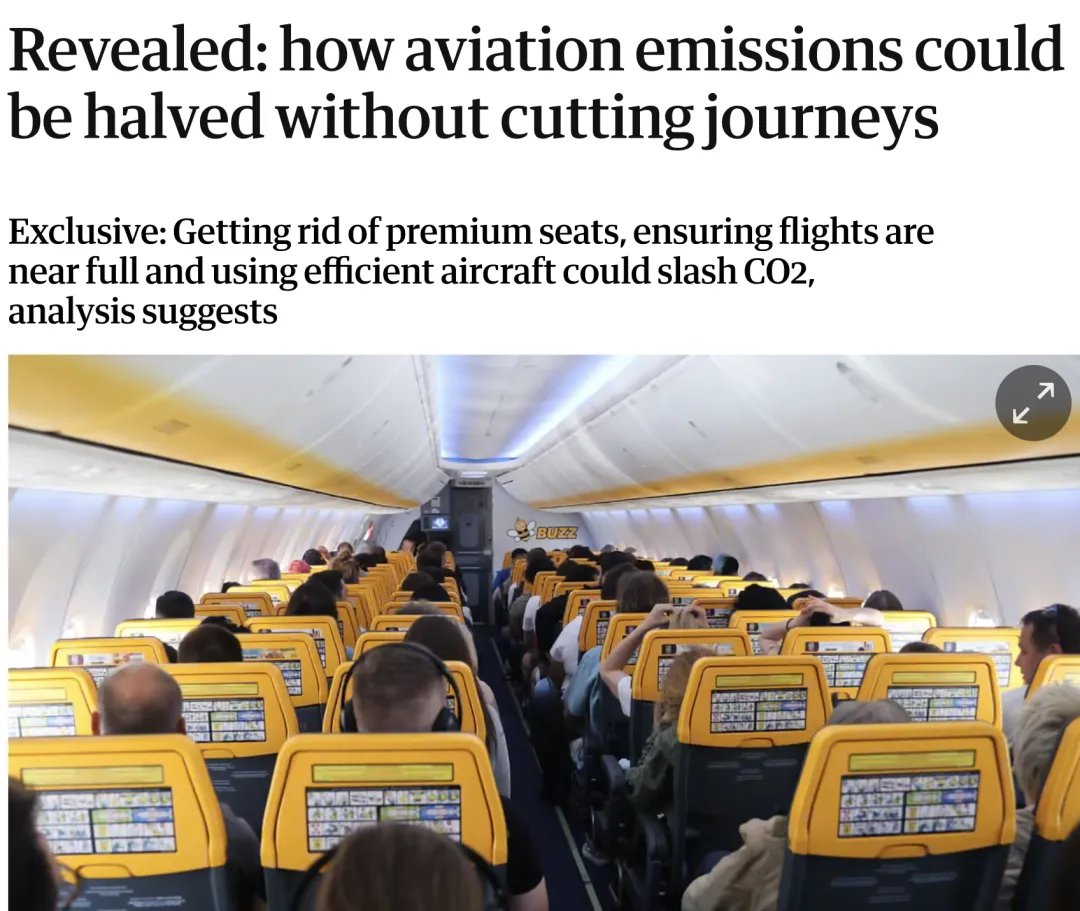
比如 卫报的一篇文章这样说到:
不减少航班,也可以减排一半(通过提高效率、减少头等舱等)
高级英文表达(可直接用于写作)
你可以把这一层逻辑这样写出来:
Some recent studies suggest that aviation emissions could be significantly reduced without limiting flights, simply by improving efficiency and aircraft design.
结论:真正的环保,是理性,而不是极端
很多雅思考生在这道题上容易犯一个错误:
把“立场”当作“思考”
他们写:
✔ 飞机污染 → 应该限制
但更高级的写法是:
✔ 承认问题✔ 分析结构✔ 提出更现实的解决方案
We don’t save the planet by flying less,but by learning how to fly better.
我们拯救地球的方式,不是停止飞行,而是学会更聪明地飞行。

可背诵金句
imposing blanket restrictions on air travel is neither the most effective nor the most equitable solution. 对航空出行实施一刀切的限制,既不是最有效的,也不公平。 - The issue is not merely behavioural, but fundamentally structural.
问题不仅是行为层面的,更是结构性的 - Focusing solely on aviation risks overlooking larger sources of emissions.
只关注航空会忽视更大的排放来源
这篇范文的核心优势在于:
① 有数据支撑,但不止于数据
✔ 使用关键数据(约 2.5%)建立客观基础✔ 但不止停留在“数据陈述”,而是进行反转分析
② 具备高阶批判思维(Critical Thinking)
这篇的批判不是“反对”,而是“深化问题”:
✔ oversimplifies a far more complex issue✔ focusing solely on individual actions risks overlooking…
本质在于:
不是这个观点错,而是它不够完整
核心能力:从“对/错判断” → 升级为“深/浅判断”
③ 有结构性分析(System Thinking)
✔ 引入关键事实:
100家公司 → 70%排放
将问题从:
个体行为(坐飞机)升级为 系统问题(能源结构)
核心能力:把“表面现象”转化为“底层机制”
④ 引入公平性维度(高级加分点)
✔ 强调:
排放 ≠ 平均分布
✔ 提出:
少数人 → 大部分航空排放
将环保问题升级为:
不只是“环境问题” 更是责任分配问题
核心能力:把“环保议题”转化为“公平议题”
⑤ 解决方案精准且克制(非常关键)
✔ 使用:
targeted measures(针对性措施)
✔ 避免:
一刀切限制 过度展开建议
solution的特点:
简洁 有针对性 与前文逻辑一致
⑥ 逻辑推进清晰(结构极强)
整篇完成了一个非常典型的高分逻辑链:
数据(2.5%)→ 质疑表象(被高估)→ 深层原因(结构问题)→ 公平性(不均衡)→ 解决方案(targeted)
这是标准的:
Surface → Analysis → Structure → Implication → Solution
⑦ 语言自然且学术(可模仿性强)
✔ 没有生硬“高难词”✔ 但充满高分表达:
oversimplifies disproportionately structural equitable targeted measures
最核心的一点
这篇真正厉害的地方在于:
它没有直接回答问题,而是重新定义了问题。
从:
Should we restrict flights?
升级为:
Are we focusing on the right cause of climate change?
高分作文不是“给答案”,而是“改变问题的角度”。

作者*雅思8.5达人@Lili 老师
-阅读听力9写作8.5口语8
超过10年的教学经验,曾多次创下帮学生40课时内达到雅思8分和7.5分的高分纪录,擅长帮学生搭建高分句型结构、满分素材,强雅思写作批改,直击失分点,英国名校圣安德鲁斯大学(英国卫报排名第二; 威廉王子母校) 英语教育MBA 双硕士科班出身,有着深厚的英语语言教学以及写作功底,TESOL 资格证书 TESl Canada 资格认证;
从 Academic Style,到论证结构、逻辑闭合、批判性表达,再到考官视角下的高阶学术语言——这是一条完整的 6–9 分进阶路径。过去,这套体系只在高价一对一里讲,已经帮助多位学生把写作稳定提到 7.5。
👉 扫一扫,即可在视频号购买学习。

写作高分,从来不是运气,而是逻辑与认知的升级。


