一、培养在三大主题语境中,学生在语篇整体布局的逻辑分析、理解语篇主旨大意基础上,通过4个预先设置的情景题目的完成,成为一个合格的problem-solver。
二、命题遵循规律:
1.题文同序:题目和答案关键信息句出现的段落先后顺序一致(含段内先后顺序一致)。ABCD篇都有这样规律。
2.一段一题:99%的题目,遵循一个段落只设置一个题目,文章大意和标题类除外。
3.紧扣主旨:不管什么题型,与全文主旨和段落主旨(前者更重要)相关的选项肯定对。
4.立德树人:正确选项通过点辐射面,引导学生积极的、正确的三观。
三、语篇结构分析:
第一部分a problem 、a phenomenon or a new idea:
问题呈现,现状与冲突。
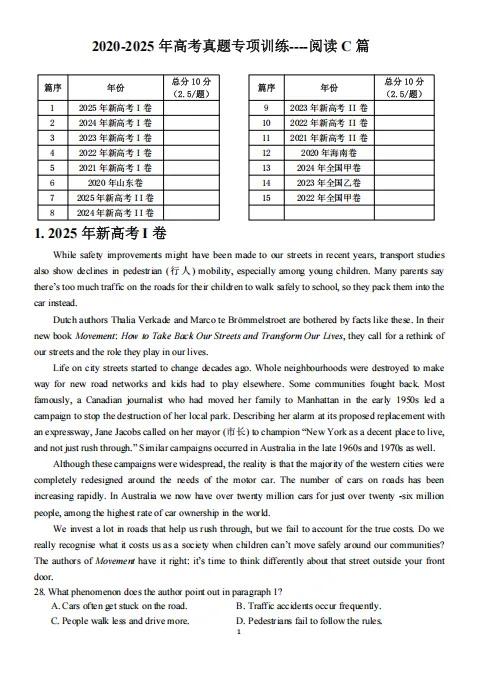
如:28.What phenomenon does the author point out in paragraph 1?(2025年)
28. What is the purpose of the project?(2022年)
第二部分a solution or reasons:
策略实施,方法与归因。
如:29.What were the Canadian journalist and other campaigners trying to do?(2025年)
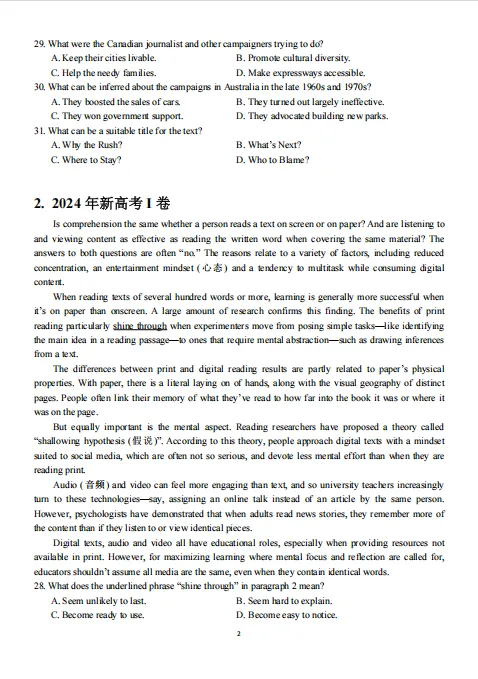
29. What does the shallowing hypothesis assume?(2024年)
第三部分effects or results:
效果测评,疗效与不足。
如:30.What can be inferred about the campaigns in Australia in the late 1960s and 1970s?(2025年)30. Why are audio and video increasingly used by university teachers?(2024年)
第四部分reflection or summary:
前景展望,总结与反思
如:31. What does the author imply in the last paragraph?(2024年)
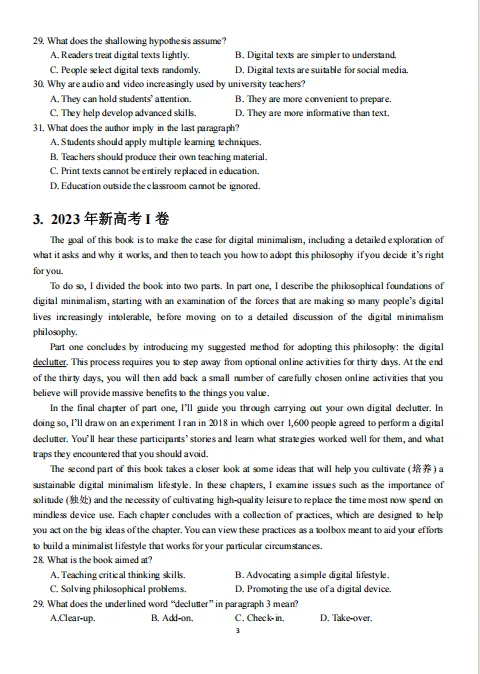
31. What does the author suggest readers do with the practices offered in part two?(2023年)