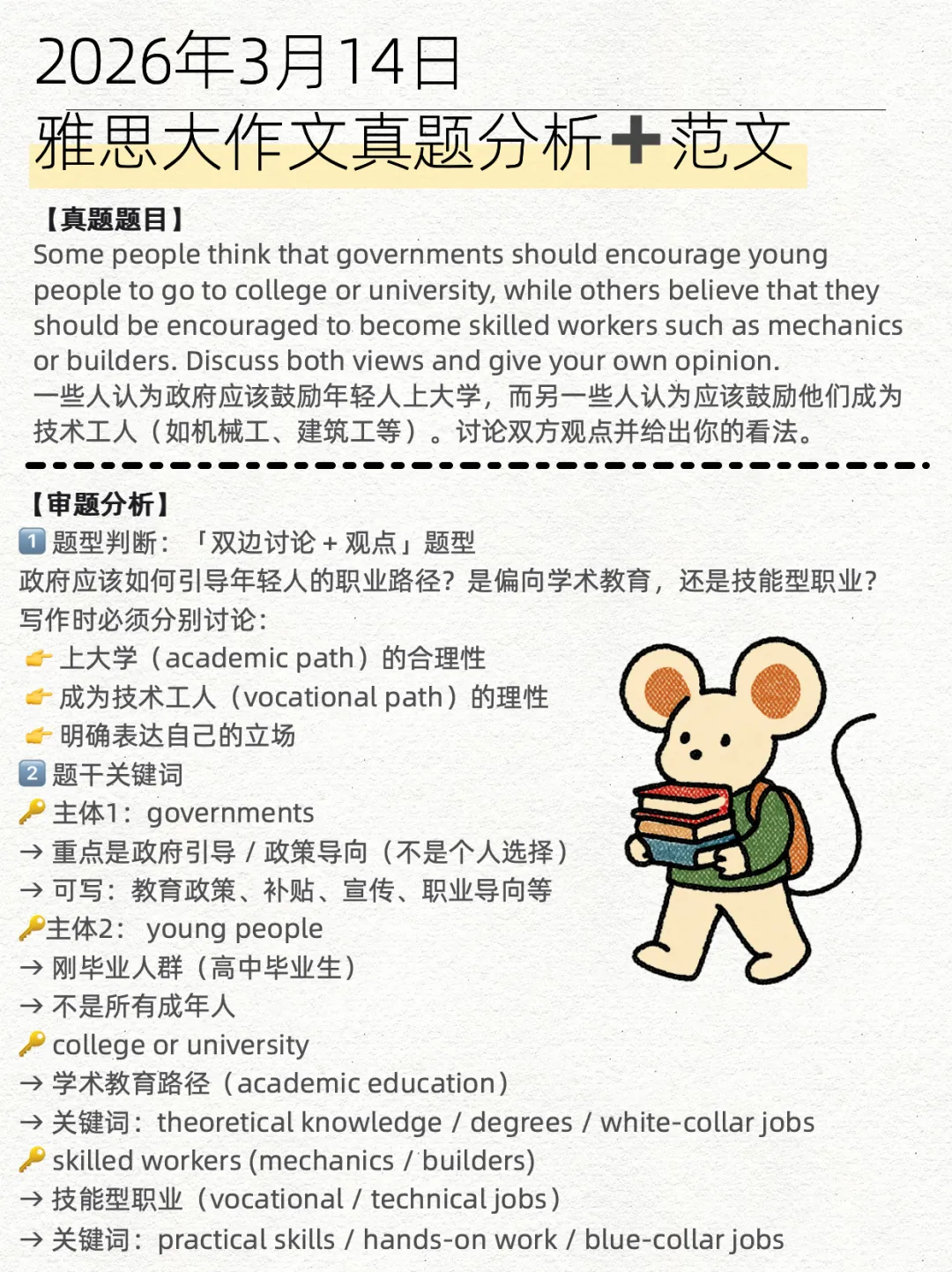
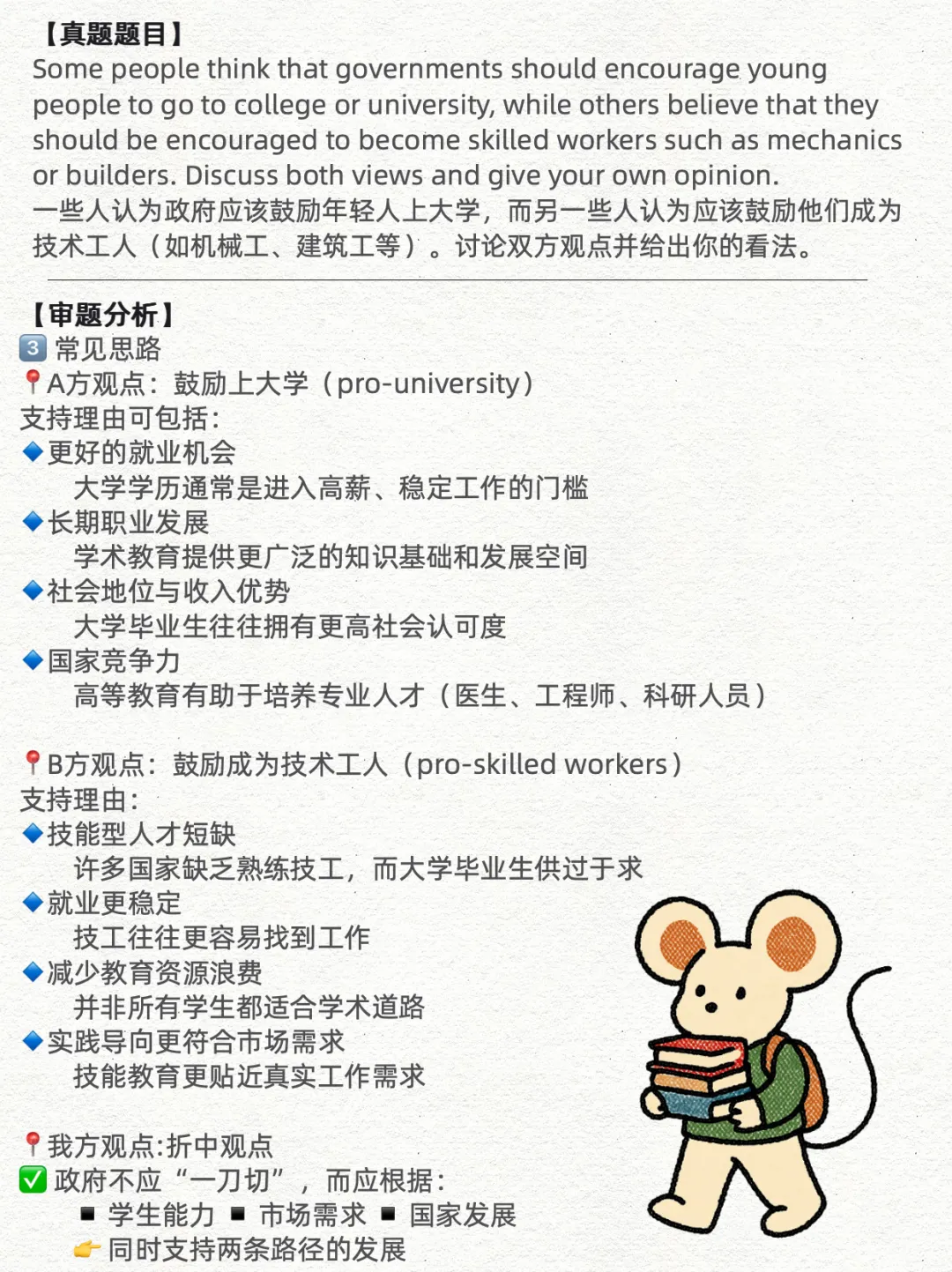
【2026.3.14真题题目】
Some people think that governments should encourage young people to go to college or university, while others believe that they should be encouraged to become skilled workers such as mechanics or builders. Discuss both views and give your own opinion.
一些人认为政府应该鼓励年轻人上大学,而另一些人认为应该鼓励他们成为技术工人(如机械工、建筑工等)。讨论双方观点并给出你的看法。
【审题分析】
1️⃣题型判断:「双边讨论」题型
政府应该如何引导年轻人的职业路径?
是偏向学术教育,还是技能型职业?
写作时必须分别讨论:
👉上大学(academic path)的合理性
👉成为技术工人(vocational path)的理性
👉明确表达自己的立场
2️⃣题干关键词
🔑主体1:governments
→ 重点是政府引导 / 政策导向(不是个人选择)
→ 可写:教育政策、补贴、宣传、职业导向等
🔑主体2: young people
→ 刚毕业人群(高中毕业生)
→ 不是所有成年人
🔑 college or university
→ 学术教育路径(academic education)
→ 关键词:theoretical knowledge / degrees / white-collar jobs
🔑 skilled workers (mechanics / builders)
→ 技能型职业(vocational / technical jobs)
→ 关键词:practical skills / hands-on work / blue-collar jobs
3️⃣跑题警告🚨
❌写成“大学教育是否重要”
❌写成“蓝领 vs 白领谁更好”
❌忽略“政府 should encourage”(变成个人选择题)
❌只写一方观点
4️⃣常见思路
📍A方观点:鼓励上大学(pro-university)
支持理由:
🔹更好的就业机会
大学学历通常是进入高薪、稳定工作的门槛
🔹长期职业发展
学术教育提供更广泛的知识基础和发展空间
🔹社会地位与收入优势
大学毕业生往往拥有更高社会认可度
🔹国家竞争力
高等教育有助于培养专业人才(医生、工程师、科研人员)
📍B方观点:鼓励成为技术工人(pro-skilled workers)
支持理由:
🔹技能型人才短缺
许多国家缺乏熟练技工,而大学毕业生供过于求
🔹就业更稳定
技工往往更容易找到工作
🔹减少教育资源浪费
并非所有学生都适合学术道路
🔹实践导向更符合市场需求
技能教育更贴近真实工作需求
📍我方观点:折中观点
✅政府不应“一刀切”,而应根据:
▪️学生能力
▪️市场需求
▪️国家发展
👉同时支持两条路径的发展
【参考范文】
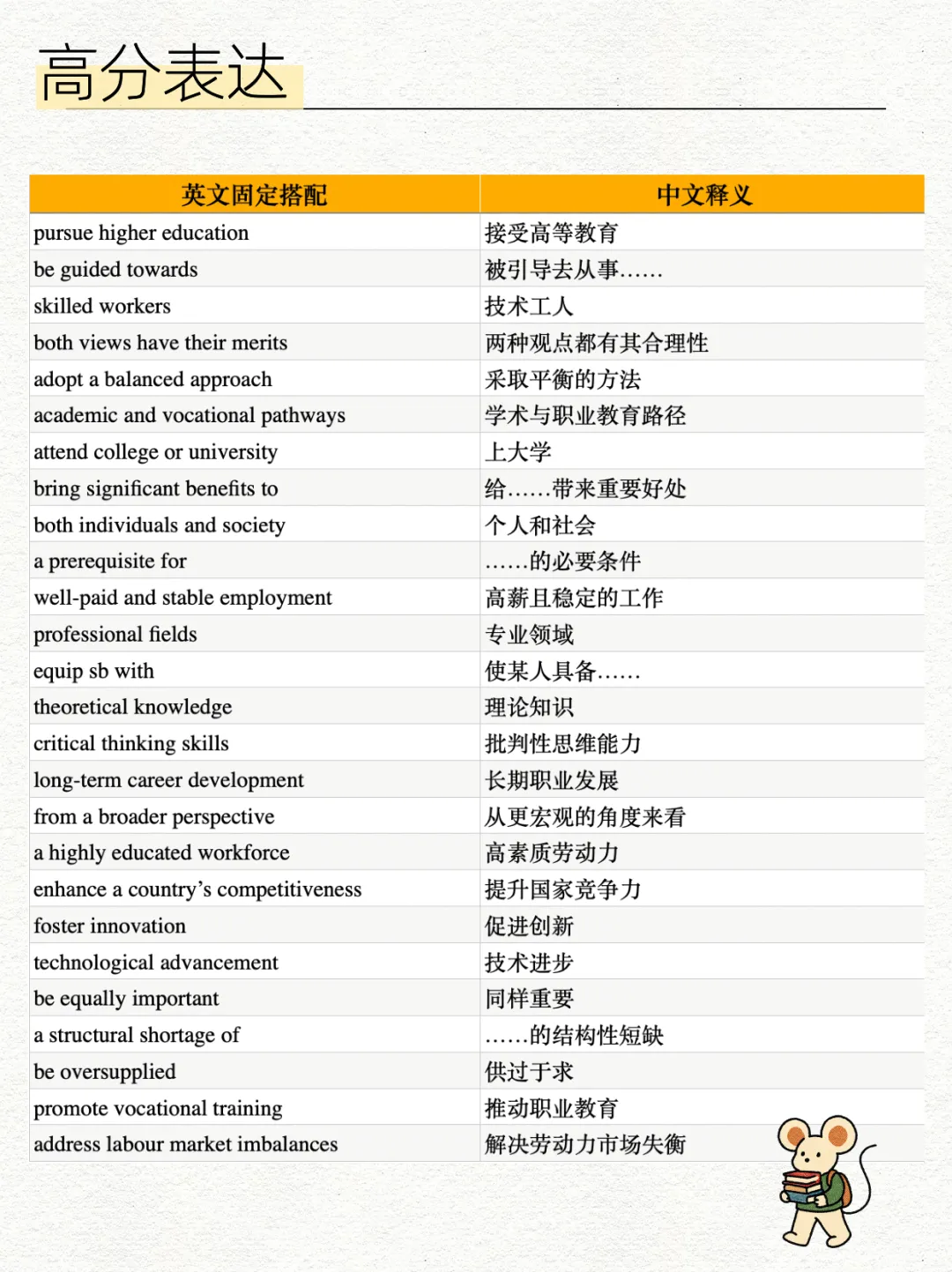
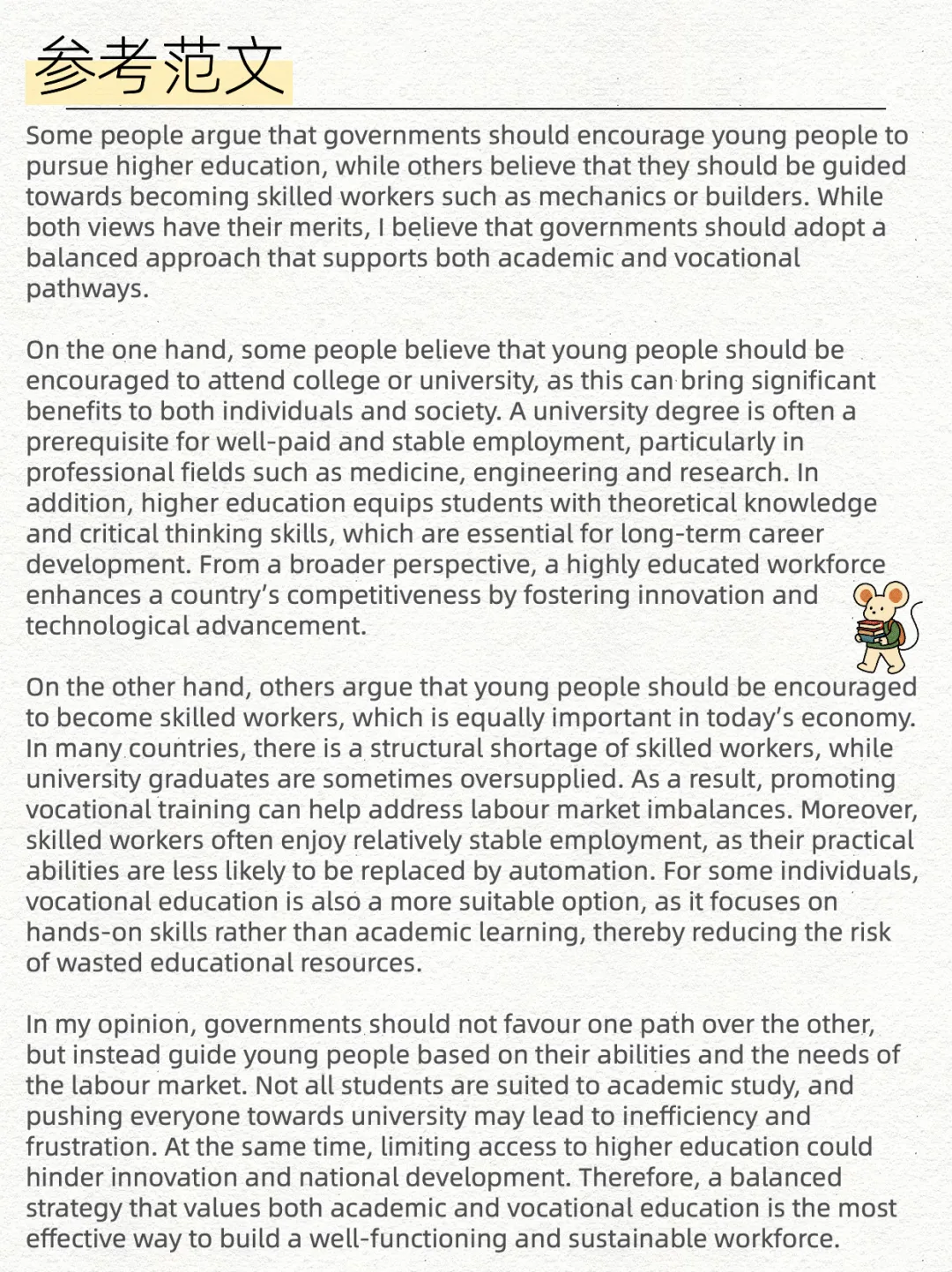
Some people argue that governments should encourage young people to pursue higher education, while others believe that they should be guided towards becoming skilled workers such as mechanics or builders. While both views have their merits, I believe that governments should adopt a balanced approach that supports both academic and vocational pathways.
On the one hand, some people believe that young people should be encouraged to attend college or university, as this can bring significant benefits to both individuals and society. A university degree is often a prerequisite for well-paid and stable employment, particularly in professional fields such as medicine, engineering and research. In addition, higher education equips students with theoretical knowledge and critical thinking skills, which are essential for long-term career development. From a broader perspective, a highly educated workforce enhances a country’s competitiveness by fostering innovation and technological advancement.
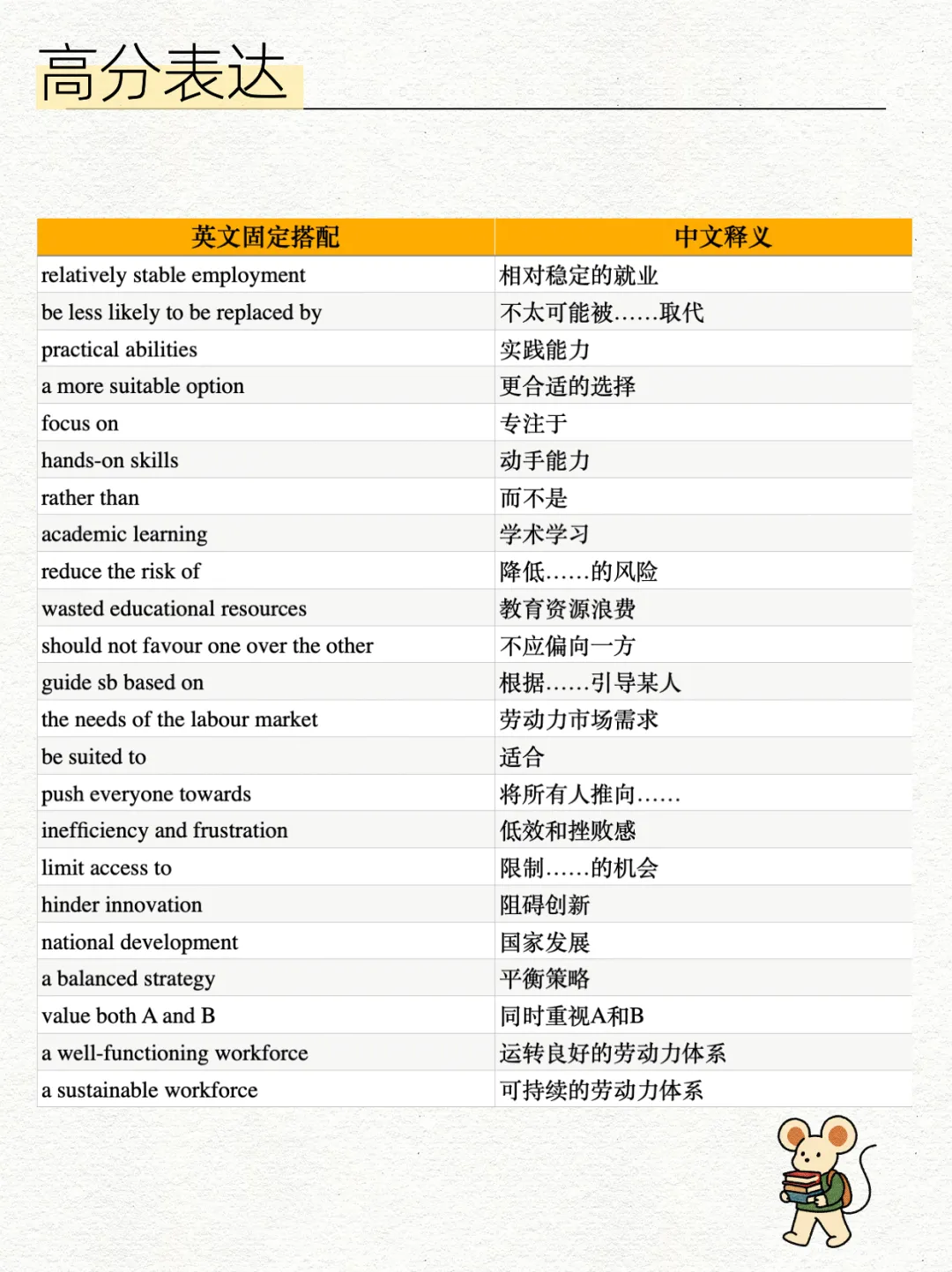
On the other hand, others argue that young people should be encouraged to become skilled workers, which is equally important in today’s economy. In many countries, there is a structural shortage of skilled workers, while university graduates are sometimes oversupplied. As a result, promoting vocational training can help address labour market imbalances. Moreover, skilled workers often enjoy relatively stable employment, as their practical abilities are less likely to be replaced by automation. For some individuals, vocational education is also a more suitable option, as it focuses on hands-on skills rather than academic learning, thereby reducing the risk of wasted educational resources.
In my opinion, governments should not favour one path over the other, but instead guide young people based on their abilities and the needs of the labour market. Not all students are suited to academic study, and pushing everyone towards university may lead to inefficiency and frustration. At the same time, limiting access to higher education could hinder innovation and national development. Therefore, a balanced strategy that values both academic and vocational education is the most effective way to build a well-functioning and sustainable workforce.
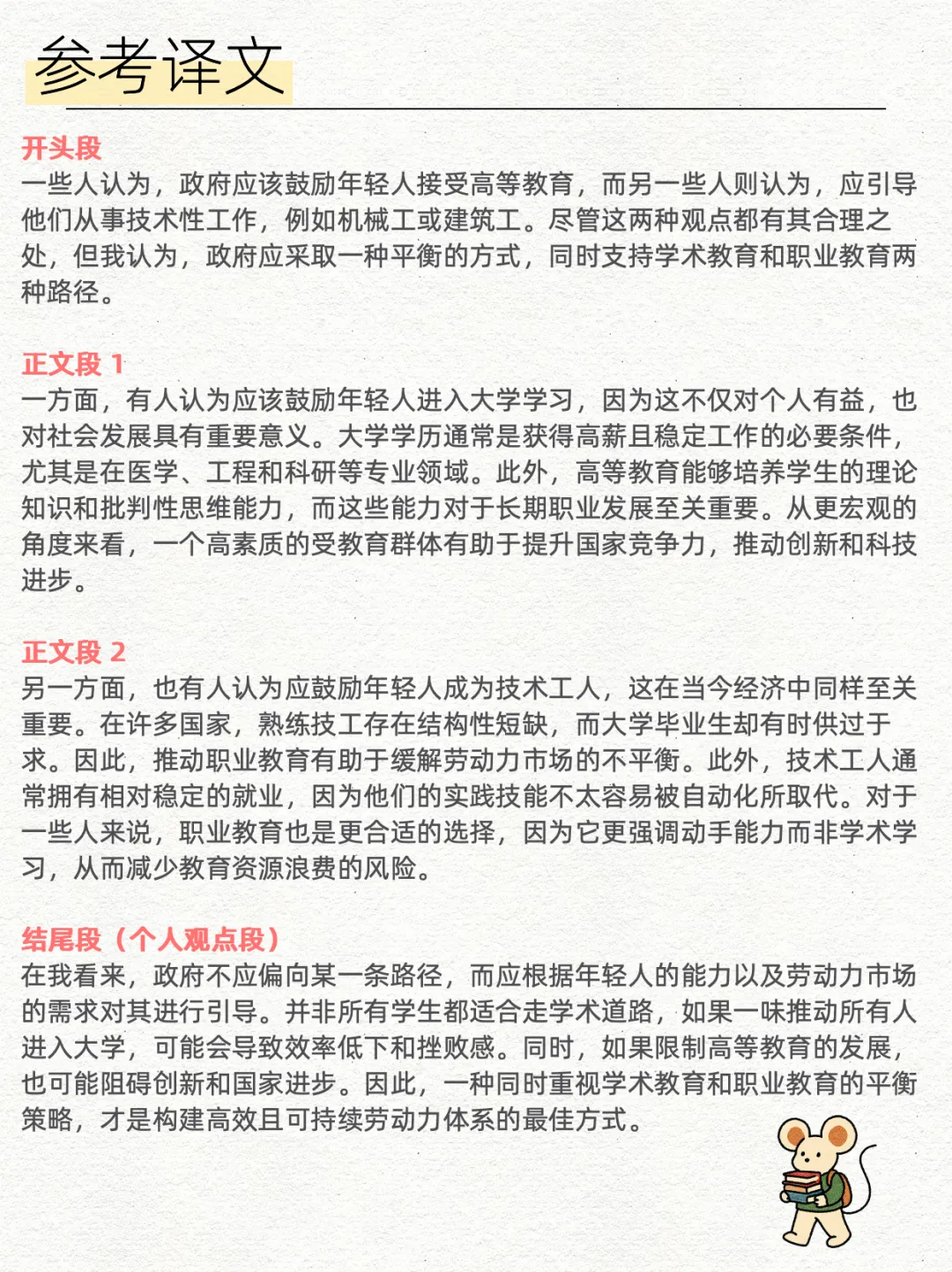
【参考译文】
一些人认为,政府应该鼓励年轻人接受高等教育,而另一些人则认为,应引导他们从事技术性工作,例如机械工或建筑工。尽管这两种观点都有其合理之处,但我认为,政府应采取一种平衡的方式,同时支持学术教育和职业教育两种路径。
一方面,有人认为应该鼓励年轻人进入大学学习,因为这不仅对个人有益,也对社会发展具有重要意义。大学学历通常是获得高薪且稳定工作的必要条件,尤其是在医学、工程和科研等专业领域。此外,高等教育能够培养学生的理论知识和批判性思维能力,而这些能力对于长期职业发展至关重要。从更宏观的角度来看,一个高素质的受教育群体有助于提升国家竞争力,推动创新和科技进步。
另一方面,也有人认为应鼓励年轻人成为技术工人,这在当今经济中同样至关重要。在许多国家,熟练技工存在结构性短缺,而大学毕业生却有时供过于求。因此,推动职业教育有助于缓解劳动力市场的不平衡。此外,技术工人通常拥有相对稳定的就业,因为他们的实践技能不太容易被自动化所取代。对于一些人来说,职业教育也是更合适的选择,因为它更强调动手能力而非学术学习,从而减少教育资源浪费的风险。
在我看来,政府不应偏向某一条路径,而应根据年轻人的能力以及劳动力市场的需求对其进行引导。并非所有学生都适合走学术道路,如果一味推动所有人进入大学,可能会导致效率低下和挫败感。同时,如果限制高等教育的发展,也可能阻碍创新和国家进步。因此,一种同时重视学术教育和职业教育的平衡策略,才是构建高效且可持续劳动力体系的最佳方式。