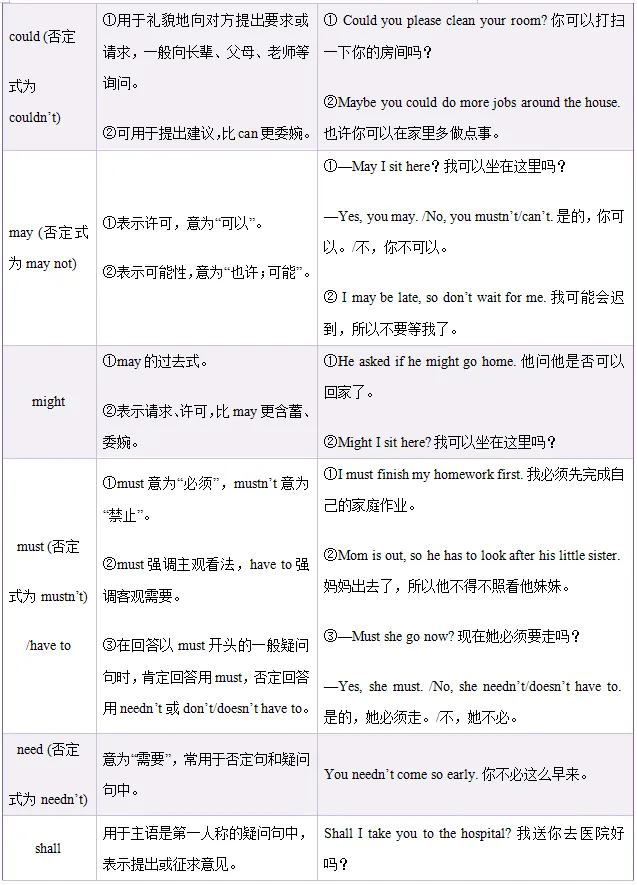
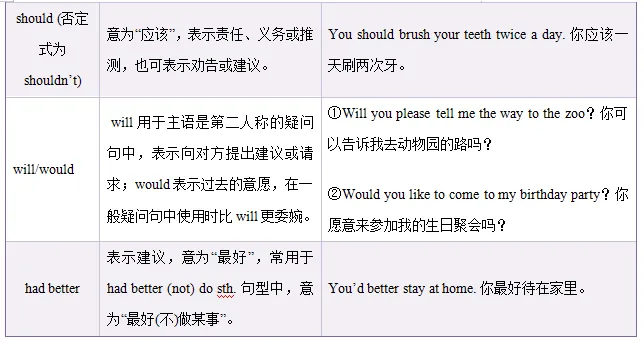
这是情态动词表推测时的核心口诀,务必掌握:✅ 一肯:must(肯定句中表“一定”)He must be at home.(他一定在家。)❌ 一否:can’t(否定句中表“不可能”)She can’t be tired.(她不可能累。)❓ 三不定:may / might / could(表“可能”,语气依次减弱)- It may rain. / It might be true. / Could he be late?推测程度:must > could > may > might > can’t
四、易混点辨析(厦门中考常考!)
1. can 与 be able to
can:表示能力,用于现在和过去(could)be able to:强调“经过努力能做到”,可用于多种时态
2. must 与 have to
must:主观认为必须have to:客观情况迫使必须
3. may be 与 maybe
may be:是“情态动词 + be”,作谓语maybe:副词,“也许”,放句首
4. can’t 与 mustn’t
can’t:表示“不可能”(推测)mustn’t:表示“禁止”
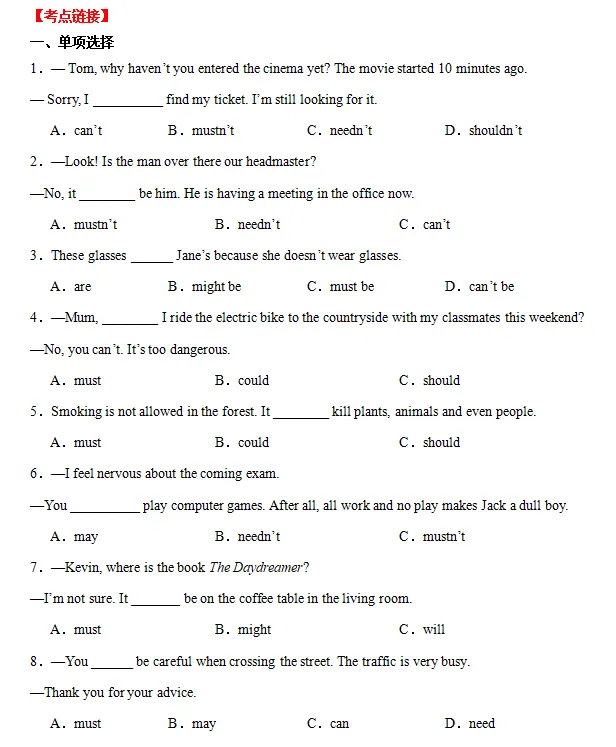
五、真题演练(附解析)
(2025·四川广元)— Is that young lady with straight hair your aunt? — No, it ______ be her. She has gone to the Horticultural Exhibition. A. mustn’t B. can’t C. can D. must✅ 答案:B解析:根据“她已经去园艺博览会了”可知,那人**不可能**是她,表否定推测用 can’t。(2025·北京)— Mom, ______ I go to the cinema with my classmates this Sunday?— Yes, of course you can.A. can B. must C. need D. should✅ 答案:A解析:此处表示**请求许可**,用 Can I…? 结构,答语中也对应使用 can。情态动词虽小,却是中考的“必争之地”。希望这篇精讲能帮助厦门的中考学子们系统复习、扎实掌握。如果觉得有用,欢迎**收藏+转发,助力更多同学备考!